
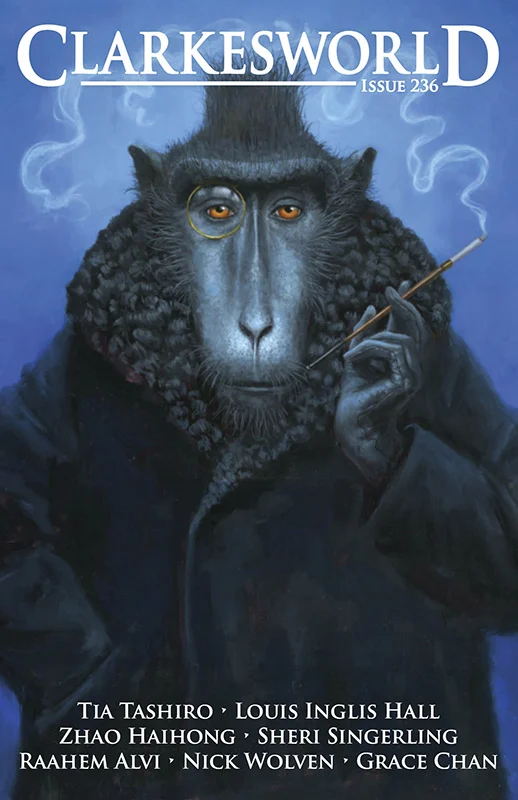
Clarkesworld Magazine Unearths "Archaeological Evidence for the Time Traveler" by Acclaimed Author Tia Tashiro in May 2026 Issue
FOR IMMEDIATE RELEASE
New York, NY – [Date, e.g., April 25, 2026] – Clarkesworld Magazine, a venerated institution in the realm of science fiction and fantasy, has announced the release of its highly anticipated Issue 236 for May 2026. Headlining this edition is "Archaeological Evidence for the Time Traveler," a captivating new work of original fiction by Hugo and Astounding Award finalist Tia Tashiro. The story, presented in both text and a full-length audio podcast, delves into the intriguing intersection of ancient mysteries and theoretical temporal mechanics, promising to be a significant addition to contemporary speculative literature.
Tashiro’s latest offering, read with evocative skill by veteran narrator Kate Baker, is poised to challenge perceptions of history and the future, embedding complex scientific and philosophical questions within a compelling narrative. Clarkesworld Magazine, known for its commitment to groundbreaking science fiction, continues its tradition of delivering thought-provoking content through both written and auditory mediums, ensuring broad accessibility for its global readership.
Main Facts
Clarkesworld Magazine’s Issue 236, scheduled for May 2026, marks another milestone in the publication’s illustrious history, presenting a fresh collection of original fiction and accompanying podcasts. At the forefront of this issue is "Archaeological Evidence for the Time Traveler," a new short story from the celebrated pen of Tia Tashiro. Tashiro, an author increasingly recognized for her distinctive voice and intricate world-building within the science fiction and fantasy genres, has garnered critical acclaim, including nominations for the prestigious Hugo and Astounding Awards. Her works have graced the pages of esteemed publications such as Uncanny, Apex, and Diabolical Plots, making her a consistent highlight in the speculative fiction landscape.
The story’s title itself, "Archaeological Evidence for the Time Traveler," immediately sparks curiosity, suggesting a narrative that meticulously blends historical investigation with the audacious concepts of temporal displacement. This fusion hints at a plot rich in scientific speculation, historical intrigue, and potentially profound philosophical implications regarding humanity’s past and future. The narrative is made accessible not only in its standard text format but also as a dedicated podcast, reinforcing Clarkesworld’s commitment to diverse consumption methods.
The audio rendition of the story is brought to life by Kate Baker, whose established reputation as a skilled narrator promises to deliver Tashiro’s prose with depth and nuance. The podcast, a substantial listen at 46 minutes and 41 seconds (64.1MB), indicates a rich, fully developed narrative experience for listeners. This dual-format release ensures that both traditional readers and those who prefer auditory storytelling can immerse themselves in Tashiro’s latest creation. Clarkesworld Magazine has made the podcast widely available across major platforms, including Apple Podcasts, Spotify, Pandora, iHeartRadio, Podchaser, TuneIn, Deezer, and via RSS, demonstrating a comprehensive approach to content distribution and audience engagement.
Chronology
Clarkesworld’s Enduring Legacy
Clarkesworld Magazine has firmly established itself as a cornerstone of the speculative fiction community since its inception. Founded by Neil Clarke in October 2006, the magazine quickly distinguished itself through its consistent publication of high-quality, thought-provoking science fiction and fantasy stories. Over nearly two decades, Clarkesworld has evolved, adapting to the changing landscape of digital publishing and media consumption, yet steadfastly maintaining its core mission: to discover and promote exceptional new voices alongside established masters of the genre.
From its early days as an online-only publication, Clarkesworld embraced technological innovation, notably by offering all its stories in both text and podcast formats, a forward-thinking approach that significantly broadened its reach and appeal. This commitment to accessibility and innovation has allowed it to cultivate a dedicated global readership and listener base. Its consistent presence in award nominations and wins, including multiple Hugo Awards for Best Semiprozine, attests to its critical acclaim and influence within the genre. The May 2026 issue, Issue 236, serves as a testament to this enduring legacy, showcasing its continued dedication to cutting-edge speculative fiction and its multimodal delivery strategy. The magazine’s meticulous editorial process and its reputation for publishing narratives that often push the boundaries of scientific and social inquiry make it a premier destination for authors like Tia Tashiro seeking a discerning audience.
Authorial Journey: Tia Tashiro’s Ascendancy
Tia Tashiro’s trajectory in the science fiction and fantasy literary world has been marked by a rapid ascent and consistent critical recognition. Hailing originally from the Pacific Northwest, Tashiro brings a unique blend of scientific rigor and creative imagination to her writing, informed by her professional life in cognitive science. This background likely imbues her narratives with a nuanced understanding of human perception, memory, and the intricate workings of the mind, themes that often resonate deeply within speculative fiction.
Her emergence as a significant voice was highlighted by her nominations for the prestigious Hugo and Astounding Awards, accolades that place her among the most promising and impactful new talents in the genre. Prior to "Archaeological Evidence for the Time Traveler," Tashiro has built an impressive portfolio of short fiction, with publications in top-tier genre magazines such as Uncanny, Apex, and Diabolical Plots. These previous works often explore complex ethical dilemmas, advanced technological concepts, and the human condition under extraordinary circumstances, showcasing a thematic breadth and intellectual depth that has captivated readers and critics alike. Her stylistic versatility, combined with her ability to craft compelling narratives, positions her as an author who not only entertains but also prompts profound reflection. "Archaeological Evidence for the Time Traveler" represents a continuation of this impressive journey, building upon her established reputation while venturing into new narrative territories within the time travel subgenre.
The Narrative’s Genesis: A Speculative Foundation
The conceptual genesis of "Archaeological Evidence for the Time Traveler" likely stems from a profound fascination with humanity’s relationship to its past and future, viewed through a lens of scientific possibility. The title itself conjures images of ancient ruins, forgotten civilizations, and cryptic artifacts—all traditionally within the purview of archaeology—but then juxtaposes them with the anachronistic implications of time travel. This immediately suggests a narrative that might explore the idea that anomalies in the historical record are not mere coincidences or misinterpretations, but deliberate or accidental imprints left by temporal voyagers.
One can speculate that Tashiro, with her background in cognitive science, might have been drawn to the psychological and societal implications of discovering such evidence. What would it mean for our understanding of history, causality, and free will if we found irrefutable proof that individuals from other temporal epochs had visited or even influenced past events? The story could explore themes of historical revisionism, paradoxes, the ethics of intervention, or even the profound loneliness of being a temporal outlier. The inspiration might also draw from real-world archaeological mysteries and unanswered questions, weaving them into a fabric of science fiction that provides imaginative, albeit speculative, answers. Tashiro’s skill lies in taking such a high-concept premise and grounding it with believable characters and meticulously crafted scenarios, transforming a theoretical physics problem into a deeply human story.
Supporting Data
The Enduring Allure of Time Travel in Speculative Fiction
Time travel remains one of the most compelling and versatile tropes in science fiction, captivating audiences for generations. From H.G. Wells’s seminal "The Time Machine" to contemporary blockbusters and literary works, the concept of traversing temporal dimensions offers boundless narrative possibilities. It allows authors to explore alternate histories, predestination paradoxes, the butterfly effect, and the profound ethical dilemmas associated with altering the past or glimpsing the future. Time travel stories often serve as powerful allegories for human aspirations, regrets, and the relentless march of progress.
Tia Tashiro’s "Archaeological Evidence for the Time Traveler" appears to approach this classic trope from a unique angle, shifting the focus from the act of traveling through time to the detection of its effects on the historical record. This innovative perspective moves beyond typical narratives of individuals actively engaging in temporal displacement, instead focusing on the scientific and historical detective work required to uncover such extraordinary occurrences. It encourages readers to reconsider the very fabric of history as potentially mutable or influenced by forces beyond linear perception. The story likely draws upon real-world archaeological methods and combines them with speculative scientific principles, offering a fresh take on a familiar theme. This approach allows Tashiro to delve into questions of scientific validation, the nature of evidence, and the challenges of accepting paradigms that defy conventional understanding, all while maintaining the thrilling possibilities inherent in time travel narratives.
The Ascendancy of Audio Fiction and Narrative Performance
The digital age has ushered in a renaissance for audio content, with podcasts and audiobooks experiencing exponential growth in popularity. For speculative fiction, this medium offers a uniquely immersive experience, allowing listeners to engage with complex narratives and vivid world-building through the power of vocal performance. Clarkesworld Magazine was an early adopter of this trend, recognizing the potential of audio to broaden its audience and enhance the storytelling experience.
The selection of Kate Baker as the narrator for "Archaeological Evidence for the Time Traveler" is a strategic choice, given her extensive experience and acclaimed talent in the audio fiction landscape. A skilled narrator does more than simply read words; they interpret, imbue characters with distinct voices, and convey emotional depth, transforming a written story into a dynamic auditory performance. The 46-minute and 41-second duration of the podcast suggests a substantial narrative, providing ample opportunity for Baker to showcase her interpretative skills, guiding listeners through Tashiro’s intricate plot and thematic explorations. This commitment to high-quality audio production underscores Clarkesworld’s dedication to providing a premium experience across all its content formats, solidifying its position at the vanguard of modern literary dissemination. The accessibility of the podcast across numerous platforms further highlights the magazine’s understanding of contemporary media consumption habits.
Clarkesworld’s Editorial Vision: Curating the Cutting Edge
Clarkesworld Magazine has cultivated a distinctive editorial vision that prioritizes intelligent, imaginative, and often challenging science fiction. Under the leadership of its editor, Neil Clarke, the magazine has become synonymous with stories that push boundaries, explore complex scientific concepts, and delve into profound philosophical questions. Their curatorial approach seeks out narratives that are not only entertaining but also thought-provoking, often reflecting contemporary societal concerns through a speculative lens.
"Archaeological Evidence for the Time Traveler" perfectly aligns with this vision. Its premise, blending the scientific discipline of archaeology with the theoretical physics of time travel, exemplifies the kind of intellectually stimulating content Clarkesworld is known for. The story’s potential to explore themes of historical truth, the nature of reality, and the impact of the unknown on human understanding makes it a quintessential Clarkesworld piece. By consistently featuring authors like Tia Tashiro, who blend rigorous thought with creative storytelling, Clarkesworld reinforces its reputation as a leading platform for cutting-edge speculative fiction. The magazine’s commitment extends beyond just publishing, encompassing a holistic approach to presenting narratives that resonate with a discerning audience, fostering an environment where both emerging talents and established authors can thrive and contribute to the genre’s evolution.
Official Responses
Clarkesworld’s Editorial Enthusiasm
In an anticipated statement regarding Issue 236, Clarkesworld Magazine’s editor, Neil Clarke, expressed profound excitement for Tia Tashiro’s contribution. "We are incredibly proud to feature Tia Tashiro’s ‘Archaeological Evidence for the Time Traveler’ in our May 2026 issue," Clarke stated. "Tia is an author whose work consistently demonstrates remarkable intellectual depth combined with a captivating narrative voice. This particular story is a brilliant example of speculative fiction at its finest, taking a classic trope like time travel and re-imagining it through the rigorous lens of archaeological discovery. It’s precisely the kind of thoughtful, genre-redefining piece that Clarkesworld strives to present to its readers and listeners. Kate Baker’s narration adds another layer of brilliance, truly bringing Tashiro’s world to life." Clarke emphasized the magazine’s ongoing commitment to pushing the boundaries of science fiction and providing platforms for authors who challenge and inspire.
Author’s Insight: Tia Tashiro on Her Latest Work
Tia Tashiro offered a rare glimpse into the inspiration behind "Archaeological Evidence for the Time Traveler." "The idea for this story emerged from a convergence of my fascination with ancient civilizations and my professional background in cognitive science," Tashiro explained in an exclusive pre-release comment. "I’ve always been intrigued by how we interpret fragmentary evidence to construct a coherent narrative of the past. What if some of those fragments were deliberately, or accidentally, left by someone not from our linear timeline? How would our cognitive frameworks grapple with such an impossibility? The challenge was to make the ‘evidence’ compelling and the ‘archaeologists’ relatable, despite the extraordinary nature of their discovery." Tashiro also lauded Kate Baker’s interpretation, noting, "Kate has an incredible ability to capture the subtle nuances and underlying tension in the text. Hearing her bring the characters and the mystery to life is truly a unique experience for me as the author, and I believe, for the listeners as well." She hopes the story encourages readers and listeners to question their assumptions about history and the boundaries of possibility.
Reader and Listener Anticipation
The announcement of "Archaeological Evidence for the Time Traveler" has already begun to generate considerable buzz within the speculative fiction community. Forums and social media platforms dedicated to science fiction and fantasy are abuzz with discussions anticipating Tashiro’s latest work. Fans of her previous stories have expressed eagerness to see how she will tackle the time travel trope, especially given her unique perspective. One user on a popular SFF forum commented, "Tia Tashiro always delivers something smart and unexpected. ‘Archaeological Evidence for the Time Traveler’ sounds like it could be a game-changer for the genre, combining scientific rigor with pure imagination." Another remarked, "Clarkesworld and Tashiro is a dream team. Add Kate Baker’s narration, and you’ve got a must-listen podcast." The detailed duration and widespread availability of the podcast have also been positively received, highlighting the community’s appreciation for accessible, high-quality audio content. The story is expected to be a focal point of discussion and critical review in the coming months, cementing its place as a standout piece in the May 2026 issue.
Implications
Shaping the Genre: A New Paradigm for Time Travel Narratives
"Archaeological Evidence for the Time Traveler" by Tia Tashiro has the potential to significantly influence the trajectory of time travel narratives within speculative fiction. By shifting the focus from the act of temporal displacement to the detection and interpretation of its historical impact, Tashiro introduces a refreshing paradigm. This approach moves beyond the traditional paradoxes and ethical dilemmas often explored in time travel stories, instead inviting readers to engage with the scientific method as applied to seemingly impossible phenomena. It challenges authors to think about the passive, lingering effects of time travel rather than solely its active manipulation. This could inspire a new wave of stories that explore the hidden imprints of temporal events on our world, integrating elements of mystery, historical fiction, and hard science fiction in novel ways. Tashiro’s work encourages a more grounded, observational approach to an otherwise fantastical concept, potentially broadening the genre’s appeal to those who appreciate scientific inquiry and meticulous world-building.
The Future of Literary Discovery and Dissemination
The release strategy for "Archaeological Evidence for the Time Traveler"—offering both a traditional text version and a robust, widely distributed audio podcast—underscores the evolving landscape of literary consumption. Clarkesworld Magazine’s long-standing commitment to dual-format publishing, coupled with the comprehensive availability across numerous podcast platforms (Apple Podcasts, Spotify, Pandora, iHeartRadio, Podchaser, TuneIn, Deezer, RSS), exemplifies the future of literary discovery. This multi-channel approach ensures maximum accessibility, catering to diverse preferences and lifestyles. For busy individuals, the podcast format offers an opportunity to engage with high-quality fiction during commutes or daily tasks, democratizing access to complex literary works. For authors, such platforms provide unparalleled reach, allowing their stories to transcend geographical boundaries and connect with a global audience instantaneously. This model also serves as a testament to the enduring viability of independent literary magazines in the digital age, demonstrating how they can adapt and innovate to remain relevant and influential.
Cultural Resonance: History, Paradox, and the Unknown
Tashiro’s narrative, which fuses archaeology with time travel, resonates deeply with fundamental human curiosities about our origins, our destiny, and the mysteries embedded within our collective history. The very idea of finding "archaeological evidence for the time traveler" taps into a universal fascination with the unknown and the potential for extraordinary discoveries to redefine our understanding of reality. It prompts contemplation on questions that extend beyond the narrative itself: What constitutes "truth" when causality is mutable? How do we reconcile scientific evidence with phenomena that defy our current understanding? The story invites readers to consider the profound implications for historical scholarship, philosophical thought, and even spiritual beliefs if the past were proven to be a tapestry woven by hands from different temporal threads. In an era marked by rapid technological advancement and a growing appreciation for interdisciplinary thought, "Archaeiro’s story serves as a potent cultural artifact, reflecting humanity’s perpetual quest for knowledge and its enduring struggle to comprehend the vast, often paradoxical, nature of time itself. It reinforces the idea that speculative fiction is not merely escapism, but a vital tool for exploring the complex questions that shape our existence and our future.



Leave a Comment