Genre Fiction Ignites Summer 2026 with a Flood of New Releases
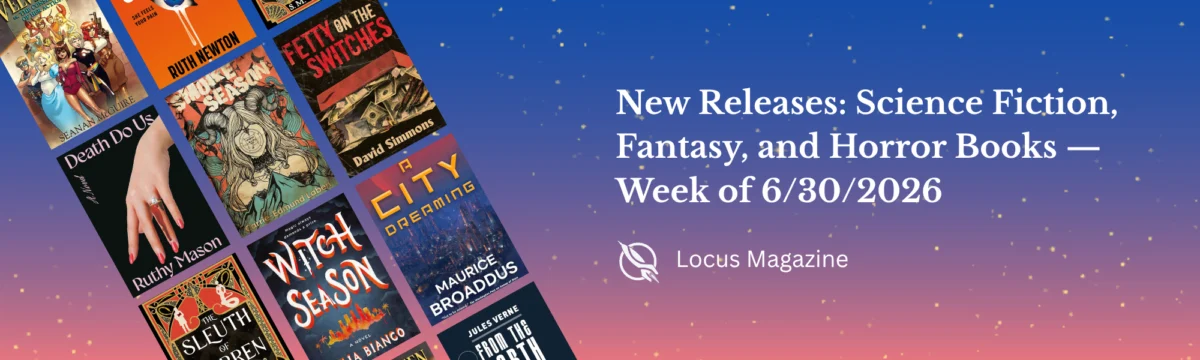
NEW YORK, NY – June 28, 2026 – As the summer of 2026 officially kicks into high gear, the literary world is abuzz with an exceptional wave of new releases spanning the dynamic realms of Fantasy, Romantasy, Science Fiction, and Horror. The publishing calendar for late June and early July is particularly dense, offering an impressive array of titles from both celebrated masters and promising debut authors, signaling a vibrant and evolving landscape for speculative fiction. Readers are invited to dive into new worlds, confront unsettling realities, and embark on epic romantic quests, with a collection that underscores the genre’s expansive creativity and commercial vitality.

This comprehensive roundup, curated by industry authority Locus Magazine, highlights an eclectic mix of novels, novellas, and collections, ensuring that every fan of the fantastic finds their next captivating read. From dark academia to cozy sci-fi, and from intricate political fantasies to chilling cosmic horrors, the sheer diversity of storytelling on display is a testament to the boundless imagination driving these popular categories. As these new titles hit shelves and digital platforms, they not only offer immediate escapism but also contribute to ongoing dialogues about societal issues, personal journeys, and the very nature of reality.

The anticipation surrounding these releases is palpable, with many titles already garnering significant pre-publication buzz. Readers are encouraged to visit their local bookstores or online platforms like Bookshop.org, as recommended by Locus Magazine, to acquire these fresh narratives and, in doing so, support both independent booksellers and the crucial work of genre journalism.

A Chronology of Imagination: Week’s Top Releases
The period spanning June 30th to July 2nd, 2026, marks a significant moment for genre enthusiasts, with a concentrated release schedule delivering a diverse harvest of stories.

June 30, 2026: A Deluge of Worlds and Wonders
The last day of June is set to be a blockbuster for new publications, with a particularly rich selection across all major speculative fiction categories.

Young Adult & Romantasy Takes Center Stage:

- S.M. Beiko’s The Sleuth of Ferren City (ECW Press) continues the beloved Brindlewatch Quintet with its third installment. This young-adult fantasy plunges readers back into a world where enigmatic "Monstros" emerge, seeking acceptance. Yet, Camillite Sable, ever the suspicious sleuth, finds herself embroiled in a deeper mystery as she hunts for a missing friend. Beiko masterfully blends themes of prejudice, identity, and the quest for belonging against a backdrop of unfolding magical intrigue, making it a compelling read for fans of character-driven fantasy.
- Julia Bianco’s Witch Season (St. Martin’s), the inaugural novel in the Broken Coven series, introduces an urban fantasy romance with a sharp edge. Katherine, a formidable enforcer for the powerful LA Aestas coven, finds her methods and patience tested by Silas, the arrogant scion of the rival Noctis coven. Their forced proximity promises a volatile mix of magical politics, simmering tension, and undeniable attraction, appealing directly to the burgeoning "romantasy" readership.
- Brianna Bourne’s Meet Me at Midnight (Penguin Random House/Delacorte) offers a captivating young adult fantasy romance. Aria’s nocturnal dreams become a vivid reality as she repeatedly encounters the same mysterious boy in breathtaking, fantastical locations. This premise explores the boundaries of dreams and reality, destiny and choice, with a narrative rich in wonder and the blossoming of first love.
- Dana Swift’s When Dealing with Dragons (St. Martin’s/Wednesday Books) presents another enchanting YA romantic fantasy. Farren Walsh, determined to follow in her father’s footsteps as a dragon veterinarian, finds her ambition complicated when her arrogant rival, James Murphy, interns at her family’s sanctuary. This novel expertly crafts an "enemies-to-lovers" dynamic amidst the fascinating world of magical creature care, full of charm and adventure.
- Emily Varga’s The River She Became (St. Martin’s/Wednesday Books) is a YA romantic fantasy that follows Yaseema, a diligent scholar who archives fae relics by day and secretly seeks to unlock their ancient magic by night. Her discovery of a key to the fae realm sets her on a perilous quest to save her threatened land, weaving together elements of destiny, forbidden knowledge, and burgeoning romance.
Expansive Sci-Fi and Thrillers:

- Maurice Broaddus’s A City Dreaming (Tor) marks the highly anticipated third entry in the Astra Black trilogy. This science fiction novel expands the intricate tapestry of the Muungano empire, a vast collection of city-states spanning the solar system, as it faces the ominous approach of a new, formidable empire. Broaddus is known for his sharp prose and insightful exploration of power dynamics and cultural clashes on an epic scale.
- Jayne Castle’s Enter the Nightmare (Penguin Random House/Berkley), part of her popular Harmony series, delivers a gripping science fiction thriller. Alice’s life unravels after a stay at the enigmatic Hotel of Dreams, culminating in a dead body and a mysterious rescuer. Castle, also known as Jayne Ann Krentz and Amanda Quick, skillfully combines futuristic elements with suspense and romance, crafting a narrative that keeps readers on the edge.
- Rebecca Thorne’s Moss’d in Space (Tor/Bramble) introduces a refreshing take on the genre with its cozy science fiction premise, kicking off the Moss’d in Space series. Torian’s purchase of an abandoned alien starship leads to the delightful discovery of Moss, an organic computer entity left behind by its previous owner. This novel promises humor, warmth, and gentle mystery, offering a comforting contrast to the often-gritty sci-fi landscape.
- Paul Tremblay’s Dead but Dreaming of Electric Sheep (HarperCollins/Morrow) delves into near-future science fiction horror. Gamer Julia accepts a morally complex temp job: "remote-controlling" a comatose man across the country using AI tech embedded in his brain. The line between control and consciousness blurs as the man begins to stir, promising a chilling exploration of technology, ethics, and the fragility of the human mind, with a clear nod to Philip K. Dick.
- Jeremy Szal’s Wolfskin (Orion UK/Gollancz), the third book in The Common series, plunges readers into a high-octane science fiction narrative. Vakov, a Reaper injected with alien DNA for enhanced abilities, must confront a dangerous cult and the genocidal Shenoi race, the very source of his powers. Szal delivers relentless action and complex moral quandaries in a universe brimming with alien threats and advanced warfare.
- Daniel Rirdan’s The Woman Who Touched the Sun (Corino Press) is an intriguing science fiction novel about a woman from Nebraska with a samurai bloodline who builds a spaceship in her barn to journey to the fiery reaches of space. This imaginative tale promises a unique blend of heritage, ambition, and cosmic exploration, offering a fresh perspective on interstellar travel.
- Ruth Newton’s The Carrier (Penguin Random House UK/Bantam UK), a debut SF thriller, explores a dystopian future where people can transfer emotional pain to "Carriers" for a fee. The catch? These Carriers invariably end up dead. This chilling premise promises a deep dive into the ethics of suffering, privilege, and the true cost of emotional freedom.
Dark & Diverse Fantasies:

- Linda H. Codega’s Pasha the Storm (Kensington/Erewhon) is a compelling fantasy novel featuring Pasha, an exiled pirate queen held hostage by nobleman Atle. As Atle’s necromantic queen grows dangerously ambitious, he draws Pasha into his own treasonous plots, setting the stage for a high-stakes narrative of political maneuvering, betrayal, and unlikely alliances.
- Angela Mi Young Hur’s The Loom Tree (Kensington/Erewhon) offers a dark academia fantasy with a strong emotional core. Korean American teenager V discovers a magical tree trunk that unlocks her mother Sharon’s diary, revealing secrets from her terrifying magical boarding school, Alvsdahl. The novel promises a rich exploration of heritage, hidden magic, and the shadows of the past.
- V.V. James’s Redhaven (Orion UK/Gollancz), set in the expansive Sanctuary universe, follows Sarah and her daughter Harper as they flee a government crackdown targeting witches in America. This fantasy novel delves into themes of persecution, survival, and the enduring bond between mother and child in a world hostile to magic.
- Sophie Kim’s The Winged Game (Penguin Random House/Del Rey) is a unique sports fantasy romance. Taissa, a former player of the magical airborne sport Carriwitchet, is offered a chance to return to the game by Kion, the rival who derailed her career. This novel combines the thrill of competitive sports with magical realism and a compelling redemption arc.
- L.E. Modesitt’s Last of the First (Tor) marks the 26th installment in the beloved Sage of Recluce series. Mirror Lancer Alyiakal’s promotion to Subcommander thrusts him into a viper’s nest of treachery within Cyador’s high command. Modesitt continues to deliver intricate political fantasy, focusing on the nuanced struggles of power and morality.
- Jo Walton’s Everybody’s Perfect (Tor) is a charming fantasy novel set in Serenissima, a mirror city to Venice. Laborer Tiry shares a collective dream with many citizens: for their city to have a doge and marry the sea. Walton’s distinctive voice brings to life a world rich in collective unconsciousness, civic pride, and magical realism.
Horror’s Darkest Corners:

- Amber Hathaway’s Hallowed Deadly Seeds (Deadly Seeds Press), the second book in the Little White Flowers series, traps Alice Drayton and her brother in isolated Evanston, Maine, where a twisted religious community is determined to assimilate them. This horror novel promises escalating dread and a chilling exploration of fanaticism and survival.
- Carrie-Edmund Laben’s Smoke Season (Word Horde) delivers cosmic horror in a remote Montana commune. Justin’s search for his estranged sister Helen, now a worshipped figure, leads him into conflict with a government agency intent on wiping her out. Laben crafts a terrifying narrative of cults, paranoia, and existential dread.
- Ruthy Mason’s debut novel, Death Do Us (Hachette/Union Square & Co.), is a visceral body horror tale. Young archaeologist Bea, feeling increasingly suffocated by her impending marriage, begins to experience her skin and hair falling off. This novel promises a disturbing exploration of societal pressures and physical transformation.
Collections and Classics:

- Seanan McGuire’s Velveteen vs. The Consequences of Her Actions (Subterranean Press) is a monumental collection of 33 stories featuring the popular superheroine, including 16 never-before-published tales. This limited edition hardcover is a must-have for fans of McGuire’s witty and inventive superhero narratives.
- Jules Verne’s From the Earth to the Moon: Annotated for Our Spacefaring Age (MIT Press) is a timely reprint of the classic 1865 science fiction novel. This edition features detailed annotations and essays by contemporary SFF writers and scientists like Samit Basu, Jordan Bimm, Erika Nesvold, Adam Oyebanji, Malka Older, Adam Roberts, and Asif Siddiqi, making it essential for understanding the historical roots of space exploration fiction.
July 1, 2026: Midweek Mysticism and Mayhem
The turn of the month brings another set of intriguing titles, delving into witchcraft, philosophical horror, and the sinister side of AI.

- Steve Berman’s Witchcraft in Your Lips (Lethe Press) is a captivating anthology comprising six novellas (one reprint) that explore themes of witches and queer love. From bog spirits to the legend of Bloody Mary, the collection features contributions from Steve Berman, Mia Dalia, L.A. Fields, Joachim Heijndermans, Audrey R. Hollis, and Ivy L. James, offering a diverse and enchanting array of magical tales.
- Eric Hofstatter’s Pain Is a Chain. Move, and I’ll Hear You (Aqueduct Press) is a unique prose-poetry book with strong fantasy and horror elements, part of the Conversation Pieces series. This experimental work promises a deep, unsettling dive into language and the subconscious.
- Gregg Hurwitz’s The Delivery (Amazon/Thomas & Mercer) is a chilling science fiction novella. Struggling parents Rebecca and Mark welcome "Mr. Man," an AI companion, into their home for help. However, violent incidents soon begin to plague their neighborhood, raising disturbing questions about the true cost and hidden dangers of advanced artificial intelligence.
- Liz Shipton’s Mother & Slaughter (Tyrannosaurus Yes), illustrated by Daniel Lorca, is a compelling fantasy novel set in Draconia, a kingdom where women must choose between motherhood and gladiatorial combat. Star combatant Eleanor finds herself unexpectedly pregnant and embarks on a perilous journey outside the kingdom to seek a mythical witch, challenging societal norms and embracing a quest for agency.
- David Simmons’s debut collection, Fetty on the Switches (Clash Books), gathers 21 crime, horror, and love stories set in an alternate Baltimore where the dead rise. Citizens grapple with phantasmagoric situations, from biology-class vivisections to serial-killing monsters. Simmons’s collection promises a gritty, surreal, and darkly humorous exploration of a city teetering on the edge of reality.
Supporting the Narrative: Market Trends and Genre Vitality
This latest surge of releases is more than just a seasonal offering; it’s a robust indicator of the sustained health and dynamic evolution of the science fiction, fantasy, and horror (SFFH) market. The sheer volume and thematic breadth of these titles reflect a publishing landscape eager to embrace diverse voices and innovative storytelling.

The prominence of "Romantasy" and "Dark Academia" subgenres speaks to a growing demand for nuanced narratives that blend established tropes with contemporary sensibilities. Similarly, the emergence of "Cozy SF" and "Body Horror" alongside traditional epic fantasies and cosmic terrors showcases the genre’s capacity for constant reinvention and niche appeal. The inclusion of multiple debut authors (Ruthy Mason, Ruth Newton, Emily Paxman, David Simmons) alongside seasoned veterans (Seanan McGuire, L.E. Modesitt, Maurice Broaddus, Jayne Castle) demonstrates a healthy ecosystem that nurtures new talent while catering to established fanbases.

Furthermore, the widespread availability across multiple formats—hardcover, paperback, ebook, and audiobook—underscores publishers’ commitment to accessibility and meeting diverse reader preferences. The involvement of independent presses such as Lethe Press, ECW Press, Word Horde, Aqueduct Press, Clash Books, Corino Press, Deadly Seeds Press, and Tyrannosaurus Yes, alongside major houses like Penguin Random House, Tor, and St. Martin’s, highlights the collaborative spirit and varied platforms that enrich the genre. This blend of mainstream and independent publishing ensures a continuous flow of both commercially viable and artistically daring works.

Industry Acclaim and Reader Anticipation
The release schedule for late June and early July 2026 has been met with significant industry buzz and high reader anticipation. Critics and early reviewers have lauded the thematic depth and narrative innovation present in many of these titles.

Established authors like Paul Tremblay are expected to deliver another round of psychological horror that blurs genre lines, while the latest installments in long-running series from L.E. Modesitt and Maurice Broaddus are eagerly awaited by loyal readers keen to revisit beloved worlds. Seanan McGuire’s comprehensive collection is a particular highlight, offering fans a treasure trove of new and classic superheroine adventures.

Debut authors are also generating considerable excitement. Ruthy Mason’s Death Do Us is already being discussed for its unflinching dive into body horror and its potential to make a significant splash. Ruth Newton’s The Carrier is poised to spark conversations around ethical dilemmas in a technologically advanced society, and David Simmons’s Fetty on the Switches promises a unique, genre-bending vision of Baltimore. The diverse voices and perspectives, particularly in works like V.V. James’s Redhaven and Liz Shipton’s Mother & Slaughter, are celebrated for their social commentary woven into compelling fantasy narratives.

Locus Magazine, in its role as a premier chronicler of the SFFH field, continues to be an invaluable resource for navigating these expansive offerings. Their detailed listings and insightful commentary help readers and industry professionals alike stay abreast of the latest developments and emerging trends, further solidifying their reputation as an essential guide to the fantastic.

Implications for the Future of Genre Fiction
The concentrated release of such a diverse and high-quality selection of genre fiction in late June and early July 2026 carries significant implications for the future trajectory of the SFFH landscape. This publishing boom reinforces several key trends:

Firstly, it underscores the continued appetite for complex, character-driven narratives that push the boundaries of imagination. From the intricate political machinations of Modesitt’s Recluce series to the deeply personal journey in Hur’s The Loom Tree, authors are engaging with themes that resonate deeply with contemporary audiences.

Secondly, the rise of "romantasy" and specialized horror subgenres like "body horror" and "cosmic horror" indicates a maturation of the market, where readers are increasingly seeking out very specific blends of emotional intensity, thematic depth, and thrilling suspense. This specialization allows for greater innovation and caters to a broader spectrum of tastes, moving beyond traditional genre pigeonholes.

Thirdly, the consistent influx of debut authors and the exploration of diverse cultural backgrounds (e.g., S.M. Beiko, Angela Mi Young Hur, Sophie Kim, Cecilia Eudave) signals a healthy and inclusive evolution within the genre. These fresh perspectives are vital for keeping SFFH relevant, challenging, and reflective of a global readership.

Finally, the emphasis on supporting local bookstores and literary institutions like Locus Magazine is crucial. In an increasingly digital and fast-paced world, these entities serve as vital anchors for community, discovery, and critical discourse. Their continued operation ensures that the vibrant conversations around these new releases can thrive, fostering a deeper connection between authors, readers, and the stories that define our collective imagination.

As summer unfolds, these new books promise not only countless hours of engaging reading but also a testament to the enduring power of storytelling to transport, challenge, and inspire. The genre fiction community eagerly awaits the adventures, horrors, and romances that these authors have meticulously crafted.

Locus Magazine relies on reader donations to continue providing quality coverage of the science fiction and fantasy field. Readers are encouraged to support their work through one-time or recurring donations to keep the site paywall-free and ensure the ongoing publication of hundreds of reviews and news stories each year.