2026 Munsey Award Nominees
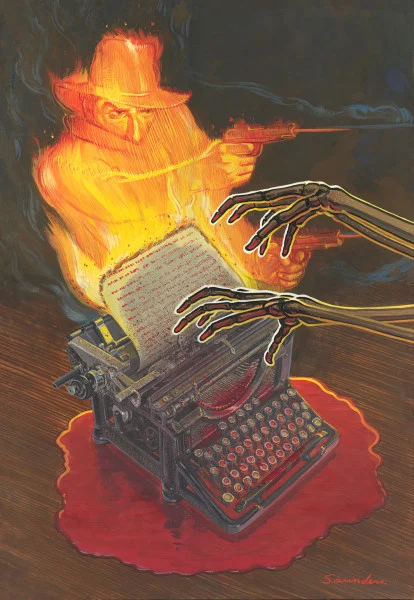
This year’s slate of thirteen nominees represents a diverse cross-section of the community, ranging from digital archivists and small-press publishers to bibliographers and historians. The winner will be announced during a formal ceremony on August 1 at PulpFest, the annual convention that serves as the epicenter for enthusiasts of the "rough paper" era.
The Legacy of the Munsey: A History of Pulp Preservation
To understand the weight of the Munsey Award, one must look back to the late 19th century. In 1896, Frank A. Munsey made a revolutionary decision to transform his magazine, The Argosy, into an all-fiction publication printed on cheap, untrimmed wood-pulp paper. This move democratized fiction, making thrilling stories accessible to the working class and launching a medium that would eventually birth characters like Tarzan, Zorro, and The Shadow.
The Munsey Award was established to honor this spirit of innovation and accessibility. It succeeded the earlier Lamont Award, which had been presented for decades at Pulpcon. Since its rebranding in 2009, the Munsey has become the gold standard for recognizing those who work behind the scenes. These are the custodians of culture who ensure that the fragile, acidic pages of 1930s magazines do not crumble into obscurity, but instead find new life in the digital age.
The selection process is unique in its peer-review rigor. The winner is not chosen by a popular vote, but by a committee consisting of all living recipients of the Lamont, Munsey, and Rusty Awards. This "council of elders" ensures that the honor remains tethered to long-term service and genuine impact on the field.
Profiles in Excellence: The 2026 Nominees
The 2026 nominees highlight the multi-faceted nature of modern pulp fandom. While the era of the original newsstand pulp ended in the 1950s, these individuals have ensured the medium’s DNA survives in contemporary literature and art.
The Publishers and Revitalists
John Betancourt stands as a titan of modern genre publishing. As the head of Wildside Press, he has pioneered the "Megapack" format, making thousands of rare pulp stories available to a global audience via ebooks. His tenure as an editor at Amazing Stories and his successful efforts to revive Weird Tales (which won a Hugo Award under his watch) and Startling Stories demonstrate a career-long commitment to keeping classic titles in circulation.
Dan Zimmer represents the visual side of this preservation effort. Through Illustration Magazine and The Illustrated Press, Zimmer has elevated pulp art from "cheap commercial work" to the status of fine art. His high-end, deluxe biographies of artists like Walter Baumhofer and Norman Saunders provide a scholarly record of the illustrators who defined the American visual imagination for half a century.
The Historians and Bibliographers
Jess Nevins is perhaps the world’s foremost authority on the "Costumed Avenger." His monumental works, including The Encyclopedia of Pulp Heroes, provide an exhaustive roadmap for researchers. As a reference librarian, Nevins brings academic discipline to the often-chaotic world of pulp bibliography, tracing the evolution of superheroes from 19th-century "Scientific Romances" to the modern era.
Henry G. Franke III has become the primary guardian of the Edgar Rice Burroughs legacy. As the editor of The Burroughs Bulletin, Franke has bridged the gap between old-school fandom and modern academia. His work on the Tarzan newspaper strips helped secure an Eisner Award, proving that pulp scholarship has a place on the highest stages of the comic and literary worlds.
The Community Pillars and Collectors
Sheila Vanderbeek represents the "Shadow" of the pulp world—the essential, often invisible force that makes research possible. Owning one of the most comprehensive private collections in existence, she has been a primary source for countless reprint houses, including Steeger Books and Battered Silicon Press. Without collectors like Vanderbeek, many of the stories being enjoyed by new readers today would be physically lost to time.
Steve Lewis and Brian Earl Brown exemplify the "letterhack" tradition—the dedicated fans who turned their passion into long-running critical journals. Lewis’s MysteryFile* has transitioned from a print fanzine to a vital online hub over 50 years, while Brown’s three-decade leadership of the Pulp Era Amateur Press Society (PEAPS) has fostered a community of writers and historians who might otherwise have worked in isolation.
The Creative Inheritors
William Patrick Maynard and Chris Kalb show how the pulps continue to inspire new creative work. Maynard, authorized by the Sax Rohmer estate to continue the Fu Manchu series, treats the source material with a blend of reverence and modern narrative sensibility. Kalb, conversely, has used his skills as a designer to create the visual identity of modern pulp fandom, from the websites for The Spider to the retro-aesthetic of Age of Aces Books.
The "Fans of Bronze"
The Doc Savage community is particularly well-represented this year. Howard Wright, the founder of The Bronze Gazette, and Chuck Welch, its current publisher and creator of the Hidalgo Trading Company website, have spent decades ensuring that the "Man of Bronze" remains a cultural icon. Their work demonstrates how a single character can anchor a subculture for generations.
The Biographers
Audrey Parente has spent her career documenting the lives behind the bylines. Her biographies of writers like Hugh B. Cave and Theodore Roscoe provide a human context to the "word-factory" era of the 1930s. Her work with Bold Venture Press continues to bring pulp-style adventure to modern audiences.
Supporting Data: The Vitality of the Pulp Market
The nomination of these thirteen individuals comes at a time of surprising growth for the pulp community. Industry data suggests that while traditional print media faces challenges, the "niche nostalgia" market is thriving.
- Digital Accessibility: Thanks to the work of nominees like Betancourt and Nevins, over 10,000 "lost" stories have been digitized in the last decade.
- Auction Records: Original pulp magazines and cover art have seen a 300% increase in value at major auction houses over the last 15 years, driven by the historical context provided by researchers like Zimmer and Franke.
- Convention Growth: PulpFest and its sister convention, Windy City Pulp and Paper, have reported steady attendance growth, with an increasing number of younger attendees citing digital archives and "New Pulp" fiction as their entry points.
Official Responses and Selection Criteria
The PulpFest Organizing Committee emphasized that the breadth of this year’s list reflects the "all-encompassing" nature of the pulp influence. "The Munsey Award is not just about who has the most magazines," noted a spokesperson for the committee. "It is about who has done the most to ensure these magazines matter to the next generation. Whether that is through a website, a scholarly book, or a reprint series, these nominees are all essential to the ecosystem."
The committee also highlighted the importance of the August 1 announcement date. "PulpFest is more than a marketplace; it is a homecoming. Announcing the winner there, in front of their peers and the fans who benefit from their work, is a tradition we hold dear."
Implications: Why the Munsey Matters in 2026
The 2026 Munsey Award nominations arrive at a critical juncture for archival history. As the world moves further into a purely digital existence, the physical artifacts of the 20th century—the garish, fragile magazines that gave us Noir, Sci-Fi, and the Superhero—face the threat of literal disintegration.
The work of these nominees ensures that the pulp era is not remembered merely as a footnote in publishing history, but as the foundation of modern popular culture. By honoring the editors, the bibliographers, and the collectors, the Munsey Award validates the idea that "disposable" fiction is, in fact, a permanent part of the human story.
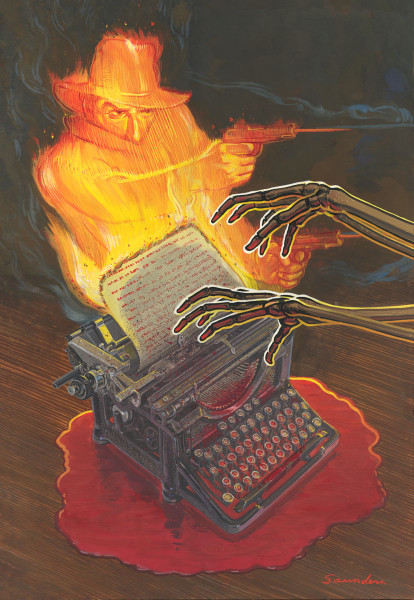
As August 1 approaches, the pulp community waits with bated breath. While only one individual will take home the David Saunders-designed award print, the collective work of these thirteen nominees ensures that, regardless of the winner, the legacy of Frank A. Munsey is in safe hands.