
Isabel J. Kim’s "Sublimation" Explores the Profound Cost of a Divided Self
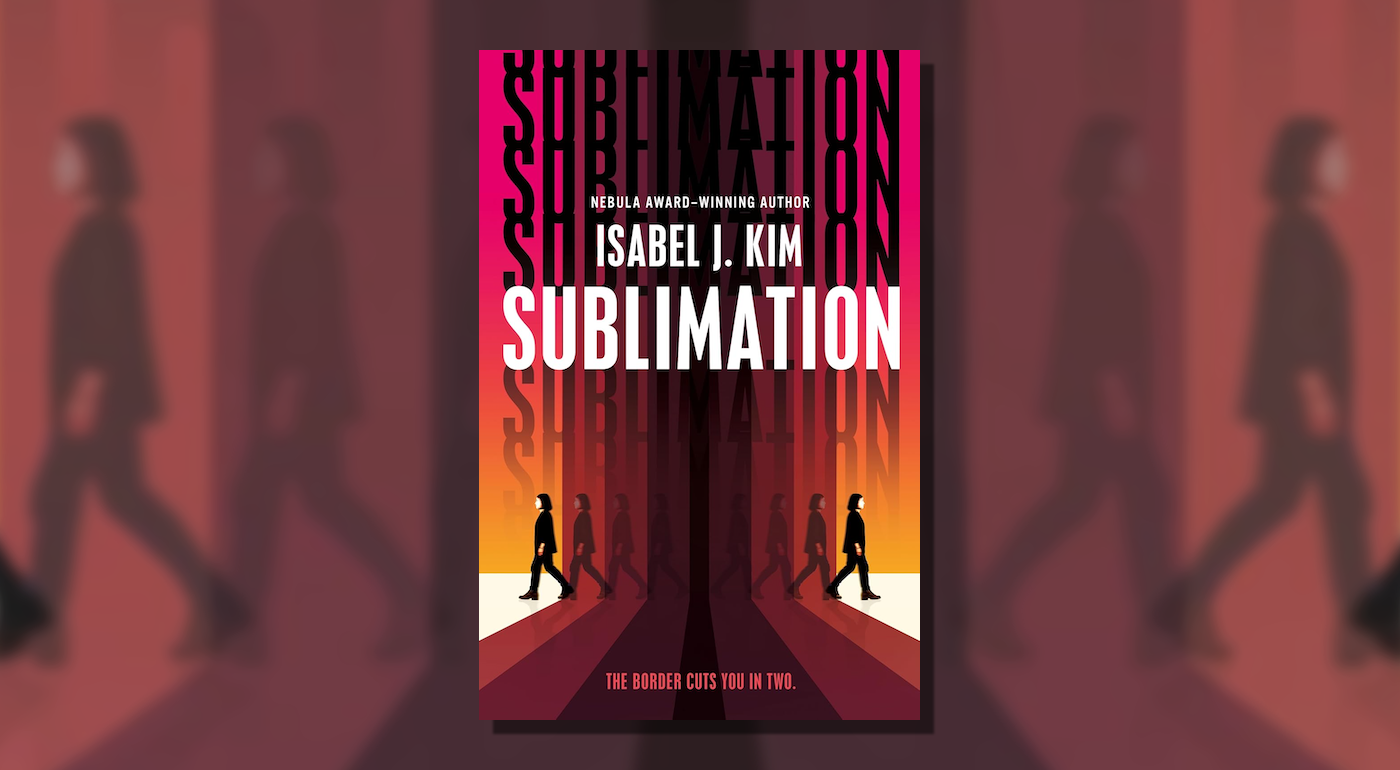
NEW YORK, NY – What defines a life, a self, a choice? And what unseen price is paid when that definition is split, literally, in two? These are the haunting questions at the heart of Isabel J. Kim’s highly anticipated science fiction novel, Sublimation, set to publish with Tor Books on June 2nd. The novel plunges readers into a world where the act of immigration can cleave an individual into "instances"—twin selves, one rooted in the homeland, the other venturing into a new life abroad. A recently released excerpt offers a visceral glimpse into this unsettling reality, focusing on two such instances, Soyoung and Rose Kang, whose lives are irrevocably intertwined by a family tragedy and a dangerous desire for reintegration.
Kim’s narrative masterfully navigates the treacherous psychological terrain of dual identities, exploring themes of belonging, sacrifice, and the very nature of personal continuity. At its core, Sublimation asks: how far would one go to live the life they didn’t choose, or reclaim the one they left behind?
Unpacking the Phenomenon: Instancing and Identity
The concept of "instancing" forms the foundational premise of Kim’s world, presenting a profound, almost mythical, twist on the immigrant experience. As the excerpt explains, "When you immigrate, you leave a copy of yourself behind, an instance. One person enters their new country; the other stays trapped at home." This isn’t merely a metaphorical splitting but a physical, sentient duplication, creating two distinct yet intrinsically linked individuals from a single origin.
The Genesis of a Divided Self
The novel grounds this fantastical element with a compelling blend of historical and sociological context. Instancing, it reveals, is not a modern marvel but a phenomenon with ancient roots, first referenced in Hammurabi’s Code, decreeing that "the foreign brother-self will receive no inheritance." This historical weight immediately establishes the deep-seated societal implications of a divided self, highlighting how legal and cultural frameworks have long grappled with such an existential dilemma.
Traditionally, instancing is linked to seafaring societies, where the vastness of the ocean served as a symbolic and literal border, delineating the familiar from the foreign. This suggests a profound connection between physical displacement and the psychological rupture that precipitates instancing. The critical element, however, is "intent." It’s not merely the act of travel but a subconscious, "secret admittance that their leave-taking is permanent, that their families have become foreign to them," that triggers the cleaving. This adds a layer of psychological complexity, implying a deeply personal, almost spiritual, commitment to the new path that manifests physically.
Cultural Echoes and Philosophical Quandaries
Different cultures, the excerpt notes, have developed their own terminologies for instances: "the sibling-self, the changeling, the one-who-does-not-return." This diversity underscores the universal impact of such a phenomenon while reflecting varied societal responses to it. The poignant folktale of the fisherman, ensnared by a water spirit and returning decades later to find his "instance" living his life, serves as a powerful allegory for the emotional and temporal disjunction that instancing creates. It foreshadows the potential for violence and tragic yearning when two versions of a life converge.
The Weight of a Choice: Soyoung’s Perspective
The narrative primarily unfolds through the alternating perspectives of the two instances of Soyoung Kang. The first, "Soyoung," is the Korean instance who remained in Seoul, her life a continuation of the one split from at age ten. Her world is thrown into turmoil by the death of her grandfather, a catalyst that compels her to contact her American counterpart, Rose.
The Burden of the Unchosen Life
Soyoung’s internal monologue reveals a complex tapestry of grief, guilt, and a simmering resentment. Her grandfather’s death, while expected, evokes a profound sense of loss that she struggles to reconcile with a perceived "relief" – "the relief of foregone conclusions." This emotional dissonance fuels her morbid curiosity about reintegration, leading to a chilling conversation with her friend Yujin. "Do you think it’s emotionally equivalent to murder?" she asks, hinting at the true depth of her desperation. Yujin, who speaks of his own instance with hope, represents a contrasting view, making Soyoung’s question all the more unsettling.
Soyoung’s decision to call Rose, her American instance, is not born of simple familial duty but a calculated desire. She confesses to Yujin that she is "sick to [her] stomach with want," implying a longing that transcends grief. The detail of the "MERGEBREAK" cuff, a rubberized band she wears, further emphasizes her covert intention for reintegration—a desire to absorb Rose’s experiences and perhaps, her very being.
A Landscape of Lost Magic
The setting for their impending reunion, the bustling basement of the Shinsegae Department Store, serves as a poignant backdrop for Soyoung’s emotional state. Once a childhood haven, it now appears "smaller, shabbier, too loud and not as wondrous." This altered perception mirrors her internal disillusionment, her yearning for a past that no longer exists, and perhaps, a life that she feels was stolen from her. Her hope that the store will feel "perfect" for Rose, allowing Soyoung to "experience that perfection again" through her, underscores the symbiotic, yet predatory, nature of her desire for reintegration. It’s not just about merging; it’s about reclaiming a perceived lost ideal.
The Echo of a Life: Rose’s Perspective
Across the globe, "Rose" (formerly Soyoung Kang) has built a life in America, deliberately distancing herself from her Korean past. Her world, too, is disrupted by the late-night call from her instance, pulling her back to a country that now feels profoundly foreign.
Abstract Grief and Manufactured Distance
Rose’s grief for her grandfather is "abstract," a "hollow grief of losing something you already assumed had dissipated into the past." Her decade-long separation from him, marked by perfunctory birthday calls and a lack of genuine connection, highlights the emotional cost of instancing. She describes her Korean family as a "vestigial limb," a part of herself she willingly allowed to atrophy in favor of her American identity.
Her initial interaction with Soyoung over the phone is fraught with a disorienting familiarity and an underlying tension. Soyoung’s use of "banmal" (informal speech) despite their long separation, and her blunt announcement of the death, further emphasizes the chasm between them. Rose’s decision to return, despite her reluctance, speaks to a residual sense of obligation, a recognition that some ties, even those severed by instancing, cannot be entirely ignored.
The Paradox of Reintegration
Rose’s experience is juxtaposed with that of her friend, Clarissa, who instanced after moving to Germany. Clarissa’s casual discussion of reintegration—her decision to return to America and merge with her original self—presents a seemingly benign, almost bureaucratic, aspect of the process. This contrast highlights the spectrum of outcomes and intentions surrounding instancing. For Clarissa, reintegration is a practical consideration, a logical next step. For Soyoung, it is an urgent, all-consuming desire bordering on obsession. For Rose, it is an unsettling, unspoken threat.
When Rose finally meets Soyoung in the Shinsegae Department Store basement, the uncanny familiarity is immediate, yet unsettling. "Here is your sister-self, your shadow-could-have-been, the woman you are in another country." The subtle differences—Soyoung’s black Americano preference versus Rose’s caramel macchiato—serve as potent symbols of their diverged paths, each choice a testament to the lives they’ve forged apart. The shared laughter, described as "something like release," momentarily masks the profound underlying tension and Soyoung’s hidden agenda.
The Philosophical Core: What It Means to Be
Sublimation delves into the profound philosophical implications of instancing, pushing readers to question the very definition of self, memory, and choice. The novel posits that "an instancing captures a static moment. A feeling in a specific time and place." Yet, human lives are dynamic, constantly evolving. This creates an inherent tension between the static origin of an instance and the fluid reality of ongoing existence.
Identity in a Pluralistic State
The administrative and governmental responses to instancing further complicate this existential puzzle. America, for instance, "considers an instance as a whole and complete person, as mandated in the nation’s founding documents." This legal recognition of each instance as a full individual contrasts sharply with the personal and emotional reality of their shared origin. The excerpt hints at the complex bureaucratic hurdles of "reintegration," particularly when it involves international borders and differing national perspectives on identity and citizenship. The phrase "a government is made of many human hearts" suggests the inherent biases and complexities in establishing legal frameworks for such a deeply personal phenomenon.
The Dark Side of Homecoming
The chilling second half of the fisherman’s folktale serves as a brutal allegory for the potential violence inherent in reintegration. The sailor, returning to find his instance living his life, is consumed by "a great and terrible anger." His act of plunging a knife into his other self, only for them to merge into a single, wounded body, is a stark warning. "Intention does not matter in homecoming. There is no requirement of desire to return for reintegration. What matters is the physical action, the touch of skin against skin." This chilling revelation suggests that reintegration might not be a consensual or even conscious act, but rather a dangerous, potentially violent, collapse of two selves into one, regardless of the consequences for the individuals involved. It recontextualizes Soyoung’s "emotional murder" question from a philosophical query into a terrifying literal possibility.
Beyond the Excerpt: Broader Implications and Themes
Isabel J. Kim’s Sublimation promises to be a powerful exploration of identity in an age of global movement and increasingly permeable boundaries, both physical and personal. The excerpt provides a compelling foundation, but the full novel is poised to expand on these profound implications:
Ethical Dilemmas of Reintegration
The ethical quandaries surrounding reintegration are immense. What happens to the memories, experiences, and personalities of the instance that is absorbed? Is it truly a "merge," or is it effectively an erasure, a form of existential murder, as Soyoung contemplates? The novel will undoubtedly delve into the psychological aftermath for the surviving merged individual, exploring the burden of living with a composite self and the echoes of a life not fully their own. The very idea challenges our understanding of individual autonomy and consciousness.
Societal Impact and Legal Frameworks
The administrative state’s role in managing instancing and reintegration presents fertile ground for exploration. How do governments regulate such a phenomenon? What are the legal rights of instances, particularly in cases of dispute or forced reintegration? The novel’s subtle hints about embassies, visas, and citizenship suggest a complex global bureaucracy struggling to keep pace with an deeply personal, almost mystical, human condition. This could lead to a deeper examination of international law, human rights, and the evolving definition of personhood in a world with dual selves.
The Immigrant Experience Reimagined
Ultimately, Sublimation offers a powerful, fantastical lens through which to examine the profound psychological and emotional costs of immigration. The literal splitting of the self amplifies the feelings of cultural displacement, lost identity, and the perpetual longing for a home that may no longer exist. It externalizes the internal struggle of many immigrants—the feeling of living two lives, one tied to the past, the other forging a new future. The novel’s central question, "what you’d sacrifice for a different life," resonates deeply with the choices and compromises inherent in the immigrant journey.
Isabel J. Kim’s Sublimation is shaping up to be a thought-provoking and emotionally charged work of science fiction. Through the captivating and unsettling tale of Soyoung and Rose Kang, the novel invites readers to confront universal questions about selfhood, belonging, and the enduring human desire to reconcile the lives we lead with the lives we might have lived. The journey of these two instances promises to be a visceral and unforgettable exploration of the ties that bind and the choices that define us.




Leave a Comment