
Nuart Aberdeen Unveils Groundbreaking Street Art Festival: A Poetic Revolution on the City’s Canvas
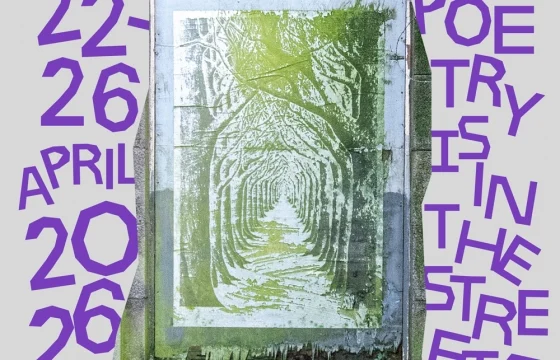
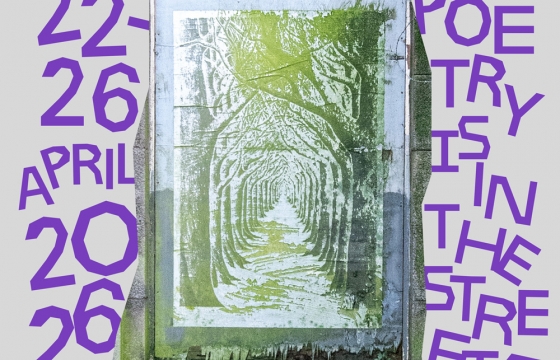
Aberdeen, Scotland – April 22, 2026 – The vibrant streets of Aberdeen are set to transform into an open-air gallery once again as Nuart Aberdeen, a globally recognized street art festival, returns for its latest iteration from April 22nd to April 26th, 2026. This year, Nuart Aberdeen is poised to make history by presenting what is believed to be the world’s first major street art festival with a primary focus on poetry and text-based artistic expressions. This bold curatorial decision signals a significant departure from the dominant large-scale figurative murals that have largely defined the street art landscape in recent years, aiming to democratize the art form and inspire a new generation of creators.
Nuart Aberdeen, under the visionary leadership of founder and curator Martyn Reed, has long championed the city as a dynamic canvas, pushing the boundaries of public art beyond mere wall embellishments. This year’s festival, however, represents a deliberate and profound shift, seeking to harness the raw, accessible power of language and poetry to engage with the urban environment and its inhabitants on a deeply personal level.
A Departure from the Monumental: Embracing the Power of Words
For years, the street art world has been captivated by the sheer visual impact of large-scale, colorful, and often figurative murals. While Nuart Aberdeen acknowledges and supports this facet of the culture, Reed highlights a critical observation: the immense resources required for such productions can inadvertently limit their accessibility and democratic reach. "Due to the resources required to produce murals, they’re perhaps also the least democratic form of art on the streets," Reed states in his curatorial note.
This realization has been a driving force behind Nuart’s evolving philosophy. As curators, researchers, and producers operating within the "festival" sphere, there’s an inherent responsibility to not only showcase technical mastery but also to foster the growth and survival of the street art culture itself. The most potent way to achieve this, according to Reed, is to actively inspire and empower individuals who may not possess a formal fine art education or privileged access to the arts.
"Nuart’s primary goal has always been not just to produce art, but to also inspire and produce the next generation of artists," Reed emphasizes. This ambitious objective often navigates a delicate balance with the practical demands of sponsors and partners. The aspiration is to move beyond awe-inspiring spectacles that leave the viewer feeling detached, towards creations that resonate on a personal level, prompting a desire to participate. "A lofty goal, particularly as it’s often in conflict with the stated needs of sponsors and partners, on paper at least, and no one stands in front of a Tower block mural and thinks, ‘I’ll pop home and have a go myself on the gable end of Gran’s house.’"
The Genesis of a Poetic Revolution: Echoes of Banksy and Parisian Uprisings
The inspiration for this poetic turn in Nuart Aberdeen’s trajectory stems from a confluence of observations and historical moments. Reed points to the profound impact of smaller, more human-scale interventions – stencils, paste-ups, and guerrilla art – as catalysts for grassroots creativity. The ease with which an artist like Banksy can create iconic works using simple tools like a craft knife, cardboard, and an idea, has, in Reed’s view, formed the very bedrock of this culture. "We’ve seen this happen time and time again," he notes. "Indeed, several of the producers and artists joining us this year started their artistic journey as assistants and volunteers at Nuart."
The festival’s commitment to exploring new forms and ideas has been a constant thread throughout its history. Nuart Aberdeen has consistently strived to view the entire city as a canvas, not just individual walls. This experimental spirit has been bolstered by the support of forward-thinking partners, and 2026 is no exception.
Reed’s contemplation of how to balance the expectations of partners and tourist boards with the imperative to captivate the public and spark scholarly interest, while simultaneously inspiring nascent artists, led him to a powerful imaginative exercise. He envisioned a city devoid of public art, where all artistic expression was sequestered within guarded institutions. This stark image then evoked a memory of the 1968 student uprisings in Paris, a period of explosive creative energy that saw the streets become a canvas for radical thought. A potent piece of graffiti from that era proclaimed, "La poésie est dans la rue" – "Poetry is in the Streets." This powerful declaration resonated deeply, posing the question: could Nuart harness that same electrifying energy to revitalize and invigorate the street art culture?
The answer began to crystallize further with a recollection of pioneering UK graffiti writer Mode2. He had once articulated the reason for graffiti’s explosive growth in the UK during the 1980s. He observed that for many, particularly those who struggled with traditional art education, the advent of graffiti offered an accessible entry point. "If you couldn’t draw or paint realistically, you were bottom of the class," Mode2 had remarked. "Then graffiti came along, and it struck everyone that all you had to know to create and engage with it was your ABC’s."
These two seemingly disparate yet interconnected moments – the revolutionary spirit of Parisian street declarations and the foundational accessibility of early graffiti – coalesced to form the conceptual bedrock of this year’s Nuart Aberdeen. The festival is now poised to celebrate forms of creative expression that are universally accessible, fostering a hope that the public will experience the same imaginative spark that was ignited by early bubble letters and Banksy stencils.
A Chronological Evolution of Nuart’s Vision
Nuart Aberdeen’s journey has been one of consistent innovation and a deep commitment to redefining the boundaries of public art. While the 2026 festival marks a distinct pivot towards text and poetry, its underlying ethos of community engagement and artistic development has been a constant.
- Early Years and Foundation: Nuart Aberdeen initially established itself by showcasing prominent figures in the large-scale mural tradition. This phase was crucial in building the festival’s reputation and attracting a broad audience, demonstrating the transformative power of art on an urban scale.
- Expansion of Scope: As the festival matured, its curatorial vision broadened. Beyond individual walls, Nuart began exploring the urban fabric itself as a site for artistic intervention, encouraging artists to think about the city as a holistic entity. This included performances, installations, and site-specific works that engaged with public spaces in novel ways.
- Focus on Accessibility and Participation: A recurring theme in Nuart’s programming has been the desire to democratize art. The festival has consistently sought opportunities to involve local communities, engage aspiring artists through workshops and volunteer programs, and highlight artists whose work resonates with accessibility and social commentary. The success of smaller, more immediate art forms like stencils and paste-ups has informed this evolving approach.
- The Poetic Turn (2026): The 2026 edition represents a deliberate and significant evolution. By prioritizing poetry and text-based art, Nuart Aberdeen is actively seeking to tap into a universal language and a form of expression that requires no specialized artistic training, only the fundamental building blocks of literacy and an idea. This move is a direct response to the festival’s ongoing commitment to fostering creativity and ensuring the long-term vitality of street art culture.
Supporting Data: The Impact of Accessible Art Forms
The rationale behind Nuart Aberdeen’s focus on text-based art is supported by observable trends in street art culture and the broader impact of accessible creative outlets.
- The Banksy Effect: The global phenomenon of Banksy’s stencil work demonstrates the immense reach and influence of art that is conceptually simple yet powerfully executed. His art, often accompanied by witty or politically charged text, requires no specialized artistic skill to appreciate or, as seen in countless imitations, to replicate. This accessibility has inspired millions to engage with street art, both as viewers and as potential creators.
- The Rise of Text-Based Art: Beyond Banksy, numerous artists have found success and resonance through text-based interventions. From Shepard Fairey’s OBEY Giant campaign, which frequently incorporates slogans, to the more recent proliferation of typographic street art, the power of words to convey messages, provoke thought, and create immediate impact is undeniable.
- Community Engagement Metrics: While specific data for Nuart Aberdeen’s previous festivals is not detailed here, the general trend in public art festivals indicates that programs emphasizing community participation, workshops, and interactive elements often report higher levels of local engagement and positive sentiment. The accessibility of text-based art naturally lends itself to broader participation.
- Empirical Observation of Artist Development: Reed’s observation that several artists and producers involved in the 2026 festival began their journeys as assistants and volunteers at Nuart highlights a tangible pathway for emerging talent. The festival’s consistent support for grassroots development, now amplified by a more accessible art form, is likely to yield further success stories.
Official Responses and Community Anticipation
While the article focuses on the curatorial vision, the success of a festival like Nuart Aberdeen is intrinsically linked to the support it receives from various stakeholders.
- Martyn Reed, Nuart Founder and Curator: Reed’s own words encapsulate the driving force behind the festival’s direction. His passion for democratizing art and his deep understanding of street art’s cultural evolution are central to the 2026 programming.
- Sponsors and Partners: Reed acknowledges the "stated needs of sponsors and partners" and the challenge of balancing these with the festival’s artistic goals. However, he also expresses gratitude: "Nuart Aberdeen have been fortunate enough to have the support of some of the most thoughtful and progressive partners that an event such as Nuart could possibly have, and this year is no different." This suggests a collaborative spirit that allows for bold artistic choices.
- City Council and Local Authorities: The article concludes with a thank you to the city council for their continued support, underscoring the integral role of local government in enabling public art initiatives. Their endorsement is crucial for the logistical and permitting aspects of transforming the city into an open-air gallery.
- Public Anticipation: While not explicitly quoted, the description of the festival aiming to "spark the public’s imagination" and the inherent appeal of poetry and text-based art suggest a high level of anticipation within Aberdeen and among art enthusiasts worldwide. The novelty of a text-centric street art festival is likely to draw significant attention.
Implications for the Future of Street Art
Nuart Aberdeen’s bold pivot towards poetry and text-based art carries significant implications for the broader street art landscape:
- Democratization of Practice: By emphasizing accessible art forms, the festival actively encourages participation from individuals without formal artistic training. This can lead to a more diverse and inclusive street art community, fostering creativity at a grassroots level.
- Reimagining Urban Narratives: Poetry and text offer powerful tools for storytelling, social commentary, and the articulation of local narratives. This focus can imbue the urban environment with deeper meaning, transforming public spaces into platforms for dialogue and reflection.
- Challenging Perceptions of Art: The festival challenges the notion that impactful street art must be large-scale and visually complex. It highlights the power of concise, evocative language to engage audiences and provoke thought, potentially broadening the definition of what constitutes significant public art.
- Inspiring the Next Generation: By drawing parallels to the accessible origins of graffiti and the impact of stencil art, Nuart Aberdeen aims to ignite the creative spark in a new generation. The festival’s success in this endeavor could serve as a model for other art organizations seeking to cultivate emerging talent.
- A New Frontier for Curatorial Innovation: Nuart Aberdeen’s approach sets a precedent for future street art festivals, demonstrating that innovation can lie not only in the scale or technique of artwork but also in the conceptual focus and the choice of artistic medium.
The curated list of artists participating in Nuart Aberdeen 2026 reads like a who’s who of emerging and established talents in the text-based and poetic street art realm, including Alisa Oleva (UK), Ciarán Glöbel (SCT), dr.d AKA Subvertiser (UK), HICKS (UK), James Klinge (SCT), KMG (SCT), Molly Hankinson (UK), Remi Rough (UK), Robert Montgomery (SCT), The Rebel Bear (SCT), The Writing Is On The Wall (UK), Trackie McLeod (SCT), and V2k (LT – SCT). Their contributions are expected to weave a tapestry of words and ideas across Aberdeen, transforming its streets into a vibrant testament to the enduring power of poetry and the written word in the public sphere. As Martyn Reed aptly concludes, "I hope the festival sparks the public’s imagination in the same way that those early bubble letters and Banksy stencils did." Aberdeen is poised to become a living testament to this hope, where poetry truly finds its place on the streets.

Leave a Comment