
Paul W. Fairman: Unmasking the Multifaceted Architect of Pulp and Sci-Fi

Chicago, IL – In the annals of mid-20th-century genre fiction, certain names echo with immediate recognition, while others, equally influential, remain largely unsung. Paul W. Fairman, a prolific author, discerning editor, and uncredited ghostwriter, falls squarely into the latter category. Though his name might be most readily associated with editorial roles or the unacknowledged crafting of juvenile novels for luminaries like Lester del Rey, a deeper examination reveals a career marked by relentless creativity, significant contributions to both detective and science fiction, and a surprising number of cinematic adaptations. Fairman’s journey through the vibrant, often chaotic, world of pulp magazines and burgeoning science fiction cinema offers a fascinating glimpse into the mechanics of genre creation during a pivotal era.
Main Facts: A Legacy Often Overlooked
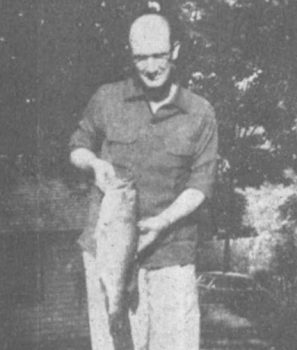
Paul W. Fairman’s career was a testament to the fluid and often anonymous nature of authorship in the mid-century publishing industry. Born on August 22, 1909, in St. Louis, Missouri, Fairman would become a versatile figure whose work spanned multiple genres and roles, yet whose independent literary contributions often remained overshadowed by his more visible editorial positions or his ghostwriting efforts.
The Ghostwriter’s Shadow and the Editor’s Chair
For many, if Fairman’s name surfaces at all, it is likely in connection with his crucial, albeit uncredited, role as a ghostwriter. During a period when established authors like Lester del Rey faced writer’s block or tight deadlines, Fairman provided the narrative backbone for several juvenile novels published under del Rey’s byline. This practice, common in an era driven by high demand for content, speaks volumes about Fairman’s skill and adaptability. Beyond his behind-the-scenes literary support, Fairman gained prominence as an editor for several influential genre magazines, including Amazing Stories and Fantastic, guiding the direction of science fiction and fantasy narratives during a critical phase of their development.
A Prolific Pen Across Genres
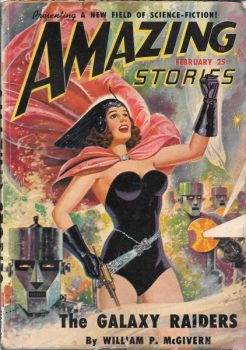
Before his editorial and ghostwriting fame, Fairman was a dedicated author in his own right. His publishing career commenced in February 1947 with the detective story “Late Rain” in Mammoth Detective, quickly establishing his versatility within the pulp landscape. By 1950, he had made a definitive leap into science fiction with “No Teeth for the Tiger,” published in Amazing Stories. Throughout his writing career, Fairman was known for his inventive plots and solid prose, often employing pseudonyms such as Ivar Jorgensen, Robert Eggert Lee, and the shared housename E.K. Jarvis, a common practice designed to circumvent magazine limits on a single author’s presence in an issue and to manage prolific output. As literary critic Marvin W. Hunt noted, Fairman’s “novels deserve the attention of science fiction enthusiasts not only because his books display the requisite technological prescience of good science-fiction, but especially because they are well written.” This commendation underscores the quality of his often-underexplored original works.
Cinematic Echoes of His Imagination
Perhaps one of the most compelling aspects of Fairman’s legacy is the frequency with which his stories were adapted for the screen, bridging the gap between pulp fiction and Hollywood. His story “Deadly City,” originally published under the Ivar Jorgensen pseudonym, became the basis for the 1954 science fiction film Target Earth. Later, his tale “The Cosmic Frame” was adapted into the cult classic Invasion of the Saucer Men in 1957, which was then remade a decade later as the television movie Attack of the Eye Creatures. Beyond these genre features, Fairman’s storytelling prowess even reached iconic television anthologies, with his narratives being adapted for episodes of The Twilight Zone and General Electric Theatre, demonstrating the broad appeal and adaptability of his imaginative concepts.
A Life in Print: A Chronology of Paul W. Fairman’s Career
Fairman’s career arc reflects the dynamic shifts within the publishing industry from the post-war pulp era through the burgeoning age of television and film adaptations. Each stage of his professional life built upon the last, painting a picture of a man deeply entrenched in the machinery of popular storytelling.
Early Life and Forays into Pulp Detective Fiction (1909-1949)
Born in St. Louis, Missouri, in the early 20th century, Paul W. Fairman came of age during a period when pulp magazines were the dominant form of popular entertainment, offering thrilling escapism for a few cents. While details of his early life remain somewhat sparse, it is clear he possessed a keen interest in narrative and a talent for crafting engaging plots. His entry into professional writing came in February 1947 with “Late Rain,” published in Mammoth Detective. This appearance marked his debut in the robust and competitive world of pulp detective fiction, a genre characterized by gritty realism, fast-paced action, and often hard-boiled protagonists. Mammoth Detective, part of the Ziff-Davis publishing empire, was known for its oversized format and diverse content, providing a fertile ground for new writers to hone their craft and reach a wide audience. Fairman’s early success in this field demonstrated his ability to master genre conventions and deliver compelling narratives to a hungry readership.
The Dawn of a Science Fiction Voice (1950-1953)
Having established himself in the detective genre, Fairman broadened his horizons significantly in 1950 by venturing into science fiction. His first story in this new domain, “No Teeth for the Tiger,” appeared in the February issue of Amazing Stories. This transition was timely, coinciding with a post-war boom in science fiction’s popularity, often referred to as the Silver Age, where imaginative tales of space exploration, alien encounters, and technological advancements captivated readers. Amazing Stories, one of the pioneering science fiction magazines, provided a prestigious platform for Fairman to showcase his prescient imagination.
The Enigma of Pseudonyms: Ivar Jorgensen and Beyond
The practice of using pseudonyms was ubiquitous in the pulp era, driven by the need for authors to publish multiple stories in a single issue or to diversify their output across different genres without saturating the market under one name. Between 1951 and 1953, Fairman frequently utilized the housename Ivar Jorgensen. This pseudonym proved particularly significant, as it was under this guise that his story “Deadly City” was published. He also adopted other aliases, including Robert Eggert Lee and E.K. Jarvis, the latter being a shared housename also used by Robert Moore Williams, further illustrating the collaborative and often anonymous nature of pulp publishing. These pseudonyms allowed Fairman to maintain a high volume of output while creating distinct authorial identities for different types of stories or even different magazines.
From Page to Screen: The Cinematic Period (1954-1957)
Fairman’s inventive storytelling quickly caught the attention of Hollywood, leading to several film adaptations that cemented his influence beyond the printed page.
Target Earth and the Adaptation Process
In 1954, Fairman’s Ivar Jorgensen-penned story “Deadly City” was adapted into the film Target Earth. Directed by Sherman A. Rose and starring Richard Denning and Kathleen Crowley, the movie is a classic B-movie sci-fi thriller depicting a city mysteriously emptied of its inhabitants, only for the survivors to discover a menacing alien invasion. The film capitalized on the widespread Cold War anxieties of the era, where fears of invasion and existential threats were pervasive. While B-movies of the 1950s often had modest budgets, Target Earth remains a notable entry in the genre, demonstrating the commercial viability of Fairman’s imaginative concepts and his capacity to tap into contemporary cultural fears.
Invasion of the Saucer Men and Attack of the Eye Creatures
Fairman’s story “The Cosmic Frame” provided the narrative blueprint for another iconic 1950s sci-fi film, Invasion of the Saucer Men (1957). Directed by Edward L. Cahn, this film became a cult classic, known for its distinctive, large-brained, and multi-eyed alien creatures. It blended science fiction with elements of horror and dark comedy, showcasing Fairman’s ability to craft narratives with broad appeal. A decade later, the enduring appeal of the story led to a television movie remake, Attack of the Eye Creatures (1967), further extending the reach of Fairman’s original concept to a new generation through a different medium. His ability to create concepts that transcended the page also led to stories being adapted for acclaimed television anthologies such as The Twilight Zone and General Electric Theatre, showcasing the quality and dramatic potential of his narratives to a national audience.
The Tumultuous World of Magazine Editing (1952-1958)
While his writing career flourished, Fairman also delved deeply into the editorial side of publishing, a role that brought both challenges and significant influence.
The Ill-Fated Venture of Strange and If
In 1952, James L. Quinn hired Fairman with an ambitious goal: to create formidable rivals to established magazines like Fate (known for its focus on the bizarre and mysterious) and Other Worlds (a prominent science fiction title). The result was the launch of two new magazines: Strange, dedicated to the paranormal and unexplained, and If, a new science fiction venture. Fairman was appointed editor of both. However, his initial foray into editorial leadership proved challenging. His knowledge of the broader science fiction landscape, particularly the emerging trends and newer voices, was reportedly limited. This led If to adopt a more conservative editorial stance, often looking back to older forms of science fiction rather than embracing the innovations of its contemporaries. Strange fared even worse, being cancelled after only four issues due to poor reception and sales. Fairman’s tenure at If was equally brief, concluding after just four issues when Quinn, disappointed with the magazine’s direction and performance, took over the editorial reins himself. This early editorial experience, though short-lived, provided Fairman with invaluable lessons in the demanding world of genre publishing.
Ziff-Davis: A Second Chance at the Helm
Despite the setback with Strange and If, Fairman landed on his feet at Ziff-Davis, a major publishing house with a strong presence in the pulp and genre magazine market. He joined as an Associate Editor of Fantastic Adventures, a sister publication to Amazing Stories. This role allowed him to gain further experience in magazine production and content curation. After a brief departure from Ziff-Davis in 1954, he returned the following year, signaling his commitment to the genre. His dedication paid off when, in 1956, Howard Browne left the company, and Fairman was promoted to editor of both Amazing Stories and Fantastic. This was a significant appointment, placing him at the helm of two of the most iconic science fiction and fantasy magazines of the era.
Launching New Horizons: Dream World and Amazing Stories Science Fiction Novels
During his tenure at Ziff-Davis, Fairman not only maintained the quality of existing titles but also oversaw new initiatives. He took charge of the launch of Dream World, a magazine that had been conceived by his predecessor, Howard Browne, further diversifying Ziff-Davis’s genre offerings. More notably, he launched Amazing Stories Science Fiction Novels, an ambitious venture aimed at publishing novelizations or original novels in a digest format. This series, though it lasted only a single issue, featured Henry Slesar’s novelization of the film 20 Million Miles to Earth. This initiative demonstrated Fairman’s continuous effort to innovate and explore new formats for science fiction content, even if some of these experiments proved fleeting.
Returning to the Craft: Post-Editorial Pursuits
Despite his significant editorial responsibilities, Fairman’s true passion remained writing. He found the demands of editing increasingly burdensome, preferring the solitary pursuit of crafting stories.
Ellery Queen’s Mystery Magazine and a Shift in Focus
Recognizing his preference for authorship, Fairman began to delegate more and more editorial work to his assistant. At the end of 1958, he made a pivotal career decision, stepping down as editor of Amazing Stories and Fantastic. This move allowed him to take on a new editorial challenge as editor of Ellery Queen’s Mystery Magazine, a highly respected and long-running publication in the detective and mystery genre. This shift represented a return to his roots in crime fiction, a genre where he had begun his publishing journey. His departure from Amazing and Fantastic also opened the door for his assistant, Cele Goldsmith, a sharp and forward-thinking editor who would go on to revolutionize both magazines and discover a new generation of science fiction talent.
The Unseen Hand: Ghostwriting for Lester del Rey
Concurrent with and subsequent to his editorial roles, Fairman continued to engage in ghostwriting, a testament to his prolificacy and the economic realities of a working author. His uncredited contributions to juvenile novels published under Lester del Rey’s name are particularly noteworthy. Del Rey, a prominent science fiction author and later a highly influential editor at Ballantine Books, occasionally faced periods of writer’s block or simply had too many commitments to meet publishing demands. Fairman’s ability to emulate another author’s style and deliver engaging narratives, particularly for the younger audience, was invaluable. These ghostwritten works, while not bearing his name, further illustrate his deep understanding of storytelling and his significant, if often hidden, impact on the literary landscape of the time.
Fairman passed away in October 1977 in Newark, New Jersey, leaving behind a substantial body of work that, for too long, has been fragmented across various pseudonyms, editorial credits, and uncredited collaborations.
Supporting Data: The Fabric of an Era
Paul W. Fairman’s career was inextricably linked to the broader trends and economic realities of mid-20th-century popular fiction. Understanding these contexts is crucial to appreciating his contributions.
The Pulp Magazine Landscape: A Breeding Ground for Talent
The 1940s and 1950s were a golden age for pulp magazines, which served as the primary incubator for genre fiction in America. These periodicals, characterized by their inexpensive wood pulp paper and sensational covers, were a vital medium for science fiction, fantasy, detective stories, and horror. They provided a consistent market for thousands of writers, offering a rapid turnaround for submissions and a direct line to a hungry readership. This environment fostered a culture of prolificacy, where authors were often paid by the word and success depended on a steady output. Fairman’s ability to publish in both detective and science fiction pulps, often simultaneously and under different names, was not unique but rather a hallmark of a successful professional writer in this system. The pulps were more than just entertainment; they were laboratories for narrative experimentation, where conventions were established, broken, and redefined, shaping the very language of genre storytelling.
The Economics of Prolificacy: Why Pseudonyms and Ghostwriting Flourished
The sheer volume of material required by the pulp industry created an economic model that incentivized both prolific writing and the strategic use of pseudonyms and ghostwriting. Publishers often limited the number of stories a single author could have in one issue to give the impression of a wider array of contributors, or to avoid reader fatigue. Pseudonyms like Ivar Jorgensen and Robert Eggert Lee allowed authors like Fairman to bypass these restrictions, maximizing their income by selling more stories. Ghostwriting, particularly for established names like Lester del Rey who had contractual obligations or a reputation to maintain, was another common practice. It provided a reliable income stream for skilled but less famous writers and ensured that popular authors could continue to deliver content even when their own creative wells ran dry. Fairman’s participation in these practices highlights his professionalism and adaptability, navigating the complex financial currents of a demanding industry.
The Mid-Century Sci-Fi Boom and its Challenges
The post-World War II era saw an unprecedented surge in the popularity of science fiction. The atomic age, the space race, and rapid technological advancements fueled public fascination with the future, leading to a proliferation of science fiction magazines, books, and eventually, films. This boom, however, also presented challenges. The market became increasingly competitive, demanding not just quantity but also quality and innovation. Editors like Fairman were tasked with identifying new talent and steering their magazines to capture the shifting tastes of readers. His initial struggle at If to embrace the "newer magazines in the field" reflects a common tension during this period: balancing the nostalgia for classic pulp adventures with the emergence of more sophisticated, character-driven, and socially conscious science fiction. His subsequent success at Ziff-Davis, overseeing Amazing Stories and Fantastic, demonstrates his eventual mastery of this delicate balance, adapting to the demands of a rapidly evolving genre.
Critical Reception and Industry Perspectives: Official Responses to Fairman’s Work
While Paul W. Fairman may not have garnered the same level of academic scrutiny as some of his contemporaries, the existing critical commentary and industry actions provide valuable insight into the perception of his work.
Marvin W. Hunt’s Endorsement: A Call for Recognition
Marvin W. Hunt’s commentary stands as one of the most direct and effusive endorsements of Fairman’s literary output. His assertion that Fairman’s “novels deserve the attention of science fiction enthusiasts not only because his books display the requisite technological prescience of good science-fiction, but especially because they are well written” serves as a powerful call to reassess Fairman’s place in the genre. Hunt’s emphasis on "technological prescience" suggests that Fairman possessed a keen foresight regarding scientific and societal developments, a hallmark of effective science fiction. The praise for his writing quality ("well written") counters any notion that his prolificacy came at the expense of craft. This specific critical response suggests that a deeper dive into Fairman’s bibliography would uncover works of significant literary merit, perhaps challenging the prevailing narrative that pigeonholes him primarily as an editor or ghostwriter.
Navigating Editorial Critique: The Case of If
Fairman’s early editorial tenure at If provides a contrasting perspective, highlighting the challenges he faced in navigating the competitive landscape of science fiction publishing. The decision by James L. Quinn to fire Fairman after only four issues, citing that If "tended to look back to an older form of science fiction, ignoring what was being done by the newer magazines in the field," constitutes a significant, if harsh, industry critique. This response indicates that Fairman, at that specific juncture, struggled to align his editorial vision with the cutting-edge sensibilities that were defining the genre’s evolution. It speaks to the pressures on editors to stay current and innovate, and the consequences of failing to do so in a rapidly changing market. However, his subsequent success at Ziff-Davis suggests he learned from this experience, adapting his approach to editing and demonstrating a capacity for growth within the industry.
The Enduring Appeal of His Cinematic Adaptations
The consistent adaptation of Fairman’s stories into films and television episodes serves as a powerful testament to the commercial viability and narrative strength of his concepts. The transformation of “Deadly City” into Target Earth, and “The Cosmic Frame” into Invasion of the Saucer Men (and its remake), indicates that producers and screenwriters recognized the inherent dramatic potential and audience appeal of his plots. These adaptations, often successful within the B-movie circuit, suggest that Fairman had a knack for creating high-concept, visually engaging stories that resonated with popular culture’s anxieties and fascinations. The fact that his work reached prestigious shows like The Twilight Zone and General Electric Theatre further underscores the quality and adaptability of his narrative ideas, transcending the specific confines of pulp fiction to find a broader audience. These "official responses" from the entertainment industry are perhaps the loudest commendations of his imaginative contributions.
Implications: Fairman’s Enduring Footprint on Genre Fiction
Paul W. Fairman’s career, though often understated, carries several significant implications for understanding the evolution of genre fiction, the nature of authorship, and the interconnectedness of media in the mid-20th century.
A Pioneer of Intermedia Adaptation
Fairman’s frequent success in seeing his stories adapted to film and television marks him as an early, though perhaps unheralded, pioneer of intermedia storytelling. In an era before widespread media convergence, his narratives demonstrated a remarkable ability to translate effectively from the written page to the screen. This capability is not merely incidental; it speaks to the inherent cinematic quality of his plots, his understanding of dramatic tension, and his creation of memorable concepts that resonated visually and thematically. His work helped lay groundwork for the symbiotic relationship between genre literature and visual media, influencing how future generations of science fiction and horror stories would be conceived and consumed across different platforms.
The Unsung Hero of Editorial Transitions
Fairman’s editorial journey, from the missteps at If to the stewardship of Amazing Stories and Fantastic, and ultimately to Ellery Queen’s Mystery Magazine, highlights the complex role of editors in shaping genre identity. His tenure at Ziff-Davis, while perhaps not as celebrated as some, provided stability for iconic magazines during a period of flux. More significantly, his decision to step down from Amazing and Fantastic directly paved the way for Cele Goldsmith, who would become one of the most transformative editors in science fiction history, championing the New Wave and discovering talents like Roger Zelazny and Thomas M. Disch. Fairman’s move, driven by his preference for writing, inadvertently facilitated a crucial generational shift in science fiction editing, underscoring his quiet yet profound impact on the genre’s trajectory.
Redefining Authorship in the Pulp Era
Fairman’s multifaceted career—as an accredited author, a ghostwriter for a famous contemporary, and an editor—challenges simplistic notions of authorship, particularly within the pulp context. His reliance on pseudonyms and his uncredited work for Lester del Rey exemplify the fluid, often collaborative, and economically driven nature of writing during this period. He embodies the working writer who mastered the craft, adapted to market demands, and contributed significantly to the literary output of his time, often without receiving full public recognition. His story compels a re-evaluation of how we define literary influence and contribution, reminding us that many essential figures operated partly in the shadows, their impact no less significant for being uncredited.
Conclusion: Reassessing a Quiet Titan
Paul W. Fairman’s life and work represent a compelling case study in the dynamic world of mid-20th-century genre fiction. From his beginnings in hard-boiled detective pulps to his significant contributions to science fiction as both an author and an editor, and his uncredited yet vital ghostwriting, Fairman’s career was characterized by versatility and dedication. His stories transcended the printed page, finding new life on the silver screen and television, a testament to his innate ability to craft engaging narratives that resonated with the anxieties and aspirations of his era.
While his name might not immediately spring to mind alongside the giants of science fiction, the insights from critics like Marvin W. Hunt, coupled with the consistent adaptation of his work, firmly establish his legacy. Fairman was more than just a writer or an editor; he was a craftsman of popular culture, a vital cog in the machinery that brought imaginative stories to millions. It is time for Paul W. Fairman to step out of the shadows and receive the recognition he justly deserves as a multifaceted architect whose quiet contributions profoundly shaped the landscape of genre fiction.


Leave a Comment