
The Unlikely Crusader: How Superman Fought Prejudice in 1950, Championing an "All-American" Ideal
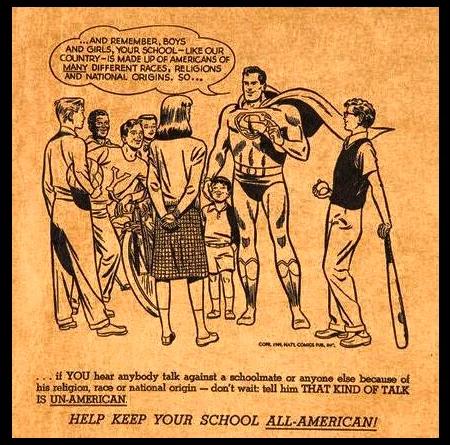
May 15, 2026 – In an era often characterized by burgeoning Cold War anxieties and deep-seated social divides, the iconic Man of Steel, Superman, transcended his comic book origins to deliver a powerful, albeit forgotten, message against prejudice. A striking illustration from 1950, recently resurfaced and colorized, depicts the Last Son of Krypton not battling supervillains, but engaging in a crucial dialogue with a group of young boys, urging them to champion an inclusive vision of America. This campaign, spearheaded by the Institute for American Democracy, an affiliate of the Anti-Defamation League, utilized the universally recognized symbol of Superman to instill values of tolerance and equality in a generation navigating a rapidly changing world.
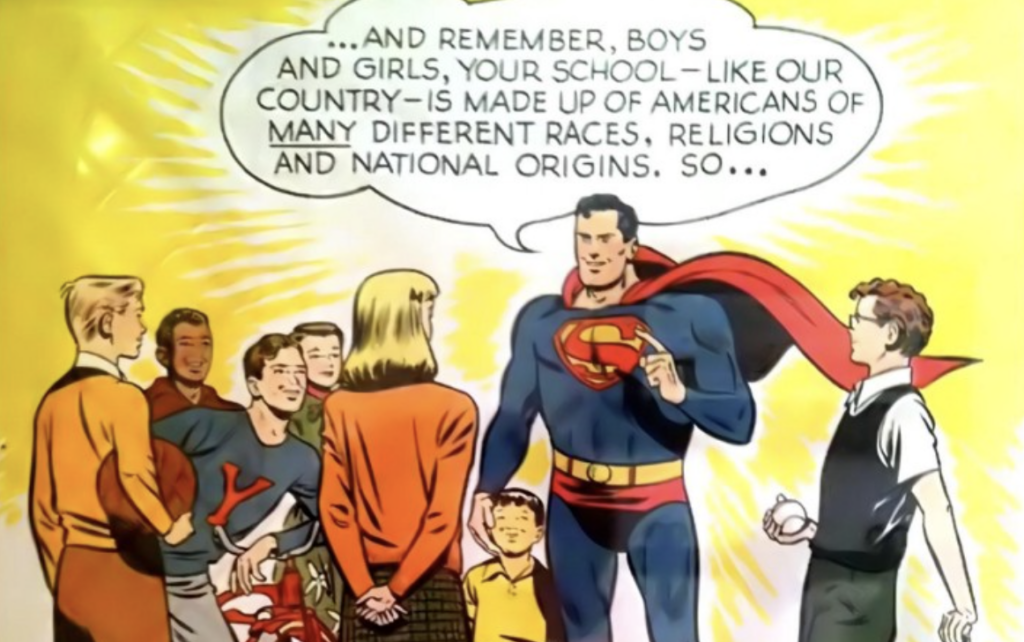
The visual narrative presented by this vintage artwork is potent. Superman, the ultimate outsider who arrived on Earth as a refugee, stands as a natural advocate for immigrants and minority groups. His own origin story—a testament to displacement and survival—lends him an unparalleled credibility when addressing the complexities of diversity. The illustration captures a pivotal moment: Superman, with his characteristic earnestness, addresses a predominantly white male audience, emphasizing that America’s strength lies in its diverse populace. His words, emblazoned on the poster, serve as a direct call to action: "remember, boys and girls, your school – like our country – is made up of Americans of many different races, religions and national origins, so… If YOU hear anybody talk against a schoolmate or anyone else because of his religion, race or national origin – don’t wait: tell him THAT KIND OF TALK IS UN-AMERICAN. HELP KEEP YOUR SCHOOL ALL-AMERICAN!"
This initiative, distributed to school children, aimed to equip them with the moral fortitude to confront intolerance. It recognized a fundamental truth: that while superheroes offer a powerful symbol of hope, the responsibility for fostering a just and equitable society ultimately rests with its citizens. The poster served as a tangible reminder that the fight against prejudice requires active participation, not passive observation.
A Chronology of Tolerance: Superman’s Unexpected Role in Post-War America
The year 1950 marked a significant juncture in American history. The nation was emerging from the shadows of World War II, a conflict that had exposed the devastating consequences of unchecked hatred and discrimination. Simultaneously, the seeds of the Civil Rights Movement were beginning to sprout, and anxieties surrounding the burgeoning Cold War fueled both patriotic fervor and a suspicion of "outsiders." It was within this complex socio-political landscape that the Institute for American Democracy recognized the potential of popular culture to shape public opinion.
Early 1950s: The Rise of the "All-American" Ideal
The post-war era witnessed a renewed emphasis on American exceptionalism and the concept of the "American Dream." However, this ideal was often narrowly defined, excluding significant segments of the population. Organizations like the Institute for American Democracy understood that to truly embody the "All-American" spirit, the nation needed to embrace its diverse heritage.
The Institute for American Democracy’s Initiative
Leveraging the immense popularity of Superman, the Institute for American Democracy commissioned the artwork and accompanying message. The choice of Superman was strategic. As a beloved and universally recognized character, he possessed an unparalleled ability to capture the attention of young audiences. His alien origin also provided a powerful, albeit subtle, parallel to the experiences of immigrants and minority groups who often faced discrimination despite contributing to the fabric of American society.
Distribution and Impact
The "All-American" poster was distributed to schools across the nation. Its simple yet profound message, delivered by a trusted cultural icon, aimed to foster empathy and critical thinking among children. The artwork depicted a diverse group of children, though critics in later years would note the underrepresentation of girls and children of color, a reflection of the prevailing societal norms of the time.
Resurgence and Reinterpretation in the Digital Age
Decades later, in the age of social media, a colorized version of the 1950 illustration gained renewed traction. This re-emergency sparked discussions about the enduring relevance of Superman’s message and the progress—or lack thereof—made in combating prejudice. While the original poster was a product of its time, its core message continues to resonate, prompting reflections on how to create a truly inclusive representation in future iterations.
Supporting Data: The Power of Cultural Icons in Shaping Values
The effectiveness of using popular culture figures to convey social messages is well-documented. Throughout history, characters like Superman have been more than just entertainment; they have served as moral compasses, embodying ideals that audiences aspire to.
- Superman’s Enduring Appeal: Created in 1938 by Jerry Siegel and Joe Shuster, Superman quickly became a cultural phenomenon. His powers, while extraordinary, were often used to protect the innocent and uphold justice, establishing him as a symbol of hope and moral righteousness. This inherent goodness made him an ideal candidate for promoting positive social values.
- The Institute for American Democracy’s Mission: Founded in the wake of World War II, the Institute for American Democracy aimed to combat antisemitism and other forms of prejudice. They recognized that education and public awareness were crucial in fostering a more tolerant society. Their collaboration with Superman represented a pragmatic approach to reaching a broad audience with their vital message.
- Educational Campaigns of the Era: The mid-20th century saw various efforts to educate young Americans about citizenship and civic responsibility. These campaigns often employed familiar characters and engaging visuals to make complex social issues accessible to children. The Superman poster fits within this broader trend of using popular media for educational purposes.
- The Evolution of Representation: While the 1950 poster was groundbreaking for its time in its explicit message against prejudice, it also reflects the limitations of representation in that era. The resurgence of the colorized version has prompted a valuable conversation about how contemporary campaigns can ensure more comprehensive and equitable representation of all children, including girls, children of color, and those with disabilities. This ongoing dialogue underscores the evolving understanding of inclusivity in media and education.
Official Responses and Enduring Relevance
While specific official statements from the Institute for American Democracy regarding this particular campaign from 1950 are not readily available in the original text, the organization’s broader mission provides context. The Anti-Defamation League (ADL), of which the Institute was an offshoot, has a long-standing commitment to combating hate and extremism. Their continued work in education and advocacy demonstrates an ongoing dedication to the principles championed by the Superman poster.
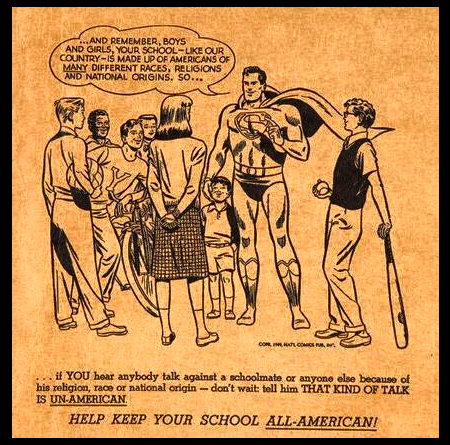
The resurgence of the "All-American" Superman image in recent years has prompted discussions within educational and cultural circles. Many view it as a historical artifact that highlights both the progress made and the challenges that remain in achieving true equality. Educators often use such examples to teach students about the history of civil rights and the importance of actively challenging discrimination.
Implications for Today: The Ongoing Fight for an "All-American" Ideal
The 1950 Superman poster, though a product of its time, carries profound implications for contemporary society. Its rediscovery serves as a powerful reminder that the fight against prejudice is an ongoing endeavor, requiring constant vigilance and active participation from all citizens.
- The Enduring Need for Inclusive Messaging: The critique that the original illustration lacked sufficient diversity is a crucial one. It highlights the importance of ensuring that all children see themselves reflected in positive and empowering narratives. Modern campaigns must strive for authentic and comprehensive representation to resonate with today’s diverse youth.
- The Power of Everyday Heroes: Superman’s intervention underscores that heroism is not solely the domain of the superpowered. The message, "If YOU hear anybody talk against a schoolmate… tell him THAT KIND OF TALK IS UN-AMERICAN," empowers ordinary individuals to become agents of change. This lesson remains incredibly relevant in an age where online discourse can often amplify hateful rhetoric.
- Combating Hate in All Forms: The poster’s focus on race, religion, and national origin is a timeless call to action. In a world still grappling with xenophobia, religious intolerance, and racial injustice, the core message of the "All-American" ideal remains a beacon. It encourages us to look beyond superficial differences and recognize the shared humanity that binds us.
- Education as a Shield Against Prejudice: The distribution of the poster to school children signifies the critical role of education in fostering a tolerant society. By equipping young minds with the tools to critically assess discriminatory language and behaviors, we build a stronger defense against the spread of hate.
- Reimagining Our "All-American" Identity: The conversation sparked by the colorized Superman image invites us to continually re-evaluate and expand our understanding of what it means to be "All-American." It suggests that true American identity is not monolithic but rather a vibrant tapestry woven from the contributions of all its people.
In conclusion, the forgotten moment when Superman fought prejudice instead of villains in 1950 offers a valuable historical perspective and a vital contemporary lesson. It reminds us that even the most iconic figures can serve as powerful advocates for social justice, and that the responsibility for creating a truly inclusive and equitable society lies not just with our heroes, but with each and every one of us. The call to action to "HELP KEEP YOUR SCHOOL ALL-AMERICAN!" echoes through the decades, urging us to continue the fight for tolerance and understanding in our communities and beyond.




Leave a Comment