
The Unseen Engine: Exploring Purpose, Metaphysics, and the Human Spirit in a Modern World
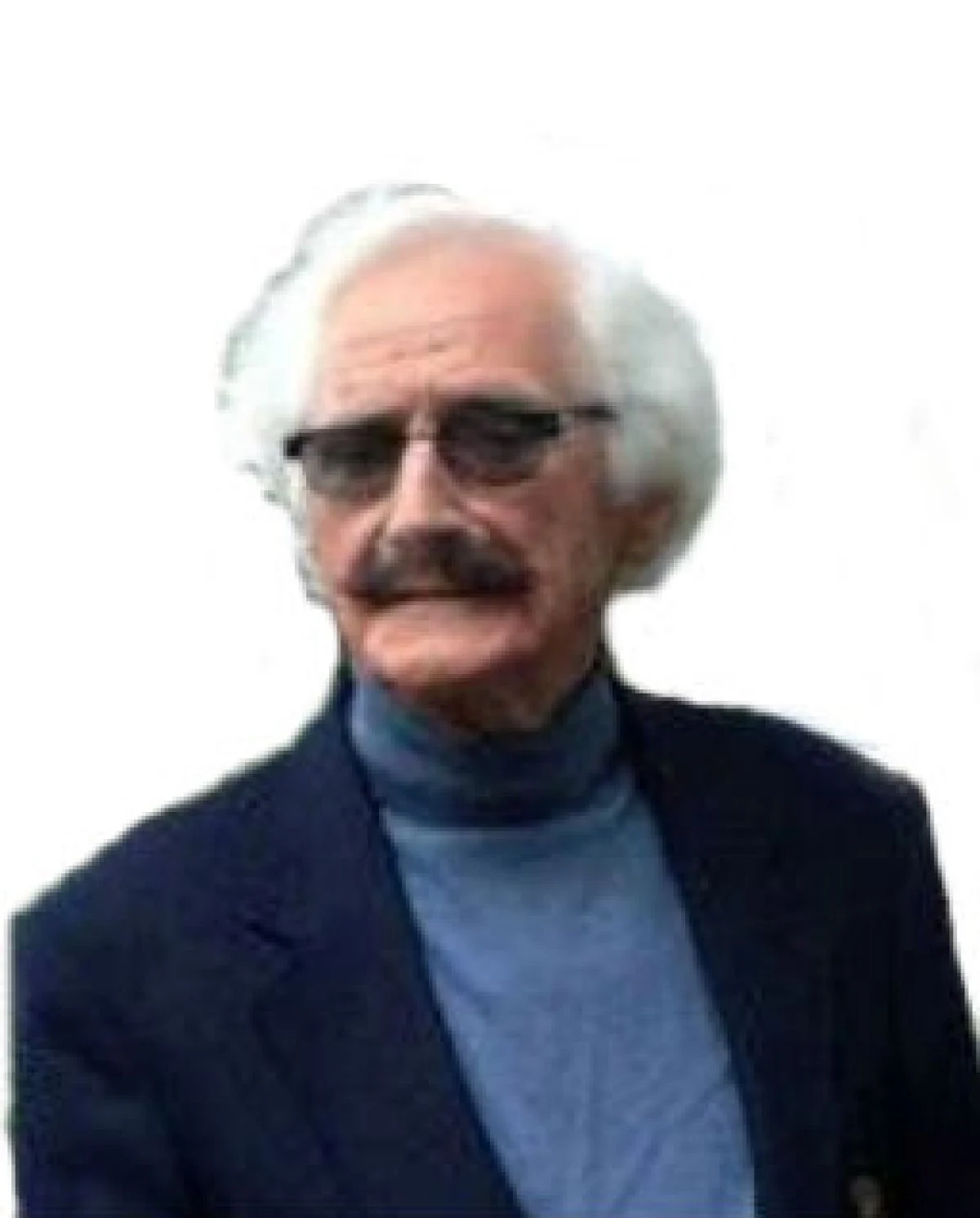
A retired professor’s chance encounter in a coffee shop sparks a profound exploration of consciousness, altruism, and the elusive nature of meaning.
The mundane act of waiting for a car service can, at times, become an unexpected gateway to profound philosophical inquiry. This was precisely the experience of a retired university professor, specializing in philosophy and psychology, during a recent visit to his local coffee shop. What began as a routine pursuit of a cappuccino transformed into an engaging dialogue with two university students, a conversation that inevitably veered into the complex and often overlooked realms of purpose, human spirit, and the very nature of consciousness.
The students, eager to probe the mind of an academic, posed the perennial question: "What is the purpose of life?" The professor, acknowledging the inherent difficulty in articulating such a concept, didn’t offer a simple, glib answer. Instead, he presented a nuanced perspective, one that acknowledged the historical and ongoing struggles of humanity.
The Shadow of Conflict and the Light of Compassion
"It is not easy to talk about purpose," the professor stated, a somber note entering his voice. He immediately drew a stark parallel between the persistent conflicts that have plagued nations and individuals throughout history and the ongoing deficiencies in fostering benevolent and spiritually tolerant attitudes. The specter of war, violence, and intolerance, he implied, casts a long shadow over humanity’s collective pursuit of meaning.
However, the professor was not one to dwell solely on the darker aspects of the human condition. He swiftly pivoted to highlight the burgeoning landscape of global altruism, pointing to the myriad charitable organizations dedicated to alleviating suffering. He singled out "Doctors Without Borders" (Médecins Sans Frontières) as a prime example of a profoundly humanistic undertaking.
Doctors Without Borders: A Testament to the Human Spirit
The professor elaborated on the extraordinary dedication of the doctors and nurses who volunteer their services with organizations like Doctors Without Borders. These individuals, he emphasized, are not merely performing a job; they are actively risking their lives in some of the world’s most perilous environments. Their motivation, he argued, stems from a powerful combination of compassion and an "altruistic need to act."
"These are men and women risking their lives, driven by compassion and the altruistic need to act," he explained. He painted a vivid picture of these medical professionals traveling to "distant and dangerous locations," putting their own well-being and careers on the line. Their actions, he asserted, are propelled by "the greatest of all moral persuasions, that internal force known as the human spirit." This act of selfless service, of extending aid to those in need regardless of personal risk, serves as a powerful testament to the enduring capacity for good within humanity.
Unpacking the "Metaphysical": Beyond the Senses
It was at this juncture that the conversation introduced a key philosophical term: "metaphysical." The professor noted with interest that only one of the two students possessed a clear understanding of its significance. He defined it as denoting "a level of awareness in human consciousness that goes beyond the world of appearances; beyond the workings of the five senses."
This distinction is crucial. In a world often dominated by empirical observation and sensory experience, the metaphysical realm invites us to consider realities that lie beyond the immediate and tangible. It suggests an inner landscape, a dimension of existence that cannot be apprehended through sight, sound, touch, taste, or smell alone.
The Questing Imagination and the Inner Dialogue
The professor further elaborated on metaphysical awareness as a "silent dialogue." This internal conversation, he explained, is driven by our "always questing imagination." It is a process of continuous questioning, delving into the "how and why of the psychological complexity of one’s self." This introspective journey is fueled by a potent psychological force that has been historically described as "spirit," or more specifically, the "human spirit."
This concept resonates with the idea that our consciousness is not solely a passive recipient of external stimuli. Instead, it is an active, dynamic entity, constantly engaging with itself, seeking to understand its own workings and its place in the wider universe. The "questing imagination" becomes the engine of this internal exploration, allowing us to conceptualize, hypothesize, and ponder realities that transcend our immediate sensory input.
Aristotle’s Legacy: "Meta" and the Mind
To provide historical context and further illuminate the concept, the professor introduced the Greek scientist and philosopher Aristotle. It was Aristotle, he explained, who coined the term "metaphysical" to describe this abstract nature of mental activity. The prefix "meta" signifies "beyond" or "after," thus introducing the concept of the mind as a distinct realm.
This "mind" encompasses a spectrum of internal experiences: "a level of awareness, thoughts, ideas, feelings, hunches, and ruminations." These are not mere byproducts of biological processes; rather, they represent an "intuitive range of consciousness." This intuitive faculty, the professor suggested, is "inspirational" and serves the "forces of spirit," operating at the "instigation of a soul."
This framing positions the mind not as a purely rational or computational entity, but as a complex interplay of intellectual, emotional, and spiritual dimensions. The intuitive, the hunches, the sudden flashes of insight – these are all part of a deeper, more encompassing understanding of human consciousness.
The Duality of Human Consciousness: Rationality and Intuition
The professor then posited a duality in human consciousness that has been recognized over centuries. This duality comprises two interconnected aspects:
- The Outwardly Directed Rational and Sensory Brain: This is the part of our consciousness that engages with the external world, processes sensory information, and operates through logic and reason. It is the tool we use to navigate the empirical realities of our lives.
- The Inwardly Directed Intuitive and Spiritual Brain: This aspect of consciousness accesses inner knowledge, intuition, and spiritual insights. It is the realm of feelings, gut instincts, and a sense of connection to something larger than oneself.
Together, these two facets form a "mental partnership we call mind." This perspective suggests that a fully realized human consciousness integrates both the logical and the intuitive, the external and the internal. Neither aspect is superior; rather, they are complementary, working in concert to create the richness and complexity of human experience.
A Disconnect with the Inner Self
The professor’s exploration of these profound concepts took an interesting turn when he posed a seemingly simple question to the students: "Do you ever ponder the unique nature of your own personalities?" The response was telling: "a couple of blank looks." This observation, while perhaps disheartening, highlights a potential disconnect in modern education and societal focus. While students are often encouraged to develop analytical skills and engage with the external world, the cultivation of self-reflection and an understanding of one’s inner landscape might be less emphasized.
The students’ lack of immediate engagement with the question of their individual personalities suggests a potential unawareness of the depth and complexity of their own inner lives. This, in turn, may contribute to the difficulty in grasping concepts like purpose and the human spirit, which are intrinsically linked to self-awareness and introspection.
Penfield’s Enduring Enigma: The Metaphysical Nature of Mind
As the coffee grew cold and the conversation drew to a close, the professor sought to leave the students with a final, impactful thought. He referenced the words of the late Wilder Penfield, a distinguished Canadian neuroscientist and brain surgeon. Penfield, renowned for his groundbreaking work on the brain, grappled with the fundamental nature of consciousness.
Penfield famously described mind as a "non-temporal, non-spatial entity." This definition directly aligns with the metaphysical concept. A "non-temporal" entity exists outside the constraints of time, and a "non-spatial" entity exists outside the confines of physical space. These are characteristics that transcend the material world and point towards a realm of existence that is inherently metaphysical.
His assertion that he "could only describe mind as a ‘non-temporal, non-spatial entity,’ hence metaphysical" serves as a powerful endorsement of the professor’s earlier points. Even a scientist dedicated to understanding the physical brain acknowledged the limitations of purely empirical explanations when attempting to define the essence of the mind.
Conclusion: The Unseen Architects of Our Experience
The encounter in the coffee shop, though brief, offered a glimpse into the enduring relevance of philosophical inquiry in our modern lives. The professor’s discussion with the students underscores the importance of:
- Recognizing the Human Spirit: Beyond the conflicts and challenges, the human capacity for compassion and altruism, exemplified by organizations like Doctors Without Borders, offers a powerful counterpoint and a source of hope.
- Embracing Metaphysical Awareness: Understanding that consciousness extends beyond sensory perception allows for a deeper appreciation of our inner lives, our imaginations, and the intuitive forces that shape our understanding.
- Cultivating Self-Reflection: The ability to ponder the unique nature of our own personalities is a crucial step in understanding our purpose and our place in the world.
- Integrating Rationality and Intuition: A holistic view of the mind acknowledges the essential partnership between our logical, analytical faculties and our intuitive, spiritual insights.
The professor’s conversation serves as a timely reminder that while we navigate the tangible realities of our existence, the most profound aspects of our being – our purpose, our spirit, our very consciousness – may lie in the unseen, the metaphysical realms that beckon us to explore the depths of our own human experience. The blank looks from the students, while perhaps indicating a lack of prior engagement, also represent an opportunity – an invitation to begin the lifelong journey of self-discovery, to delve into the "how and why" of their own existence, and to recognize the extraordinary power of the human spirit.


Leave a Comment