
Culture Currents: From Artistic Mysteries to Cinematic Debates and Future Visions
A sweeping panorama of the week’s cultural landscape reveals intriguing appeals to public knowledge, significant literary accolades, spirited debates on industry standards, and captivating explorations of humanity’s past and future. From an artist’s plea to solve a decades-old enigma to the highly anticipated shortlists for prestigious awards and the ongoing dialogue about diversity in cinema, the world of arts and entertainment continues to offer a rich tapestry of stories and discussions.
Unraveling Artistic Enigmas and Literary Futures
Main Facts:
This week, a unique call to action has emerged from the art world, with Michael Whelan’s webmaster appealing to the collective memory of fandom to uncover the publication origins of a significant 1977 painting, "The Mad Poet." Simultaneously, the literary sphere buzzes with the announcement of numerous novella nominations for major speculative fiction awards and the unveiling of the Walter Scott Prize for Historical Fiction shortlist, spotlighting new voices and established masters alike.
The Mystery of "The Mad Poet": A Call to Fandom
Chronology:
The saga of "The Mad Poet" traces back to 1977 when acclaimed fantasy artist Michael Whelan was commissioned to create a piece intended to accompany a Robert E. Howard poem. The commission, likely facilitated by Armand Eisen at The Morning Star Press, resulted in a striking artwork that has since become a "fan favorite." However, over four decades later, the precise original print publication of this pivotal painting remains elusive.
Supporting Data:
Mike Jackson, the dedicated webmaster for MichaelWhelan.com, has spearheaded an initiative, hoping that "the collective knowledge of fandom might recall the publishing origins of Michael Whelan’s painting The Mad Poet." The background to this intriguing mystery is further detailed in the weekly newsletter, "Descent into Madness," available via TheArtOfMichaelWhelan.substack.com. The appeal specifically asks for "clues, photos, and recollections" to meticulously reconstruct the painting’s early publication history.
Implications:
This crowdsourcing effort underscores the vital role of dedicated fan communities in preserving and documenting the history of popular culture. For an artist of Whelan’s stature, whose work has graced countless book covers and defined the visual aesthetic of science fiction and fantasy for generations, establishing a complete provenance for each piece is crucial for art historians, collectors, and fans alike. Robert E. Howard, a foundational figure in heroic fantasy, adds another layer of historical significance to the quest, linking the visual art to a legendary literary figure. The successful resolution of this mystery would not only fill a gap in Whelan’s extensive oeuvre but also highlight the power of digital communities in collaborative historical research.
Novellapalooza: Celebrating the Mid-Length Masterpiece
Main Facts:
Chapter Adventure recently published a comprehensive roundup titled "The 15 Novellas Nominated for 2026 Locus, Nebula, and Hugo Awards," showcasing the vibrant health and diverse themes within the speculative fiction genre’s mid-length format. Among the distinguished nominees, Annalee Newitz’s "Automatic Noodle" stands out, securing nominations across all three prestigious awards.
Supporting Data:
The roundup highlights a "very diverse mix" of novellas, demonstrating the format’s versatility. Themes range from "cozy robot restaurants" and "gothic fairy tale retellings" to "murder mysteries set in space," "fairy tales about sisters and Faerie," "witches and curses," "haunted coal mines," and even "climate allegories told from a mountain’s point of view." This eclecticism reflects the imaginative breadth characteristic of modern speculative fiction.
Annalee Newitz’s "Automatic Noodle," a leading contender, is categorized as "Cozy Sci-Fi" and spans 163 pages. Its compelling premise is set in a near-future San Francisco, still recovering from a "devastating war of independence." The story follows a group of deactivated food-service robots who, upon reactivating in an abandoned ghost kitchen, decide to open their own hand-pulled noodle restaurant to pay off a mysterious debt and maintain their freedom. When their burgeoning business is threatened by a "targeted wave of one-star fake reviews," the robots must turn detective and rally their community to survive in a world not designed for them. The narrative blends elements of mystery, community, and social commentary, wrapped in an accessible, engaging package.
Implications:
The strong showing of novellas in these major awards—the Locus (fan-voted), Nebula (professional peer-voted), and Hugo (fan-voted)—underscores the format’s growing prominence and critical recognition within speculative fiction. Novellas offer authors the space for deeper exploration than short stories while maintaining a narrative tightness often absent in longer novels, making them ideal for innovative concepts and focused storytelling. "Automatic Noodle’s" triple nomination signifies not only its individual strength but also the genre’s embrace of diverse subgenres like "cozy sci-fi," appealing to a broad readership and demonstrating the ever-expanding boundaries of speculative fiction. The "buzz" around such multi-nominated works often translates into increased readership and critical discourse, further elevating the novella’s status.
Walter Scott Prize for Historical Fiction 2026 Shortlist Announced
Main Facts:
On April 16, the Walter Scott Prize for Historical Fiction unveiled its 2026 shortlist, featuring five distinguished titles. The prize, celebrating the finest historical fiction published in the UK, Ireland, and the Commonwealth, continues to honor works that demonstrate exceptional literary merit and historical accuracy.

Supporting Data:
While the specific titles were not provided in the original dispatch, the Walter Scott Prize is renowned for recognizing novels that transport readers to past eras with depth and authenticity. Past shortlists and winners have explored diverse historical periods and cultural contexts, from ancient civilizations to pivotal moments in the 20th century. The shortlisted works typically offer intricate character development, meticulous research, and compelling narratives that illuminate the human condition through the lens of history. The five selected novels would have undergone a rigorous judging process, evaluated for their ability to bring history to life while offering contemporary relevance.
Implications:
The Walter Scott Prize holds significant weight in the literary world, particularly for historical fiction. Its shortlist acts as a powerful recommendation for readers and critics, often boosting the profiles of both established and emerging authors. For the genre itself, the prize encourages high standards of historical research and literary craftsmanship, ensuring that historical fiction remains a vibrant and intellectually stimulating category. The selection process highlights works that not only entertain but also educate, providing insights into different periods and cultures, fostering a deeper understanding of our shared past.
Critiques, Canons, and Cultural Conversations
Main Facts:
The cultural discourse this week has been rich with critical analysis, from a ranking of science fiction "masterpieces" to a prominent astrophysicist’s book review and a fiery debate surrounding Oscar inclusion standards. These discussions reflect ongoing efforts to define artistic excellence, scrutinize public figures, and reshape industry norms.
Collider’s Sci-Fi Masterpieces: The Enduring Power of "The Forever War"
Chronology:
Collider recently published its list of "10 Greatest Sci-Fi Book Masterpieces, Ranked," a compilation that largely reflects canonical works popular over the past few decades. Among these titans, Joe Haldeman’s seminal 1974 novel, "The Forever War," secured the ninth position, affirming its enduring legacy.
Supporting Data:
Collider‘s list, while predictable in some respects, serves as a valuable touchstone for the genre. The inclusion of "The Forever War" is particularly noteworthy. The review describes the novel as following "a soldier drafted into an interstellar conflict where relativistic space travel causes time dilation, meaning that every mission sends him decades or centuries into the future." This core mechanic leads to the protagonist’s profound alienation from a society he is ostensibly defending, evolving into a "relic, increasingly unable to relate to evolving cultural norms, even as the war itself becomes increasingly abstract and purposeless."
The article highlights Haldeman’s unique perspective, noting that the book was "Written by a Vietnam War veteran," allowing it to read "as both sci-fi and a bitter memoir." It draws comparisons to cinematic works like The Hurt Locker and The Time Machine, underscoring its dual nature as both a visceral war narrative and a philosophical exploration of time and change. The brilliance, according to Collider, lies in how it "uses its pulpy, hard science elements to drive the character development and emotional investigation." Time dilation, far from being a mere gimmick, becomes "a mechanism through which to explore the trauma of war."
Implications:
"The Forever War" remains a critical and fan favorite, having won both the Nebula Award and the Hugo Award for Best Novel. Its continued presence on such "greatest" lists speaks to its timeless relevance as an anti-war narrative and a poignant exploration of the human cost of conflict. Haldeman’s use of hard science fiction concepts to ground deeply human themes has influenced countless authors. The novel’s ability to transcend its genre origins and comment on universal experiences of alienation and trauma ensures its place in the literary canon, making it a compelling entry even on lists dominated by more obvious, foundational texts. Its inclusion on Collider‘s list reinforces its status not just as a science fiction classic, but as a literary masterpiece.
Neil deGrasse Tyson’s Literary Blind Spot: A Critical Review of "Take Me to Your Leader"
Main Facts:
Alec Nevala-Lee delivered a scathing review of Neil deGrasse Tyson’s new book, "Take Me to Your Leader," in The New York Times, specifically critiquing Tyson’s apparent oversight of rich literary science fiction in his exploration of alien life.
Supporting Data:
The review, though behind a paywall, highlights a core paradox in Tyson’s approach. Nevala-Lee notes that Tyson correctly observes how movies and television often depict aliens with "a head, two eyes, a mouth, shoulders, two arms, two hands and 10 fingers," attributing this to the practical limitations of "human actors paid to don alien costumes." However, Nevala-Lee sharply points out that Tyson "almost entirely ignores an art form that isn’t constrained by practical considerations — the dazzlingly inventive world of science fiction novels and short stories."
While Tyson mentions a handful of literary works like "Slaughterhouse-Five," "The Andromeda Strain," and "Contact," the reviewer questions why he doesn’t delve into more imaginative examples. Nevala-Lee specifically cites Hal Clement’s 1953 novel, "Mission of Gravity," set on a "rapidly rotating planet populated by intelligent centipedes," as a prime example of scientific ideas explored through truly alien depictions. The critique concludes that this "lack of engagement is a giveaway," suggesting Tyson "doesn’t seem all that interested in science fiction; it’s frankly unclear if he even likes it, or feels any need to approach it on its own terms."

Official Responses:
Alec Nevala-Lee’s review functions as an expert response, challenging Tyson’s authority on the subject of alien depiction within the broader cultural landscape. While not an "official" response from an institution, it represents a significant critical voice within the science and science fiction communities.
Implications:
This critique brings to light a recurring tension between popular science communicators and the speculative fiction genre. While figures like Tyson excel at making complex scientific concepts accessible to the masses, they sometimes overlook the profound and often scientifically rigorous explorations found in literary science fiction. Nevala-Lee’s review argues that by ignoring the rich tradition of imaginative literary works, Tyson misses an opportunity to engage with the very creativity he claims is lacking in visual media. It underscores the importance of acknowledging and celebrating science fiction literature not merely as entertainment, but as a fertile ground for exploring scientific possibilities and philosophical questions with unparalleled freedom and depth. The paywall for such a significant review also highlights ongoing debates about access to critical commentary and journalistic content.
Dispelling Misconceptions: Oscar Inclusion Standards and Best Picture Eligibility
Main Facts:
Variety directly addressed and debunked recent claims, particularly from Elon Musk, that the Academy’s Representation and Inclusion Standards would disqualify past Best Picture winners or upcoming films like Christopher Nolan’s "The Odyssey." The article clarifies that all Best Picture winners in the Academy’s 98-year history, including "Oppenheimer," would meet the standards, which became a requirement for the 2024 eligibility year.
Chronology:
The Academy announced its new Representation and Inclusion Standards in 2020. These standards were phased in over two "information-gathering years" and became mandatory for Best Picture eligibility starting with the 2024 awards cycle. "Anora" and "One Battle After Another" were cited as the first winners to compete under these new rules.
Supporting Data:
The Variety article explicitly refutes Elon Musk’s assertions on X (formerly Twitter), where he claimed Nolan "desecrated the Odyssey so that he would be eligible for an Academy Award," and questioned the "asshole who added DEI lies to Academy Awards eligibility." Variety states unequivocally that "every best picture winner in the Academy’s 98-year history… clears the Academy’s Representation and Inclusion Standards." It emphasizes that films only need to meet "two of four standards. Again, two of the four. Not all four."
The four standards are:
- Standard A (On-Screen Representation): Requires a lead or significant supporting actor from an underrepresented racial or ethnic group, or a 30% ensemble drawn from two underrepresented groups, or a storyline centered on one.
- Standard B (Creative Team): Focuses on diversity within department heads, broader crew, or 30% overall crew composition.
- Standard C (Industry Access): Relates to the distribution or financing company’s paid apprenticeships and training programs.
- Standard D (Executive Leadership): Addresses diversity among in-house senior executives or consultants involved in development, marketing, publicity, and distribution.
Official Responses:
The Variety article serves as a direct journalistic response to public misinformation and the controversial statements made by Elon Musk. It provides factual clarity on the Academy’s rules, acting as a corrective to a highly publicized but inaccurate narrative.
Implications:
The debate surrounding the Academy’s inclusion standards highlights the ongoing cultural tensions regarding diversity, equity, and inclusion (DEI) in major industries. Variety‘s detailed explanation reveals that the standards are designed to encourage broader representation and opportunity within Hollywood, rather than serving as restrictive barriers. By requiring only two out of four criteria, the Academy aims for flexibility, allowing films to qualify through various pathways related to casting, crew, studio infrastructure, or training programs. The article suggests that much of the criticism stems from a misunderstanding or deliberate misrepresentation of the rules, rather than their actual impact. This clarification is crucial for fostering an informed discussion about the evolution of award criteria and the broader push for a more inclusive film industry.
Spectacles, Nostalgia, and Unexpected Discoveries
Main Facts:
Beyond the realms of literary critique and industry standards, the week offered a glimpse into unique entertainment spectacles, a beloved cinematic retrospective, and a fascinating historical find, showcasing the diverse ways culture manifests and history resurfaces.
Robowar: Mech Battles and Community Building in Detroit
Chronology:
In an unexpected fusion of technology, entertainment, and community engagement, Detroit is hosting "Robowar," an event where "performers dressed as giant robots battle it out in front of a live audience behind bullet-proof glass." The cultural fantasy of fighting robots dates back to Richard Matheson’s 1956 short story "Steel," which was adapted into a 1963 Twilight Zone episode and inspired the 2011 film Real Steel.

Supporting Data:
NPR reported on this unique spectacle, set "in the back of a church in an anonymous stretch of 7 Mile in Detroit." Art Cartwright, the impresario behind both Global Empowerment Ministries (the church) and The Interactive Combat League (the robot show), explains his vision: "We have these nine foot tall metal gladiators that shoot exploding projectiles at 20 rounds a second." Cartwright clarifies that his two enterprises are distinct but share space, crucially introducing community members to potential employment in the burgeoning robotics sector. He proudly states, "Metropolitan Detroit right now leads the nation in robotics. We have more robots than any other place in America." The "gleaming, glowing-eyed stars" of the Interactive Combat League are not industrial robots but humans in elaborate "mech suits," blending performance art with technological spectacle.
Implications:
"Robowar" is a compelling example of how entertainment can intersect with economic development and community outreach. By staging a high-energy, visually striking event, Cartwright not only provides a unique spectacle but also leverages Detroit’s status as a robotics hub to inspire and train local talent. The event taps into a deep-seated cultural fascination with fighting robots, a trope cemented by decades of science fiction, from classic literature to modern cinema. The unusual setting of a church further adds to the event’s unique character, highlighting an innovative approach to urban revitalization and engagement.
Memory Lane: The Enduring Legacy of "The Empire Strikes Back"
Chronology:
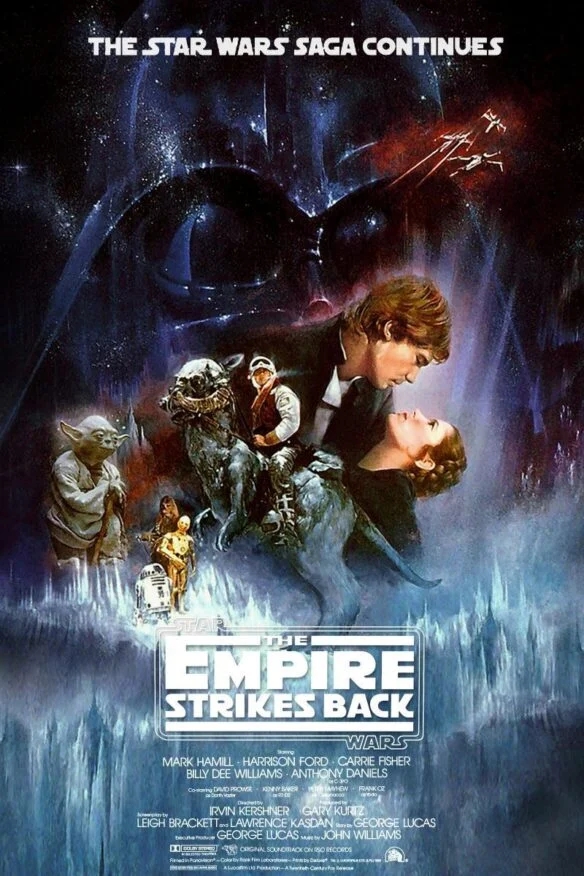
Paul Weimer’s "Memory Lane" entry offers a nostalgic and critical look back at "The Empire Strikes Back" (1980), widely considered by many, including Weimer, to be "The Greatest of the Star Wars films." His personal journey with the film began not in the theater, but through fragmented experiences with Atari 2600 and vector laser arcade games, before finally seeing it on TV in the mid-1980s, after having already watched "Return of the Jedi."
Supporting Data:
Weimer’s reflection highlights several reasons for the film’s enduring appeal. He praises its "leaner, meaner and more controlled" script compared to the original "Star Wars," which he admits "can be slow going in places." He notes the subtle shifts in character dynamics, particularly George Lucas’s apparent change of mind regarding Luke and Leia, leading to the nascent romantic tension between Leia and Han. Key moments such as the introduction of Yoda in his "best incarnation," the return of Force Ghost Obi-Wan, and Darth Vader’s casual deflection of Han Solo’s blaster fire are singled out for their impact.
The article culminates in a discussion of the iconic reveal: "Luke, I am your Father." Weimer calls it "One of the greatest twists in modern cinema, bar none," and explores its immediate implications for Luke and the Rebellion, plunging them into a "low point" with Han captured and the rebellion scattered. He frames Empire as a masterful execution of the "Hero’s Journey," serving as the quintessential "descent" or "ordeal" in the trilogy. Contrasting it with often "flabby or repetitive" middle installments, Weimer declares Empire "the exception that proves the rule."
Implications:
"The Empire Strikes Back" holds a unique and revered position within the Star Wars saga and cinematic history. Its darker tone, complex character arcs, and groundbreaking plot twist elevated the franchise beyond a simple space opera, imbuing it with deeper mythological resonance. Weimer’s personal recollection mirrors the experience of many fans who grew up with the films, solidifying its status as a cultural touchstone. The film’s critical success and continued adoration by fans demonstrate its profound influence on storytelling, character development, and the art of the sequel, setting a benchmark for epic middle chapters in serialized narratives.
Korean Monster Movie: "Hope" Blends "Bad CGI" with "Brilliant Action"
Chronology:
A decade after his acclaimed horror-hybrid "The Wailing" (2016), Korean director Na Hong-jin makes his much-anticipated return with "Hope." Shrouded in secrecy despite an international cast and the largest budget in Korean film history, the film has finally arrived, receiving a Variety review that describes it as an "overlong monster mash" featuring "bad CGI inside brilliant action."
Supporting Data:
The Variety review highlights Na Hong-jin’s reputation for "uncategorizable genre mash-ups." "Hope" is set in the late 1980s, pre-cellphones, in the shabby South Korean hamlet of Hope Harbor, notably close to the North Korean border, where billboards warn against landmines and spies. The narrative begins with Police Chief Bum-seok (played by Hwang Jung-min, reuniting with Na after "The Wailing") investigating the "gorily mysterious mutilation of a large cow" in a vast field. This gruesome discovery quickly escalates into widespread chaos and carnage, as a mysterious creature wreaks havoc on the tight-knit community where "everybody knows or is related to everyone else."
The review praises the film’s "outstandingly berserk first hour," comparing it to "Ron Underwood’s cult classic Tremors, only scaled up in expanse as well as expense." Cinematographer Hong Kyung-pyo, known for his work on "Parasite," "Burning," and


Leave a Comment