
The Synthesis of Baroque Mastery and Modern Myth: The Ascendance of Jesús Aguado
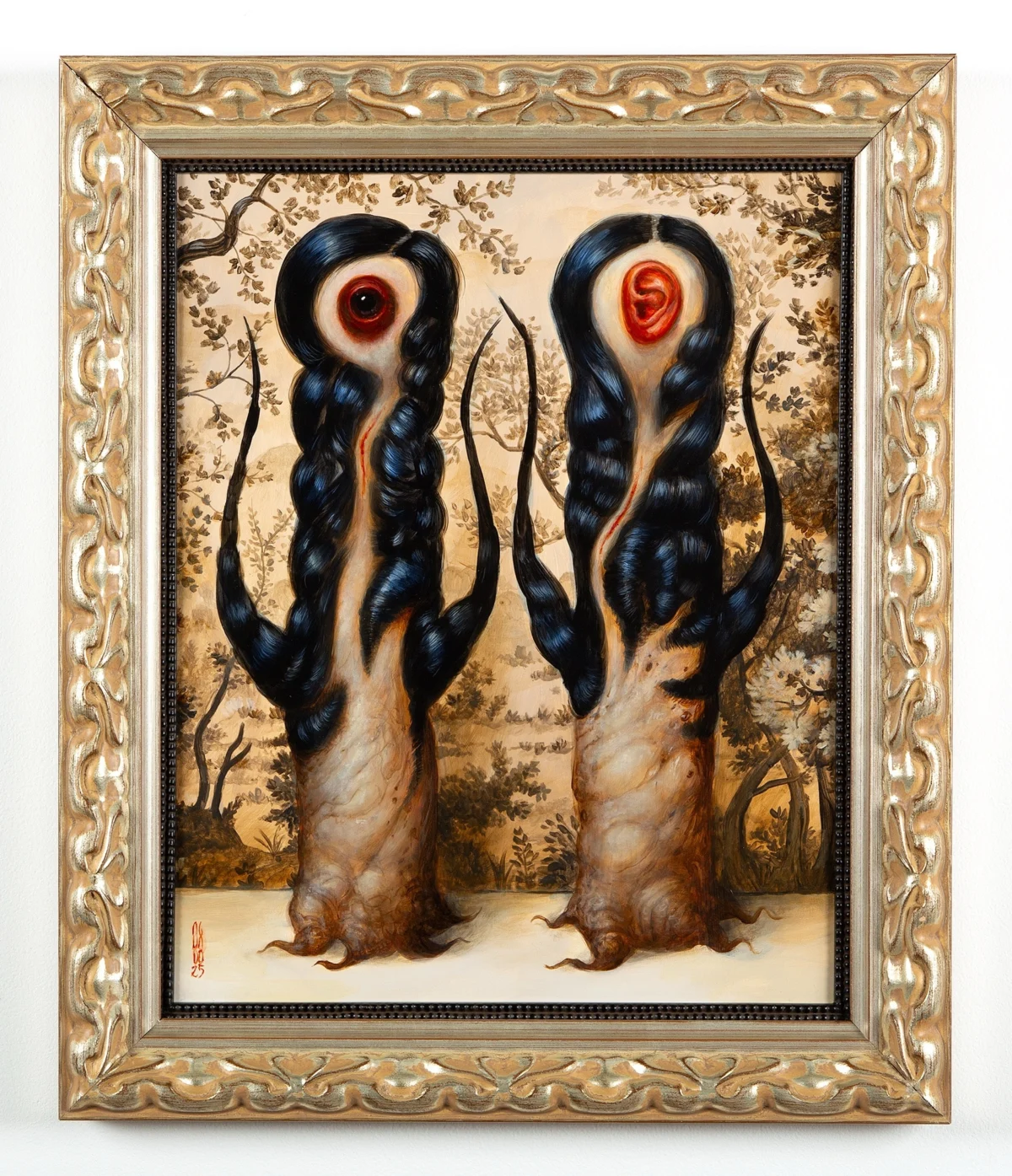
PHILADELPHIA — In the contemporary art landscape, a persistent tension exists between accessibility and intellectual depth. For decades, the "Lowbrow" or Pop Surrealism movement has often been dismissed by academic circles as overly commercial, while high-concept fine art is frequently criticized as being intentionally opaque. However, the emergence of Spanish artist Jesús Aguado has begun to dismantle this dichotomy.
Aguado, whose latest solo exhibition Life Milestones is currently on display at Arch Enemy Arts in Philadelphia, represents a rare breed of creator: a master technician who spent twenty years in the high-pressure world of global commercial illustration before pivoting to the fine art stage. His work—a heady fusion of Renaissance lighting, Baroque density, and comic book imagination—offers a blueprint for how 21st-century surrealism can provide both a psychological sanctuary and a profound metaphysical inquiry.
I. Main Facts: The Architect of "Baroque Surrealism"
Jesús Aguado (b. 1976) has become a pivotal figure in the international surrealist community by leveraging a background that many fine artists would hide. Rather than emerging from the vacuum of a traditional studio practice, Aguado’s visual language was forged in the editorial trenches of National Geographic, Santillana, and various international children’s publishers.

His current aesthetic, often dubbed "Baroque Surrealism," is characterized by several defining pillars:
- Aesthetic Synthesis: A combination of classical techniques—such as dramatic chiaroscuro and horror vacui—with the vibrant, narrative-driven energy of graphic novels and comic books.
- Thematic Focus: An exploration of life’s paradoxes, specifically the coexistence of joy and darkness, through an anthropomorphic bestiary that replaces human subjects with universal animal chimeras.
- Technical Rigor: The use of traditional supports, specifically wood and birch panels, treated with modern acrylic glazing techniques to create a translucent, luminous depth.
- Current Exhibition: Life Milestones, running from May 24 to June 15, 2025, marks Aguado’s third solo show with the prestigious Arch Enemy Arts gallery, cementing his status as a leading voice in the "New Contemporary" movement.
II. Chronology: From Valladolid to the Global Stage
The trajectory of Aguado’s career is a testament to the power of "slow-burn" mastery. His journey is marked by distinct phases of technical acquisition and philosophical shifts.
1976–1998: The Academic Foundation
Born in Valladolid, Spain, Aguado showed early aptitude for draftsmanship. He pursued formal training at the University of Salamanca, earning his degree in Fine Arts. During this period, he became enamored with the Spanish and Flemish masters—Velázquez, Rubens, and Caravaggio—whose influence remains the skeletal structure of his current work.

1998–2017: The Illustration Decades
Following university, Aguado entered the professional world not as a gallery artist, but as a commercial illustrator. For two decades, he produced art for educational textbooks and scientific publications. This period was crucial for two reasons:
- Universal Communication: Working for publishers in Spain and as far-reaching as Taiwan, Aguado learned to communicate complex ideas through imagery that transcended language barriers.
- Discipline: The relentless deadlines of the publishing industry forced him to master speed, precision, and the ability to render diverse textures—from the iridescent scales of a dragon to the soft fur of a rabbit—with clinical accuracy.
2017–2018: The Fine Art Pivot
Around 2017, Aguado began the transition from digital and commercial media to oil and acrylic painting on wood. This was not a rejection of his past, but an evolution. He began to combine his "comic book" sensibilities with the academic poetry of his university days. By 2018, his signature style had coalesced, attracting the attention of international galleries.
2020–Present: The Arch Enemy Years and Fatherhood
Aguado’s relationship with Arch Enemy Arts in Philadelphia began in 2020, providing him with a platform in the United States. However, the most significant biographical shift occurred in 2023 with the birth of his son. This event transformed his work from general surrealism into a deeply personal, metaphysical exploration of life’s "milestones," leading directly to his 2025 exhibition.

III. Supporting Data: The Technical Alchemy of Light and Wood
Aguado’s work is distinguished by a level of technical sophistication that sets him apart from many of his peers in the Pop Surrealist genre. His methodology is a dialogue between the 17th and 21st centuries.
The Substrate of History
Unlike many contemporary artists who favor canvas, Aguado paints almost exclusively on wood and birch panels. This choice is strategic. Wood offers a rigid, non-porous surface that allows for the fine-detail work required for his complex compositions. Furthermore, it carries the "weight" of art history, echoing the supports used by Northern Renaissance masters. This material choice lends a sense of permanence and gravitas to his often whimsical subjects.
The Glazing Process
Aguado employs a complex system of acrylic glazing. By applying multiple translucent layers of paint, he allows light to penetrate the surface and bounce back from the underlying layers. This creates a "shimmering" effect, or what critics call a "vivacious ecstasy of tranquil joy." This luminosity makes his chimerical creatures—dragons, worms, and hybrid insects—feel tangibly present, as if they possess their own internal light source.

The Bestiary of Symbols
Aguado’s "cast" of characters is not random; it is a coded language:
- Dragons: Represent ferocity, ancient wisdom, and the raw power of nature.
- Rabbits: Embody innocence, vulnerability, and the "cute" veneer of the modern world.
- Worms and Insects: Suggest the grotesque, the cycle of decay, and the often-overlooked foundations of life.
By excluding humans, Aguado ensures that his art is "demographically neutral," allowing any viewer, regardless of age or culture, to project their own identity onto his protagonists.
IV. Official Responses: Critical Reception and Gallery Perspectives
The art world’s response to Aguado has been characterized by a recognition of his "accessible profundity."
The Gallery’s Stance
Arch Enemy Arts, a gallery known for championing the "New Contemporary" and "Dark Romanticism" styles, has positioned Aguado as a cornerstone of their roster. Gallery directors have noted that Aguado’s work performs a rare feat: it rewards the "quick look" of the casual observer with vibrant color and charm, while simultaneously rewarding the "deep look" of the collector with intricate narrative threads and master-level technique.

Critical Interpretation
Art critics have frequently highlighted Aguado’s use of horror vacui—the fear of empty space. His canvases are often "strategic overwhelms," packed with flora and fauna. Critics argue that this density mirrors the information-heavy digital age, but rather than causing anxiety, Aguado’s organized chaos offers a "visual novel" experience that encourages slow, meditative consumption.
One reviewer described his work as "Renaissance beauty impregnated with the darkest baroque," noting that his ability to balance irreverent humor with existential dread is his most "revolutionary" trait.
V. Implications: Art as a Sanctuary for the Overstimulated
The rise of Jesús Aguado comes at a critical juncture in cultural history. As the digital world becomes increasingly fragmented and "exhausting"—a term Aguado himself uses to describe the modern deluge of opinions and information—his art serves a specific psychological function.

The "Life Milestones" Series
The implications of his current series, Life Milestones, are particularly resonant. By using metaphors such as "winged caterpillar mothers wielding hammers" or "octopus stumps gardening with lobster claws," Aguado addresses the "metaphysical mitosis" we all undergo. His work suggests that life is not a linear path but a series of transformative, often bizarre "milestones" that embed themselves in the deepest parts of our being.
Escapism vs. Expansion
While Aguado’s work is often categorized as escapist, its implications go deeper. He describes his paintings as spaces where "joy and darkness coexist." By forcing these two opposites into a single, beautiful frame, he provides a visual "pressure valve" for the viewer. His work implies that the goal of art in the 21st century is not just to provide a temporary exit from reality, but to provide a sanctuary where the viewer can process the complexities of existence with "tranquil joy."
The Future of the Movement
Aguado’s success suggests a shifting tide in the art market. Collectors are increasingly seeking works that offer a high degree of craftsmanship (the "mastery" aspect) combined with a relatable, modern mythology. Aguado’s ability to bridge the gap between his commercial past and his fine-art future indicates that the next generation of great artists may not come from the "white cube" of the academy, but from the diverse fields of global visual communication.

Conclusion: The Visual Vocabulary of the 21st Century
Jesús Aguado has spent the last decade proving that an artist’s commercial background can be their greatest superpower. By refusing to choose between pop appeal and art-historical significance, he has created a new visual language. In an era that demands the navigation of contradiction with grace, Aguado’s "Baroque Surrealism" offers more than just a beautiful image—it offers the visual vocabulary we need to understand a complex, beautiful, and often absurd world.
Exhibition Details:
- LIFE MILESTONES by Jesús Aguado
- Venue: Arch Enemy Arts, Philadelphia
- Dates: May 24 – June 15, 2025
- Opening Reception: First Friday, June 6, 2025
- Online Access: archenemyarts.com/lifemilestones2025


Leave a Comment