
The Relentless Evolution: Mastering the Zerg Swarm in Tabletop Battles
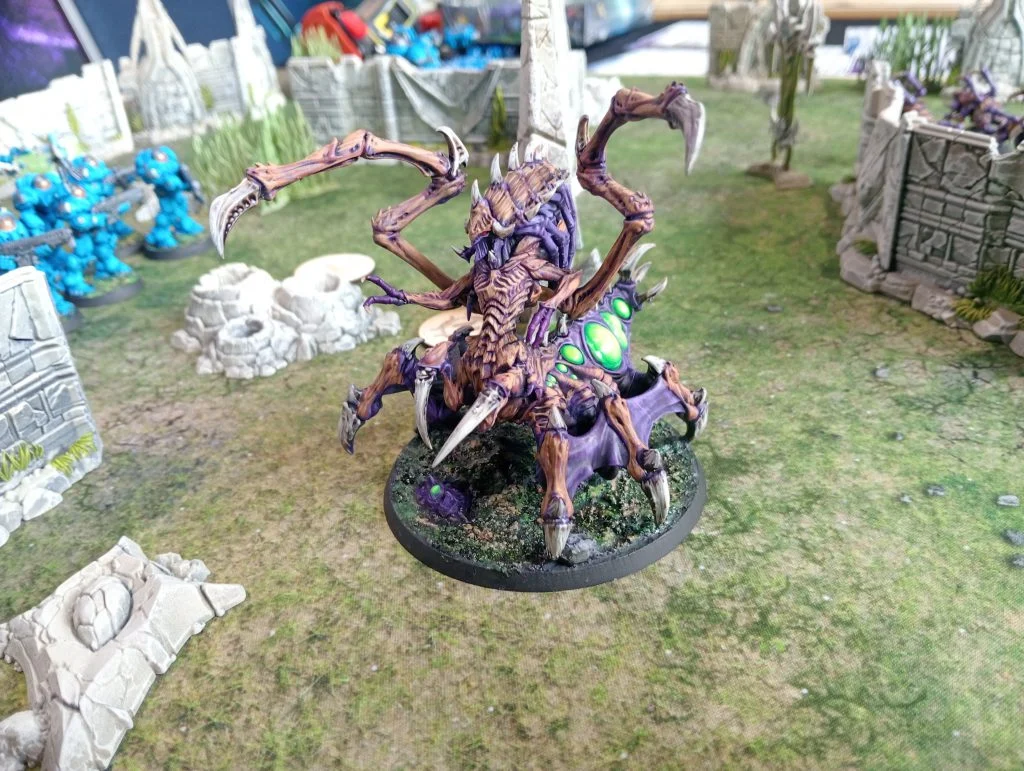
The Zerg, an iconic alien species from the StarCraft universe, embody a terrifying and relentless drive for perfection through evolutionary adaptation. For players delving into the StarCraft Tabletop Miniatures Game, understanding the Zerg is not merely about their statistics but about grasping their core philosophy: a singular, unified superorganism driven by a "Purity of Essence" bestowed by the ancient Xel’naga. This essence fuels their insatiable hunger for assimilation, transforming genetic material from conquered species into a myriad of specialized bioforms and strains. Their goals are primal – endless expansion and the acquisition of more essence, a relentless pursuit that, some argue, mirrors the boundless, self-perpetuating nature of late-stage capitalism, substituting "essence" for "capital."
This article provides an in-depth strategic guide to the Zerg faction in the StarCraft Tabletop Miniatures Game, exploring their unique mechanics, pivotal cards, diverse unit roster, and advanced tactical combinations. From their origins to their tabletop manifestations, we uncover the intricate layers that define the Swarm’s relentless march.
The Swarm’s Relentless March: A Strategic Overview
In the StarCraft Tabletop Miniatures Game, the Zerg play as a highly specialized, adaptive force. Their units are typically designed to excel in one specific role, often at the expense of versatility. This "toolbox" approach demands a player who can meticulously analyze the opponent’s strategy, identify weaknesses, and deploy the precise counter-tool from the Swarm’s vast biological arsenal. Success with the Zerg hinges on masterful timing, board control through organic expansion, and the ability to execute devastating, often unexpected, strikes.
The Zerg’s core gameplay revolves around creating synergistic combinations between their unique mechanics, unit abilities, and faction cards. They are not a forgiving faction for the uninitiated, but for those who master their intricacies, the Zerg offer a deeply rewarding and potent playstyle capable of overwhelming any adversary.
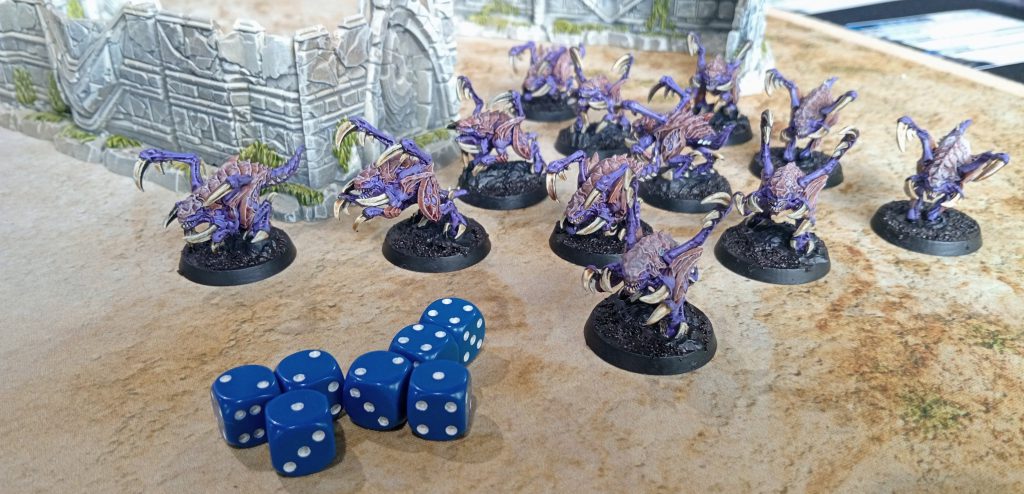 Starcraft Tabletop Miniatures Game – Zerglings in combat.

Core Mechanics: The Biological Foundation of Conquest
The Zerg faction distinguishes itself with several unique mechanics that fundamentally shape their strategic approach and interaction with the battlefield.
Creep: The Living Battlefield
Main Facts: Creep is more than just a terrain feature; it is a living, psionically active superorganism that the Zerg propagate across the battlefield. It serves as the Swarm’s nervous system, binding colonies together and enhancing the capabilities of Zerg lifeforms that operate within its influence. This biological network is central to Zerg communication, sustenance, and combat effectiveness.
Supporting Data: In game terms, models within 6 inches of a Creep Tumour or an Omega Worm gain the On Creep status. While On Creep provides no inherent bonus by itself, it acts as a crucial trigger for numerous Zerg unit abilities, enhancing their movement, damage, or defensive capabilities. Creep Tumours themselves are tokens with Stay In Place and Displacement, meaning they establish an area of influence and can slightly impede enemy movement, forcing awkward model placement or even blocking narrow corridors.
Implications: Creep is a primary vector for Zerg map control and area denial. Spreading Creep aggressively is vital for maximizing the effectiveness of your army, turning strategic zones into potent killing fields or defensive strongholds. Opponents must either dedicate resources to removing Creep Tumours – often a costly distraction – or contend with empowered Zerg units on the Swarm’s home turf. This mechanic emphasizes proactive board manipulation and rewards players for maintaining a widespread Creep network.
Burrow: Subterfuge and Surprise
Main Facts: Burrow is a signature Zerg ability, reflecting their natural capacity for subterranean movement and ambush tactics. It allows units to disappear beneath the ground, becoming a hidden threat or an evasive target.
Supporting Data: Broadly, Burrow grants the Hidden status. Beyond mere concealment, Burrowed units are considered Size 0, allowing even Size 1 terrain to block line of sight. They gain the ability to make an Evade roll against any attack, even if their Hidden status has been removed. Furthermore, as long as they remain Hidden, they are untargetable by shooting attacks beyond 4 inches and immune to Impact damage.
However, Burrow comes with significant tactical trade-offs. Burrowed units count as Supply 0 for Disengage checks, cannot control or contest objectives, cannot make any attacks, and cannot charge. Any movement, unless explicitly stated otherwise by a special ability, immediately breaks Burrow. This means that in close combat, a Burrowed unit cannot even make melee attacks without first performing a Close Ranks action, which removes the Burrow status.
Implications: Burrow is primarily a defensive and manipulative tool. It denies opponents easy targets, forces them to spend actions or units on "detection" to remove Hidden, or lures them into unfavorable positions. It excels at setting up counter-attacks, protecting vulnerable units, or creating psychological pressure on an advancing enemy. Mastering Burrow involves understanding when to commit to the defensive posture and when to unleash a sudden, devastating unburrowing strike.
Burrow Ambush: Rapid Deployment
Main Facts: A common upgrade for many Zerg units, Burrow Ambush transforms the defensive Burrow mechanic into an offensive deployment tool.
Supporting Data: Burrow Ambush allows a unit to Deploy 18 inches from your deployment line. Crucially, it cannot be used from an Omega Worm, making it a distinct form of rapid insertion.
Implications: Given the Zerg’s relative lack of other "Place(X)" or double-move abilities common in other factions, Burrow Ambush is their primary method for quickly getting units across the board. It allows for flanking maneuvers, rapid objective contention, and surprise attacks, bypassing traditional movement constraints and presenting immediate threats to the enemy’s rear or flanks.
Devastating Charge: The Swarm’s Onslaught
Main Facts: While not exclusive to the Zerg, the Devastating Charge ability is far more prevalent and central to their combat philosophy than in other factions.
Supporting Data: Even the humble Zergling deals IMPACT damage upon charging, and the Zerg faction possesses numerous ways to buff Devastating Charges through cards and Creep types.
Implications: This ubiquity means Zerg armies often excel at initiating combat with a powerful alpha strike. By maximizing IMPACT damage, Zerg units can soften up or even eliminate enemy units before they have a chance to retaliate, allowing the Swarm to dictate the pace and outcome of engagements. It encourages an aggressive playstyle focused on overwhelming charges and decisive melee combat.
Strategic Architectures: Faction & Creep Cards
Faction cards define the core identity of your Zerg army, while Creep types provide essential army-wide buffs.
Faction Cards
Faction cards generate 1 Biomass per round, a vital resource for activating many Zerg abilities. They also mandate the selection of a Creep type, further specializing your force.
-
Kerrigan’s Swarm – Faction
- Main Facts: This faction represents the legions under the direct psionic command of Sarah Kerrigan, the Queen of Blades. It embodies her vengeful fury and aggressive leadership.
- Supporting Data: In-game, it provides 1 Hero Slot, 2 Elite Slots, and 3 Core Slots. It allows you to summon Kerrigan’s Omega Worm, granting access to the Nydus Network for rapid redeployment. Additionally, it offers an "any-phase buff" that provides +1 movement and Precision (1) on your first attack for a chosen unit. This buff lasts the entire turn, translating to +1 movement, +1 charge distance, and one guaranteed hit on either a shooting or melee attack.
- Implications: Kerrigan’s Swarm is an excellent choice for players seeking an aggressive, damage-oriented approach. It provides significant combat enhancements and unparalleled mobility through the Omega Worm, allowing for decisive strikes and rapid reinforcement. Access to Malignant Creep and specialized Kerrigan Swarm Raptors further amplifies its offensive potential.
-
Zerg Swarm – Faction
- Main Facts: Representing the unified Zerg swarm, presumably under the command of the Overmind, this faction is considered the "default" Zerg experience, emphasizing adaptability and resilience.
- Supporting Data: This faction provides 1 Elite Slot, 3 Core Slots, and 1 Support Slot. It grants a powerful defensive reaction: +1 to Evade rolls. For units like Zerglings, this boosts their Evade to a remarkable 3+. Furthermore, a Movement Phase ability allows you to burrow any unengaged unit out of sequence.
- Implications: Zerg Swarm excels at reactive plays and defensive trickery. The enhanced Evade makes your units surprisingly resilient, while the out-of-sequence burrow can bait enemy attacks, allow units to reposition safely, or set up devastating ambushes. This faction rewards cunning players who can exploit enemy movements and hide their intentions.
Creep Types
Choosing a Creep type is mandatory and significantly impacts your army’s overall strategy. Creep cards do not generate Biomass.
-
Accelerating Creep (Unique) – Creep
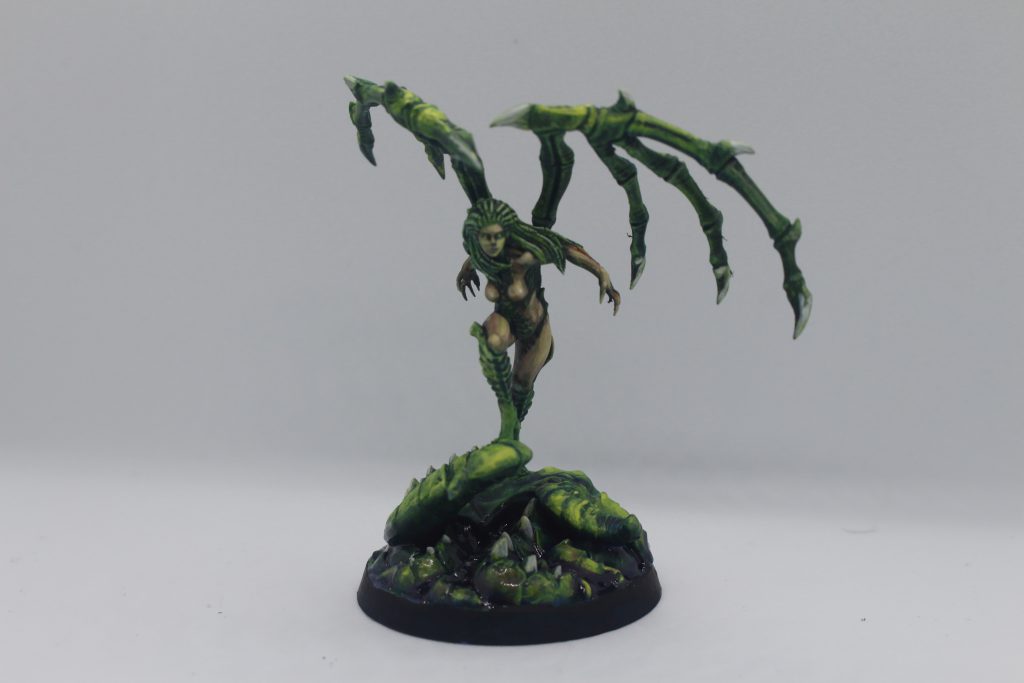
- Main Facts: A straightforward yet highly effective Creep type focused on enhancing the Swarm’s mobility.
- Supporting Data: Units On Creep gain +1 to their Speed. This bonus applies to both regular movement and charge distances.
- Implications: In tabletop games, movement is often king. Accelerating Creep provides a substantial advantage, allowing Zerg units to close distances faster, outflank opponents, secure objectives, and perform longer, more reliable charges. It’s an excellent default option for any Zerg force.
-
Malignant Creep (Unique) – Creep
- Main Facts: This Creep type prioritizes raw damage output over speed, making your charges even more lethal.
- Supporting Data: Units On Creep gain +1 to their Devastating Charge rolls.
- Implications: While seemingly minor, a +1 to Devastating Charge rolls can dramatically increase the reliability and damage output of your charging units. For Zerglings, it can represent a 50% increase in their IMPACT hits, turning a good charge into an utterly devastating one. This is ideal for aggressive lists focused on overwhelming melee assaults.
Zerg Queen, a vital support unit for the Swarm.
Evolutionary Adaptations: Biomass-Generating Cards
These cards represent the Zerg’s essential structures and capabilities, each generating one Biomass per round and offering unique tactical advantages.
-
Evolution Chamber (1 BM)
- Supporting Data: Provides 1 Core Slot. It grants either Tough (1) in any phase, boosting durability, or +1 to IMPACT rolls in the Assault Phase.
- Implications: A versatile choice. Tough (1) can make key units surprisingly resilient, shrugging off a critical hit. The IMPACT buff synergizes perfectly with Devastating Charge-focused units, enhancing their offensive punch.
-
Hatchery (1 BM)
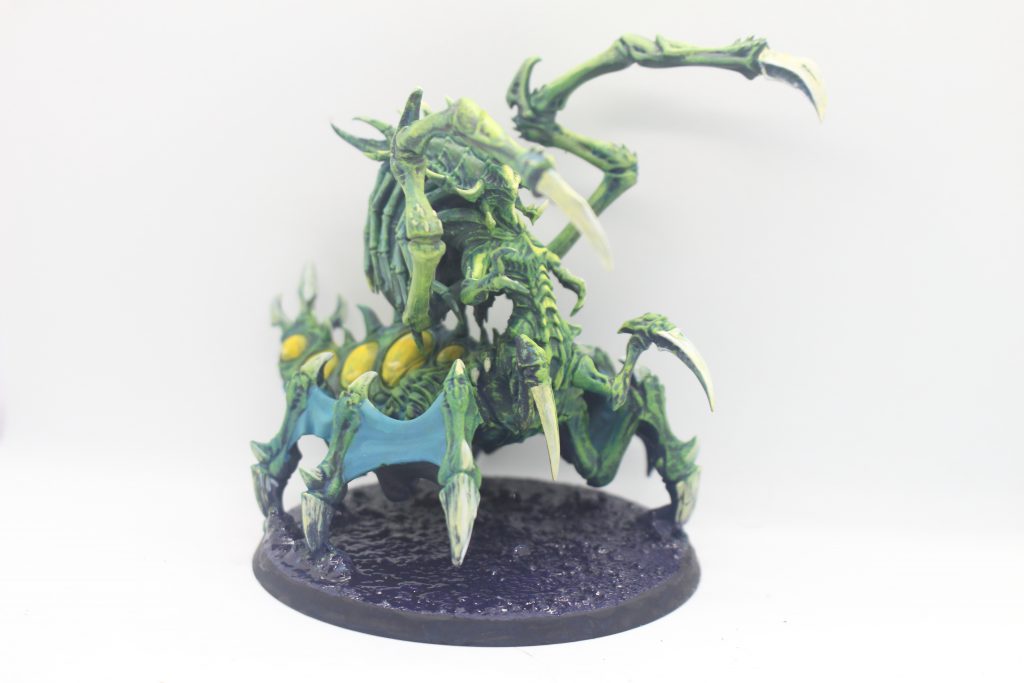
- Supporting Data: Provides 1 Support Slot. In the Movement Phase, it can be used to burrow an active, unengaged ground unit (without costing an action) or drop a Creep Tumour within 6 inches of another Creep Tumour or your entry edge.
- Implications: Essential for early Creep spread and reactive Burrow plays. The ability to burrow a unit without expending an action offers significant tactical flexibility, allowing units to disengage and immediately hide.
-
Hydralisk Den (1 BM)
- Supporting Data: Provides 2 Elite Slots, primarily to field more Hydralisks. It also grants one unit Precision (1) in shooting.
- Implications: While the Precision (1) is a nice bonus, the main draw here is the increased Elite capacity, allowing players to field a formidable ranged core of Hydralisks.
-
Lair (Unique) (1 BM)
- Supporting Data: Provides 1 Elite Slot and 1 Core Slot, an advanced version of the Hatchery. It shares the Creep Tumour ability and, instead of burrowing, grants Instant to a unit’s Close Combat Weapons (currently "Any Phase," likely an error to be clarified).
- Implications: The Lair offers a balanced slot distribution and a potent combat buff. Granting Instant attacks allows units to bypass enemy defensive reactions or attack first in melee, potentially crippling an opponent before they can strike.
-
Overlord (Unique) (1 BM)
- Supporting Data: Provides 1 Hero Slot, 1 Elite Slot, 1 Core Slot. Crucial for taking Kerrigan in a Zerg Swarm list. It has a similar Creep Tumour ability to the Hatchery/Lair but works in the Assault Phase, allowing for reactive Creep placement. Its signature ability is a signaled end-of-round Deploy: drop a token 10 inches away from enemy models, and after scoring, deploy a unit base-to-base with the token.
- Implications: The Overlord is a strategic powerhouse. Its late-game deployment ability is invaluable for bringing reinforcements into key positions, reinforcing a Burrow Ambush, or punishing overextended opponents. Its Assault Phase Creep drop also provides unexpected board control.
-
Overseer (Unique) (1 BM)
- Supporting Data: Provides 1 Support Slot. In the Movement Phase, it can remove Hidden from enemy units within 6 inches of a token you place. Alternatively, it can give a unit a better charge reroll (2d6 drop lowest).
- Implications: The Overseer is borderline mandatory for Zerg. It’s their primary means of removing Hidden from enemy units, crucial for targeting Burrowed or cloaked threats. The enhanced charge reroll further boosts the reliability of Zerg charges, making it a versatile support piece.
-
Roach Warren (1 BM)
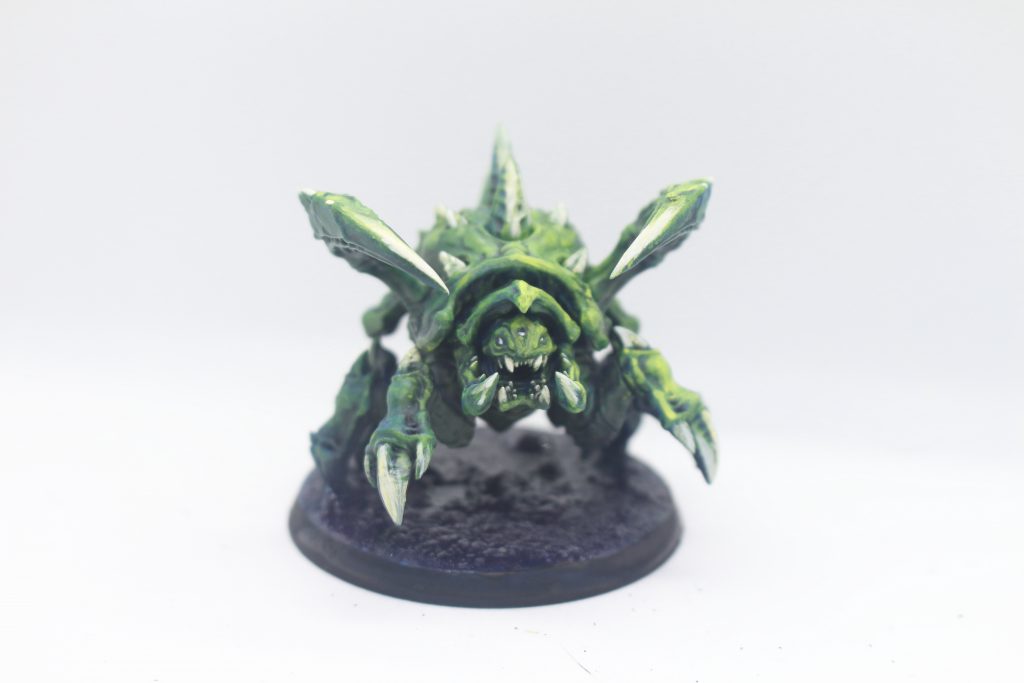
- Supporting Data: Provides 1 Core Slot. Allows you to unburrow a unit in the Assault Phase.
- Implications: This card synergizes powerfully with Burrow mechanics, enabling "Nasty Surprises" where units burrow defensively and then unburrow to attack in a later turn, catching opponents off guard.
-
Spawning Pool (1 BM)
- Supporting Data: Provides 1 Core Slot. Grants Precision (2) in melee.
- Implications: An excellent buff for melee-focused units like Zerglings or Kerrigan, significantly improving their hit probability and overall damage output in close combat.
-
Spawning Pool (Six Pool) (Unique) (2 BM)
- Main Facts: A specialized, more aggressive version of the Spawning Pool, referencing an iconic early-game rush strategy from StarCraft.
- Supporting Data: Provides 2 Core Slots. It grants Precision (2) in melee, like its standard counterpart. Its unique ability is to Deploy one basic Zergling unit off any Table Edge, provided they are out of 10 inches of an enemy model.
- Implications: This card enables a highly aggressive, early-game threat. While the basic Zergling’s 6+ charge chance is low, combining it with Accelerating Creep, Kerrigan’s Swarm, and an Overseer can boost the success rate to a formidable 75%, presenting an unavoidable threat that can cripple an opponent’s setup. It’s a significant commitment but can seize victory by overwhelming the enemy’s flanks.
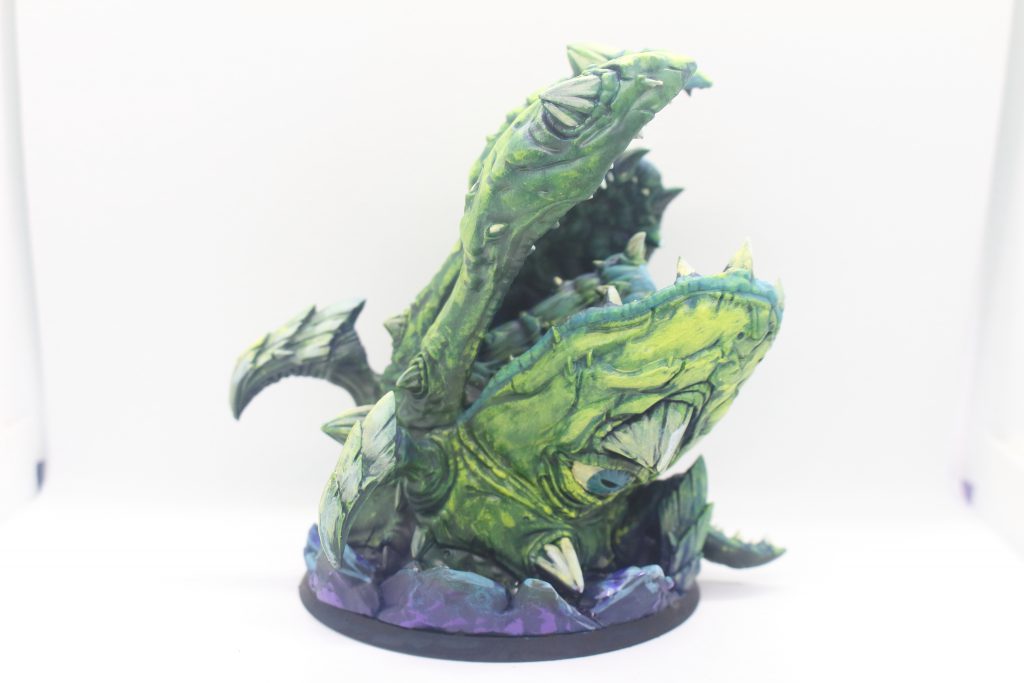 Kerrigan, the Queen of Blades, leading the Swarm.
The Swarm’s Bioforms: Unit Analysis
The Zerg unit roster is a testament to their evolutionary adaptability, with each bioform serving a specific, often hyper-specialized, role.
Heroes
- Kerrigan, The Queen of Blades
- Main Facts: The ultimate expression of the Swarm’s will, Kerrigan is a terrifying psionic entity and a master of both ranged and melee combat, embodying the Swarm’s relentless pursuit of dominance.
- Supporting Data: With Speed 7, 5+ Armour, 6+ Evade, and 9 HP, she is surprisingly mobile and resilient for a hero. She counts as 1 Supply but 2 for Objectives and Disengages. Her Movement Phase abilities (1 Biomass each) allow her to Activate an enemy unit within 12 inches, preventing their movement or ability use, or tune her defenses against a specific enemy unit within 18 inches, granting +2 to Evade rolls against their attacks. This allows her to effectively negate a significant portion of a chosen unit’s damage.
- In the Assault Phase, she possesses an 8-inch ranged attack (5 shots, 3+ hit, D3 Surge vs. Light/Armoured, 1 damage). Her Devastating Charge (4) on 4+ is solid. Her signature Leaping Strike allows her to Place (6) if unengaged, enabling devastating charges from unexpected angles or quick repositioning. In melee, she delivers 6 attacks (4+ hit, 2 damage, Critical Hit (2)), capable of inflicting 4 automatic damage on two hits.
- Implications: Kerrigan is a complex but immensely powerful control piece. Her ability to shut down key enemy units or dramatically reduce incoming damage makes her a vital strategic asset. Her high mobility and potent melee make her a dangerous duelist, while her Leaping Strike allows for unparalleled tactical flexibility. Mastering Kerrigan requires precise timing and target prioritization.
Supports
- Queen
- Main Facts: The Zerg Queen serves as the vital utility and support backbone of the Swarm, responsible for maintaining the Creep network and tending to the lesser bioforms.
- Supporting Data: These Armoured units (4+ Armour, 9 HP, no Evade) are slow (4-inch move) but indispensable. In any phase, Queens can cleanse debuffs (within 4 inches), block 2 incoming damage on a friendly unit (reaction), or spawn a Creep Tumour (base-to-base). While these abilities are costly, a Queen can discount one ability use by 1 Biomass per round if 7 friendly models are within 6 inches (including herself, meaning 6 other models). This synergy with Zerglings is crucial.
- Her shooting attack (6-inch range, 4 shots, 4+ hit, Surge D3 vs. Light, 2 damage) is decent against light infantry, and her anti-flying attack (12-inch range, same stats, Surge vs. Light/Armoured) is potent. She boasts IMPACT (4) on 3+ on the charge but is weak in melee (3 attacks, 4+ hit, 1 damage).
- Upgrades: A mandatory upgrade provides +2 Speed On Creep (a 50% movement buff). Another allows her to grant +1 Supply for Objectives/Contesting to a unit within 6 inches.
- Implications: Queens are essential for Creep spread, damage mitigation, and supporting Zergling blobs. Their ability to discount actions when surrounded by smaller units reinforces the Zerg’s reliance on numerical superiority. The Creep Speed upgrade is almost universally beneficial, allowing them to keep pace with the advancing Swarm.
Core
-
Zergling – Zergling Variant
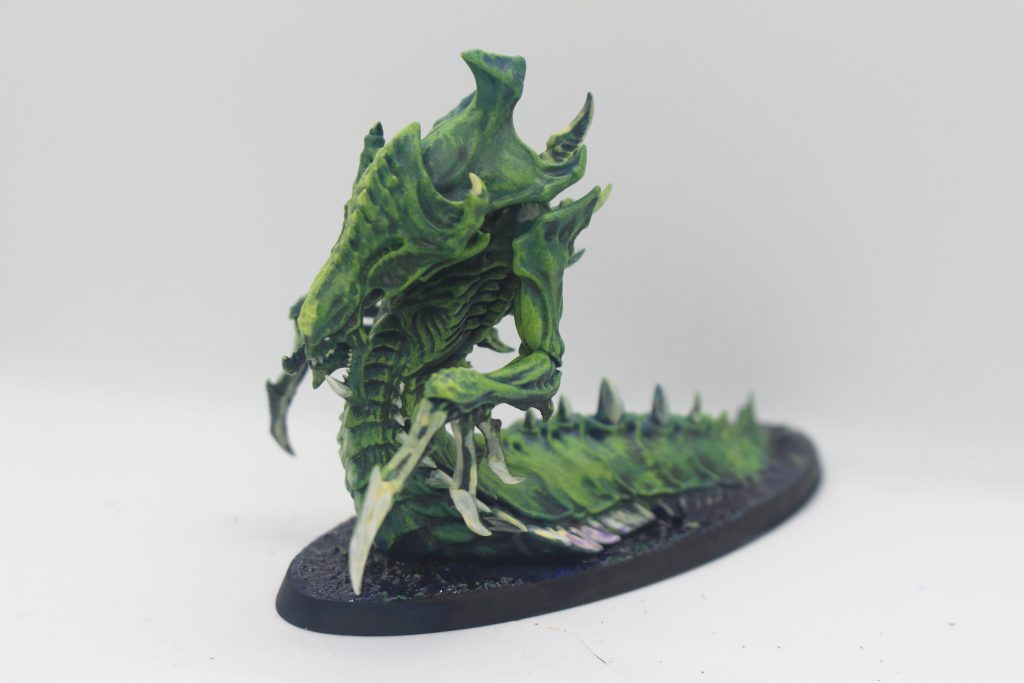
- Main Facts: The iconic "Ling Rush" unit, Zerglings are fast, numerous, and relentless, forming the core skirmish and assault force of the Swarm.
- Supporting Data: They come in units of 12 for 1 Supply or 18 for 2 Supply. With 4/8 move, 6+ Armour, 4+ Evade, and 1 HP each, they are fragile but incredibly fast. Their 4-inch coherency grants them effective movement. They can get 2D6 drop lowest on the charge (before rolling). They resolve IMPACT (1) on 5+. While individually weak, a unit of 18 Zerglings with Malignant Creep and Evolution Chamber support can average 12 IMPACT hits. In melee, they get 2 attacks each (4+ hit, D3 Surge vs. Light, 1 damage).
- Upgrades: Burrow Ambush, Precision (2), and Shredding Claws (Surge vs. Armoured/Light).
- Implications: Zerglings are designed to overwhelm with numbers, bog down enemy lines, and efficiently trade with skirmish units. They are crucial for triggering Queen discounts and can be upgraded to tackle heavier targets. However, they are vulnerable to choke points and massed area-of-effect attacks.
-
Swarmling – Zergling Variant
- Main Facts: A specialized Zergling variant focused on attrition and numerical advantage through regeneration.
- Supporting Data: Come in 18s for 1 Supply, with similar stats to Zerglings but 5+ Evade. They share the same coherency, charge bonus, and IMPACT damage. They are weaker in melee (5+ hit, no Surge) and only get Burrow Ambush as an upgrade.
- What sets them apart is their Respawn ability: For 1 Biomass, bring back 2 Swarmlings (or 3 if On Creep) base-to-base with other models.
- Implications: Swarmlings are fantastic for objective control and screening. Their Respawn ability makes them incredibly resilient, allowing them to constantly re-engage, tie up enemy units, or flip objectives. Though their melee is weak, their charge is as potent as regular Zerglings.
-
Roach – Roach Variant
- Main Facts: The general-purpose frontline unit, Roaches are tanky, adaptable, and masters of subterranean combat.
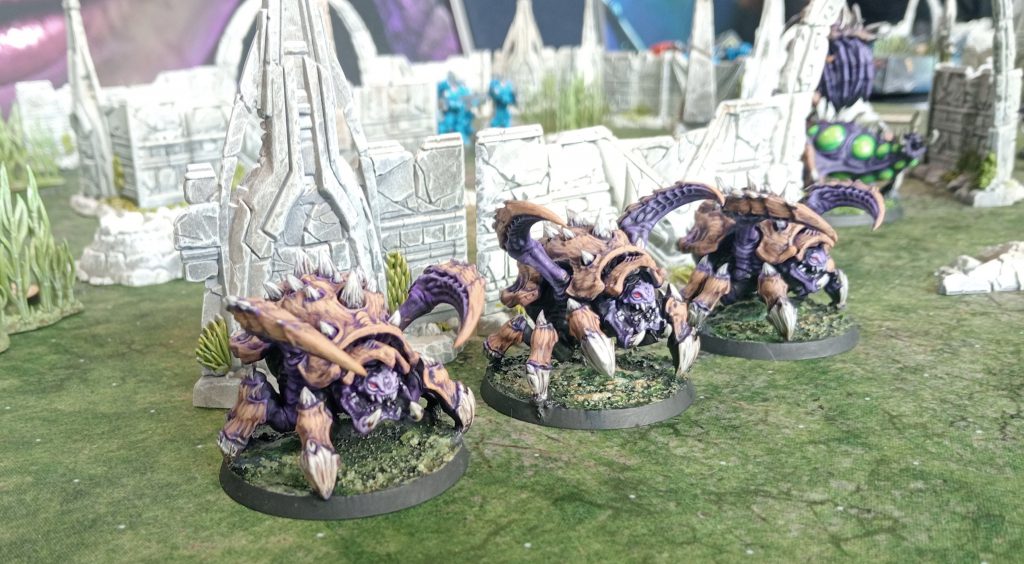
- Supporting Data: Come in 3s for 1 Supply. With 4/7 move, 3+ Armour, 5+ Evade, and 4 HP each, they are incredibly durable. They are the only unit with innate burrow/unburrow for 2 Biomass (any phase, no list-building cost). They Heal (2) if Burrowed at the start of their activation. They have Devastating Charge (2) on 4+, a mediocre 8-inch shooting attack (3 shots, 3+ hit, 1 damage), and weak melee (2 swings, 4+ hit, 1 damage).
- Upgrades: Burrow Ambush, Tunneling Claws (move/run while Burrowed, phase through bases), +


Leave a Comment