
The Inescapable Dread: Exploring Horror’s Most Relentless Pursuers in Literature
Main Facts: The Unyielding Terror of the Unstoppable
In the vast landscape of horror, audiences and readers often seek the thrill of confrontation, the satisfaction of a monster defeated, or a curse broken. From the classic silver bullet for a werewolf to a decisive blow to a zombie’s brain, conventional horror narratives frequently provide a clear path to vanquishing evil. However, a particularly potent strain of terror emerges when the antagonist defies such conventions. What happens when the villain hunting the characters is seemingly unstoppable, an entity, curse, or force that simply keeps coming, regardless of any countermeasure? This subgenre taps into a profound, primal fear: the loss of control and the inescapable march of the inevitable.
This article delves into the unsettling world of horror literature where characters find themselves ensnared by malevolent forces that cannot be outrun, outwitted, or definitively defeated. These narratives strip away the comfort of resolution, leaving protagonists—and readers—to grapple with an existential dread that resonates deeply.
Chronology: Tracing the Evolution of Inescapable Horror
The concept of an unstoppable force in horror is not new; its roots can be traced back to ancient folklore and mythological tales where fate, divine curses, or vengeful spirits pursued individuals relentlessly. These early narratives often served as cautionary tales, emphasizing the futility of defying destiny or atoning for past transgressions. In literature, this theme gained prominence with the rise of gothic horror, where ancestral curses or lingering specters haunted families across generations, embodying a slow, inexorable doom.
The 20th century saw the trope evolve, often reflecting societal anxieties. Post-World War II horror, for instance, sometimes channeled the pervasive sense of dread and helplessness against global threats. In modern horror, the unstoppable entity frequently moves beyond mere physical threat, becoming a psychological tormentor or a metaphysical manifestation of fate itself.

The cinematic realm has significantly popularized this trope. Films like George A. Romero’s The Return of the Living Dead (1985) introduced zombies that could not be killed by conventional means, only delayed. David Robert Mitchell’s It Follows (2014) masterfully depicted a sexually transmitted curse that manifests as a slow, relentless stalker, always approaching, always present. The entire Final Destination franchise, beginning in 2000, personifies Death itself as an intelligent, unavoidable force, meticulously correcting any attempts to cheat it. These films collectively cemented the idea of an antagonist whose defining characteristic is its sheer, terrifying persistence.
A pivotal moment in this subgenre’s global impact was the Japanese novel Ring by Koji Suzuki, which was famously adapted into the 1998 film Ringu. This story epitomized the concept of a time-limited, transmissible curse—a cursed video tape that, once watched, marks the viewer for death within seven days unless they replicate and pass on the curse. This ingenious premise introduced a new level of psychological horror: not only is the threat unstoppable, but survival demands complicity in its spread, blurring the lines between victim and perpetrator.
Building upon this rich history, contemporary authors continue to innovate, crafting narratives that explore the terrifying implications of inescapable horror. The following five books and short stories represent some of the most compelling recent examples of characters desperately trying to evade or outmaneuver malevolent forces that simply refuse to be defeated.
Supporting Data: Literary Manifestations of Unstoppable Dread
"The Road Virus Heads North" by Stephen King (1999)
Stephen King, a master of modern horror, frequently explores the terror lurking in the mundane, and "The Road Virus Heads North" is a quintessential example of his knack for making inanimate objects terrifying. Featured in his 1999 collection Everything’s Eventual, the short story introduces Richard Kinnell, a horror author whose journey home to Derry, Maine, after a literary conference in Boston takes a sinister turn.
Kinnell’s fateful encounter at a yard sale leads him to purchase a peculiar painting. The artwork, depicting a man with a fang-filled mouth driving a muscle car across Boston’s Tobin Bridge, initially appeals to his macabre sensibilities. However, as he resumes his drive, Kinnell begins to notice subtle, unsettling changes in the painting. The man in the canvas seems to move, his car advancing along the depicted highway. This slow, insidious transformation escalates the psychological pressure on Kinnell. His initial amusement quickly gives way to creeping dread, leading him to desperate attempts to rid himself of the painting.

The horror in "The Road Virus Heads North" lies not in a sudden, violent assault, but in the relentless, methodical progression of the painted image. Each glance reveals further advancement, each attempt to abandon the artwork proves futile as it inexplicably reappears or finds its way back to him. King masterfully crafts a scenario where the antagonist is not a physical being but an unfolding, malevolent narrative contained within a canvas, an entity that closes the distance, mile by painted mile. The unstoppable nature here is tied to an artistic, almost metaphysical, inevitability. Kinnell cannot destroy it, cannot escape its presence, and the horrifying implication is that the painting’s final "destination" is his own reality, leading to a chilling, unavoidable confrontation. This story reinforces King’s reputation for transforming everyday objects—like the topiary animals in The Shining or even a car in Christine—into sources of profound, inescapable fear.
Maggie’s Grave by David Sodergren (2020)
David Sodergren’s Maggie’s Grave injects a potent blend of folk horror and B-movie sensibilities into the unstoppable entity trope, delivering a narrative that is both darkly comedic and genuinely terrifying, liberally spiced with gore. Set in the desolate, dying Scottish town of Auchenmullan, the story unfolds in 2019, where only 47 inhabitants cling to a dwindling existence.
The catalyst for chaos arrives with an unsuspecting American tourist. The town’s few remaining young adults, seeking to entertain their guest, take her to Auchenmullan’s most infamous landmark: the grave of Maggie Wall, a woman burned as a witch in 1657. What begins as a disrespectful lark—defiling the grave—quickly spirals into unimaginable horror. Maggie Wall, far from being a quiescent historical figure, rises from her grave, driven by centuries of unquenched vengeance.
Maggie, as a desiccated corpse, defies conventional physical limitations, her supernatural nature allowing her to bypass corporeal constraints. This is where her "unstoppable" quality truly shines. She is not merely a reanimated body; she is an embodiment of ancient, elemental fury. The residents of Auchenmullan, trapped in their isolated town, soon discover that traditional defenses are useless against her. Bullets pass through her, physical attacks prove futile, and her relentless pursuit of retribution for the injustice she suffered centuries ago cannot be reasoned with or appeased. Sodergren masterfully uses Maggie’s non-corporeal yet physically devastating presence to create an antagonist who is truly beyond defeat, making her a terrifying force of nature in a modern setting, reminding readers that some evils are too old and too powerful to be reasoned with. The isolated Scottish landscape further amplifies the sense of entrapment, as there’s literally nowhere to run from a witch who knows every inch of the land she haunts.
Incidents Around the House by Josh Malerman (2024)
Josh Malerman, known for his unique and unsettling concepts like Bird Box, presents a polarizing yet deeply effective horror narrative in Incidents Around the House. The story is told entirely from the perspective of eight-year-old Bela, whose purposefully simplistic and choppy narrative voice lends an unnerving, childlike innocence to escalating terror. Bela’s frequent, almost obsessive use of "Daddo" is one of the stylistic choices that divides readers but undeniably immerses them in her limited, yet terrifying, world.
Bela has formed a strange "friendship" with a supernatural entity she calls "Other Mommy." This entity’s persistent request—"Can I go into your heart, Bela?"—becomes the central, insidious threat. Bela, not fully grasping the implications, consistently refuses, but Other Mommy’s patience wears thin, and her demands grow more insistent and aggressive.

The horror in Malerman’s novel is profoundly psychological and intimate. Other Mommy’s physical descriptions are chillingly vague yet visceral, making her a shape-shifting, omnipresent threat within the confines of Bela’s home. The "unstoppable" nature of Other Mommy is rooted in her insidious presence and her relentless psychological manipulation. She cannot be banished, reasoned with, or killed by any conventional means, as her existence seems tied to Bela’s perception and her gradual attempts to infiltrate Bela’s very being. The family’s desperate, heartbreaking attempts to escape—moving from room to room, house to house—only serve to highlight the futility of their efforts, as Other Mommy remains an ever-present, internal, and external threat. Malerman crafts excellent jump scares, but the true terror lies in witnessing a family’s slow unraveling under the weight of an entity that cannot be defeated, only endured, or ultimately, succumbed to.
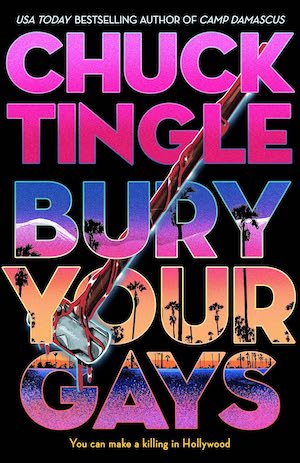
Bury Your Gays by Chuck Tingle (2025)
Chuck Tingle, celebrated for his unique brand of satirical and often explicitly queer-themed pulp fiction, ventures into more mainstream horror with Bury Your Gays. This novel tackles both a popular horror trope and a pervasive real-world issue, creating a meta-horror narrative that is both inventive and impactful. Misha Byrne, a successful screenwriter, finds himself at odds with studio executives who demand he adhere to the "bury your gays" trope – the depressingly common narrative device where queer characters are killed off, especially after moments of happiness or intimacy. Misha’s sci-fi show, Travelers, features two female leads on the cusp of a groundbreaking kiss, a moment the studio will only permit if the characters meet a tragic end shortly thereafter.
Misha’s refusal to sacrifice his characters’ happiness leads to a surreal and terrifying consequence: his own fictional villains, conjured from his creative mind, begin to manifest in reality and pursue him. The most terrifying among them is "The Smoker," a hauntingly pale man with no eyelids who asks for a light. Deny him, and he guarantees death in five days. Crucially, Misha, in his initial creation, never conceived of a way to defeat The Smoker.
The unstoppable nature of The Smoker and Misha’s other creations is central to the novel’s meta-commentary. Misha’s oversight in not writing a defeat mechanism for The Smoker directly translates into his real-world predicament, making the villain truly unstoppable by his own design. Tingle skillfully weaves in complex themes of corporate greed, AI’s role in creative industries, and queer erasure within the horror framework. Despite the heavy subject matter, Misha’s dry wit and the delightfully creative horror elements maintain a sense of dark fun. The Smoker, as an unkillable, inescapable death sentence, becomes a chilling metaphor for the relentless, destructive forces Misha battles, both fictional and corporate, highlighting the terror of confronting a threat for which no solution was ever intended.
"Come" by Nat Cassidy (2026)
Nat Cassidy’s forthcoming short story, "Come," promises a contemporary re-imagining of classic horror tropes, blending the viral curse of Ringu with the relentless pursuit of It Follows, all set against the backdrop of a high school. The premise is immediately compelling: a cursed sex tape circulates, bringing death to its viewers. However, Cassidy introduces a unique twist that sets "Come" apart.
The unnamed protagonist is among the first at their school to inadvertently watch a portion of this infamous, long-lost video—a scandalous recording of a student and teacher in a classroom. The terrifying pattern quickly emerges: anyone who watches the video dies. Yet, the protagonist is an anomaly; they don’t die. Instead, they become the unwitting carrier of the curse, the nexus through which the malevolent force continues its relentless path.

The curse in "Come" is unstoppable because it adapts, using the protagonist’s immunity not as a reprieve, but as a mechanism for its perpetuation. The psychological burden on the protagonist is immense, forced to navigate the horror of being a vector for inescapable death while simultaneously being spared its direct effects. Cassidy expertly captures the frivolous and often vulgar attitudes of teenagers towards such a tape, but beneath the superficial humor, the story delivers genuine scares and treats its grim subject matter with a nuanced seriousness. The unstoppable nature here is ingenious: the curse isn’t about killing one person, but about its ceaseless, almost viral, propagation, transforming the victim into an agent of dread. It’s a modern take on the inescapable, highlighting how information (even cursed information) can spread and haunt in the digital age.
Official Responses: The Genre’s Embrace of Inevitability
The critical and popular reception of stories featuring unstoppable entities reveals a profound fascination within the horror genre for narratives that challenge conventional expectations. Critics often laud these works for their ability to evoke a deeper, more existential dread than traditional monster tales. Unlike a creature that can be physically harmed or outsmarted, an unstoppable force taps into the fundamental human fear of helplessness and the ultimate inevitability of certain aspects of life, particularly death.
The "official response" of the genre, as reflected in critical analysis and audience engagement, suggests that these stories resonate because they force a confrontation with the limits of human agency. Authors like Stephen King are praised for their psychological depth in portraying characters grappling with futility. Sodergren and Malerman receive recognition for their innovative approaches to old tropes, proving that relentless dread can be found in ancient curses or within the confines of a child’s mind. Tingle’s work is notable for using the trope as a powerful metaphor for systemic issues, earning appreciation for its bold social commentary. Cassidy’s impending work is anticipated for its fresh take on established horror paradigms, indicating a continuous appetite for reinvention within this subgenre.
These stories often receive particular acclaim when they manage to convey a sense of dread without resorting to cheap scares, building tension through the creeping realization that escape is not an option. This commitment to an inescapable narrative arc often distinguishes them, earning them a place in discussions about truly impactful and memorable horror. They are seen as pushing the boundaries of terror, moving beyond visceral fright to a more lingering, psychological torment.
Implications: The Enduring Allure of Unstoppable Horror
The enduring appeal of stories featuring unstoppable creatures, curses, or forces lies in their ability to strip away the illusion of control. In a world where humanity constantly strives to conquer nature, illness, and even death, these narratives remind us of the terrifying power of the inevitable. They tap into universal anxieties: the fear of inescapable fate, the dread of an unknown threat that cannot be reasoned with, and the ultimate vulnerability of human existence.
By presenting protagonists who cannot simply "win" in the traditional sense, these stories often explore themes of endurance, psychological resilience, and the profound impact of unrelenting pressure. They invite readers to confront their own fears of situations where agency is lost, where every action is merely a delay, and where the outcome is predetermined. This can be deeply unsettling, yet also strangely cathartic, as it allows for a safe exploration of ultimate helplessness.
Furthermore, the "unstoppable" trope often forces authors to be highly creative in their narrative construction, focusing on the psychological breakdown of characters, the desperate ingenuity of their attempts to survive, and the philosophical implications of their predicament. The horror transcends mere monster-slaying; it becomes a meditation on mortality, the nature of evil, and the limits of human power.
Whether it’s a painting that comes to life, a vengeful witch rising from her grave, an insidious entity infiltrating a child’s mind, a created villain manifesting to punish its maker, or a viral curse that uses its victims as conduits, these narratives leave a lasting impression. They remind us that sometimes, the most terrifying horror is the one that simply keeps coming, demanding not defeat, but acceptance of its relentless, terrifying presence. These stories are a testament to horror’s power to confront us with our deepest, most primal fears, offering no easy answers, only the chilling certainty of inescapable dread.


Leave a Comment