
Interstellar Reunion Reveals Deep Divisions, Hints at Unexpected Unity

Harbor Hill, Earth – What began as a traditional Reunion Day celebration, intended to bridge the growing chasm between Earth-bound "Grounders" and their "Spacer" kin, devolved into a series of cultural clashes this week, culminating in damage to a vital ecological habitat and a public confrontation. However, an unexpected intervention by the legendary "First Spacer," Admiral Biswas, has offered a surprising new perspective on the ancient divide, suggesting that the very act of separation was, in itself, a profound act of ecological stewardship.
The annual Reunion, a quadrennial event bringing together the five core clans of Grounders and various Spacer contingents, is traditionally a time for renewing gene-kin bonds and sharing progress reports. This year, however, saw simmering tensions boil over, particularly fueled by the outspoken defiance of a young Grounder, Rayet Waterweaver of the Willow Clan.
Reunion Day Marred by Inter-Clan Tensions
The festivities commenced under a strained atmosphere. Mayzelle, a prominent bondmother and clan leader, was reportedly exasperated from the outset, struggling to rally her fourteen-year-old daughter, Rayet, who had initially refused to participate in the "ritualistic folly" of the Welcoming ceremonies. Rayet, known for her "sharp angles and prickly opinions," expressed fervent disdain for the returning Spacers, whom she pejoratively labeled "void suckers."
"She’d sworn she wouldn’t stand for this anymore. She’d sworn," a source close to Mayzelle indicated, highlighting the deep-seated frustration even before the Spacer ships docked. Mayzelle herself was observed rushing through the commune, searching for Rayet, who was ultimately discovered at her beloved marine habitat, immersed in data visualization.
The Spacers’ arrival, heralded by a "white-gold star" appearing in the noontime sky and a "merry fanfare blown on real brass horns," was met with cheers from the assembled clans on Harbor Hill. Yet, young Rayet "clenched her fists and stared in silent rage at the earth below," reflecting a widespread Grounder sentiment that views Spacer culture as disruptive and antithetical to their core values.
A Daughter’s Defiance and the Grounder-Spacer Rift
The stark cultural differences between Grounders and Spacers formed the backdrop for the day’s events. Grounders are dedicated to "cultivating habitats, stewarding ecologies, cleansing the Terran soils, waters, and weather systems," embodying a philosophy of nurturing and balance within Earth’s "great global garden." They view the planet as a "whole thrumming planet to live for and care for."
In contrast, Spacers are perceived by many Grounders as "crammed in their cold ships, plying the darkness of the solar system, with all their mad groping after desolate frontiers," knowing "nothing of nurture, of balance, of warmth." This deep philosophical divide manifests in daily interactions.
Throughout Reunion Day, numerous incidents underscored this friction. A Spacer’s "rocktorch burned away nearly an entire briar patch" in the commune’s tanglewilds. A brawl erupted in the Conclave Hall after Suleman, orchestrating "mobi-chairs," inadvertently disrupted an impromptu wrestling match among Spacers. Further incidents included "another torch accident in the data hall, and a jumping contest that nearly flattened the gardener guild’s new mushroom crop!"
The most significant disruptions, however, stemmed from Rayet’s increasingly confrontational behavior. At luncheon, she nearly came to blows with a Spacer boy who consumed all the cold roast beef, questioning his understanding of natural meat as a "rare, precious gift." Later, during a tour of the restock farms, Rayet physically "attacked two Spacer men who’d provoked the cloned marmosets," resulting in "punches thrown" and "eyes blackened"—a "terrible, humiliating scene," according to witnesses.
Rayet’s consistent outspokenness during official sessions, including reports on asteroid redirection and colonization, highlighted her "boiling dislike for these rowdy gene-kin." Despite Mayzelle’s repeated attempts to counsel her, Rayet remained steadfast in her conviction that she was a "staunch defender of the Grounder way of life."
The Enigmatic Admiral Biswas and the Feast’s Unraveling
A curious subplot unfolded with the delayed arrival of Admiral Biswas, Rayet’s great uncle and the revered "First Spacer." Mayzelle had hoped his presence would offer a unifying force, but Biswas was notably absent from the initial landing. Spacer clan leaders, Captain Forth and Dame Obingwa, dismissed Mayzelle’s concerns, stating Biswas had "peeled off the fleet before the final approach" in his private shuttle, having "grown reclusive in his later years." Captain Forth, described as "small, compact, tough," and "virtually ageless," suggested that "after eighty-five years off-world… a guy gets to be a little odd, spending all that time in the void."
As the evening feast progressed, the Spacers grew "ragingly drunk," with Captain Forth emerging as the most unruly. She fixated on Rayet, mockingly challenging her perspective on the difficulties of Grounder life versus the perils of space. "You’d have to be an absolute shivving psychopath to want to leave this planet, eh?" Forth slurred, calling her own crew "worthless void suckers" and "fart recyclers," yet simultaneously provoking Rayet to "show me what it is you do all day down here."
Rayet, unable to contain her indignation, accepted the challenge, leading a procession of rowdy Spacers to her prized marine habitat in the ecopod vale. Despite her attempts to explain the intricate "balance, the cycles, the flows" of ecoculture, the Spacers treated her work with dismissive curiosity, eyeing the organisms for "useful applications" like "soil growth" or "colonization." Their aggressive curiosity culminated in a wrestling match between Captain Forth and a cadet, resulting in a shoulder slamming into Rayet, the crowd shifting, and a "crack" as her console was shattered.
The damage to the habitat, causing "plumes of milky haze" to writhe into the water, triggered an alarm and left Rayet distraught. Mayzelle arrived to find her daughter amidst the wreckage, leading to a tense confrontation in the elders’ lodge.
A Revelation in the Ecopods
In the aftermath, Mayzelle and Rayet’s argument escalated. Mayzelle expressed profound weariness, lamenting the absence of Uncle Biswas, believing his presence might have averted the disaster. Rayet, however, vehemently rejected any positive association with Spacers, shouting, "If you think your stupid Uncle Biswas is so great, I wish you’d go to space with him. Just go!" before fleeing into the night.
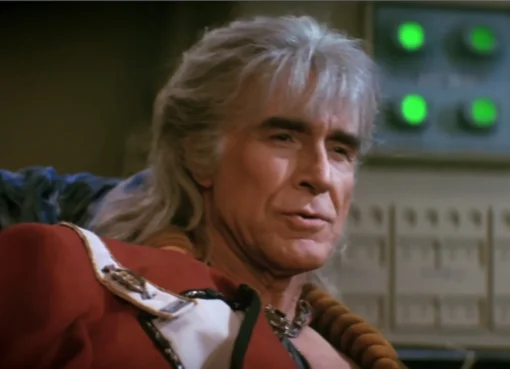
The following morning, Rayet discovered a miracle: the milky plumes of biotic pollution in her marine habitat were gone, replaced by a "healthy, balanced marine ecosystem." Standing nearby was a small, white-haired man, no taller than her shoulder, meticulously adjusting a portable console. It was Admiral Biswas.
Biswas, a figure far removed from his "regal and authoritative" holoportraits, humbly explained his intervention: "The thing about nutrient imbalances is that the right kind of algal bloom will just… will just mop them all right up!" He revealed his past as an "ecofarmer" and handed Rayet the console, displaying his "expert cleanup job."
The conversation that followed was a turning point. Biswas revealed that Mayzelle feared Rayet would "run away… with the Spacers." Rayet’s shock ("She thinks I want to be a Spacer? Are you serious?") was palpable, but Biswas calmly articulated the Spacer ethos: "Many of us were Grounders once. And every Grounder we’ve taken on, they all found their way to us in the same fashion. First, they picked fights with us. Then, over time, they got to like the fighting." He suggested that some individuals are simply "born that way," possessing a "rambunctious disposition" and a "high tolerance for risk" necessary for the "greatest fight there is… with the void."
Bridging the Divide: Implications for Future Coexistence
The most profound revelation came as Mayzelle joined Rayet later, explaining Biswas’s true history. "He didn’t want to go to space?" Rayet asked, astonished. Mayzelle clarified that Biswas, a man who "fell into a depression every time a habitat failed" and "always did love to garden and farm," had never been "that type" of restless individual.
During the "Long Decline," after the "Time of the Cities" and before the "conclave network had just barely formed," Earth faced a unique challenge: a planet transformed into "one giant garden" left "fidgety people" with no "earthly wilderness" to tame. Biswas, the "first to lead a long-haul flight," sacrificed his own desires to "neutralize a threat to our way of life."
"He became a Spacer because he hated Spacers?" Rayet incredulously asked. Mayzelle clarified, "Biswas gave up everything—everything he valued—to neutralize a threat to our way of life." He essentially managed human restlessness as a form of "ecoculture," shifting "excess energy out of the system" by providing a "more stimulating habitat" in the void for those predisposed to exploration and conquest.
Rayet, finally grasping the true genius of her great uncle, burst into laughter. "Getting the Spacers off the Earth… creating those two cultures, Spacers and Grounders, it… it has to be the greatest work of ecoculture in history!" she exclaimed.
Looking at the departing Spacers, who, despite their rowdiness, moved as "one great single unified organism," Rayet observed, "They weren’t bad, so much as out of their element, like creatures adapted to a different habitat." She concluded, "He’s not their leader, really. He’s ours."
The events of Reunion Day, though fraught with conflict, have unveiled a deeper understanding of the Grounder-Spacer relationship. What was once seen as an irreconcilable divide, born of differing values, is now understood by some as a carefully managed ecological balance, orchestrated by a reluctant pioneer. Admiral Biswas, the quiet gardener who became an admiral, ensured Earth’s peace by providing an outlet for humanity’s inherent drive for expansion, making him, in a profound sense, the ultimate steward of both worlds. The future of Grounder-Spacer relations, while still complex, now carries the potential for a new era of mutual, if distant, respect.



Leave a Comment