
Nat Meade Unveils "Franklin": A Profound Exploration of Fatherhood, Mortality, and Renewal at HESSE FLATOW
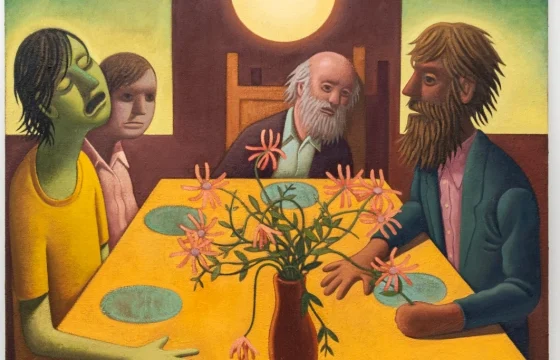
New York, NY – HESSE FLATOW is proud to present "Franklin," the third solo exhibition by acclaimed artist Nat Meade, a captivating collection of paintings and works on paper that delves into the complex tapestry of human experience. Running through April 18, 2026, "Franklin" offers a deeply personal yet universally resonant exploration of the artist’s navigation of fatherhood, his recent reflections on his own paternal legacy, and the inherent struggles and eventual triumphs that define our lives.
Meade’s figurative works, renowned for their allegorical depth and evocative imagery, serve as potent vehicles for confronting universal archetypes. Within the canvases of "Franklin," viewers are invited to contemplate themes of existential searching, intergenerational dynamics, and the delicate balance between vulnerability and resilience. Far from literal depictions, Meade’s protagonists embody timeless human struggles, rendered with a masterful blend of the absurd, the somber, and the humorous. This exhibition marks a significant moment in Meade’s artistic journey, offering a candid and poignant examination of personal challenges and the enduring strength of the human spirit.
The Genesis of "Franklin": A Personal Reckoning
The exhibition’s genesis lies in the artist’s profound and recent experience of his father’s passing. This profound loss has catalyzed a deep reevaluation of his own role as a parent, prompting an introspective journey into the complexities of familial bonds and the cyclical nature of life. "Franklin" becomes a canvas for Meade to process grief, explore inherited traumas, and ultimately, to find a sense of hope and reconciliation through the introduction of younger figures within his oeuvre.
Meade has consistently explored the human condition through his art, but "Franklin" represents a more direct and vulnerable engagement with themes of mortality and legacy. The works are imbued with a palpable sense of introspection, as Meade grapples with the weight of his father’s memory and the burgeoning responsibilities of his own parenthood. This personal reckoning, however, is not presented as a solitary burden. Instead, the exhibition introduces elements of renewal and acceptance, suggesting that even in the face of profound loss, there is a path towards healing and the perpetuation of love.
A Visual Dialogue: Archetypes and Allegories
The figurative language employed by Nat Meade in "Franklin" is rich with symbolism, inviting viewers to engage in a visual dialogue with the artist’s introspective themes. Each canvas and work on paper acts as a portal into a realm where personal experiences are transmuted into timeless archetypes, offering a powerful allegorical distance.
In pieces like Poise, Meade presents a striking image of dangling legs suspended from a cloud. This ambiguous scene immediately prompts contemplation on the duality of existence – is the figure ascending or descending? The implication is a profound suggestion of the interchangeability of birth and death, both physically and spiritually. This visual metaphor speaks to the continuous flow of life, where endings are often precursors to new beginnings.
Further exploring the ethereal and the profound, Meade introduces "ghostly specters" that hover over certain individuals. These spectral presences are not merely decorative; they serve as potent metaphors for inherited trauma, the lingering effects of past experiences that can shape present realities. Yet, within this evocation of burden, Meade also suggests the possibility of release. The visual representation of a soul peeling away from a body, reminiscent of classic animation, invites contemplation on how we perceive our past selves – with happiness, regret, or a complex amalgamation of both. This visual trope underscores the exhibition’s central theme of confronting and ultimately transcending personal and familial burdens.
The exhibition’s title, "Franklin," itself carries a subtle yet significant resonance. Meade draws a connection to the 1974 horror film The Texas Chainsaw Massacre, a cinematic work notorious for its chilling portrayal of a deranged patriarchal family. This deliberate allusion is not an endorsement of violence but rather an acknowledgment of the inner turmoil that can arise from confronting destructive familial impulses. Meade’s characters, in their often-turbulent interactions, sublimate or bring these antagonistic forces into a semblance of order.
The allegorical weight continues with potent imagery. A vulture picking away at a corpse evokes the eternal punishment of Prometheus by Zeus, a timeless symbol of suffering and consequence. Elsewhere, a bearded figure on his hands and knees echoes William Blake’s iconic depiction of Nebuchadnezzar, a monarch brought low and condemned for his insatiable lust for power. These powerful references underscore Meade’s engagement with universal narratives of human fallibility, ambition, and the consequences of unchecked desires.
A Shift Towards Hope and Harmony: The Younger Figures
In stark contrast to the more somber and challenging themes often explored through his adult figures, Meade introduces younger characters in "Franklin" who embody a sense of burgeoning hope, acceptance, and renewal. These figures represent a vital counterpoint, signaling a shift in the artist’s focus and a profound statement about the potential for healing and growth.
One compelling depiction features a young boy charting his own course, confidently steering a boat illuminated by a radiant torch. This image is a powerful symbol of self-determination, suggesting a journey unburdened by the societal and familial pressures that often weigh down adults. The child’s unclouded path represents an unadulterated sense of purpose and adventure.
Another poignant work captures an adolescent with ankles submerged in a secluded cove. The figure is depicted reaching into the water, where the seabed is brilliantly alive with starfish, anemones, and mussels. This scene evokes a profound sense of childlike wonder and a harmonious connection with the natural world. It speaks to a purity of experience, a direct engagement with life’s simple marvels before the complexities of adulthood take hold.
In a related piece, Meade presents a tender tableau of father and son in the same shallow pool. The composition highlights two pairs of legs, one guiding the other. This intimate portrayal is a powerful testament to the restorative nature of paternal guidance and the potential for reconciliation within familial relationships. It signifies a tender passing of knowledge and love, a nurturing interaction that fosters growth and understanding.
This emphasis on calmer waters and nurturing interactions marks a significant departure from Meade’s earlier works, where figures were often depicted wrestling with or succumbing to the overwhelming forces of nature, battered by turbulent winds and crashing waves. The focus on tranquil seas in "Franklin" signals a turning point. Meade acknowledges the necessity of confronting one’s "rocky histories" – the traumas, the losses, the intergenerational burdens – as a crucial step towards healing and liberating future generations from similar struggles.
Despite the inherent weight of these themes, Meade offers a powerful reminder of the "stubborn resilience of human nature." This resilience, he suggests, makes progress attainable. Even in the face of what may seem like insurmountable challenges, the capacity for growth, healing, and ultimately, a more harmonious existence, remains. "Franklin" is not a narrative of despair, but rather a testament to the enduring human capacity for hope and renewal.
Supporting Data and Artistic Context
Nat Meade’s artistic practice is deeply rooted in a tradition of figurative painting that engages with psychological depth and symbolic narrative. His work often draws parallels with artists who have explored the human condition through allegorical means, from the Old Masters to contemporary painters. The exhibition’s exploration of themes like mortality, legacy, and the complexities of family dynamics aligns with ongoing dialogues within the art world concerning identity, memory, and the impact of personal history on individual and collective consciousness.
Meade’s recurring use of archetypal figures allows his work to transcend the purely personal, inviting a broad spectrum of viewers to connect with the universal human experiences he depicts. The allegorical distance he creates through his painterly style is crucial; it provides a safe space for both the artist and the audience to confront challenging emotions and complex ideas without being overwhelmed by literal representation.
The specific allusions within "Franklin," such as the reference to The Texas Chainsaw Massacre, demonstrate Meade’s engagement with popular culture and his ability to recontextualize familiar imagery to explore deeper psychological and familial themes. This approach adds layers of meaning and invites viewers to consider the darker aspects of human nature and familial relationships from a new perspective.
The introduction of younger figures as harbingers of hope and renewal is a significant development in Meade’s artistic trajectory. This thematic shift can be seen as a reflection of his own evolving life stages and a broader artistic exploration of intergenerational healing. The contrast between the burdened adult figures and the unencumbered youth underscores the cyclical nature of life and the potential for positive change and the breaking of harmful patterns.
The critical reception of Nat Meade’s previous solo exhibitions at HESSE FLATOW has consistently highlighted his mastery of technique, his incisive psychological insights, and his ability to imbue his figurative works with profound emotional resonance. "Franklin" continues this tradition, offering a body of work that is both visually compelling and intellectually stimulating, solidifying his position as a significant voice in contemporary painting.
Official Responses and Gallery Statement
HESSE FLATOW, a gallery renowned for its commitment to showcasing innovative and thought-provoking contemporary art, has expressed immense enthusiasm for presenting "Franklin." The gallery statement underscores the exhibition’s significance within Meade’s artistic development and its profound relevance to contemporary audiences.
"Nat Meade’s ‘Franklin’ is a deeply moving and intellectually rigorous exhibition that showcases the artist at the height of his powers," states [Gallery Director Name/Title, if available, otherwise use a general statement]. "His ability to translate intensely personal experiences into universal allegories is truly remarkable. This body of work, born from profound reflection on fatherhood and loss, offers a powerful exploration of vulnerability, resilience, and the enduring hope for reconciliation. We are honored to provide a platform for such an important and timely presentation."
The gallery’s commitment to exhibiting Meade’s work for a third time signifies a strong belief in his artistic vision and his growing impact on the contemporary art landscape. "Franklin" is positioned as a pivotal exhibition, inviting viewers to engage with themes that are both intimate and universally relatable, fostering dialogue and introspection.
Implications and Broader Significance
"Franklin" by Nat Meade transcends the boundaries of a typical art exhibition. It functions as a powerful catalyst for introspection, prompting viewers to examine their own relationships with family, mortality, and the legacies they inherit and pass on. The exhibition’s profound engagement with themes of grief, reconciliation, and hope carries significant implications for how we understand and navigate the complexities of human connection.
The artwork’s allegorical nature encourages a deep personal connection, allowing individuals to project their own experiences and interpretations onto Meade’s evocative imagery. This universality is a testament to the artist’s skill in tapping into fundamental human emotions and struggles. In a world often characterized by rapid change and a sense of disconnection, "Franklin" offers a moment of profound contemplation and a reminder of the enduring power of familial bonds and the human capacity for healing.
Furthermore, the exhibition contributes to a broader cultural conversation about masculinity, fatherhood, and the evolving understanding of these roles. Meade’s candid exploration of vulnerability and his acknowledgment of the challenges inherent in these identities offer a nuanced perspective that can resonate with a wide audience, challenging traditional notions and promoting a more empathetic understanding.
The introduction of younger figures as symbols of hope and renewal carries a vital message about the potential for breaking cycles of trauma and hardship. It suggests that by acknowledging and processing past burdens, future generations can be liberated, fostering a more harmonious and resilient society. This aspect of the exhibition offers a potent sense of optimism and underscores the ongoing process of growth and evolution that defines the human experience.
In conclusion, Nat Meade’s "Franklin" at HESSE FLATOW is more than just an exhibition of paintings; it is a profound meditation on the human condition, a testament to the artist’s remarkable ability to translate personal experience into universal truths, and a beacon of hope for reconciliation and renewal. The exhibition serves as a vital reminder of our shared humanity and the enduring strength found in confronting our pasts to build a more hopeful future.




Leave a Comment