
"The Ragged Edge": Babylon 5’s Interstellar Alliance Teeters on the Brink Amidst Personal Crises and Unseen Threats
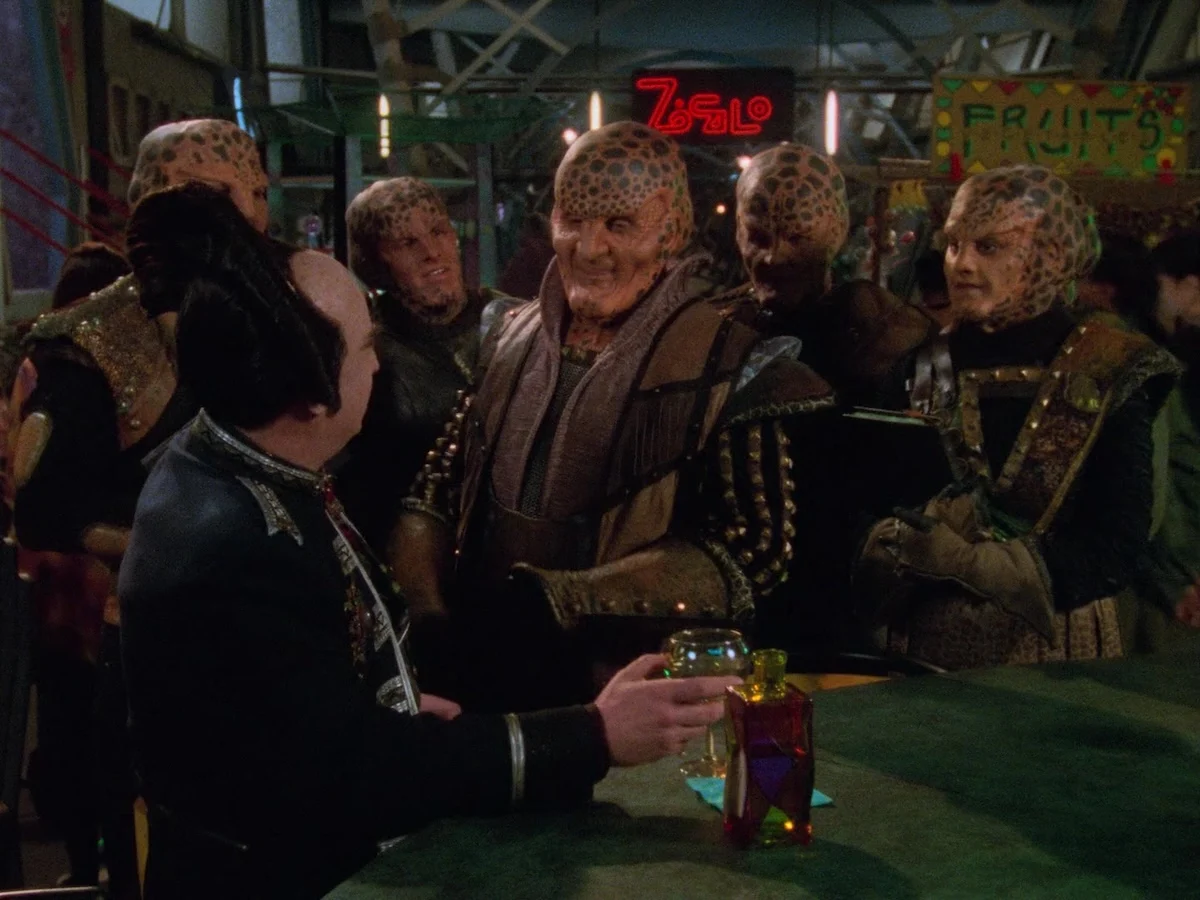
Babylon 5, Season 5, Episode 12 — "The Ragged Edge"
- Written by: J. Michael Straczynski
- Directed by: John Copeland
- Original Air Date: April 8, 1998
- Production Episode: 513
Main Facts
In "The Ragged Edge," the twelfth episode of Babylon 5’s fifth season, the nascent Interstellar Alliance (IA) finds itself on a perilous precipice, struggling to solidify its foundations amidst a wave of mysterious attacks on shipping lines. Penned by series creator J. Michael Straczynski and directed by John Copeland, the episode, which originally aired on April 8, 1998, delves deep into the political fragility of the post-Shadow War galaxy while simultaneously exposing the escalating personal crises of its central figures. President John Sheridan grapples with the bureaucratic inertia and distrust among member worlds, whose representatives are boycotting crucial treaty meetings until their security concerns are addressed.
The episode’s narrative branches into three critical arcs: the urgent investigation into the shipping attacks, led by a deeply troubled Michael Garibaldi; the unexpected and unwelcome transformation of G’Kar into a reluctant spiritual icon; and the significant career shift of Dr. Stephen Franklin. Garibaldi’s pursuit of the truth is tragically marred by his deepening alcoholism, leading to fatal consequences and the unwelcome revelation of Centauri involvement in the destabilization efforts. Meanwhile, G’Kar navigates the bizarre reality of his unfinished philosophical writings being published and revered, forcing him to confront the dangers of fundamentalism. Dr. Franklin, a beacon of medical ethics, accepts a prestigious new role that will remove him from Babylon 5 but broaden his impact across the IA. "The Ragged Edge" thus captures the multifaceted pressures facing the Alliance and its champions, highlighting how external geopolitical threats intertwine with profound personal battles, pushing everyone to their limits.
Chronology
The episode opens with a scene of bureaucratic frustration that sets the tone for the IA’s precarious state. President Sheridan is seen tirelessly signing copies of treaties, yet the conference room remains conspicuously empty. Representatives from the IA member worlds have initiated a widespread boycott of all meetings, their primary grievance stemming from the persistent insecurity plaguing their shipping lines. This political stalemate underscores the fragility of the newly formed alliance, even after the unifying threat of the Shadows has been neutralized.
The urgency of the shipping crisis is immediately brought into sharp focus with a dramatic cut to the Earth ship Red Star 9 under brutal attack. The vessel is swiftly destroyed, but not before a single lifepod ejects, carrying a lone pilot—a potential witness, and a glimmer of hope for the beleaguered IA. The wreckage is later discovered by the Rangers, confirming the presence of the missing lifepod and, for the first time, the possibility of identifying the perpetrators. However, intelligence suggests Red Star 9 may have been involved in smuggling illegal goods for the Drazi, complicating any potential Earth or Drazi cooperation in the investigation.
Meanwhile, a more personal, yet equally significant, drama unfolds with the return of Londo Mollari and G’Kar from Centauri Prime. G’Kar is immediately struck by the overwhelming positive attention he receives from his fellow Narns on the station. They bow to him, treating him with an unprecedented reverence that deeply confuses him. His aide, Ta’Lon, awaits him in his cabin and quickly clarifies the bewildering situation: Narns, concerned about G’Kar’s journey to Centauri Prime, broke into his quarters, discovered his unfinished manuscript, and, through an unknown party, had it printed. The Book of G’Kar has not only been published but has become a runaway bestseller on Narn, astonishingly outselling even the revered Book of G’Quan. G’Kar is profoundly mortified, not just by the unauthorized publication of his incomplete work, but by the weight of unintended celebrity and religious veneration.

Concurrent to these events, the struggle of Michael Garibaldi takes a darker turn. He awakens from a deep, alcohol-induced sleep, roused by Allan, who questions his absence from a scheduled meeting. Garibaldi’s flimsy excuse of sleeping through his alarm is betrayed by the empty booze bottle next to his bed—a stark visual confirmation of his relapse.
Sheridan, desperate for answers regarding the shipping attacks, authorizes Garibaldi to investigate the Red Star 9 incident, specifically to locate the missing pilot. Given the complexities surrounding the ship’s potential smuggling activities, Garibaldi asserts that his contact on the Drazi homeworld, Tafiq Azir, would only speak with him alone. He politely but firmly rebuffs Franklin’s offer to accompany him, citing the need to maintain the contact’s trust and denying any personal animosity, though the subtext of his addiction and fear of judgment from Franklin, a former stim addict and doctor, is palpable.
On Drazi, Garibaldi meets Azir in his hotel room. Their interaction suggests a history of camaraderie, further highlighting Garibaldi’s earlier deception regarding Azir’s supposed aversion to strangers. The two share drinks, and Garibaldi eventually passes out. Azir, departing to arrange a meeting with the pilot, is tragically shot just outside Garibaldi’s door. Garibaldi, slowly regaining consciousness, discovers Azir’s dying moments. A confrontation ensues with a Drazi assailant, whom Garibaldi throws over a balcony to his death. Descending to meet the pilot, Garibaldi instead finds the pilot already dead, killed by a group of hooded figures who then attack Garibaldi. Battered and bruised, Garibaldi manages to transmit an emergency signal to Babylon 5, requesting a White Star pickup from Delenn.
Back on Babylon 5, Ta’Lon convinces a reluctant G’Kar to address his burgeoning Narn fanbase, the "fangoobers," who have assembled outside his quarters. Despite G’Kar’s genuine disinterest in becoming a leader or teacher, Ta’Lon insists on the importance of his message for his people. G’Kar agrees, inviting them in. During his impromptu sermon, G’Kar advocates for Narns to transcend their historical distrust of other species. A "fangoober" challenges him, quoting an early passage from The Book of G’Kar that warns against trusting Centauri and emphasizes Narn self-reliance. G’Kar, highlighting the perils of fundamentalist interpretation, famously slams the book shut on the Narn’s nose, illustrating that an unfinished work, reflecting evolving perspectives, should not be treated as immutable dogma.
Garibaldi, returned to Babylon 5, reports his harrowing experience to Sheridan, Delenn, Franklin, and G’Kar. He presents a small gold disc he managed to retrieve from one of his attackers, admitting he doesn’t recognize it but is certain his assailants were not Drazi and were specifically targeting him, indicating an internal leak. Mollari finally arrives, late as usual, and immediately recognizes the disc as a button worn by Centauri palace guards. Garibaldi, quick-thinking, lies about finding it from a Zocalo vendor, and the others play along. Once Mollari leaves the room, G’Kar reveals the attempted assassination on Mollari back on Centauri Prime, underscoring the extreme danger Mollari would face if he knew his own people were betraying the IA.
In another significant development, Dr. Franklin meets with Sheridan to announce his acceptance of a new job offer. Dr. Kyle, his predecessor as head of Babylon 5’s Medlab, is retiring as head of Xenobiological Research on Earth, and Franklin has been asked to fill the prestigious position. Franklin explains that this new role will allow him to more efficiently catalogue medical data for all IA worlds, signaling a strategic move for the Alliance’s long-term health infrastructure. The episode concludes with a poignant and tragic image: Garibaldi, once again, passed out drunk in his bed, his personal battle with addiction deepening even as the galaxy’s political tensions escalate.
Supporting Data
"The Ragged Edge" masterfully interweaves the personal and the political, demonstrating how the struggles of individuals can profoundly impact the fragile stability of a nascent interstellar government. J. Michael Straczynski’s script is lauded for its tight plotting and character development, even if director John Copeland’s execution, his second time in the chair, occasionally drew criticism for a perceived lack of intensity compared to the script’s inherent drama.

Sheridan’s Burden of Leadership: President Sheridan’s opening scene, drowning in paperwork and facing a boycott from IA member worlds, powerfully illustrates the immense, often thankless, task of building a new galactic order. His transition from a decisive military commander to a statesman bogged down by diplomacy and bureaucracy is palpable. The shipping crisis is not just an economic threat but a direct challenge to the IA’s credibility and its ability to guarantee security, the very cornerstone of any alliance. The "ragged edge" here applies directly to the IA itself, constantly threatened by internal dissent and external sabotage.
G’Kar’s Unwilling Messiah: One of the episode’s most compelling and darkly comedic arcs is G’Kar’s transformation into an accidental prophet. The unauthorized publication of The Book of G’Kar, an unfinished and evolving personal reflection, becoming a Narn bestseller surpassing even The Book of G’Quan, is a brilliant commentary on the nature of celebrity, faith, and interpretation. G’Kar, a former ambassador, warrior, and political prisoner, is now burdened with spiritual leadership he neither sought nor desired. His frustration and mortification are evident, but his eventual, reluctant embrace of the role, particularly his demonstration against fundamentalism (the "closing the book on the nose" incident), is a pivotal moment. It underscores his wisdom and his commitment to critical thinking over blind devotion, a crucial message for any species emerging from oppression and seeking a new path. Marshall Teague returns as Ta’Lon, G’Kar’s devoted aide, providing a grounding influence and reminding G’Kar of his inherent responsibility to his people.
Garibaldi’s Downward Spiral: The most tragic storyline belongs to Michael Garibaldi. His relapse into alcoholism, hinted at in previous episodes, takes center stage with devastating consequences. The empty bottle beside his bed, his missed meeting, and his transparent lie to Franklin about Azir’s aversion to strangers are all clear markers of his denial and deepening addiction. His refusal to allow Franklin, a fellow former addict and a physician, to accompany him is particularly poignant. Garibaldi fears judgment and exposure, pushing away the very person who could offer him the most understanding and help. The death of his contact, Tafiq Azir (played excellently by John Castellanos), directly results from Garibaldi’s incapacitation dueuating to alcohol. This incident is a harsh demonstration of how personal failings can have professional and fatal repercussions, pushing Garibaldi further into despair and isolation. The episode’s closing shot of Garibaldi drunk in bed is a somber reminder of his deteriorating state and foreshadows further challenges.
Centauri Intrigue: The gold disc from the Centauri palace guard is the crucial piece of evidence that unravels the mystery of the shipping attacks. This revelation ties the current instability directly back to the ongoing political machinations on Centauri Prime, a long-running plot thread in Babylon 5. It confirms that a faction within the Centauri government is actively working to destabilize the IA, likely to regain influence or assert dominance. Mollari’s unwitting identification of the button highlights his precarious position, caught between his loyalty to the IA and the corrupt elements of his own people who have already attempted to assassinate him. This elevates the Centauri plot from internal political struggle to a direct threat against galactic peace.
Franklin’s New Path: Dr. Stephen Franklin’s decision to leave Babylon 5 for a leading xenobiological research position on Earth is a significant character development. While removing him from the immediate action on the station, it positions him to make a broader, systemic contribution to the IA’s well-being. His focus on cataloging medical data for all IA worlds underscores the Alliance’s commitment to scientific cooperation and public health. This move suggests a maturation of the IA beyond immediate conflict resolution, towards building a sustainable, healthier future for its diverse member species.
The title, "The Ragged Edge," perfectly encapsulates the episode’s themes. It speaks to the fragile state of the Interstellar Alliance, constantly on the brink of collapse due to internal and external pressures. It also reflects the personal struggles of characters like Garibaldi and G’Kar, whose lives are teetering on the edge of profound change, despair, or reluctant destiny.
Official Responses
The various in-universe responses within "The Ragged Edge" paint a vivid picture of the challenges facing the Interstellar Alliance.

- IA Member Worlds: Their collective "official response" to the shipping attacks is a decisive boycott of all treaty meetings. This action, while disruptive, sends a clear message to President Sheridan: the security of their trade routes is paramount, and without it, the Alliance cannot move forward. This highlights the inherent distrust and self-interest that still permeate the galaxy, even after the unifying threat of the Shadows. Their demand for guaranteed security is a rational, albeit politically charged, reaction to an existential threat to their economies.
- Earth and Drazi Governments: The official stance of Earth and Drazi governments regarding the Red Star 9 incident is one of non-cooperation. The suspicion that the ship was smuggling illegal Drazi goods creates a diplomatic quagmire, making both governments unwilling to openly assist the IA’s investigation. This refusal underscores the lingering geopolitical complexities and self-preservation instincts that hinder broader galactic cooperation, even when a larger threat looms. It forces the IA, through Garibaldi, to operate in a grey area, relying on unofficial contacts.
- Narn "Fangoobers": The Narn populace’s reaction to G’Kar’s book is an overwhelming display of reverence and quasi-religious devotion. Their bowing and treating him with "impressive reverence" demonstrate their desperate need for a spiritual and philosophical anchor in the post-Centauri occupation era. Their fundamentalist interpretation of his unfinished text, particularly the early passages, showcases the dangers of literalism and the profound impact a charismatic figure can have on a hopeful, yet vulnerable, population.
- President Sheridan: Sheridan’s "official response" is one of determined, albeit frustrated, leadership. He is seen furiously working on treaties despite the boycotts, and swiftly authorizes Garibaldi’s investigation, recognizing the critical need to address the shipping crisis. His lament about the sheer volume of paperwork involved in his presidency reflects the often-unglamorous reality of his new role as a political leader rather than a battlefield commander. Upon learning of the Centauri involvement, his reaction is one of calculated caution, understanding the delicate political tightrope he must walk to avoid a wider conflict.
- Dr. Stephen Franklin: Franklin’s "official response" to his new job offer is one of professional ambition and strategic thinking. He accepts the prestigious role of head of Xenobiological Research on Earth, not merely for personal advancement, but with a clear vision of how it will benefit the entire IA by facilitating the systematic cataloging of medical data across all member worlds. His decision highlights a shift in focus from immediate crisis management to long-term systemic improvement within the Alliance.
- Londo Mollari: Mollari’s "official response" to the Centauri palace guard button is a casual recognition, combined with a seemingly innocuous dismissal of its value. His apparent ignorance of its deeper implications—that his own people are behind the attacks—serves as a crucial plot point, protecting him from immediate danger while highlighting the pervasive corruption and secrecy within the Centauri court. His amusement at G’Kar’s celebrity status is also an "official" part of his persona, a mask he often wears.
Implications
"The Ragged Edge" concludes with profound implications for the future of the Interstellar Alliance and the personal trajectories of its key figures, setting the stage for escalating conflicts and internal battles.
Escalation of the Centauri Conflict: The most significant geopolitical implication is the confirmed Centauri involvement in the shipping line attacks. The discovery of the Centauri palace guard button transforms the crisis from a vague security threat into a direct act of sabotage perpetrated by a known, albeit factionalized, IA member. This revelation pushes the IA closer to an open confrontation with elements of the Centauri Republic, threatening to unravel the fragile peace established after the Shadow War. For Mollari, this knowledge, currently withheld from him, places him in even greater peril. If he were to discover his own people’s treachery, his life would be forfeit, deepening the moral and political quagmire he already inhabits. This sets up a direct path towards the tragic climax of the Centauri storyline, where the corruption within the Republic will demand decisive action from the IA.
Deepening of Garibaldi’s Personal Crisis: Garibaldi’s alcoholism is no longer a simmering personal struggle; it has become a demonstrably destructive force with fatal consequences. Azir’s death, a direct result of Garibaldi’s incapacitation, will undoubtedly weigh heavily on him, pushing him further into guilt, denial, and isolation. His continued refusal of Franklin’s implicit offer of help, rooted in a fear of judgment and exposure, isolates him from his closest allies. This arc suggests a complete breakdown for Garibaldi before any potential recovery, promising intense character drama and exploring the full, devastating impact of addiction on a once-dependable figure. His actions in this episode underscore the "ragged edge" of his own self-control and moral compass.
G’Kar’s Evolving Role and the Challenge of Faith: G’Kar’s unwilling transformation into a spiritual leader, coupled with the widespread fundamentalist interpretation of his unfinished writings, presents a unique challenge for both him and the Narn people. His powerful demonstration against literalism, violently closing the book on a follower’s nose, serves as a crucial philosophical lesson against blind faith. This new role will force G’Kar to reconcile his private skepticism with his public image, potentially shaping the future direction of Narn society within the IA. His influence, now amplified by his unexpected celebrity, could either unify his people in a new era of enlightenment or inadvertently lead them down a path of rigid dogma, highlighting the delicate balance between inspiration and manipulation.
Fragility of the Interstellar Alliance: The boycotts, the unresolved shipping crisis, and the insidious Centauri sabotage collectively highlight the profound fragility of the newly formed Interstellar Alliance. Despite the existential threat of the Shadows being vanquished, the galaxy remains a dangerous place, susceptible to internal power struggles, economic vulnerabilities, and lingering distrust. The IA’s ability to maintain security, foster cooperation, and navigate complex political landscapes is tested at every turn, emphasizing that peace is not a destination but a continuous, arduous process. The "ragged edge" metaphor applies here to the very concept of galactic unity.
Franklin’s Broader Contribution: Dr. Franklin’s departure from Babylon 5 to head Xenobiological Research on Earth signifies a strategic broadening of the IA’s infrastructure. While a loss for the station’s immediate medical needs, his new role promises to establish a systemic framework for health and scientific cooperation across all member worlds. This move underscores the long-term vision of the IA, focusing on sustained growth and well-being beyond crisis management, and solidifying its role as a force for progress in the galaxy.
In essence, "The Ragged Edge" serves as a crucial turning point, unmasking the silent enemy destabilizing the IA, deepening the personal crises of its heroes, and reaffirming the precarious nature of the new galactic order. The episode leaves viewers with a clear understanding that the path to lasting peace is fraught with both external dangers and the internal demons of its champions.




Leave a Comment