
Unveiling the Unknowable: ‘City of Six Moons’ Challenges Players to Decipher an Alien Civilization’s Very Rules of Existence
A groundbreaking solo board game, "City of Six Moons," is poised to redefine player engagement by presenting its entire rulebook in an alien language, demanding translation before gameplay can even begin. Designed by Amabel Holland and set for release next month from Hollandspiele, this audacious title promises an experience steeped in linguistic decryption, cultural interpretation, and an intentional embrace of pervasive ambiguity. Players will embark on a journey not just to guide an alien civilization, but to understand the very fabric of its creators’ thought processes, with the designer steadfastly refusing to confirm any translation’s accuracy.
A Radical Approach to Rulebooks: Deciphering the Alien Tongue
In an industry often critiqued for opaque or poorly written rulebooks, "City of Six Moons" takes this challenge to an entirely new, philosophical level. Instead of merely presenting complex mechanics, it presents an impenetrable linguistic barrier that players must first dismantle. The game’s rulebook is not written in English, or any human language for that matter, but in a bespoke alien script composed of icons, glyphs, and symbols. This isn’t just a clever puzzle; it’s integral to the game’s core identity.
The Core Premise: Beyond Traditional Gameplay
Designer Amabel Holland describes "City of Six Moons" as a dual experience: it is both a game about guiding the destinies of an extraterrestrial civilization and, crucially, a game designed as if it were actually made by an alien civilization in real life. This meta-narrative immediately elevates the title beyond a simple strategy game. Players are not merely interacting with a simulated world; they are attempting to comprehend an artifact from an entirely different mode of existence. This premise forces a fundamental shift in perspective, moving from the typical objective of mastering game systems to the more profound challenge of interpreting an alien worldview.
The implications of this design choice are vast. Traditional board games strive for clarity in their rules, aiming to minimize confusion and ensure a fair, consistent play experience. "City of Six Moons" deliberately subverts this expectation, turning the very act of understanding the rules into the primary, initial gameplay challenge. It’s a game that begins before the first piece is moved, before the first card is drawn, rooted instead in a deeply intellectual and investigative process.
The Cryptic Challenge: Icons, Glyphs, and Cultural Assumptions
To crack the code of "City of Six Moons," players will need to engage with the rulebook on multiple levels. It demands more than just logical deduction; it requires an almost anthropological approach. Holland suggests that success will hinge on players drawing upon their "own existing cultural assumptions" while simultaneously accepting that "the culture of the alien civilization who made it is very different to humanity." This tension between familiar frameworks and radical otherness is central to the decryption process.
Imagine encountering an ancient, unknown text. A linguist wouldn’t just look for direct word-for-word translations; they would analyze recurring patterns, contextual clues, the visual structure of the script, and even speculate on the cultural context in which such a language might have evolved. "City of Six Moons" asks players to become these linguistic archaeologists. The icons and glyphs are not just arbitrary symbols; they are intended to convey meaning through their form, their relationships to one another, and their potential visual correlations with the game’s components or cover art. This process requires patience, an open mind, and a willingness to venture into the unknown without a clear roadmap.
The challenge is amplified by the inherent lack of a "Rosetta Stone" – a known text translated into both the alien language and a human one. Players must build their understanding from the ground up, inferring grammar, syntax, and semantics through iterative trial and error, cross-referencing, and pure intellectual leaps of faith. This makes the game a profound exercise in semiotics and hermeneutics, pushing players to interpret signs and construct meaning in a vacuum of external guidance.
The Designer’s Vision: Embracing Ambiguity
Amabel Holland, known for her innovative and often intellectually rigorous designs published under Hollandspiele, has crafted "City of Six Moons" not just as a game, but as an experience that explores the boundaries of communication, understanding, and the very nature of play. Her approach to player interaction with the rulebook is as radical as the rulebook itself.
Amabel Holland’s Philosophy: The Unknowable Truth
Perhaps the most provocative aspect of "City of Six Moons" is Holland’s unwavering stance: she will refuse to answer any questions about the game’s rules. This isn’t an oversight or a lack of support; it’s a deliberate design choice central to the game’s philosophical core. As Holland cheekily proposes, players will "never quite know if they’ve perfectly cracked the code." This intentional ambiguity is not a bug; it’s a feature.
This refusal to provide a definitive answer forces players to internalize the responsibility of interpretation. There is no external authority to validate their understanding. This cultivates a unique sense of ownership over the ruleset they construct, but also a lingering doubt. Is their interpretation "correct"? Or is it merely "functional enough" to play? The game becomes a personal journey of belief and conviction, where the player’s confidence in their translation is as much a part of the experience as the translation itself. This mirrors real-world challenges in understanding ancient texts or alien signals, where complete certainty is often elusive.
This design philosophy challenges the fundamental social contract between designer and player, where the former typically provides a clear framework for interaction. By withholding this clarity, Holland transforms the game into a mirror, reflecting the player’s own biases, assumptions, and capacity for grappling with the inherently unknowable. It’s a bold statement on the nature of truth and interpretation in interactive media.
The "Lesser Experience" and Lingering Loss
Further deepening the game’s meta-narrative, Holland shared on Bluesky that "City of Six Moons" is intended to be a "functional, replayable game" for those who successfully decipher its rules. However, she also posits that after the initial decryption, the experience might become "lesser." This seemingly counterintuitive statement is crucial to understanding the game’s full scope.
The journey of deciphering the code is not merely a prelude to the "real" game; it is a significant part of the game itself. Once the linguistic puzzle is solved, the mystery is gone. The thrill of discovery, the intellectual struggle, and the profound sense of accomplishment derived from understanding an alien language will inevitably diminish. Holland embraces this transient nature of discovery, stating: "That loss is a thing I want you to feel; I want it to linger."
This concept resonates with certain forms of art or puzzle games where the magic lies in the initial encounter with the unknown. Once the solution is revealed, the experience fundamentally changes. For "City of Six Moons," this transformation is not a byproduct but an intended emotional arc. Players are meant to experience the exhilaration of breakthrough and then the melancholic acceptance that a unique, unrepeatable challenge has been overcome. It’s a powerful commentary on how knowledge, once acquired, can alter perception, sometimes at the cost of the initial wonder. This encourages players to savour the process of discovery, to truly immerse themselves in the linguistic puzzle, knowing that its unique allure is finite.
What We Know (and Don’t Know) About City of Six Moons
Given the game’s central conceit, concrete details about its actual gameplay mechanics are, predictably, sparse. This scarcity of information only adds to the mystique surrounding "City of Six Moons," forcing speculation and anticipation among the board gaming community.
Scant Details on Mechanics, Richness in Concept
What has been confirmed is that "City of Six Moons" will be a solitaire experience. This makes perfect sense, as the deeply personal journey of deciphering an alien language is best undertaken alone, allowing for individual interpretation and cognitive struggle without external influence. The game box will include a set of components, alongside the enigmatic rulebook.
Crucially, the nature of these components remains largely undisclosed. It’s highly probable that these game pieces will either be entirely devoid of language or, more intriguingly, be marked with the same cryptic iconography as the rulebook. If the components also feature the alien script, they would serve as additional textual evidence, perhaps offering contextual clues or repeated symbols that could aid in the translation process. This integration would further solidify the game’s immersive premise, ensuring that every element contributes to the alien artifact experience.
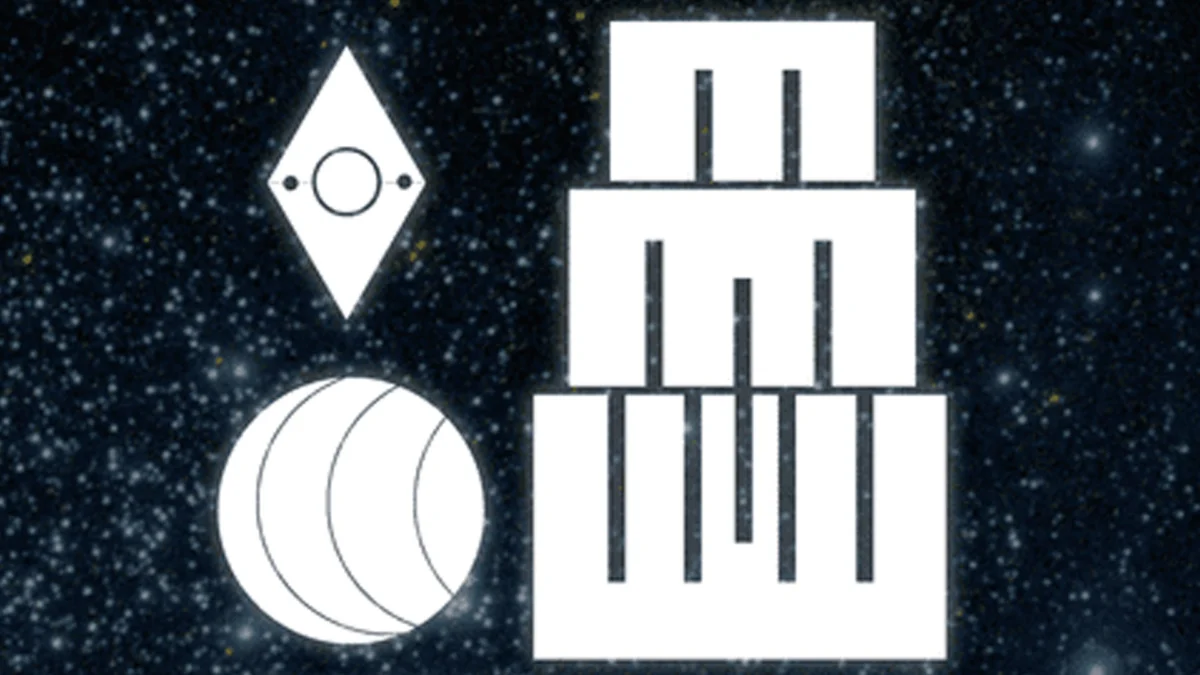
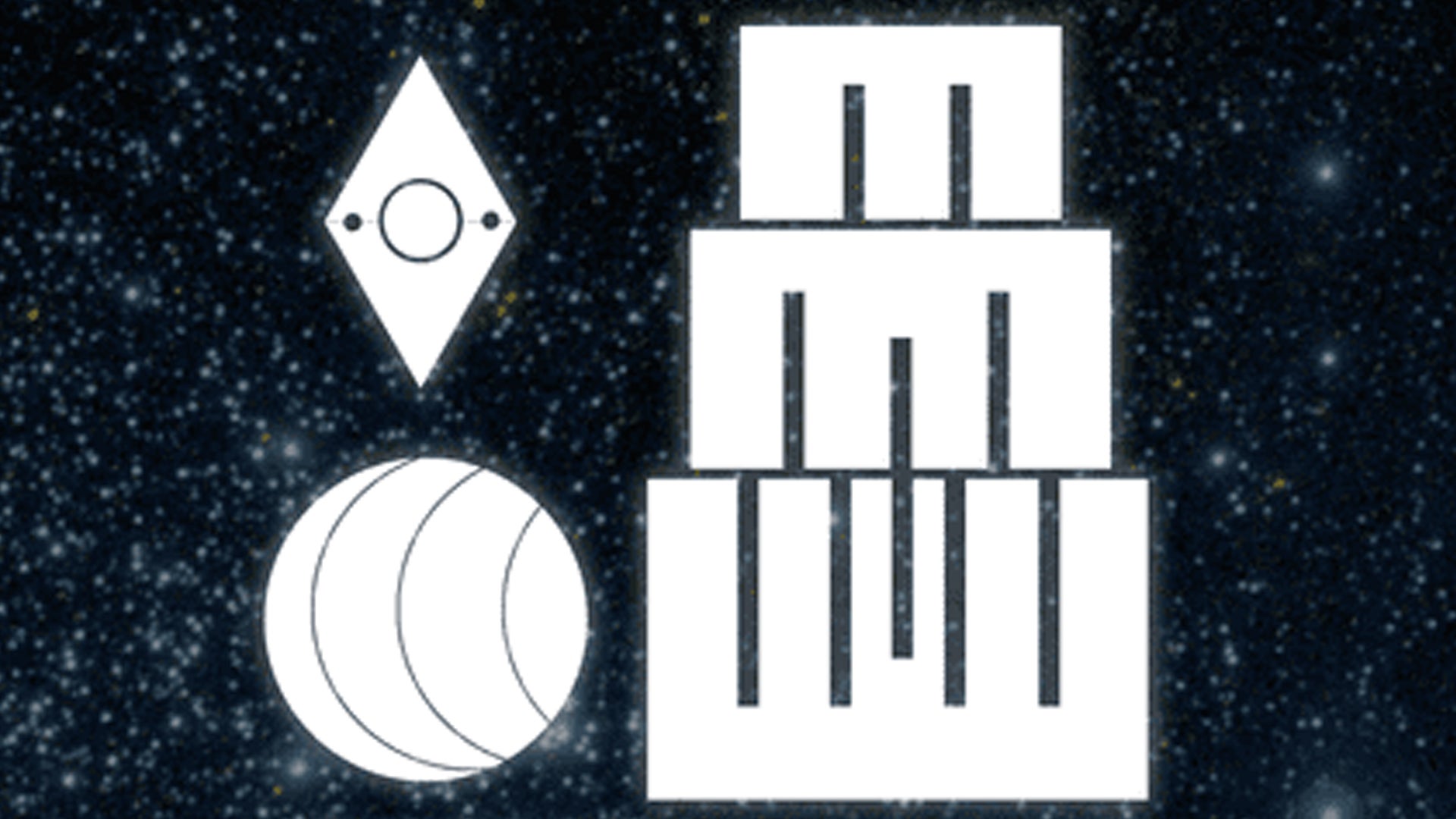
We have, however, been given a glimpse of the cover artwork for "City of Six Moons" (Image credit: Hollandspiele). This artwork, likely rich in symbolic imagery related to the alien civilization, could be the first critical clue for aspiring linguists. Game designers often embed thematic or mechanical hints within their cover art, and for a game centered on decryption, the visual cues on the box could serve as a rudimentary "key" or at least a conceptual starting point for interpreting the alien glyphs. Analysts on BoardGameGeek and other platforms will undoubtedly pore over every detail of this artwork, searching for any pattern or symbol that might unlock the language’s secrets.
Hollandspiele’s Track Record: A Niche for Innovation
"City of Six Moons" emerges from Hollandspiele, a publishing label co-owned by Amabel and Mary Holland, renowned for its commitment to innovative, often unconventional, and deeply thematic board games. Hollandspiele has cultivated a reputation for releasing titles that challenge traditional notions of gameplay, frequently exploring complex historical, political, or philosophical themes. Their catalogue often features games with unique mechanics, demanding high player engagement and intellectual investment.
This context is vital for understanding "City of Six Moons." It is not an outlier in Hollandspiele’s portfolio but rather a logical, albeit extreme, extension of their design philosophy. Their audience consists of discerning players who actively seek out experiences that push boundaries, reward deep thought, and aren’t afraid to diverge from mainstream gaming trends. The publisher’s willingness to embrace such a radical concept underscores their dedication to artistic expression within the board game medium, positioning "City of Six Moons" not just as a game, but as a significant cultural statement in the world of interactive entertainment. Their previous releases, while not directly comparable in mechanic, share a common thread of intellectual curiosity and a refusal to shy away from complex, demanding player experiences.
The Broader Implications: Redefining the Board Game Experience
The announcement of "City of Six Moons" has sparked considerable discussion within the board gaming community, not just for its unique premise but for its profound implications on what a board game can be, how players interact with rules, and the very nature of engagement.
A Test of Patience and Cognitive Agility
Playing "City of Six Moons" will be a test unlike most others. It demands an extraordinary level of patience, persistence, and cognitive agility. Players will need skills traditionally associated with cryptography, linguistics, and cultural anthropology, rather than just strategic planning or tactical execution. The initial hurdle of translating the rulebook could take hours, days, or even weeks, transforming the "game" into a long-term intellectual project.
This design intentionally filters its audience, appealing strongly to those who relish intellectual puzzles, enjoy deep immersion, and possess a high tolerance for ambiguity and frustration. It’s a game that values the journey of understanding over the immediate gratification of play, challenging players to find reward in the slow, painstaking process of deciphering meaning from chaos. It’s a deliberate slow burn, requiring players to invest significant mental energy before any traditional "gameplay" can commence.
The Meta-Narrative as Gameplay: Art, Language, and Play
"City of Six Moons" blurs the lines between a board game, an art installation, a linguistic puzzle, and a piece of interactive fiction. By presenting an alien artifact that demands interpretation, the game transcends its physical components to become a conceptual experience. The act of deciphering the rules is not merely a means to an end; it is, in itself, the core gameplay loop, at least initially.
This approach positions the game as a significant work within the burgeoning field of experimental game design. It challenges conventions, forcing players to reconsider their preconceived notions of what constitutes "fun" or "play." Is the fun in winning? Or is it in the profound intellectual satisfaction of cracking an unknown code, of glimpsing into an alien mind? Holland’s design suggests the latter, elevating the process of interpretation to an artistic act, where the player becomes both participant and co-creator of meaning. It’s a testament to the power of games to explore complex ideas beyond mere entertainment.
Community and Collaboration: The Collective Decryption
While "City of Six Moons" is a single-player game, its unique challenge inherently fosters a strong potential for community interaction. It is almost inevitable that players will gravitate towards online forums, Discord servers, and social media platforms to share their theories, interpretations, and progress in deciphering the alien language. This could lead to a fascinating, emergent layer of collaborative gameplay.
Imagine threads filled with players debating the meaning of a particular glyph, proposing different grammatical structures, or sharing screenshots of their attempted translations. This collective effort, even if not explicitly designed into the game’s mechanics, becomes a crucial part of the player experience. It transforms a solitary intellectual pursuit into a communal puzzle, where different perspectives and insights could accelerate the decryption process. This shared struggle, the triumph of collective intelligence over an inscrutable challenge, could create a vibrant and engaged community around the game, extending its lifespan and impact far beyond individual play sessions. This social dimension, even if unofficial, adds another rich layer to the game’s multifaceted design.
Pushing the Boundaries of Accessibility and Engagement
It must be acknowledged that "City of Six Moons" will not appeal to everyone. Its deliberate high barrier to entry—the prerequisite of linguistic decryption—will undoubtedly deter many players seeking a more immediate and conventional gaming experience. This is a game that prioritizes conceptual depth and artistic vision over broad market appeal or ease of access.
However, for its target audience—those who relish intellectual challenges, meta-narratives, and unique experiences—it promises an unparalleled level of engagement. This design pushes the boundaries of accessibility not by making the game easier, but by making it a more profound and demanding intellectual endeavor. It demonstrates that games can cater to highly specific niches, offering experiences that are deeply rewarding precisely because of their difficulty and unconventional nature. This approach contributes to the diversification of the board game market, encouraging designers to explore bold, new avenues of interactive storytelling and problem-solving.
The Enduring Legacy of Ambiguity in Art and Games
The intentional ambiguity at the heart of "City of Six Moons" connects it to a long tradition in art and literature that embraces multiple interpretations and resists definitive answers. From cryptic ancient texts to modern experimental theatre, artists have often used ambiguity to engage their audience more deeply, inviting them to participate in the construction of meaning.
In the realm of games, this is a less common but equally powerful tool. By refusing to provide a "correct" answer, Holland empowers players to trust their own judgment, to grapple with uncertainty, and to accept that absolute truth might be elusive. This philosophical stance elevates "City of Six Moons" beyond a mere game; it becomes a meditation on communication, understanding, and the limits of human knowledge. Its legacy might not be in its sales figures, but in its influence on future designers to explore bolder, more conceptually driven interactive experiences that challenge players on a fundamental level.
Anticipation and the Road Ahead
As "City of Six Moons" prepares for its release next month, the anticipation within the niche of experimental board gaming is palpable. This is not merely another new title; it is a statement, a challenge, and a potential milestone in interactive design.
A Niche, Yet Potentially Influential, Release
While "City of Six Moons" is undeniably a niche product, its radical design has the potential for significant influence. It dares to ask fundamental questions about the nature of rules, the role of a designer, and the active participation of a player. Its impact might be felt less in direct sales and more in the conversations it sparks, the design paradigms it challenges, and the inspiration it offers to other creators to push the boundaries of the medium. It’s a testament to the vibrancy and innovation thriving within the independent board game scene.
Preparing for the Unprecedented
For those brave enough to tackle "City of Six Moons," preparation will be key. This isn’t a game to be rushed or casually approached. It demands a dedicated mindset, a willingness to immerse oneself in a linguistic puzzle, and a healthy appreciation for the unknown. Players should expect frustration, moments of profound insight, and the enduring satisfaction of overcoming a truly unique intellectual hurdle. It’s an adventure that begins not on the board, but in the mind.
"City of Six Moons" stands as a testament to the boundless creativity within the board game industry. Amabel Holland has crafted an experience that is less about traditional gameplay and more about a profound journey of linguistic and cultural discovery. As players prepare to tackle this cryptic puzzle, they are not just buying a game; they are acquiring an alien artifact, an intellectual challenge, and an invitation to ponder the very essence of understanding. Good luck to anyone preparing to embark on this unprecedented voyage into the unknowable.


Leave a Comment