Arthur C. Clarke’s "Imperial Earth": A Flawed Masterwork Navigating Humanity’s Future
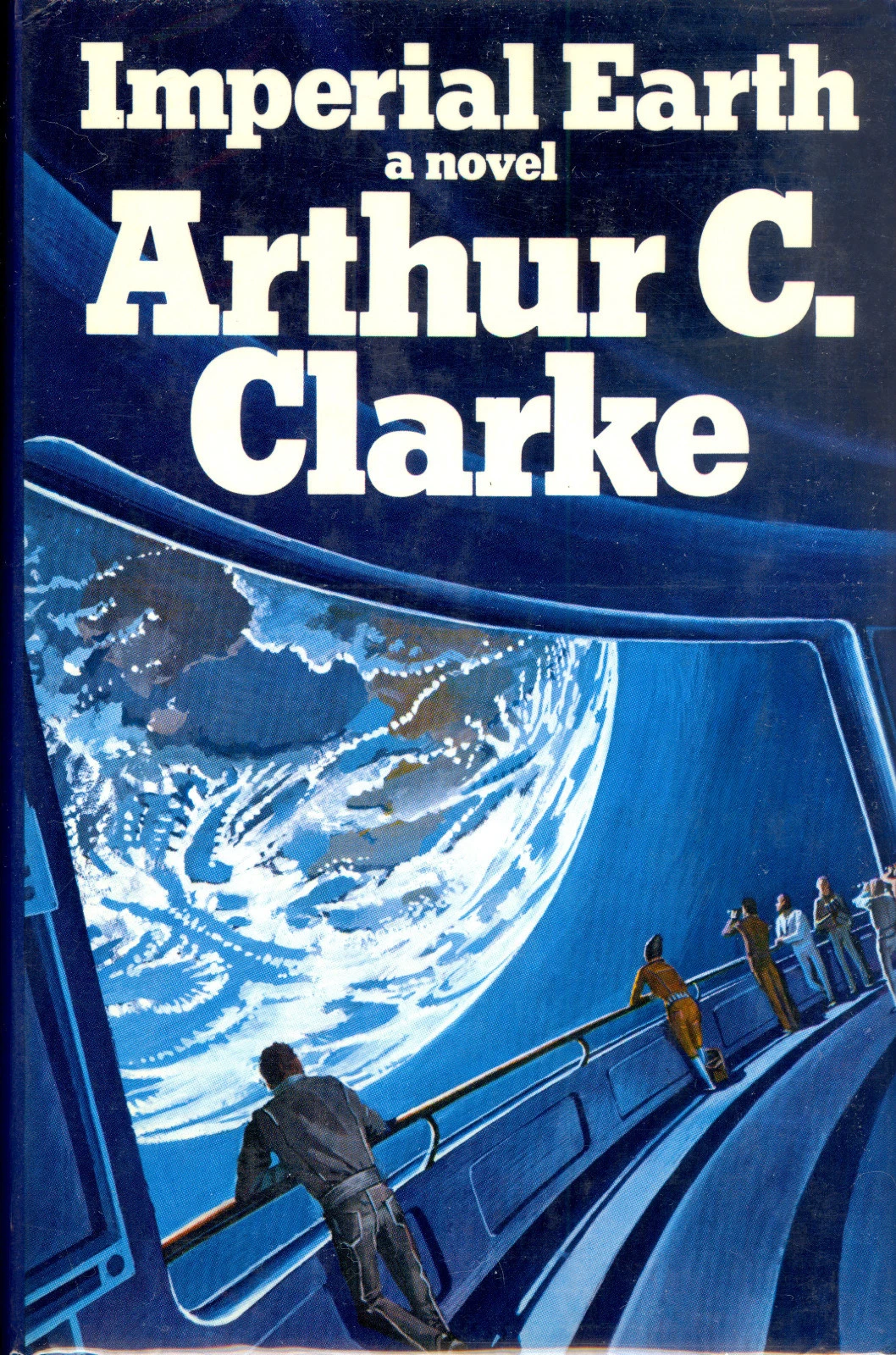
London, England – In the pantheon of science fiction’s grand masters, Arthur C. Clarke stands as a towering figure, celebrated for his prescient visions, meticulous scientific detail, and philosophical explorations of humanity’s destiny among the stars. Alongside literary giants like Robert A. Heinlein, Isaac Asimov, and Ray Bradbury, Clarke shaped the genre, guiding generations of readers through speculative futures. Yet, even for a writer of such immense caliber, some works stand out not just for their brilliance, but for their fascinating complexities and perceived imperfections. One such novel is Imperial Earth, published in 1975 in the UK and 1976 in the US, a bicentennial offering that aimed to project humanity three centuries into its future, coinciding with America’s quincentennial. While not achieving the critical acclaim and awards of its immediate predecessors and successors, Imperial Earth remains a compelling, if problematic, testament to Clarke’s enduring imagination and his unshakeable faith in human potential.
The novel introduces readers to Duncan Makenzie, a clone and scion of Titan’s most influential family, as he embarks on a pivotal journey to Earth. Set against the backdrop of a sprawling, interplanetary civilization celebrating a significant historical milestone, Makenzie’s mission is multifaceted, delving into complex issues of identity, economics, political intrigue, and humanity’s relentless quest for meaning beyond its terrestrial cradle. This ambitious scope, while characteristic of Clarke, presented unique narrative challenges, leading to a work that has sparked considerable debate among critics and readers alike regarding its coherence and thematic execution.
Chronology
The Author’s Personal Discovery and Re-evaluation
For many, including this article’s originating perspective, the journey into science fiction began in the early 1970s, a golden age where the names Heinlein, Asimov, Bradbury, and Clarke dominated the bookshelves. Initially, the works of Clarke might have been less immediately captivating for some, overshadowed by the more accessible narratives of his contemporaries. While Heinlein’s adventurous tales and Bradbury’s poetic prose often drew readers in, Clarke’s more austere, idea-driven fiction, apart from seminal works like Childhood’s End, might have been encountered later in a reader’s development. However, a deliberate re-engagement with Clarke’s extensive bibliography in recent years reveals the profound depth and foresight embedded in his narratives, bringing a renewed appreciation for his unique contributions to the genre. Imperial Earth, though a later work, offers a critical lens through which to examine both the strengths and occasional narrative detours of this visionary author.
Imperial Earth‘s Genesis and Setting
Imperial Earth was conceived and published during a period of significant cultural reflection in the United States, celebrating its bicentennial in 1976. Clarke, ever attuned to the grand sweep of history and future possibilities, chose this moment to project humanity’s trajectory forward by 300 years, setting his narrative in 2276, the year of America’s quincentennial. This temporal leap allowed him to explore a fully realized interstellar society, where Earth is no longer the sole crucible of human civilization.
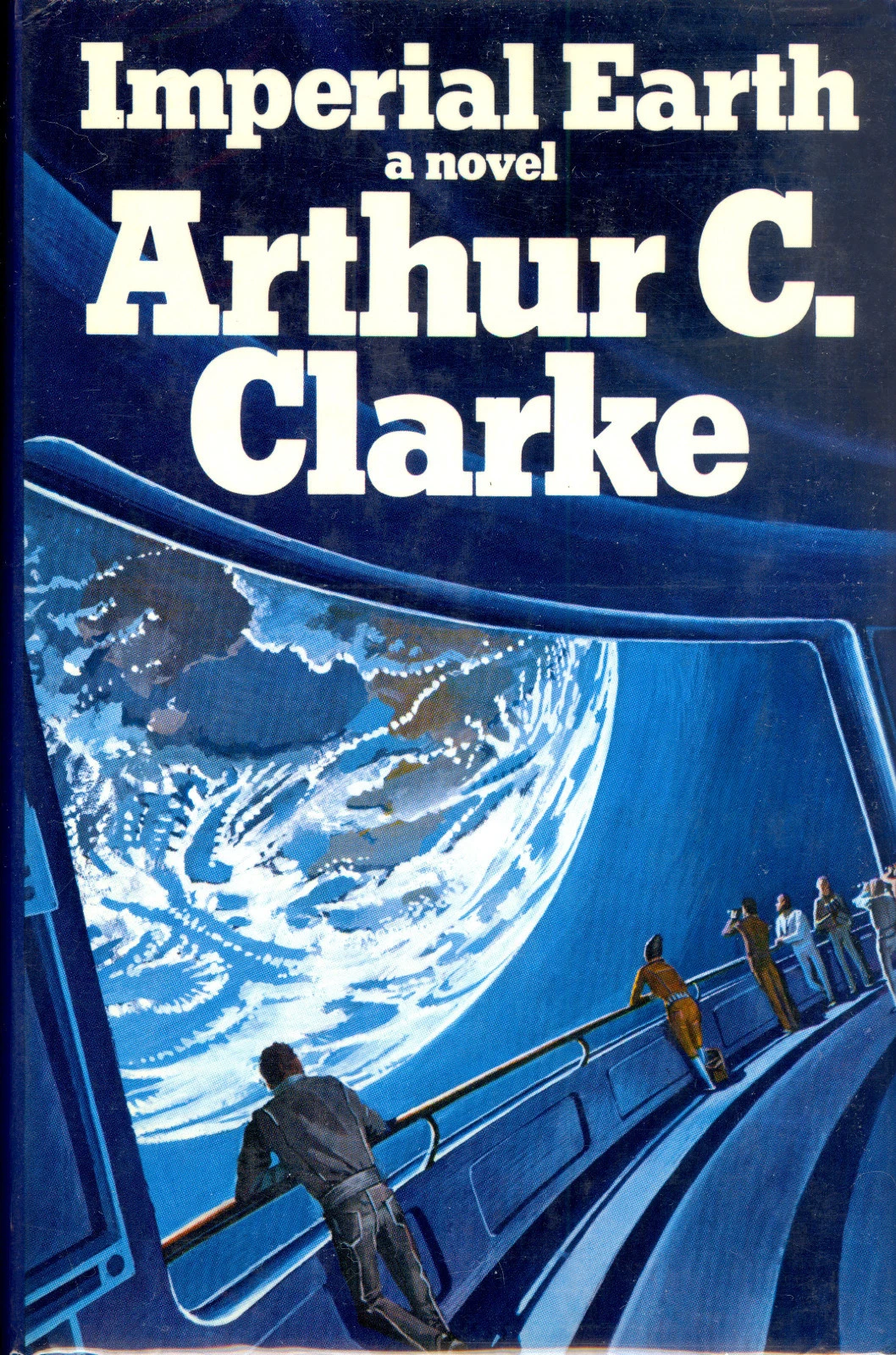
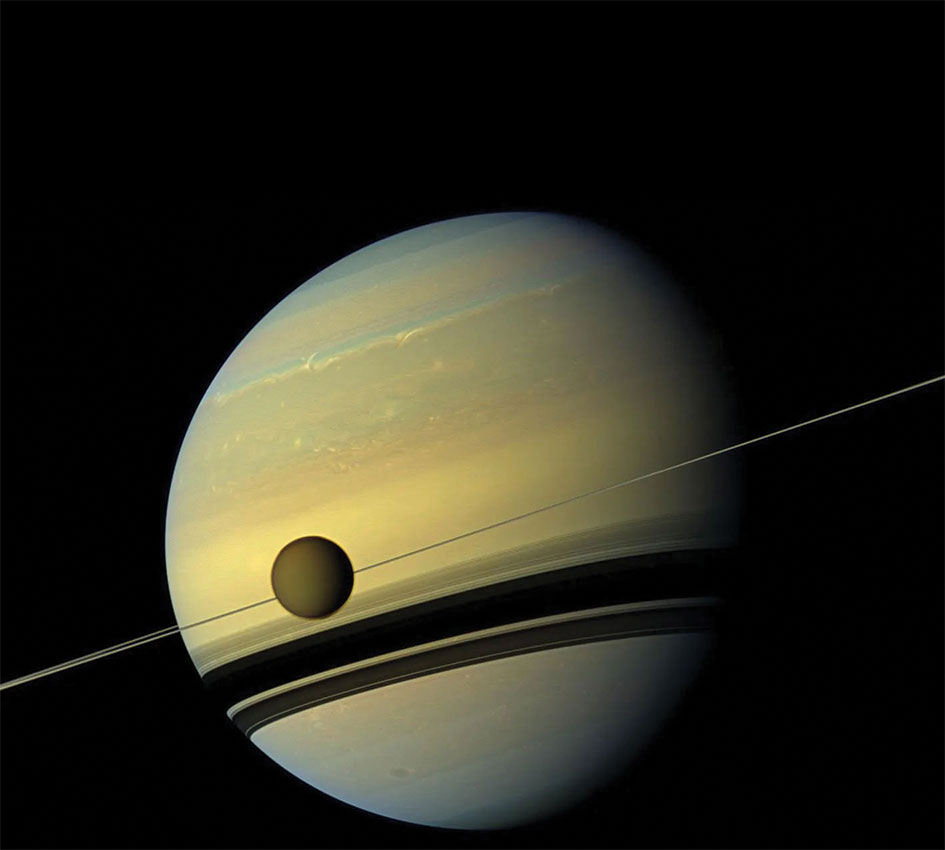
The story’s primary setting away from Earth is Titan, Saturn’s largest moon, which has been transformed into a vibrant human colony supporting a population of half a million. Titan’s prosperity and crucial role in the solar system’s economy are rooted in the innovative genius of Malcolm Makenzie, Duncan’s "grandfather." Malcolm pioneered a highly profitable method of harvesting hydrogen from Titan’s dense atmosphere, an element indispensable as fuel for Earth’s interplanetary spacecraft. This "hydrogen economy" fueled humanity’s expansion, enabling settlements across Mercury, Mars, and various planetary satellites, establishing the Makenzie family as interstellar aristocracy.
Duncan Makenzie’s Earthly Pilgrimage
Duncan Makenzie, the protagonist, is not merely a successor but a direct genetic echo of his lineage – a clone, in fact, the clone of a clone. This unique biological heritage stems from Malcolm’s inability to have biological children due to radiation exposure, leading to the cloning of his "son," Colin, who in turn cloned Duncan. This genetic legacy, while an intriguing scientific premise, also introduces a layer of existential complexity to Duncan’s character.
Duncan’s singular visit to Earth is burdened with a multitude of responsibilities, each carrying significant implications for Titan and the broader human community. His "Titanian physique," adapted to the lower gravity of his home moon, means this will be his only extended stay on Earth, necessitating a year-long immersion in its history and culture. His pressing agenda includes:
- Economic Diplomacy: The imminent invention of a new, highly efficient "asymptotic" space drive threatens to drastically reduce Earth’s reliance on Titanian hydrogen. Duncan must navigate these shifting economic tides to safeguard Titan’s prosperity.
- Succession and Identity: He plans to consult the physician who facilitated his own cloning to arrange for the next Makenzie generation, a direct clone of himself, raising profound questions about legacy and identity in an era of advanced biotechnology.
- Reconnecting with the Past: Duncan seeks to rekindle a lost love with Catherine Linden "Calindy" Ellerman, an idealized figure from his youth who returned to Earth after a visit to Titan. This personal quest intertwines with his public duties, adding an emotional dimension to his journey.
- Unraveling Intrigue: A significant portion of his mission involves investigating the shadowy political and financial machinations of his estranged childhood friend, Karl Helmer. Helmer, ostensibly on a mission to a lesser Saturnian moon, is discovered to be hiding on Earth, his schemes potentially destabilizing Earth-Titan relations. The plot thickens with the revelation that Calindy was also romantically involved with Karl, implicating her in his complex plans.
- The Quincentennial Address: Overlaying all these personal and political challenges is the immense pressure of preparing and delivering a keynote speech at the quincentennial celebrations in Washington D.C. This address is not merely ceremonial; it must articulate Titan’s continued importance and inspire the entire solar system’s human community towards a shared future.
The sheer volume and diversity of these tasks, spanning personal identity, romantic longing, economic policy, political espionage, and planetary-scale rhetoric, place an extraordinary burden on Duncan Makenzie, and by extension, on Clarke’s narrative framework.
Supporting Data: An Analysis and Critique
Imperial Earth is a fascinating study in narrative ambition meeting uneven execution. While replete with Clarke’s signature scientific imagination, its storytelling often diverges from the focused precision found in his more celebrated works.
Narrative Cohesion and Pacing
The most significant critique leveled against Imperial Earth is its perceived lack of narrative cohesion. Unlike the tightly structured plots of Rendezvous with Rama or the epic scope of 2001: A Space Odyssey, Imperial Earth can feel "aimless and shapeless." The reviewer notes that Clarke holds the various plot threads with a "surprisingly slack hand," leading to a narrative that "stops rather than concludes." This departure from Clarke’s usual "clean, efficient, highly directional storytelling" means that no true impetus builds, and consequently, no satisfying release is felt at the novel’s end. The bulk of the novel simply follows Duncan as he leisurely attends to his myriad tasks on Earth, a pace that, while allowing for detailed world-building, often sacrifices dramatic tension.
Unaddressed Ethical Dilemmas: Cloning
One of the novel’s most intriguing, yet problematically handled, subplots revolves around cloning. Duncan himself is a clone, and a key objective of his Earth visit is to arrange for his own cloning to perpetuate the Makenzie line. Clarke’s portrayal of this advanced reproductive technology, particularly the concept of "incubator" women, reveals a peculiar discomfort with the ethical implications. These women, described as having "significantly sub-par intelligence (and sub-par looks)," are employed to carry cloned embryos to term, only for the infants to be taken away immediately after birth. Clarke’s narrative implies these women find "great fulfillment" in this brief motherhood, an assertion that many readers, then and now, would condemn as deeply exploitative and ethically unsound. Duncan’s own "qualms" are fleeting, and both character and author quickly move past the issue, suggesting either an inability or unwillingness on Clarke’s part to grapple seriously with the profound moral questions his own premise raises. This avoidance is particularly glaring given the intense ethical debates surrounding cloning that were nascent in the 1970s and continue to evolve today.
Romance and Personal Stakes
Clarke’s strengths typically lay in grand scientific concepts and humanity’s collective journey, rather than the intricacies of individual human relationships. This becomes evident in Duncan’s romantic subplot with Calindy. His idealized adolescent passion for her, nurtured over years of separation, proves anticlimactic upon their reunion. Calindy has moved on, and Duncan quickly recognizes his obsession as an "illusion." While this serves to advance the plot by having Calindy provide information about Karl, it underscores a general disinterest in exploring the emotional depths of romantic love. For an author who could wax poetic about the "evolutionary destiny of the human race," the complexities of a personal love affair seemed to hold little narrative fascination.
Political Intrigue and First Contact
Karl Helmer’s machinations, initially shrouded in mystery, ultimately reveal a grand project: the construction of a moon-sized radio array near Titan, designed to achieve first contact with an alien civilization. The "financial and political jiggery-pokery" surrounding this project necessitates secrecy, but its unraveling is hastened by Karl’s convenient, accidental death from a radio telescope platform. This sudden resolution feels less like a natural plot development and more like a narrative expedient. Duncan subsequently co-opts Karl’s vision, transforming it into the central theme of his quincentennial speech. This speech, framed as an updated "New Frontiers agenda" and culminating in an invocation of the American Founding Fathers’ pledge of "lives, fortunes, and sacred honor," is critiqued as a "fairly flaccid piece of oratory." However, it does contain a quintessential Clarkean element: the hint that this project could eventually lead to humanity’s "godhood," a recurring motif in his work that speaks to his belief in transcendence through scientific advancement.
The Forgotten Crisis
Perhaps the most striking example of the narrative’s "slack hand" is the complete disappearance of the looming economic crisis on Titan. A major driver for Duncan’s visit to Earth, the threat posed by the new asymptotic space drive to Titan’s hydrogen economy, is introduced with gravity but then simply fades from the narrative. Both Duncan and Clarke appear to forget about it, leaving a significant plot thread unresolved and undermining the initial stakes of the story. The book concludes with Duncan returning to Titan, not with a clone of himself, but surprisingly, with a clone of Karl Helmer, further complicating the narrative’s resolution and closing a "hall of mirrors" that was never fully explored.
Official Responses: Literary Reception
The critical reception of Imperial Earth stands in stark contrast to that of the novels immediately preceding and following it. Rendezvous with Rama (1973) and The Fountains of Paradise (1979) both garnered science fiction’s highest accolades, winning both the Hugo Award and the Nebula Award for Best Novel. Imperial Earth, however, received no major awards. This lack of recognition from the science fiction community underscores the general consensus that, while intellectually stimulating, the novel suffered from significant structural and thematic flaws that prevented it from reaching the same heights as Clarke’s undisputed masterpieces. Its designation as a "problematic book" within Clarke’s oeuvre reflects its ambitious but ultimately uneven execution, a testament that even giants of the genre can occasionally falter in delivering their vision.
Implications: Clarke’s Vision of the Future
Despite its narrative shortcomings as a piece of coherent fiction, Imperial Earth retains considerable interest as a "vision of the future." Read as an unhurried travelogue through the Earth of 2276, it offers a fascinating glimpse into Arthur C. Clarke’s predictions and philosophical convictions.
Societal Predictions: Hits and Misses
Fifty years on from Clarke’s 1976 vantage point, his predictions for the 23rd century present a compelling mix of prescience and missed opportunities:
- The "Time of Troubles": Clarke foresaw an early 21st-century "time of troubles," a period of social and political chaos driven by overpopulation and resource scarcity. While the early 21st century has indeed witnessed its share of global challenges, the precise nature of Clarke’s prediction – leading to a drastic population collapse and legal limits on birth rates – has not materialized in the way he envisioned. However, concerns about declining birth rates and resource management remain pertinent.
- Urban Transformation: In Clarke’s future, the era of mega-cities is over, with a city of half a million now considered "very large." Earth becomes increasingly rural due to a vastly reduced population and off-planet settlement. This contrasts with ongoing global urbanization trends, though the concept of distributed populations and exoplanetary migration remains a speculative possibility.
- Technological Hits: Clarke correctly predicted the criminalization of manual automobile driving on public roads, a forecast that seems increasingly plausible with the advent of autonomous vehicles. More strikingly, he envisioned personal computing devices carried by everyone, capable of performing a host of functions – a strong resemblance to modern smartphones. However, in a very Clarkean omission, he imagined these devices used solely for "entirely practical purposes," missing the explosion of social media, entertainment, and frivolous content that defines our current digital landscape. His 23rd-century citizens aren’t watching "twenty-second videos of cats or babies" or "clips from Mercury’s Funniest Home Videos."
Race and Social Evolution
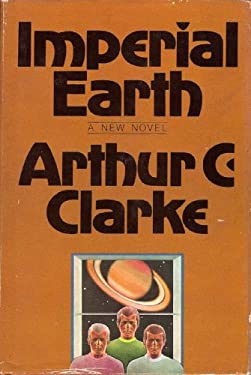
Clarke’s treatment of race in Imperial Earth is notably indirect and underdeveloped. The revelation that Duncan Makenzie is black comes about a quarter of the way into the book, a detail easily missed and notably absent from contemporary cover art. He then alludes to "race snobbery" and obliquely suggests that people can somehow change their skin color, with darker skin implying "more social cachet." This intriguing idea, presented as a "tossed-off, unattached idea," is a missed opportunity for deeper social commentary. In an era where identity politics and racial dynamics are intensely scrutinized, Clarke’s superficial exploration of such a potentially transformative societal shift feels incomplete.
The Technocratic Utopia
Perhaps the most defining characteristic of Clarke’s future in Imperial Earth is its utopian vision. He posits a world devoid of war, disease, poverty, hatred, hunger, superstition, or religion (the latter two, for Clarke, being synonymous). How this paradise was achieved is never explained, but the administration of this peaceful, frictionless, and efficient world is clearly in the hands of a "technocratic elite"—completely rational and thoroughly competent, governing through a "benign global bureaucracy" that makes no significant mistakes. This idyllic depiction, while inspiring, reads more like fantasy than science fiction, especially when contrasted with the complexities and imperfections of real-world politics and human nature. The novel’s only concession to systemic flaws is a minor computer error that altered the spelling of "Makenzie," a triviality that pales in comparison to the "much worse and more far-reaching effects" that real-world bureaucratic perversities often entail. The reviewer’s wry observation that "an Englishman of all people should know that there’s no such thing as a clean empire" aptly highlights the disconnect between Clarke’s ideal and historical reality.
The Enduring Clarkean Philosophy
At its core, Imperial Earth embodies Arthur C. Clarke’s unshakeable belief, almost a "faith," in human beings as fundamentally rational creatures. This rationality, unclouded by anything "unscientific or irrelevant," is seen as the ultimate tool for solving all problems, leading inevitably to paradise on Earth and eventually, transcendence and perhaps even "godhood." Karl Helmer’s alien contact project is explicitly presented as the initial step in this transformative process.
One cannot help but admire Clarke’s profound optimism and his conviction in humanity’s potential to perfect itself and its world. His innocence, as some might call it, is both inspiring and, at times, perplexing. It raises questions about his understanding of actual human beings, the lessons of history, or the realities of real-world bureaucracies. His faith was evidently strong enough to override any such objections.
While Imperial Earth may be judged as one of Clarke’s weaker books in terms of narrative coherence, it nonetheless bears his indelible mark. His vision, though occasionally circumscribed by blind spots (such as failing to foresee global warming, declining birth rates as a global phenomenon, or the rise of AI in its current form, which are unavoidable misses for any visionary), remains profoundly inspiring. The utopia of peace and plenty he depicts, even if more coherently articulated in his better works, still evokes a powerful question: "How beautiful… and why not?" This query, a testament to the enduring power of science fiction, offers "much-needed hope" in any century, serving as a reminder that inspiration lies in daring to imagine a better "why not," even when the "why nots" of reality seem overwhelming. At the very least, Clarke’s impossibly lovely dream of a trouble-free 23rd century Earth offers a moment of respite and aspiration, a brief escape from the mundane challenges of any given day.