
Approaching the Half-Century Mark: A Writer’s Meditations on Mortality, Legacy, and the Art of Being Human
[City, State] – [Date] – As the milestone of his 50th birthday looms less than a month away, acclaimed author Chuck Wendig has penned a deeply personal and philosophical essay exploring themes of aging, mortality, legacy, and the very essence of human creation. In a piece that blends raw introspection with a profound appreciation for the creative process, Wendig eschews a typical news report for a more reflective examination of life’s impermanence and the enduring power of authentic expression. While not presenting a traditional chronological account of events or direct quotes from officials, the article delves into the implications of existential thought for creators and the inherent value of human-made art in an increasingly automated world.
The Inevitable March of Time: A Personal Reckoning
Wendig opens by candidly addressing the impending 50th birthday, a temporal marker that, for him, has intensified reflections on mortality. He humorously dismisses the notion that 50 is inherently "old," contrasting his current perception with the almost mythical antiquity he once associated with the age in his youth. However, this lightheartedness quickly gives way to a more candid acknowledgment of the physical realities of aging – the creaks, the groans, and the growing chorus of medical advice, from statins to screenings.
"It shouldn’t! It’s not – not really," Wendig writes, grappling with the disconnect between the objective reality of age and the subjective feeling of it. "But it sometimes literally feels old as I wake up with more creaks and crackles and weird bumps and barnacles…" The essay humorously catalogues the barrage of age-related health directives, from managing blood pressure to planning for retirement and even selecting a final resting place. This section, while tinged with a self-deprecating humor, lays the groundwork for a deeper contemplation of what it means to leave something behind.
The Metaphor of Melting Butter: A New Perspective on Dissolution
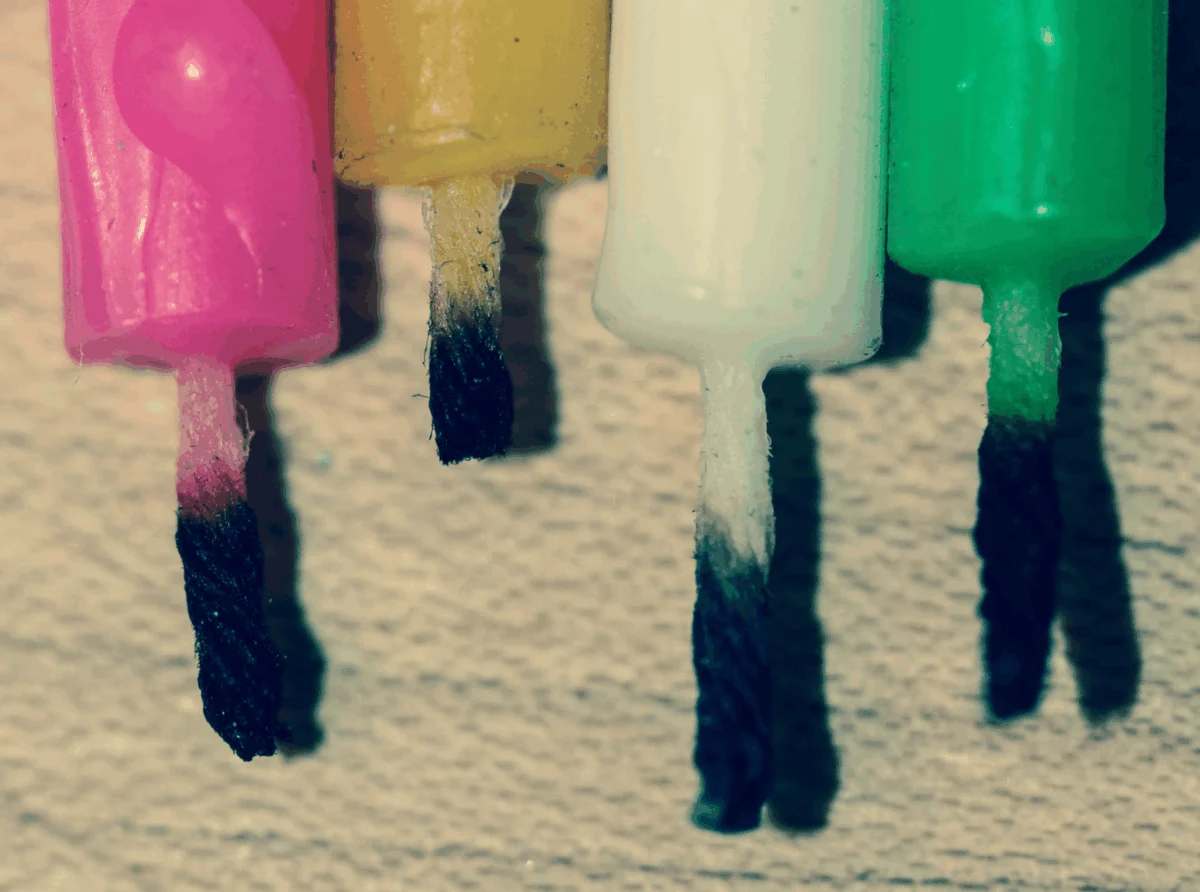
The essay’s central metaphor emerges unexpectedly from a mundane domestic act: melting butter in the microwave. Wendig describes observing the solid cube transform into a liquid state, a process he likures to death itself. However, this is not presented as a grim or terrifying dissolution. Instead, he posits that the butter, while losing its form, remains fundamentally butter. It has merely transitioned to a new state, becoming an "un-container."
This observation then extends to the human experience. Wendig suggests that, much like the butter, our physical bodies break down and are absorbed into the larger ecosystem, fueling new life. This cycle of consumption and transformation, he argues, is not an end but a beautiful, albeit complex, continuation. The butter, once eaten, becomes part of the consumer, contributing to their energy and happiness. Even the eventual decay of that consumer further perpetuates the cycle.
"It’s kind of beautiful," Wendig concludes this segment. "We’re all just melting butter." This perspective offers a comforting, albeit unromanticized, view of physical mortality, emphasizing interconnectedness and the fundamental nature of change.
Beyond the Physical: The Existential Echo of Identity
While the melting butter metaphor provides a framework for understanding physical dissolution, Wendig acknowledges that it doesn’t fully address the more profound existential fear: the loss of individual consciousness and identity. He grapples with the idea that the "ME-me," the unique constellation of thoughts, memories, desires, and anxieties that constitute his individual self, will likely dissipate with the breaking of molecular bonds.
This leads to a discussion of humanity’s persistent yearning for an afterlife, a concept that offers solace by promising the continuation of the "us" part – the identity, the soul – even as the physical body perishes. Wendig, however, expresses a nuanced skepticism, not a outright disbelief, in traditional afterlife narratives. He concedes that if an afterlife exists, it will occur regardless of his personal belief.
"I don’t know if I believe in any of that – okay, I don’t disbelieve in it, sure," he states, highlighting a pragmatic approach to the unknown. He suggests that even without a celestial reward or punishment, a different form of legacy endures.
Crafting a Legacy: The Enduring Power of Human Creation
Wendig’s core argument solidifies around the concept of a "legacy" that transcends the purely physical. He posits that beyond the biological breakdown, there exists an equivalent breakdown and legacy of our "WHO WE ARE slash identity slash soul portion of our existence." This legacy, he contends, is imprinted upon those who knew and loved us.

He draws a parallel between the absorption of butter into the eater and how individuals are absorbed into the lives of those they have impacted. Even after those individuals pass, fragments of our essence – our ideas, our jokes, our quirks – persist, cascading through the universe like "stones thrown into cosmic ponds." These "ripples," he believes, carry on in some form, evolving and continuing to affect others.
This profound realization leads Wendig directly to his long-held advocacy for authentic and deeply personal writing. He champions the idea of "leaving it all out there on the narrative field," of bleeding, crying, and exposing one’s heart within the work. This advice, he explains, is not merely practical for creating original narratives (as the teller is the unique element), but is also deeply beneficial for the creator’s own well-being.
"It’s good for your heart and soul to be in conversation with it," he asserts, emphasizing the therapeutic value of channeling anxieties and dreams into creative output. He views this as the true essence of "write what you know" – utilizing one’s authentic self, with all its idiosyncrasies, as the primary creative ingredient.
The Threat of Artificiality: Why AI Falls Short
In a powerful concluding argument, Wendig directly addresses the burgeoning role of Artificial Intelligence (AI) in creative fields. He reiterates his well-known stance against AI-generated content but frames it within the context of legacy and human authenticity.
"Your work is part of you and your legacy, but if you let AI touch that, it really isn’t yours. It isn’t you," he states unequivocally. He likens the use of AI to "stolen existential valor," arguing that it amounts to presenting a superficial imitation of oneself rather than genuine creation.
Wendig contends that AI-generated work, by its very nature, is soulless. It lacks the unique imprint of human experience, the "YOU part" that imbues a creation with genuine life and meaning. Such work, he believes, fails to create a meaningful legacy. It offers "dead echoes. Flat ripples. A stone that doesn’t skip across the surface of the pond – it just fucking sinks."
He implores creators to pour themselves wholly into their work, to be unabashedly themselves, because it is this authentic human element that resonates and endures. "You’ll live on in others if you allow yourself to," he concludes, reinforcing the idea that genuine human connection and the transmission of personal essence are the true forms of immortality.
Implications for the Creative Landscape
Wendig’s essay, while personal, carries significant implications for the broader creative landscape. It serves as a potent reminder of the intrinsic value of human authorship and the unique contribution of individual experience to art. In an era where AI-generated content is becoming increasingly prevalent, his argument for authenticity and personal investment in creative work is a clarion call to preserve the human element.
The "melting butter" metaphor offers a comforting perspective on mortality, shifting the focus from absolute cessation to transformation and interconnectedness. His emphasis on legacy underscores the profound impact individuals have on one another, not just through grand gestures but through the subtle threads of their being woven into the fabric of other lives.
Ultimately, Wendig’s reflections serve as a powerful manifesto for human creativity, urging artists, writers, and creators of all stripes to embrace their individuality and imbue their work with their deepest selves. This, he suggests, is the most meaningful and enduring legacy one can possibly leave behind, a testament to a life lived, experienced, and shared.



Leave a Comment