
The King Returns to Essex Street: New York City Officially Designates "Jack Kirby Way"
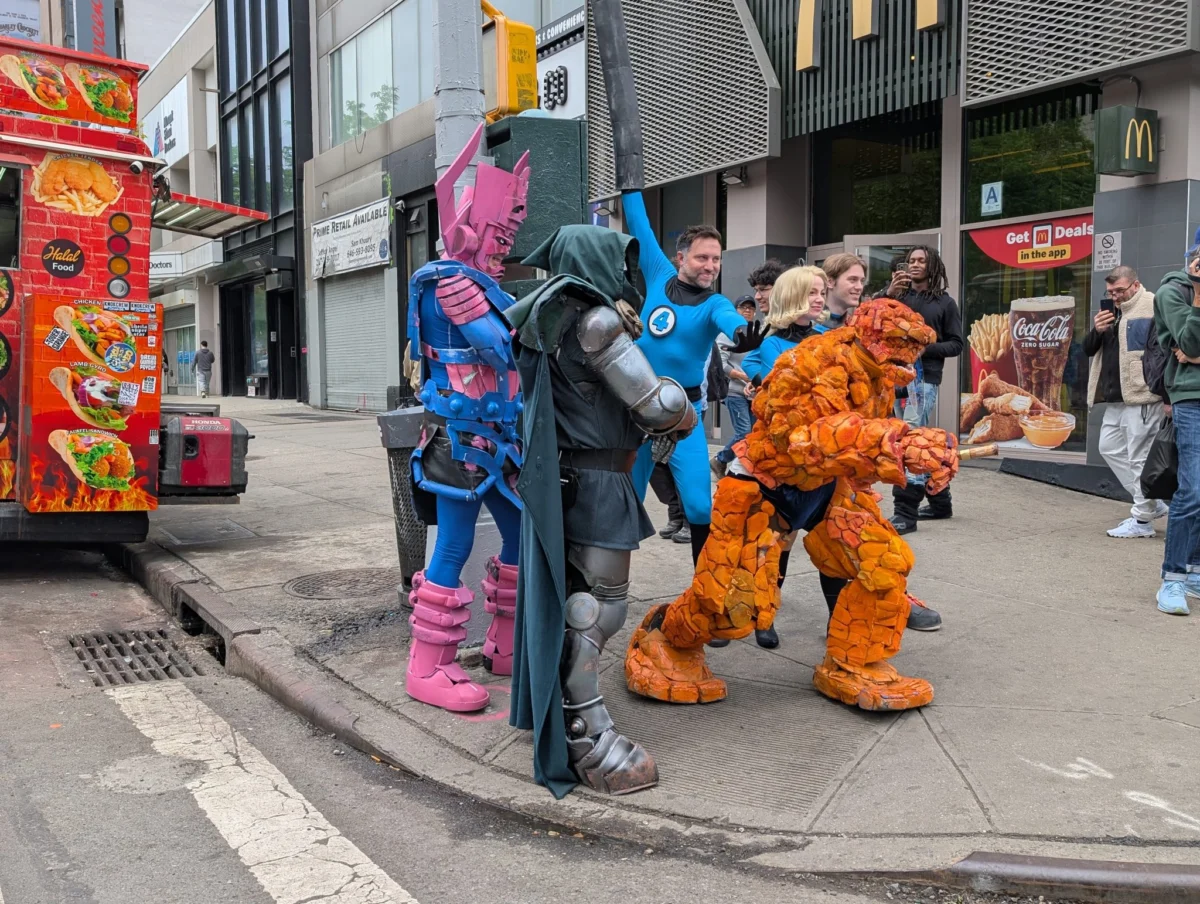
NEW YORK CITY — On a grey but resolute Monday afternoon in May 2026, the intersection of Delancey and Essex Streets in the Lower East Side transformed into a cross-dimensional nexus. Under a sky that threatened rain but remained dry, a crowd of several hundred gathered not for a protest or a street fair, but for an act of historical reclamation. Standing among the sea of New Yorkers were figures that seemed to have stepped directly out of the cosmic tapestry of the mid-20th century: Galactus, Doctor Doom, and the Fantastic Four.
They were there to witness the official unveiling of "Jack Kirby Way," a permanent street sign honoring the man born Jacob Kurtzberg just a block away at 147 Essex Street. For many in attendance, the sign was more than a navigational marker; it was a long-overdue validation of the man widely regarded as the "King" of American comics and the primary architect of the modern mythological landscape.
Main Facts: A Permanent Tribute to a Creative Titan
The dedication of Jack Kirby Way marks the culmination of years of advocacy by historians, family members, and local officials. While the Lower East Side has undergone radical gentrification since Kirby’s birth in 1917, the area remains the spiritual home of the "Yancy Street" mythos—the fictionalized version of Delancey Street where Kirby’s character Ben Grimm (The Thing) was raised.
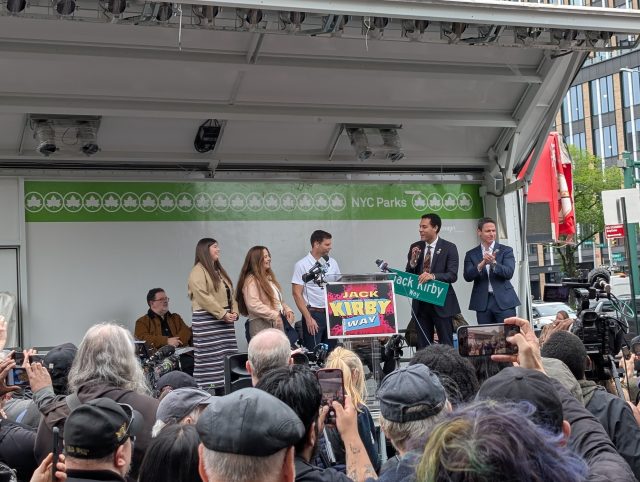
The event, which lasted approximately one hour, featured a prestigious roster of speakers from the highest echelons of the comic book industry and local government. The primary objective was to cement Kirby’s legacy in the physical geography of the city that shaped his visual vocabulary.
Key Details of the Event:
- Location: The corner of Delancey and Essex Streets, Manhattan.
- Historical Significance: Located one block from 147 Essex Street, where Kirby was born and raised.
- Organizers: Led by pop culture historian Roy Schwartz in collaboration with the Kirby family and the New York City Council.
- Legacy Figures: Attendance included representatives from both Marvel and DC Comics, signifying Kirby’s unique status as a bridge between the two rival "universes."
Chronology: The Long Road to Recognition
The path to Monday’s unveiling was not a linear one. For decades, Kirby’s contributions to pop culture were often overshadowed by the corporate entities that owned his creations.
The Early Advocacy (2000s–2010s)
The movement to recognize Kirby began in earnest with the establishment of the Jack Kirby Museum & Research Center. For over twenty years, the Museum worked to archive Kirby’s massive output—estimated at over 25,000 pages of art—and educate the public on his role as the co-creator of Captain America, the X-Men, the Avengers, and the New Gods.
The "Yancy Street" Gimmick (2025)
Last year, a temporary publicity-driven renaming of Delancey Street to "Yancy Street/Jack Kirby Way" took place. While the event generated significant social media buzz, it was criticized by some as a fleeting marketing exercise. The signs were removed after only a few hours, leaving fans feeling that the tribute was as ephemeral as a comic book variant cover.
The Legislative Push (2025–2026)
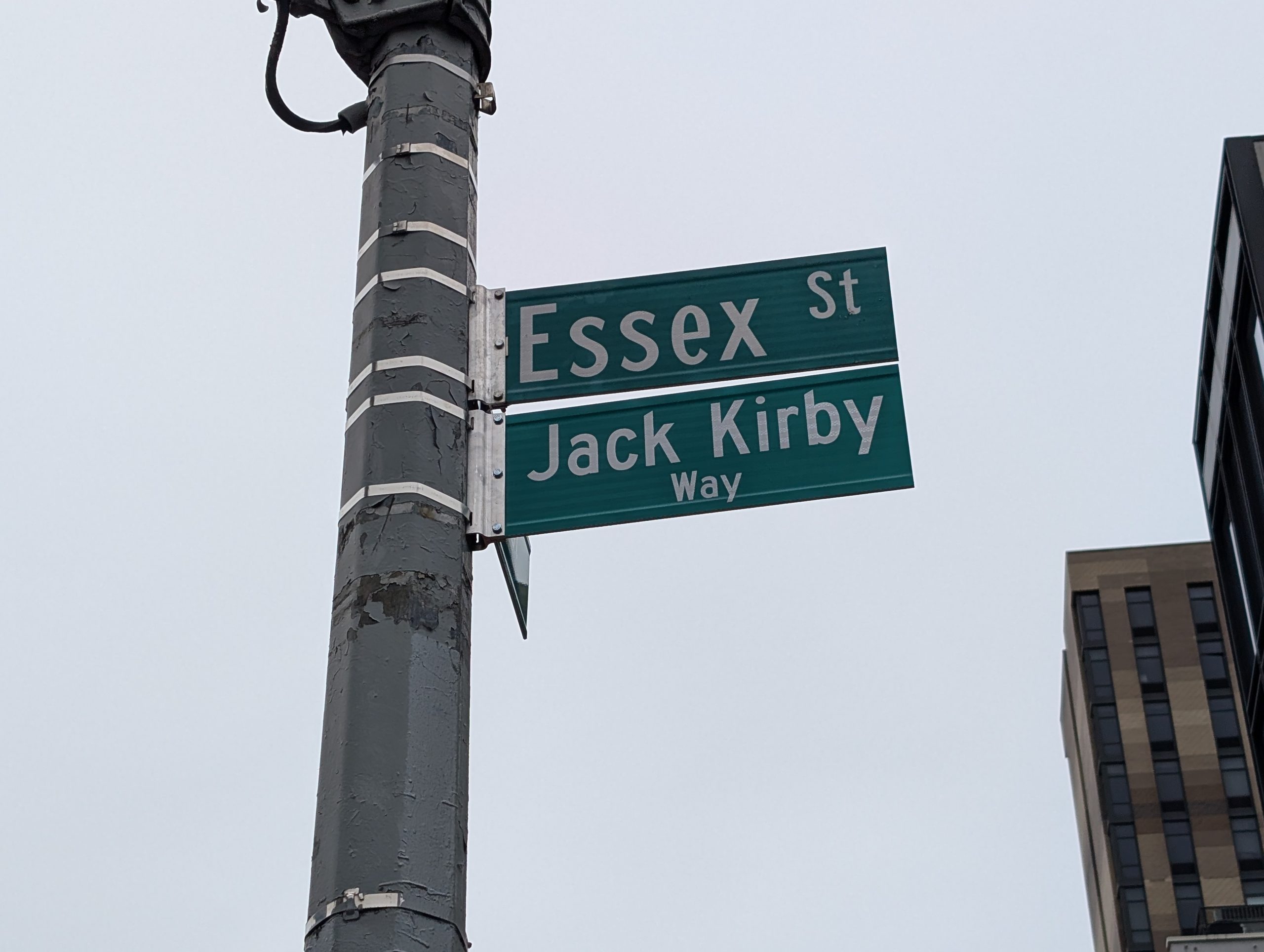
Following the temporary renaming, Roy Schwartz and the Kirby family worked with New York City Councilmember Christopher Marte to introduce legislation for a permanent co-naming. This required navigating the bureaucratic channels of the Manhattan Community Board 3 and the City Council’s Committee on Parks and Recreation. The goal was to ensure that Kirby’s name would be etched into the city’s official map, rather than just a temporary banner.
The Unveiling (May 11, 2026)
The ceremony on Monday represented the final victory in this campaign. The event featured a "green sleeve" covering the sign, which was ceremoniously removed by Kirby’s grandchildren to a chorus of cheers from fans and the sight of costumed heroes standing at attention.
Supporting Data: The Magnitude of Kirby’s Influence
To understand why a street naming in the Lower East Side carries such weight, one must look at the sheer scale of Jack Kirby’s impact on global culture.
Economic and Cultural Footprint
Jack Kirby is the primary visual architect of the Marvel Cinematic Universe (MCU), a franchise that has generated over $30 billion in global box office revenue. Characters Kirby co-created—including Iron Man, Thor, Black Panther, and the Eternals—have moved from the fringes of "pulp" entertainment to the center of global iconography.
The Lower East Side Influence
Kirby’s upbringing in the tenement housing of Essex Street was not merely a biographical detail; it was the foundation of his art. The street gangs of his youth became the "Yancy Street Gang." The cramped, kinetic energy of the Lower East Side informed his "Kirby Crackle" (a stylistic convention for depicting cosmic energy) and his dynamic, forced-perspective layouts.
Institutional Recognition
The push for "Jack Kirby Way" was supported by academic and archival institutions. Karen Green, Columbia University’s curator for comics and cartoons, has long argued that Kirby’s work represents a vital chapter in New York’s literary and artistic history. This sentiment is echoed in the upcoming documentary Kirbyvision, directed by Ricki Stern, which seeks to frame Kirby as a 20th-century visionary on par with Walt Disney or Frank Lloyd Wright.
Official Responses: "Beyond Overdue"
The speakers at the event provided a mix of professional reverence and personal intimacy, highlighting the dual nature of Kirby as both a "King" and a family man.
The Political Perspective
Councilmember Christopher Marte, who represents the Lower East Side, was blunt in his assessment of the timeline. "This was beyond overdue," Marte told the crowd. He emphasized that New York City has a responsibility to honor the "working-class heroes" who rose from its streets to change the world. For Marte, the sign is a reminder to the current residents of the Lower East Side that greatness can be forged in their own backyards.
The Industry Perspective
The presence of both Marvel’s Tom Brevoort and DC’s Paul Levitz was a rare show of industry unity.
- Paul Levitz (Former President of DC Comics): "Jack Kirby gave us a universe, and it’s only fitting that we acknowledge him as powerfully as we can in our universe." Levitz’s comment touched on the "Fourth World" saga Kirby created for DC, a sprawling epic that redefined what was possible in serialized storytelling.
- Tom Brevoort (Marvel Executive Editor): Brevoort spoke to Kirby’s "boundless imagination," noting that the industry still relies on the templates Kirby drew sixty years ago.
The Artistic Perspective
Jim Steranko, a legendary artist and a contemporary of Kirby, provided a link to the "Silver Age" of comics. Steranko’s presence served as a reminder of the artistic revolution Kirby led—a shift from static, illustrative panels to explosive, cinematic storytelling that demanded the reader’s engagement.
The Family Perspective
The most poignant moments came from Kirby’s three grandchildren. They spoke of "Grandpa Jack" not as a mythic figure, but as a man who worked tirelessly at a drawing board in a basement to provide for his family, often without the royalties or recognition his work deserved.
Implications: Righting a Historical Wrong
The mood of the event was celebratory, but it was underpinned by a palpable sense of "corrective history." The story of Jack Kirby is, in many ways, the story of the American comic book industry’s "original sin": the exploitation of creators.
The Battle for Credit and Copyright
For decades, Kirby fought for the return of his original physical artwork from Marvel and for proper creator credit. It wasn’t until 2014, following a long legal battle that nearly reached the Supreme Court, that the Kirby estate and Marvel (under Disney) reached a settlement. This settlement led to the "Created by Stan Lee and Jack Kirby" credits now seen in every Marvel film.
The Sign as a Symbol of Reform
The unveiling of "Jack Kirby Way" is seen by many in the industry as a symbolic "righting of the ship." It represents a shift in how society views creators—not as disposable "work-for-hire" labor, but as the foundational authors of our modern culture.
A Moment of History
The article’s author recounted a telling interaction during the ceremony: a teenage skateboarder paused to ask what was happening. When told it was "History," the word felt heavy. As the author noted, the event was less a "marker" of history and more an active attempt to change how history is recorded.
By placing Kirby’s name on a permanent New York City street sign, the city is ensuring that his narrative is no longer confined to the "long boxes" of collectors or the fine print of legal settlements. It is now part of the literal bedrock of Manhattan.
Conclusion: A New Direction for the Fourth World
As the crowd dispersed and the costumed Galactus faded back into the Lower East Side traffic, the green sleeve lay discarded on the pavement, and the name "Jack Kirby Way" shone clearly in the afternoon light.
The naming of this street is a testament to the endurance of Kirby’s imagination. It serves as a permanent reminder that the cosmic battles of the New Gods and the street-level heroics of the Fantastic Four all began here, in a neighborhood of immigrants and dreamers. While a street sign cannot erase decades of industry exploitation, it serves as a powerful, public declaration that Jack Kirby’s "Way"—a path of relentless innovation and boundless creativity—is finally being recognized as a central artery of the American experience.


Leave a Comment