
Frostpunk Freezes Over the Escape Room Genre with "Side Quest: Frostpunk"
A New Chapter in Post-Apocalyptic Survival Offers a Chilling Puzzle Challenge This Summer
The critically acclaimed and notoriously brutal world of Frostpunk is set to expand its tabletop presence this summer with the announcement of "Side Quest: Frostpunk," an escape-room-in-a-box experience. Known for its unforgiving city-management gameplay and grim moral dilemmas, the Frostpunk universe will now offer a more streamlined, puzzle-centric challenge, allowing players to brave the frozen wastes from a new perspective. Publishers Board&Dice and Lockme, alongside designers Jakub Caban and Bartosz Idzikowski, promise an intriguing storyline amidst tough puzzles, offering a comparatively breezy, yet still challenging, foray into the icy apocalypse. The game is slated for release at Gen Con in August, providing a stark contrast to the summer heat with its frosty premise.
The Main Facts: A Glimpse into the Frozen Enigma
"Side Quest: Frostpunk" represents a significant departure from the intricate and demanding nature of its digital predecessor and its expansive board game adaptation. While the core themes of survival, resource scarcity, and difficult choices remain, this new iteration funnels them into the focused, time-sensitive format of an escape room.
Players will assume the roles of a party of scouts, a concept familiar to fans of the original video game, who are tasked with venturing beyond the relative safety of the last city. Their mission: to locate and reactivate an abandoned generator, ensuring its habitability within an arduous six in-game days. This critical time limit translates to approximately 60 to 90 minutes of real-time gameplay, mirroring the classic pressure cooker environment of traditional escape room puzzles. The game supports up to four players, or can be tackled by a solo adventurer, offering flexibility in group size.
Central to the experience will be the management of vital resources and environmental factors, albeit in a more abstracted manner than the grand city-building simulation. Players will need to juggle temperature control, steam core maintenance, and food supplies, all while deciphering intricate puzzles. The success of the mission hinges on a blend of keen perception, creative problem-solving, and strategic decision-making.
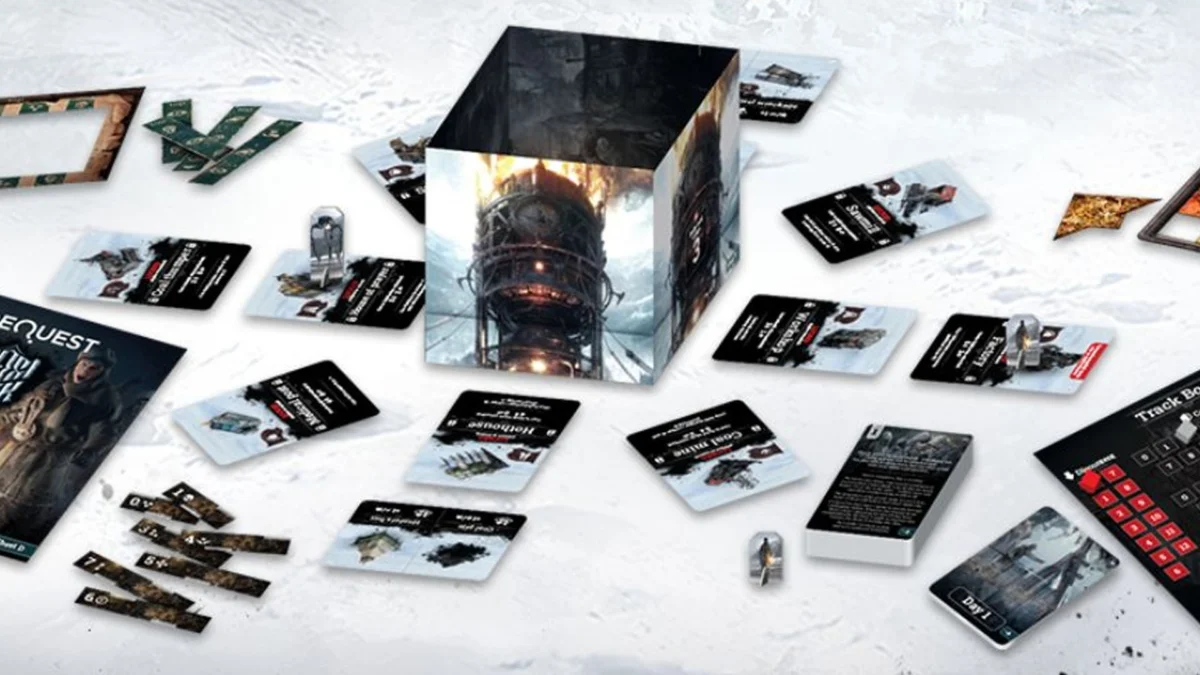
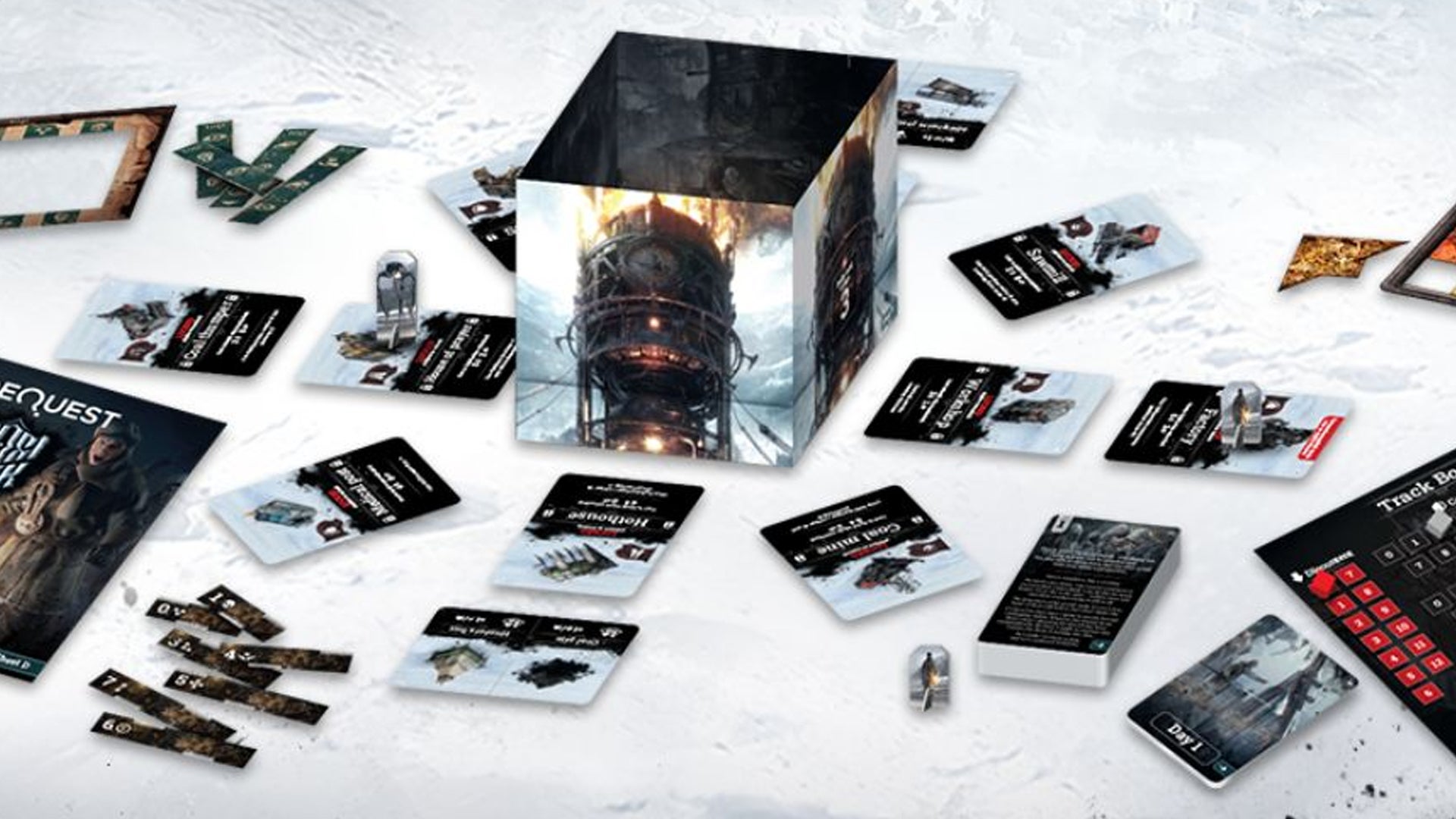
Visually, early images reveal a distinctive card-based system, where components are arranged to construct the familiar central generator of a Frostpunk city, encircled by a ring of various challenge cards. This physical layout aims to immerse players directly into the desolate yet mechanically complex world of the game.
Developed by Board&Dice and Lockme, "Side Quest: Frostpunk" is the brainchild of Jakub Caban and Bartosz Idzikowski, celebrated designers known for their work on the "Escape Tales" series and other "Side Quest" titles, including adaptations of popular IPs like "Nemesis" and "7th Sea." Their expertise in crafting narrative-driven puzzle experiences bodes well for this new venture into the Frostpunk lore.
A Chronology of Cold: From Digital Despair to Tabletop Trials
The journey of Frostpunk from a standalone video game phenomenon to a multi-platform tabletop universe is a testament to its compelling narrative and unique gameplay.
The Genesis of Frostpunk: A Digital Winter (2018)
The Frostpunk saga began in 2018 with the release of the video game developed by 11 Bit Studios. Set in an alternate late 19th century, the world has been plunged into a perpetual winter, forcing humanity to huddle around immense steam-powered generators in a desperate fight for survival. Players are thrust into the role of the "Steward" of the last city on Earth, responsible for managing its citizens, resources, and infrastructure against the unrelenting cold.
The game quickly gained notoriety for its brutal difficulty and profound moral choices. Players are constantly faced with dilemmas that test their humanity: implementing child labour, enforcing radical laws, or sacrificing individual liberties for the collective good. The consequences of these decisions ripple through the city, affecting hope, discontent, and ultimately, the survival of the populace. Frostpunk was praised for its innovative blend of city-building, survival mechanics, and narrative depth, earning critical acclaim and a dedicated fanbase drawn to its bleak yet deeply engaging world. Its success underscored a hunger for games that offered more than just entertainment, delving into complex ethical questions.
The Grand Adaptation: Frostpunk: The Board Game (Circa 2022)
Following the video game’s success, the announcement of an official board game adaptation, "Frostpunk: The Board Game," generated considerable excitement. Launched on Kickstarter, it quickly became a massive success, demonstrating the fervent desire of fans to bring the digital experience to their tabletops. The board game, also developed by 11 Bit Studios in collaboration with Glass Cannon Unplugged, aimed to faithfully translate the video game’s intricate mechanics and moral dilemmas.
Released roughly a year or so prior to the announcement of "Side Quest: Frostpunk," the board game adaptation was lauded for its ambition and commitment to the source material. It captured the essence of resource management, the constant threat of freezing, and the weight of leadership decisions. However, this fidelity came with its own set of challenges. The game became infamous for its colossal rulebook and a box so substantial it jokingly earned comparisons to real estate in expensive cities. Its setup time and inherent complexity meant it appealed primarily to dedicated board gamers willing to invest significant time into mastering its systems. While successful in its faithful translation, it also highlighted the barrier to entry for casual players or those seeking a quicker, more accessible Frostpunk experience.
The "Side Quest" Series: A New Frontier for Tabletop Puzzles
The "Side Quest" series, published by Board&Dice and Lockme, represents a distinct segment within the burgeoning escape-room-in-a-box genre. These games are designed to deliver a self-contained, narrative-driven puzzle experience that can be played at home. Unlike traditional board games with extensive replayability, escape rooms are typically a one-shot experience, focusing on immersion and the thrill of discovery.
Designers Jakub Caban and Bartosz Idzikowski are veterans in this field, having also co-created the highly regarded "Escape Tales" series. Their previous "Side Quest" adaptations, such as those based on the sci-fi horror board game "Nemesis" and the swashbuckling tabletop RPG "7th Sea," demonstrate their proficiency in distilling the essence of complex worlds into digestible, puzzle-centric formats. This track record positions them uniquely to tackle the challenge of Frostpunk, known for its grim atmosphere and strategic depth. The series aims to offer engaging narratives intertwined with clever puzzles, providing a different kind of challenge that emphasizes perception, logic, and collaborative thinking over long-term strategy and extensive rule memorization.
The Latest Expedition: Side Quest: Frostpunk (August 2024)
The announcement of "Side Quest: Frostpunk" marks the next evolutionary step for the franchise’s tabletop presence. By embracing the escape-room-in-a-box format, the creators are offering a different gateway into the frozen world. Slated for a Gen Con release in August, this game is poised to attract both existing fans seeking a novel challenge and newcomers curious about the Frostpunk universe but perhaps daunted by the complexity of the main board game. It represents an innovative approach to IP adaptation, focusing on a specific narrative slice rather than attempting to replicate the entire grand strategy experience.
Supporting Data: Unpacking the Icy Mechanics
To understand the promise of "Side Quest: Frostpunk," it’s crucial to delve into the supporting details that define its gameplay and design philosophy.
Complexity Reimagined: A Lighter Frostpunk?
One of the most striking pieces of information is the publishers’ rating of the game’s complexity as "two out of four." This stands in stark contrast to the often-overwhelming complexity associated with "Frostpunk: The Board Game" and, to some extent, the digital original. For an escape-room-in-a-box, this rating likely refers to the rules overhead and the immediate learnability of the game, rather than the intrinsic difficulty of the puzzles themselves.
In an escape room, complexity often manifests in the layers of puzzles, the subtlety of clues, and the necessity for "outside-the-box" thinking, rather than a thick rulebook or intricate resource conversion charts. A "2/4" complexity suggests that players won’t spend an hour learning how to play but will instead dive straight into the narrative and problem-solving. This accessibility is a deliberate design choice, aiming to broaden the game’s appeal beyond the niche of heavy board game enthusiasts. It means more time spent puzzling and less time poring over regulations, making it an ideal choice for a casual game night or a dedicated puzzle session.
Gameplay Mechanics: The Scout’s Burden
The core narrative places players as a party of scouts, a crucial element in the original Frostpunk video game where expeditions were vital for discovering resources, survivors, and lore. This narrative choice naturally lends itself to the escape room format, as players must navigate a specific scenario with clear objectives and constraints.
The mentioned need to manage "temperature, steam cores, food and more" indicates that while the overarching complexity is reduced, the thematic essence of Frostpunk’s survival mechanics is retained. These elements will likely serve as puzzle constraints or resources that need to be acquired and utilized strategically to overcome challenges. For instance, a puzzle might require a certain amount of "steam cores" to activate a mechanism, or a "food" scarcity might introduce a penalty or a time crunch. The integration of these elements ensures that players still feel the constant pressure and thematic weight of Frostpunk, even within a simplified system.
The emphasis on "perception and creativity" as key survival tools further defines the gameplay. This suggests that puzzles won’t just be about logical deduction but may also involve pattern recognition, spatial reasoning, and innovative solutions, perhaps even requiring players to interact with the game components in unexpected ways. This aligns perfectly with the strengths of escape room design, where players are often encouraged to think laterally and collaborate on interpreting clues.
The Visual and Experiential Design
The images of the game components, particularly the cards arranged to form the city’s central generator surrounded by a ring of other cards, offer a glimpse into the game’s physical design. This modular layout not only provides a visual anchor to the Frostpunk theme but also likely serves a functional purpose. The generator might act as a central hub from which different puzzle paths emanate, or its state might change as players progress through the game. The surrounding ring of cards could represent different locations in the wasteland, potential threats, or puzzle elements that become accessible over time.
This tactile interaction with the game components is a hallmark of good escape room design, allowing players to physically manipulate elements to uncover secrets and solve riddles. The thematic artwork, drawing directly from 11 Bit Studios’ established aesthetic, will undoubtedly enhance immersion, transporting players directly into the desolate, snow-swept landscapes of Frostpunk.
The Rise of the Escape-Room-in-a-Box
The "Side Quest" series, and "Side Quest: Frostpunk" specifically, taps into a booming segment of the tabletop industry: the at-home escape room. These games offer the thrill of an escape room experience without the need to visit a physical venue, providing convenience and often a more affordable price point. Their popularity surged during periods of lockdown but has continued due to their unique blend of narrative, puzzle-solving, and collaborative play.
These games are typically designed for a single playthrough, as the puzzles, once solved, lose their mystery. However, this focused design allows for highly curated experiences, often with compelling storylines that unfold as players progress. The success of the "Side Quest" series and the "Escape Tales" games by the same designers indicates a strong market for well-crafted, narrative-driven puzzle games, positioning "Side Quest: Frostpunk" to capitalize on this trend.
Official Responses and the Art of Concealment
When it comes to escape rooms, the most effective marketing often involves saying very little. Publishers Board&Dice and Lockme are, as noted, "staying unsurprisingly schtum on what exactly to expect from the escape room-style experience." This strategic silence is not an oversight but a deliberate choice to preserve the integrity of the puzzles and the player’s discovery process. The core appeal of an escape room lies in unraveling its secrets, and revealing too much beforehand would diminish that crucial element of surprise and challenge.
What has been shared, however, can be seen as an indirect official response. The promise of an "intriguing storyline amidst the tough puzzles and tougher decisions" confirms that while the format is lighter, the thematic gravity of Frostpunk is not lost. The focus on a defined narrative arc, characteristic of Caban and Idzikowski’s previous works, ensures that players are not just solving abstract puzzles but are deeply invested in the scouts’ perilous mission.
The selection of these specific designers also serves as an official endorsement of their expertise in the genre. Their history with the "Escape Tales" series, known for its strong narratives and clever puzzles, and their successful adaptations of other IPs like "Nemesis" and "7th Sea," effectively communicates that "Side Quest: Frostpunk" is in capable hands. Their design philosophy tends to blend immersive storytelling with diverse puzzle types, suggesting that "Frostpunk" will offer a rich and varied puzzle experience that goes beyond simple riddles.
While direct quotes about specific puzzles are absent, the available information paints a clear picture: this is a carefully crafted experience designed to capture the spirit of Frostpunk through the lens of a challenging, collaborative puzzle game. The "official response" is embedded in the game’s format, its chosen designers, and the subtle hints about its thematic depth.
Implications: Broadening Horizons in a Frozen World
The launch of "Side Quest: Frostpunk" carries several significant implications for the Frostpunk franchise, the tabletop gaming industry, and the players themselves.
Franchise Expansion and Accessibility
The most immediate implication is the further expansion of the Frostpunk intellectual property. By venturing into the escape-room-in-a-box format, the franchise can reach a wider audience that might not be drawn to the complexity of the main board game or the time commitment of the video game. This offers a more accessible entry point, allowing new players to experience the thematic richness and moral weight of Frostpunk in a concentrated, digestible package. It introduces the brand to puzzle enthusiasts and casual gamers who enjoy collaborative problem-solving without the steep learning curve of a heavy strategy game. This diversification of formats ensures that the Frostpunk universe can be enjoyed by different player segments, strengthening its overall market presence.
The Evolution of IP Adaptations
"Side Quest: Frostpunk" also serves as a compelling case study in the evolving art of intellectual property adaptation within the tabletop industry. Instead of attempting a direct, all-encompassing translation, which can sometimes lead to overly complex or unwieldy games, this adaptation focuses on a specific narrative slice – the scout expedition. This allows designers to hone in on particular themes and mechanics that best suit the escape room format, such as exploration, resource scarcity under duress, and immediate decision-making, rather than trying to replicate the entire city-management experience. This approach suggests a growing maturity in how IPs are brought to the tabletop, prioritizing an engaging experience tailored to the new medium over strict mechanical fidelity. It highlights that successful adaptations can come in many forms, from sprawling epics to focused, intimate challenges.
Future of the "Side Quest" Series and Beyond
The success of "Side Quest: Frostpunk" could further solidify the "Side Quest" series as a premier platform for adapting popular video game and board game IPs into escape room experiences. It demonstrates the versatility of the format and the design prowess of Caban and Idzikowski. This could pave the way for future adaptations of other beloved franchises that possess strong narratives and thematic depth, offering them a new avenue for fan engagement. It reinforces the idea that an escape-room-in-a-box isn’t just a novelty but a legitimate and robust genre within tabletop gaming.
Player Experience: A Different Kind of Chill
For players, "Side Quest: Frostpunk" offers a distinct experience. Existing Frostpunk fans will appreciate the thematic consistency and the opportunity to engage with the lore in a new, perhaps less stressful, but still challenging way. The time limit and the pressure of resource management will evoke the familiar tension of the original game, but within a more focused and immediate context. For escape room enthusiasts, it provides a fresh, grimly atmospheric setting that contrasts with many lighter-hearted puzzle games. The promise of an "intriguing storyline" also caters to those who seek more than just abstract puzzles but a cohesive narrative journey.
The timing of its release at Gen Con in August adds a layer of delightful irony. Venturing into a frigid, post-apocalyptic world while the summer sun shines outside provides a unique contrast, amplifying the immersive quality of the game. The question of whether players will "make it back out" of the experience, as the article playfully suggests, underscores the challenge and replayability (or lack thereof, typical for this genre) inherent in a well-designed escape room.
The Blurring Lines of Gaming
Ultimately, "Side Quest: Frostpunk" is another example of the continued blurring of lines between digital and tabletop gaming. It shows how successful video game IPs can transcend their original medium, finding new life and new audiences through innovative board game formats. This trend enriches both worlds, bringing the tactile, social engagement of tabletop gaming to digital fans, and introducing rich, established narratives to board game enthusiasts. As the tabletop industry continues to innovate, expect to see more creative adaptations that explore different facets of beloved fictional universes, providing diverse and engaging experiences for all types of players.


Leave a Comment