
Kate Meissner Unveils Profound Exploration of Bodily Metamorphosis at Lyles & King
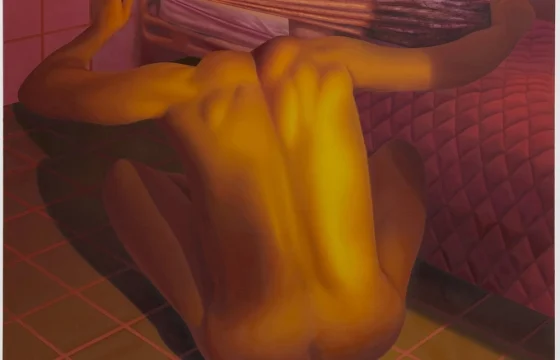
New York, NY – Lyles & King, a prominent contemporary art gallery in New York City, is currently hosting a compelling exhibition of new paintings by artist Kate Meissner. Titled "Project Kate Meissner," the show, on view through April 4th, delves into the intricate and often profound transformations the human body undergoes, drawing deeply from Meissner’s recent personal experiences. The exhibition offers a visceral and intellectually stimulating exploration of elasticity, metamorphosis, and the primal essence of our physical being.
Meissner, an artist whose burgeoning career has already seen her work acquired by prestigious institutions like the Denver Art Museum and the Xiao Museum of Contemporary Art, presents a body of work that is both deeply personal and universally resonant. Her artistic practice, informed by her recent journey through pregnancy and the birth of her first child, acts as a lens through which she examines the fundamental nature of biological change.
"These works are an exploration of the human body’s elasticity and capacity to metamorphose," Meissner states in her artist’s statement accompanying the exhibition. "Informed by my own experience of pregnancy and the birth of my first child last year, these paintings are a meditation on physiological transformation and the body’s underlying animalistic and mammalian nature." This direct connection to her lived experience imbues the canvases with a raw authenticity, inviting viewers to confront their own understanding of embodiment and the often-unseen processes that shape us.
The Genesis of Transformation: Meissner’s Personal Journey as Artistic Catalyst
Kate Meissner, born in Sacramento, California in 1995, has rapidly established herself as a significant voice in contemporary painting. Her artistic trajectory, marked by a rigorous MFA from Yale University, has consistently engaged with themes of the body, identity, and the material world. However, "Project Kate Meissner" represents a pivotal moment in her oeuvre, where personal narrative converges with profound artistic inquiry.
The catalyst for this exhibition, as explicitly stated by Meissner, is her experience of pregnancy and childbirth. This period, characterized by dramatic physiological shifts, serves as the bedrock for the conceptual framework of her new paintings. Pregnancy is a biological marvel, a testament to the body’s extraordinary ability to expand, adapt, and nurture life. The subsequent experience of birth, another monumental physiological event, further underscores the body’s inherent power and resilience.
Meissner’s decision to translate these intensely personal experiences into her art speaks to a desire to both process and share these transformative moments. By focusing on the "elasticity and capacity to metamorphose," she highlights the dynamic and ever-changing nature of the human form, challenging static perceptions of the body. This is not merely an aesthetic exploration; it is a deep dive into the biological realities that underpin our existence. The "animalistic and mammalian nature" she references points to a primal, instinctual aspect of our biology, connecting us to a broader spectrum of life and underscoring the fundamental biological processes that govern our species.
A Chronology of Embodiment: Tracing the Arc of Physiological Change
While the exhibition itself is a snapshot of Meissner’s current artistic output, the genesis of these works can be understood as a chronological unfolding, mirroring the stages of pregnancy and postpartum. The nine months of gestation represent a period of constant, incremental change. The body stretches, adapts, and rearranges itself to accommodate new life. This process, while natural, can be both awe-inspiring and disorienting. Meissner’s paintings likely capture the visual language of this expansion, perhaps through fluid forms, stretched canvases, or a palette that reflects the internal landscape of a developing body.
The act of birth, a powerful and often intense experience, marks a dramatic shift. It is a moment of rupture and emergence, a testament to the body’s strength and the culmination of a long process. Following birth, the postpartum period is another phase of significant transformation. The body begins to recover and recalibrate, a process that can be as challenging and profound as the pregnancy itself. Meissner’s meditations on "physiological transformation" and the body’s "underlying animalistic and mammalian nature" suggest that these paintings are not just about the visual appearance of change, but also about the internal, visceral sensations and the inherent biological drives at play.
The chronology inherent in her experience—from conception, through gestation, to birth and beyond—provides a rich thematic wellspring. Each stage offers distinct visual and emotional cues that an artist like Meissner can translate onto the canvas. One might envision early works reflecting the initial stages of growth and subtle changes, while later works could depict the more dramatic shifts and the emergence of a new form. The postpartum period could inspire reflections on recovery, vulnerability, and the enduring strength of the maternal body.
Supporting Data: Meissner’s Proven Track Record and Artistic Sensibility
Kate Meissner’s inclusion in significant museum collections and her representation by Lyles & King are strong indicators of her established artistic merit and critical acclaim. The Denver Art Museum, the Xiao Museum of Contemporary Art, The Mer Collection, and the Abroms-Engel Institute for the Visual Arts all represent institutions with discerning curatorial practices, suggesting that Meissner’s work resonates with a broad spectrum of art historical discourse and public appreciation.
Her MFA from Yale University, a highly competitive and rigorous program, signifies a deep engagement with artistic theory, practice, and critique. This academic foundation likely provides her with a sophisticated understanding of art history and a refined technical mastery, enabling her to articulate complex ideas through her chosen medium.
The themes Meissner has explored prior to this exhibition, while not explicitly detailed in the provided text, can be inferred to contribute to her current focus. Her consistent engagement with the human body suggests a long-standing fascination with its form, its vulnerabilities, and its expressive potential. The "elasticity and capacity to metamorphose" are not entirely new concepts for an artist who has consistently grappled with the physical realm. However, her recent personal experiences have clearly provided a fresh and deeply personal lens through which to re-examine these themes, lending them a new urgency and depth.
The artist’s statement itself serves as crucial supporting data, offering direct insight into her conceptual intentions. The deliberate use of terms like "elasticity," "metamorphose," "physiological transformation," "animalistic," and "mammalian" are not casual descriptors. They are carefully chosen words that reveal a commitment to exploring the biological and instinctual underpinnings of human experience. This intellectual rigor, combined with her evident technical skill, positions "Project Kate Meissner" as a significant exhibition within the contemporary art landscape.
Official Responses: A Dialogue with the Artistic Community and the Public
While direct "official responses" in the form of statements from external bodies are not available in the provided text, the exhibition itself, and the gallery’s presentation of it, constitute an official response from Lyles & King. The gallery’s decision to dedicate its "project space" to Meissner’s new body of work signifies their belief in its importance and potential impact. Project spaces within galleries often serve as platforms for artists to experiment and present more conceptually driven or nascent bodies of work, suggesting that Lyles & King sees this exhibition as a crucial development in Meissner’s career.
The inclusion of Meissner’s artist statement is a direct engagement with the public, offering a framework for understanding the exhibition’s core themes. This is a standard practice in art exhibitions, aiming to bridge the gap between the artist’s intent and the viewer’s interpretation. The statement acts as a vital tool for contextualization, guiding the audience towards a deeper appreciation of the work’s conceptual underpinnings.
Furthermore, the presence of Meissner’s work in permanent collections of major art institutions, as mentioned, represents an ongoing "official response" from the art world. These acquisitions are not merely passive acknowledgments; they are active endorsements of an artist’s contribution to contemporary art. Curators and museum boards, through their selection process, are making a public declaration about the significance and enduring value of an artist’s vision.
The ongoing exhibition at Lyles & King itself serves as an invitation for critical engagement from art critics, curators, and the wider public. The conversations that will undoubtedly arise from this show, both within the gallery and in subsequent reviews and discussions, will form a crucial part of the "official response" to Meissner’s artistic exploration.
Implications: Redefining Perceptions of the Body and Maternal Experience
Kate Meissner’s exhibition at Lyles & King carries significant implications for how we perceive the human body, particularly in the context of biological transformation and the often-underrepresented aspects of maternal experience. By focusing on the "elasticity and capacity to metamorphose," Meissner challenges the often-static and idealized representations of the body prevalent in popular culture. Her work encourages a more nuanced understanding of the body as a dynamic, adaptable, and inherently powerful entity.
The explicit connection to pregnancy and childbirth offers a powerful counter-narrative to societal silences surrounding these profoundly significant life events. For too long, discussions about the female body, particularly during and after pregnancy, have been relegated to the private sphere or framed through a lens of aesthetic deficit. Meissner’s art brings these experiences into the public realm, asserting their artistic and conceptual validity. Her exploration of the "animalistic and mammalian nature" of the body can be seen as a reclamation of these primal aspects, stripping away societal artifice and connecting us to a fundamental biological truth.
This exhibition has the potential to foster empathy and understanding for the physical and emotional journeys associated with reproduction and motherhood. By rendering these experiences visible and engaging them on an aesthetic and intellectual level, Meissner contributes to a broader cultural dialogue about embodiment, vulnerability, and the enduring strength of the human form.
Moreover, Meissner’s success in placing her work within major international collections and exhibiting at a respected gallery like Lyles & King signifies a growing appreciation for art that delves into deeply personal yet universally relevant themes. Her work contributes to a contemporary art landscape that is increasingly open to exploring the complexities of lived experience, moving beyond purely abstract or conceptual concerns to embrace the visceral realities of human existence. The implications of "Project Kate Meissner" extend beyond the art world, offering a profound and visually arresting meditation on what it means to be a living, transforming, and fundamentally mammalian being.



Leave a Comment