
Culture Currents: A Deep Dive into Sci-Fi Legacies, Literary Shifts, and Industry Shakes
Tokyo, Japan / Los Angeles, CA / New York, NY – May 24, 2026 – From a nostalgic look back at a foundational sci-fi film to the evolving landscape of anime, publishing, and cinematic merchandising, the cultural sphere is buzzing with significant developments. This week, we examine the enduring influence of classic cinema, the digital and artistic shifts in literary presentation, the profound impact of a beloved television host, and the intricate financial battles shaping the comic book world, alongside a somber farewell to a sci-fi legend and a celebratory nod to a contemporary literary giant.
The Last Echo of Tinsel: A Rediscovery of Logan’s Run (1976)
Main Facts:
A recent retrospective by the author of Muse from the Orb revisits the 1976 science fiction classic Logan’s Run, declaring it a quintessential "capstone" to a specific, vibrant era of cinematic futurism. Published under the candid title "I Finally Watched… LOGAN’S RUN (1976)," the piece offers a fresh perspective on the film’s aesthetic and thematic contributions, years after its initial release.
Chronology:
The article frames Logan’s Run, released in 1976, as the unwitting final masterpiece of the "tinsel/synthesizer" era of sci-fi cinema, a period stretching roughly from 1968 to 1977. This decade marked a unique vision of the future, characterized by a distinct blend of camp, bright visuals, and electronic soundscapes, before a shift towards grittier or more grounded science fiction began to dominate.
Supporting Data:
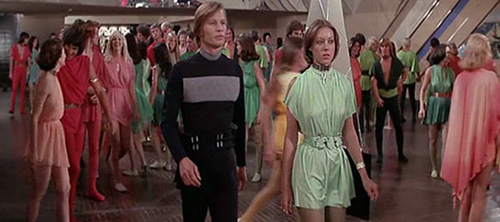
The "tinsel/synthesizer" era, as described, envisioned the third millennium through a lens of glittering spectacle, resembling fantastical stage productions like The Cher Show or Peter Brook’s A Midsummer Night’s Dream infused with futuristic elements. Films of this period, including Zardoz and Barbarella, often relied on "shiny interiors, rainbow colors, boop-zoop sounds, and… sets that were sometimes literally just tinsel" to communicate their vision of "THE FUTURE."
Logan’s Run stands as a pinnacle of this aesthetic. The author highlights its unparalleled use of "mirrors, neon, or that ‘extremely shiny airport’ type of futurism," where every woman sports a "Sabrina Carpenter wardrobe," and citizens navigate environments in "little bubble domes like it’s Epcot." A standout detail is Farrah Fawcett’s cameo as a medspa beautician, whose "signature smile, flirtatious and innocent but weirdly sinister in its perfection," perfectly symbolizes the film’s youth-obsessed world, where society’s energy is funneled into "consumption and frivolity."
Beyond the dazzling surface, the article praises the subtle world-building embedded in background details. Glimpses of disrepair in certain sectors and faded old signs hint at a deeper, more complex history for the Dome society. Questions arise: Was the population once larger? What calculations does the omniscient Computer make regarding maintenance? These mysteries enrich the narrative, suggesting a past fraught with untold events.

A particularly memorable sequence involves Logan and Jessica’s encounter with an insane robot deep underground. This "goofy" interaction is lauded for its narrative depth, with every line hinting at a larger, darker truth. The robot’s self-declaration as a "fusion" of man and machine, and his macabre revelation of frozen Runner bodies—stored because "the ‘other food’ — plankton and protein — ‘stopped coming’"—raises disturbing questions about the Dome’s origins, its past societal solutions, and even the possibility of secret cryochambers or human-robot fusions. The presence of frozen penguins and the robot’s repetitive chant of "BOX, BOX, BOX" only adds to the unsettling, intriguing enigma.
Implications:
This critical re-evaluation underscores Logan’s Run‘s dual legacy: a visually groundbreaking film that captured the optimistic, albeit superficial, futurism of its era, and a subtly profound work that grappled with deeper societal anxieties about control, consumption, and the price of utopia. Its position as the "unwitting end" of the tinsel age suggests a cinematic transition, paving the way for the more grounded, often dystopian, science fiction that would follow, exemplified by films like Star Wars (which premiered just a year later) and Alien. The film’s ability to spark such detailed analysis decades later testifies to its enduring power as both a cultural artifact and a thought-provoking piece of speculative fiction.
Anime’s Global Ascent: Crunchyroll Awards Mark a Decade of Influence
Main Facts:
The 10th annual Crunchyroll Anime Awards recently concluded in Tokyo, celebrating the best in anime with winners chosen from an astounding 73 million global votes. This milestone event underscores the immense and growing worldwide popularity of Japanese animation.
Chronology:
Held on a recent Saturday, the 10th edition of the Crunchyroll Anime Awards honored productions from the 2025-2026 anime season. The awards have grown significantly since their inception, reflecting anime’s journey from a niche interest to a global cultural phenomenon.
Supporting Data:
The star-studded ceremony, hosted by Sally Amaki and Jon Kabira, saw My Hero Academia‘s final season clinch the coveted "Anime of the Year" award, presented by none other than global music icon The Weeknd. This high-profile celebrity involvement further highlights anime’s crossover appeal into mainstream entertainment.
Other significant accolades included:
- Film of the Year: Demon Slayer: Kimetsu no Yaiba Infinity Castle, a testament to the franchise’s cinematic dominance.
- Best Original Anime: Lazarus, showcasing innovation in storytelling.
- Best Continuing Series: One Piece, a perennial favorite demonstrating its enduring quality and fanbase.
- Best New Series: Gachiakuta, signaling promising talent and fresh narratives in the industry.
The sheer volume of global votes—73 million—speaks volumes about the dedicated and expansive international fanbase for anime, spanning continents and cultures. Crunchyroll, as a leading platform for anime streaming, plays a pivotal role in aggregating this global enthusiasm and legitimizing anime as a major entertainment force.
Implications:
The Crunchyroll Anime Awards serve as more than just a ceremony; they are a barometer for the health and direction of the global anime industry. The massive voter turnout and the involvement of mainstream celebrities like The Weeknd signify anime’s successful integration into broader popular culture. This continued growth points to a future where anime increasingly shapes global entertainment trends, attracting diverse audiences and inspiring new generations of creators and fans alike. The awards also highlight the variety within anime, from long-running shonen epics to innovative original works, ensuring a rich and dynamic future for the medium.
A Literary Pillar Departs: Publishers Bid Farewell to Stephen Colbert
Main Facts:
The publishing world is mourning the conclusion of Stephen Colbert’s tenure as a late-night host, recognizing him as an unparalleled champion for authors and literature on mainstream television. His departure marks the loss of a crucial platform for literary discourse and promotion.
Chronology:
For over two decades, Colbert cultivated a reputation as one of television’s most intellectually curious interviewers. His journey began with The Colbert Report, where, alongside The Daily Show, he established a unique space for serious discussions with authors. When he transitioned to CBS in September 2015 to host The Late Show, many questioned if network television audiences would embrace literary guests. Colbert, however, proved them wrong, deliberately positioning his show as significantly more book-friendly than its competitors.
Supporting Data:
During his time on The Colbert Report, Colbert routinely featured two authors per week, covering a broad spectrum from historians and economists to journalists and fiction writers. Notable guests included Malcolm Gladwell, Ann Patchett, Ta-Nehisi Coates, the beloved Maurice Sendak, Junot Díaz, George Saunders, and Anne Rice. The penultimate episode of The Report notably hosted Phil Klay, author of the National Book Award-winning collection Redeployment.
Upon moving to The Late Show, Colbert continued this tradition with conviction. Stephen King appeared in the show’s very first week, signaling its literary commitment. George Saunders became a recurring guest, and high-profile figures like Michelle Obama discussed her memoir Becoming. Other literary luminaries such as Walter Isaacson, Kwame Alexander, and Tobias Wolff also graced his stage. In total, between both shows, Colbert interviewed approximately 125 authors, a staggering number for a late-night program.

Erinn McGrath, an industry veteran and CEO of the literary marketing agency Full Story, eloquently summarized Colbert’s impact to Publishers Weekly. She stated, "For the entirety of my career, Stephen Colbert made late-night television one of the most meaningful platforms for publishers to promote books and authors." McGrath emphasized the transformative power of a single appearance: "A single appearance on his show could transform a debut novelist into a bestseller, elevate urgent nonfiction into the national conversation, or remind millions of Americans why reading still matters." She lauded his approach, noting, "He treated writers just as seriously as actors and musicians. The end of his show marks the loss of a rare cultural space where literature regularly reached a mass audience." McGrath specifically recalled memorable appearances by President Bill Clinton, Dolly Parton, Lawrence Wright, and James Patterson.
Implications:
Colbert’s departure leaves a significant void in the media landscape. His unique blend of intellectual rigor, genuine curiosity, and comedic timing allowed authors to engage with a mass audience in a way rarely seen on television. The loss of such a sympathetic and effective advocate for books is a substantial blow to publishers, particularly for debut novelists and those promoting important, yet perhaps less commercially obvious, works. In an increasingly fragmented media environment, Colbert’s platform was a unifying force for literature, fostering a broader appreciation for reading and intellectual engagement. The challenge now lies in whether any other mainstream personality will step forward to fill this crucial role for the literary community.
The Art of the Book: Painted Covers Make a Grand Return
Main Facts:
A noticeable trend is sweeping through bookstores across the United States: the resurgence of painted book covers. These artistic covers, featuring reproductions of oil and acrylic paintings, are increasingly replacing stock photos and digital renderings, marking a significant shift in publishing aesthetics.
Chronology:
Hyperallergic notes this as a "recent shift" from the minimalist color fields and geometric abstraction that have often characterized modern book design. This return to painterly covers reflects a broader cultural yearning for tangible, human-made artistry.
Supporting Data:
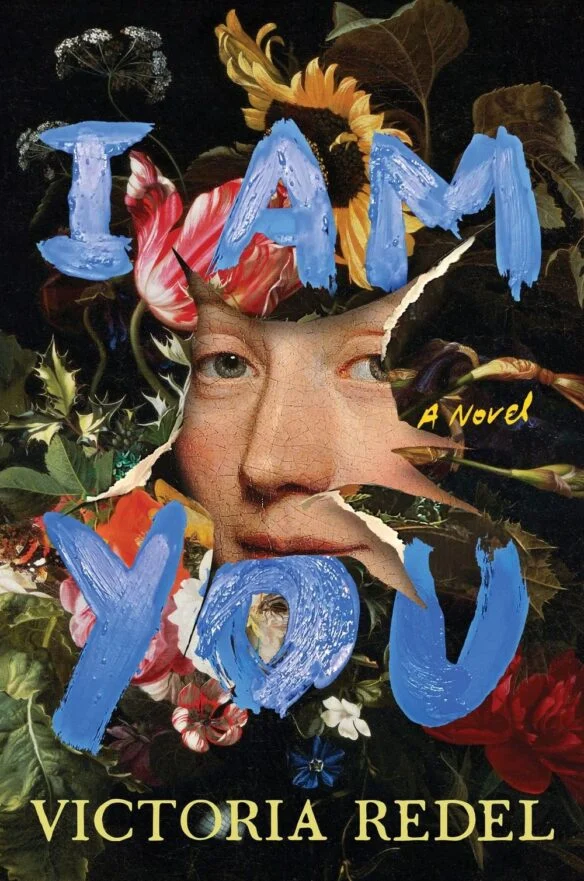
The new wave of painted covers is characterized by saturated, often primary colors, and figures with "inscrutable expressions and intimate gestures emphasized by tight cropping." These covers proudly display the "material marks" of artists, ranging from early modernists like Hilma af Klint to contemporary realists such as Nashville-based Shannon Cartier Lucy. In a market saturated with generic design templates and the increasing prevalence of AI-generated imagery, the painted cover stands out as distinctly and reassuringly human.
Hyperallergic posits that this shift reflects "a broader craving for embodiment and physical presence — proof, in other words, of the artist’s hand and subjectivity in the era of the internet." This choice is more than just aesthetic; it’s philosophical. Just as painting demands time and deliberate creation, so too does a novel require sustained attention from both writer and reader. This tension deliberately undermines the forces of rapid creation and consumption driven by profit margins in both the art and publishing industries.

Beyond its deeper implications, the trend is also "a matter of taste." Carrying a novel adorned with a work by af Klint, whose Guggenheim Museum retrospective remains the institution’s most visited, or by an emergent painter from the Tribeca gallery scene, serves as a cultural signal. It projects "intellectual rigor, cultural capital, rarefied sensibilities, and a sense of irony." On the bookshelf, such a cover subtly aligns the book with a rich "art-historical lineage" rather than the ephemeral curation of an algorithmic feed, offering a more profound connection to artistic heritage.
Implications:
The return of the painted book cover signifies a powerful counter-movement against the depersonalization of digital culture and mass production. It speaks to a collective desire for authenticity, craftsmanship, and the unique touch of the human hand in an increasingly digitized world. For publishers, it’s a strategic move to differentiate books in a crowded market, imbuing them with an added layer of artistic and cultural value. For readers, it offers an enhanced tactile and visual experience, turning a book into an object of art and a statement of intellectual and aesthetic preference. This trend suggests that in the digital age, the physical book is finding new ways to assert its enduring appeal and artistic significance.
Beyond the Screen: How Movies and Toy Tie-Ins Are Evolving
Main Facts:
The New York Times has released an analysis detailing the evolving relationship between major film franchises and their toy tie-ins, highlighting how this dynamic is being redefined by upcoming summer blockbusters. This intricate dance between cinematic storytelling and merchandising continues to shape the entertainment industry.
Chronology:
This summer’s lineup features new chapters in decades-old franchises, demonstrating the long-term impact of this symbiotic relationship. The Mandalorian and Grogu (a Star Wars spinoff) premiered on May 22. Two weeks later, Masters of the Universe followed, leading up to the much-anticipated release of Toy Story 5 on June 19. These releases continue a tradition that has spanned decades, with each new iteration pushing the boundaries of how films and merchandise interact.
Supporting Data:
The article explores three distinct models of this phenomenon:
- Toy Story 5: This sequel introduces Lilypad, a bright green, kid-friendly computer tablet, as the latest rival for the child’s affections, causing the perpetually anxious plastic T-Rex, Rex, to bemoan "Extinction. Not again." This narrative directly integrates the anxieties of traditional toys facing modern digital companions, reflecting real-world shifts in children’s play. The series has historically reignited sales for classic toys like Mr. Potato Head.
- The Mandalorian and Grogu: This Star Wars spinoff is a direct descendant of George Lucas’s groundbreaking strategy. Lucas famously exchanged a portion of his directing fees for the original Star Wars film in favor of licensing and merchandising rights to all related toys, a decision that made him one of Hollywood’s wealthiest filmmakers. This established a precedent for intellectual property monetization that continues to influence major franchises.
- Masters of the Universe: This franchise famously inverted the traditional order of things. Its iconic toys were released two years before the popular 1980s Saturday-morning cartoon. This "toy-first" strategy illustrates how merchandise can sometimes precede and even drive the narrative content, making the action figures as iconic as the characters themselves. As the NYT piece notes, when fans think of He-Man, they’re "just as likely to picture the improbably musclebound Mattel action figure as the animated cartoon or the 1987 feature starring Dolph Lundgren."
Meredith Bak, an associate professor in childhood studies at Rutgers University-Camden and author of Playful Visions: Optical Toys and the Emergence of Children’s Media Culture, notes that such products have an "understandable appeal to children." This appeal stems from the tangible connection toys provide to beloved characters and stories, allowing children to extend their imaginative play beyond the screen.

Implications:
The evolving landscape of movie and toy tie-ins highlights a sophisticated and lucrative model where entertainment and commerce are inextricably linked. The success of these franchises demonstrates that toys are not merely afterthoughts but integral components of intellectual property development and long-term brand building. From Lucas’s visionary licensing deals to the "toy-first" approach of Masters of the Universe and Toy Story‘s meta-narrative about toys themselves, these examples illustrate how studios continue to innovate in leveraging merchandise to enhance storytelling, engage audiences, and generate substantial revenue. This trend ensures that the boundaries between film, play, and consumer products will continue to blur, creating immersive and profitable experiences for generations to come.
A Titan of Fandom and SF Publishing: Ted White (1938-2026) Remembered
Main Facts:
Ted White, a multifaceted figure renowned as an author, pioneering fanzine fan, and influential editor of Amazing Stories and Fantastic, passed away on May 24, 2026, at the age of 88. His daughter, Arielle Kit White, shared the news of his passing on Facebook, prompting an outpouring of tributes from across the science fiction and fantasy community.
Chronology:
Born in 1938, Ted White’s lifelong dedication to science fiction began early, entering fandom in 1951. He launched his first fanzine, Zip 1, in 1953, marking the beginning of a prolific career that spanned decades.
His contributions to fandom were widely recognized and celebrated:
- Fan Writer: White won the coveted Best Fan Writer Hugo Award in 1968. His fanzines, including Void (co-edited with Greg Benford from 1958-1967), Blat!, and Pong (the latter two co-edited with Dan Steffan), were highly influential. Blat! earned a FAAn Award in 1994, and White himself received the FAAn for Best Fan Writer in 1999, followed by the FAAn Award for lifetime achievement in 2010.
- Conventions: In the 1960s, he was a co-founder of New York’s Fanoclasts. His organizational prowess was evident in his co-chairing NYCon 3, the 1967 Worldcon, and chairing Lunacon 11, 12, and 13 from 1968-1970. His significant standing in fandom was further acknowledged when he was honored as Worldcon Fan Guest of Honor at Aussiecon Two in 1985.
White’s professional writing career in speculative fiction began with "Phoenix" (co-written with Marion Zimmer Bradley), published in Amazing in February 1963. His first novel, Invasion from 2500 (1964), was co-authored with Terry Carr under the pseudonym Norman Edwards.
His editorial leadership left an indelible mark on the genre. He served as assistant editor at The Magazine of Fantasy and Science Fiction under Ed Ferman from 1963 to 1


Leave a Comment