Tlotlo Tsamaase’s "House of Margins": A Masterclass in Genre-Bending Horror and Post-Colonial Critique
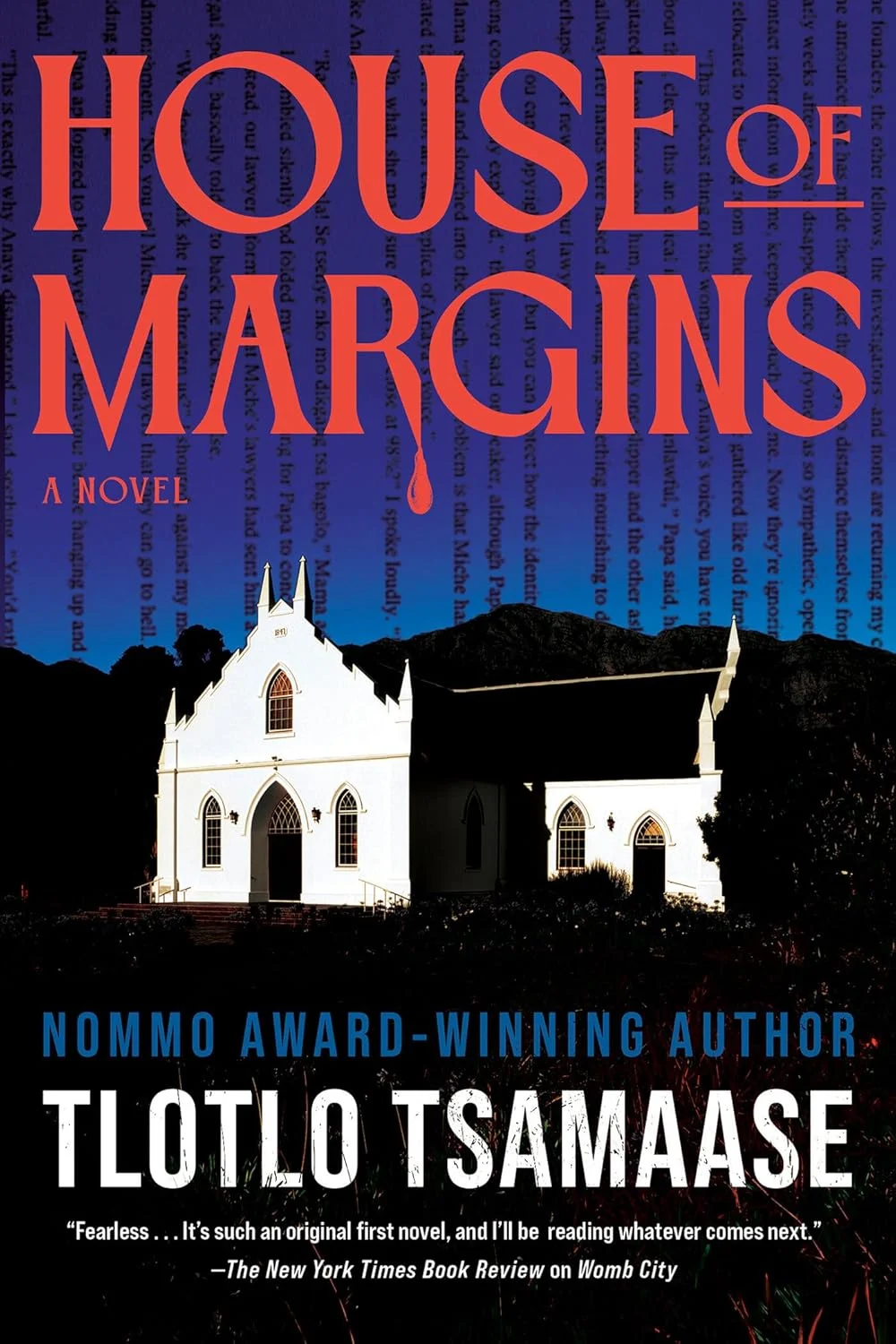
GABORONE/CAPE TOWN – Motswana writer Tlotlo Tsamaase has once again cemented her reputation as an innovator in contemporary literature with her second novel, House of Margins. This ambitious work seamlessly blends folkloric horror, digital-age mystery, and sharp social commentary, offering a reading experience unlike any other. The novel challenges not only traditional storytelling conventions but also compels its audience to critically examine the publishing industry, the ethics of narrative ownership, and the enduring scars of colonialism. While its uniquely crafted narrative holds appeal for any discerning reader, House of Margins resonates particularly deeply with fellow writers, who will find its metacommentary on the literary world both insightful and provocatively familiar.
Published by Tartarus Press (implied from original link, though not explicitly stated in text), House of Margins plunges readers into a labyrinthine mystery surrounding the disappearance of Anaya Sebeya, an emerging Motswana fiction writer whose last known location was a prestigious writing residency in Cape Town, South Africa. Her vanishing act triggers a multi-layered investigation, unraveling a story steeped in historical trauma and contemporary anxieties. The novel has been lauded for its audacious structure and its unflinching exploration of difficult truths, marking it as a significant contribution to both African and global literature.
Unraveling the Enigma: The Core Narrative of House of Margins
At its heart, House of Margins is a gripping mystery, meticulously constructed to keep readers on edge. The narrative pivots around the sudden disappearance of Anaya Sebeya, a talented but struggling writer who views the Cape Town fellowship as her last hope to validate her chosen career path. The pressures of the industry, combined with the personal sacrifices she has made, underscore her desperate need for recognition. Her disappearance is not merely a plot device but a catalyst that ignites a profound exploration of identity, belonging, and the unseen forces that shape individual destinies.
The story unfolds through a dual perspective, oscillating between the "present day" investigations of Anaya’s sister, Ranewa, and flashbacks to Anaya’s experiences at the fateful writing residency. Ranewa, driven by grief and a fierce determination, embarks on a quest for truth, navigating a landscape where facts are obscured by rumor, digital noise, and insidious historical echoes. This chronological fluidity allows Tsamaase to build suspense while gradually revealing the complex layers of Anaya’s past and the sinister circumstances that led to her vanishing.
The Multimodal Unfolding of a Digital-Age Mystery
Tsamaase elevates the narrative beyond a simple missing person’s case by employing sophisticated multimodal storytelling techniques. Anaya’s story is not simply recounted but is being retold in the format of a narrative podcast by an unseen character whose intentions are far from pure. This "large degree of separation" from Anaya’s authentic "voice" immediately introduces an element of unreliability, forcing the reader to question every piece of information presented. This narrative device cleverly mirrors the real-world consumption of true crime, where victim narratives are often mediated, sensationalized, and ultimately commodified.
Meanwhile, Ranewa’s investigation in the present day is guided by an enigmatic "haunted cell phone." This supernatural digital artifact feeds her cryptic clues, pulling her deeper into the mystery and connecting her directly to the forces that claimed her sister. The fluid integration of these diverse narrative modes—past memoirs, present-day investigations, and external media—allows House of Margins to fluidly shift between different tenses, styles, and voices. The past and present are not merely juxtaposed but are intricately woven together, blurring the lines of time as Ranewa uncovers the truth about what happened to Anaya and its unsettling connection to the cursed house that hosted the writing residency.
The Fabric of Deception: Interludes and Immersive Storytelling
Beyond its chronological shifts, House of Margins experiments boldly with narrative form through a series of "interludes" strategically placed between chapters. These interludes offer readers glimpses into the "Internet buzz" surrounding Anaya’s case, immersing them in a hyper-realistic digital landscape. Text messages, news articles, and social media posts provide fragmented yet crucial insights into the various players involved in the mystery.
This structural innovation creates an incredibly immersive reading experience, akin to actively participating in a breaking news investigation. The comment sections are depicted as authentically "toxic," reflecting the venomous undercurrents of online discourse. Journalists are portrayed with their inherent "biases," highlighting how narratives can be manipulated and spun. Crucially, the social media posts often prove "more revealing than the character’s internal monologues," offering unfiltered, albeit often distorted, windows into the unfolding drama. Each new interlude functions as a small explosion of knowledge, breathing vital life into the plot and adding layers of complexity with even the smallest details. This digital mosaic not only propels the plot forward but also serves as a potent commentary on our contemporary information ecosystem, where truth is often a casualty of clicks and sensationalism.
A Critical Lens: Deconstructing True Crime and Publishing Ethics
Tsamaase’s ingenuity extends beyond structural experimentation; House of Margins offers a profound metanarrative critique. The novel’s structure is not merely inspired by true crime journalism but actively dissects its ethical implications. Tsamaase demonstrates a mature understanding of metanarrative writing by embodying the very medium she critiques. By framing Anaya’s tragedy as a sensationalized podcast and online phenomenon, the author powerfully illustrates how real human suffering can be repackaged and consumed as mere "segments of entertainment." The delicate "line between raising awareness and making money is blurred to a comedic yet thought-provoking effect," forcing readers to confront their own complicity in the consumption of such narratives. This self-awareness within the text elevates House of Margins from a simple horror story to a significant work of cultural criticism.
The Haunted House of History: Colonialism and Trauma
As the mystery deepens, it becomes clear that Anaya’s torment is rooted in a curse inextricably linked to the residency house itself. Known ominously as "Huis," the house transcends its architectural form to become a formidable character—a "powerful and intimidating force of evil." The source of Huis’s malevolence is deeply entrenched in the "long history of white colonialism and anti-Black violence" that has scarred both South Africa and Botswana. Tsamaase courageously confronts these historical atrocities, refusing to "flinch from or censor itself" in depicting the brutal realities faced by the people of these nations.
Yet, despite its unflinching gaze into darkness, House of Margins ultimately delivers a message of "hope and renewal." It posits that even in the face of profound hardship and inherited trauma, faith and love can serve as powerful conduits for resilience and healing. The folkloric horror elements are not merely for shock value but are deeply symbolic, representing the lingering, unaddressed specters of the past that continue to haunt the present. The novel suggests that true liberation comes from confronting these historical demons, understanding their origins, and actively working towards a future free from their oppressive influence.
The Writer’s Dilemma: Navigating the Literary Landscape
For writers, House of Margins offers a particularly poignant "metacommentary about the literary world." Anaya’s journey as an "emerging writer, not quite established," is a stark portrayal of the struggles many aspiring authors face. She must contend with the immense pressure to gain recognition, especially when compared to her fellow residents who are "more naturally gifted at promoting themselves on social media." This highlights the modern paradox where artistic merit often takes a backseat to digital visibility.
Adding to Anaya’s burden is Michele, the sole white South African in the residency, who self-pityingly casts herself as a "minority" in a publishing industry she perceives as unfairly "favoring Black voices." This character serves as a sharp critique of certain perspectives within the literary establishment, exposing the insidious nature of white fragility and the tendency to deflect from systemic issues of privilege.
Furthermore, Anaya faces significant "backlash from her mentors," who attempt to "pigeonhole her writing as something that reflects industry standards." Her experimental style, her integration of her "own native language," and her refusal to shy away from "graphic descriptions of anti-Black violence" are deemed too uncomfortable, too unconventional. Anaya is fed "platitudes that her writing is brilliant, yet receives pushback for writing what she truly feels," constantly being coached to become "more commercial and palatable." The familiar refrain of "This writing is great, but…" will undoubtedly resonate with countless writers who dare to explore trauma or experiment with form. These scenes, imbued with dark humor, serve as a potent reminder that the publishing industry, despite its rhetoric of seeking "authentic stories and authentic voices," often shies away from narratives that truly challenge or unsettle its predominantly white and Western readership, especially when those narratives articulate the suffering of marginalized peoples.
Critical Reception and Authorial Intent
The intricate tapestry of House of Margins has garnered significant critical attention, particularly for its innovative structure and thematic depth. Sinclair Adams, in their review, praises the novel as an "epic novel that hits many high notes with its evolutions of form and timely talking points." Adams’s personal connection as a writer allows for a deeper appreciation of Tsamaase’s critique of the literary world, lending weight to their assessment of the novel’s impact.
Tsamaase’s deliberate artistic choices underscore her vision: to create literature that is both profoundly entertaining and intellectually challenging. Her fusion of genres—horror, science fiction, and magical realism—is not merely stylistic flair but a means to explore complex themes from multiple angles. The novel’s ability to weave these disparate elements into a "cohesive narrative and transcendent horror-mystery" is a testament to her masterful storytelling. Tsamaase clearly intends to provoke thought about how stories are told, who gets to tell them, and the ethical responsibilities inherent in narrative creation.
However, Adams’s review also offers a nuanced critique regarding the character of Ogone, one of Anaya’s fellow residents. Ogone’s revelation that she "used to be a lesbian until she converted to Christianity" and her subsequent engagement to a man left a "bad taste" in the reviewer’s mouth. Adams wished for the narrative to "challenge instead of tolerate" this "upsetting topic," especially given Anaya’s bisexuality and the prevalent issue of homophobia in South Africa. While acknowledging the novel’s primary focus on racism and violence against women, this point highlights a missed opportunity for a more comprehensive intersectional critique, particularly from a queer perspective within the narrative. This serves as a reminder of the immense challenge authors face in addressing the full spectrum of societal injustices within a single work, and the continuous conversation around representation and nuanced portrayal.
Implications: A New Horizon for African Literature
House of Margins stands as a pivotal work, poised to leave a lasting impact on the landscape of African speculative fiction and horror. Tlotlo Tsamaase’s ability to seamlessly merge local folklore with cutting-edge narrative techniques positions her at the forefront of a new generation of writers who are redefining what African literature can be. The novel’s bold exploration of post-colonial trauma through the lens of horror offers a powerful model for confronting historical injustices in imaginative and resonant ways.
Beyond its literary merit, the novel’s timely engagement with the ethics of storytelling, the commercialization of trauma, and the gatekeeping within the publishing industry makes it deeply relevant to broader global conversations. It challenges readers worldwide to consider whose stories are told, how they are framed, and the often-unseen power dynamics at play in their dissemination.
Ultimately, House of Margins is more than just a book; it is an experience—a call to awareness, a challenge to convention, and a testament to the enduring power of narrative. Tsamaase’s innovative approach and her unflinching commitment to exploring complex truths ensure that this novel will be discussed, debated, and admired for years to come. It is an essential read for anyone "hungry for new ways of telling horror stories with a twist of SF and magical realism," and a powerful affirmation of Tlotlo Tsamaase’s burgeoning legacy as a vital voice in contemporary literature.