
The Architecture of the Unseen: Exploring the Visionary Digital Surrealism of Fran Rodriguez
In an era where digital art often struggles to find a soul amidst the sea of algorithmic generation, Spanish artist Fran Rodriguez—known professionally as "lacabezaenlasnubes"—has emerged as a vital architect of the subconscious. His body of work, a meticulous blend of digital precision and psychedelic wonder, serves as a bridge between the tangible landscapes of Northern Spain and the infinite expanses of a hidden reality. Rodriguez does not merely create images; he constructs portals that challenge the viewer to question the structural integrity of their own perception.

Main Facts: The Visionary Behind the Clouds
Fran Rodriguez, whose pseudonym "lacabezaenlasnubes" translates literally from Spanish to "head in the clouds," is a digital artist whose work has become synonymous with contemporary visionary surrealism. Born in the verdant province of Cantabria, Rodriguez has spent the last two decades refining a style that merges the pastoral beauty of his homeland with the cosmic isolation of deep space.

His artistic output is characterized by several core tenets:

- The Juxtaposition of the Mundane and the Cosmic: Frequently placing human figures or everyday objects in astronomical or fantastical settings.
- Psychedelic Chromaticism: A sophisticated use of vibrant, high-saturation color palettes designed to trigger a sense of wonder and "visual euphoria."
- Digital Collage and Mastery: Utilizing cutting-edge digital tools to create seamless transitions between nature and fantasy, making the impossible appear photographically real.
- The Philosophy of the Iceberg: A belief that sensory reality is merely the tip of a much larger, hidden existence that art is uniquely qualified to explore.
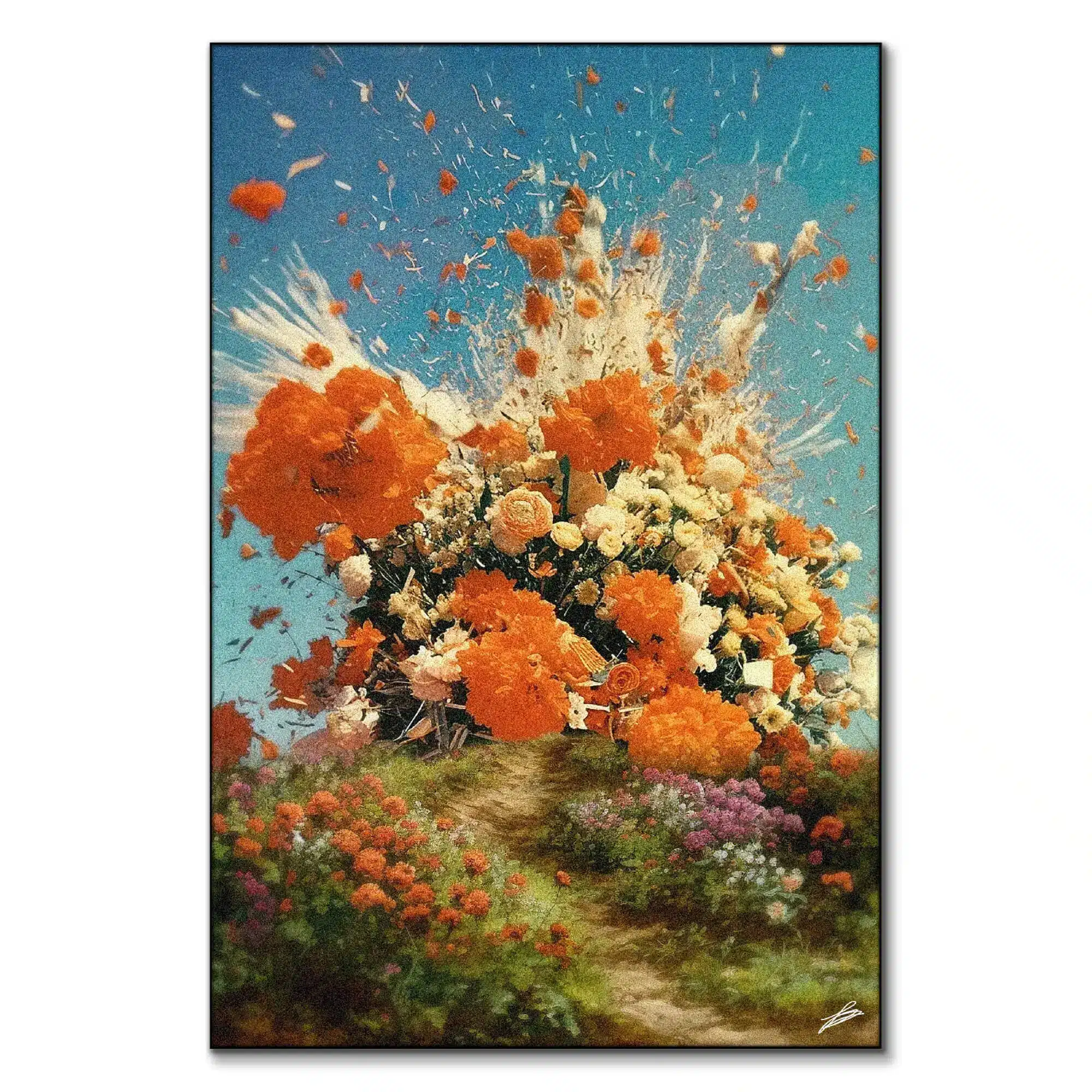
Rodriguez’s work has found a massive global audience not only in digital galleries but also in the commercial "big wall" decor market, where his pieces like Bloom Boom and Space Swing have become iconic representations of the modern surrealist movement.

Chronology: The Geographic and Artistic Evolution of Fran Rodriguez
The trajectory of Rodriguez’s career is deeply intertwined with the geography of Spain, with each location contributing a new layer to his visual vocabulary.

The Formative Years: Torrelavega, Cantabria
Rodriguez’s journey began in Torrelavega, a town in Northern Spain known for its lush, green landscapes and dramatic natural vistas. This early exposure to the "verdant reality" of Cantabria established his lifelong fascination with nature. It was during this period that he first encountered the works of classic surrealists and the aesthetic of 1960s psychedelia, two influences that would eventually merge into his signature style.

The Urban Transition: Madrid
As his artistic ambitions grew, Rodriguez moved to Madrid. The transition from the rural North to the bustling, high-contrast environment of the Spanish capital introduced a more structured, architectural element to his work. In Madrid, he began to experiment with digital tools, moving away from traditional mediums to embrace the infinite possibilities of the digital canvas. It was here that the concept of "lacabezaenlasnubes" began to take shape—a way to maintain a connection to the infinite while navigating the constraints of urban life.

The Maturity of Style: Barcelona
Currently based in Barcelona, Rodriguez has reached a pinnacle of artistic maturity. The city’s vibrant, avant-garde atmosphere and its rich history of surrealist thought (being the land of Dalí and Miró) provided the perfect backdrop for his most ambitious projects. In Barcelona, Rodriguez transitioned from a digital illustrator to a world-renowned visionary artist, establishing partnerships with major art distributors and developing a philosophy that views digital art as a legitimate vehicle for exploring the human subconscious.

Supporting Data: The Pillars of Rodriguez’s Artistic Vision
To understand the impact of Rodriguez’s work, one must analyze the thematic pillars that support his compositions. His work is not random fantasy; it is a calculated exploration of specific psychological and aesthetic territories.

1. The Architecture of Surreal Landscapes
Rodriguez masterfully merges elements of the natural world with otherworldly scenes. In pieces like Signals, he utilizes the concept of the "crater" or the "portal" to suggest that the Earth itself is a living, breathing gateway to other dimensions. His landscapes often feature:

- Floating Spheres: Representing perfect geometry and the "unseen forces" of the universe.
- Overgrown Structures: In works such as Surreal Nature Overgrown Building, he explores the reclamation of human architecture by a vibrant, hyper-colored floral world, suggesting a post-human paradise.
- Cosmic Juxtaposition: The Astronaut Pantheon in Rome is perhaps the most striking example, where a classical Roman oculus becomes a window into deep space, suggesting that our ancestors were always looking toward the stars.
2. Psychedelic Influences and Color Theory
Rodriguez’s art harnesses color as a psychological tool. Unlike the chaotic "acid-trip" art of the past, his use of psychedelia is controlled and elegant. He employs "Bloom Boom" effects—explosions of floral color against stark blue or starry skies—to evoke a sense of spiritual exploration. This use of color serves to bypass the rational mind and speak directly to the viewer’s sense of awe.

3. Digital Mastery and Technical Prowess
The technical execution of Rodriguez’s work is what separates him from the amateur digital collage artist. He manages a level of detail in light and shadow that makes his most fantastical concepts—such as a girl on a swing suspended above the Earth in Space Swing—feel grounded in a physical reality. His mastery of digital lighting ensures that the "cosmic ocean" blending into a starry sky in his collages feels like a single, cohesive photograph of a dream.

Official Responses and Philosophical Underpinnings
While Rodriguez’s work is visually stunning, it is his underlying philosophy that has garnered respect from critics and the visionary art community. Rodriguez has often stated that his art is a "life project" aimed at unveiling the mysteries lurking beneath the surface of everyday reality.

The Artist’s Manifesto
In various statements regarding his work, Rodriguez has emphasized that "the visible world represents merely a fraction of a greater, hidden reality." He compares our sensory perception to the tip of an iceberg breaking the surface of consciousness. His work is an invitation to dive beneath the water. This perspective has resonated with a modern audience increasingly disillusioned with material reality and seeking a "re-enchantment" of the world.

Critical Reception
Art critics have noted that Rodriguez’s work functions as a "digital subconscious." By utilizing icons of the 20th century—vintage dresses, mid-century modern houses, and Apollo-era astronauts—he taps into a collective nostalgia while simultaneously propelling the viewer into a futuristic, interstellar context. This "retro-futurism" allows the viewer to feel a sense of familiarity even as they are confronted with the utterly alien.

Implications: The Democratization of the Dreamscape
The rise of Fran Rodriguez signifies a broader shift in the art world regarding the value of digital surrealism and its accessibility to the public.

The Commercial Renaissance of Visionary Art
Rodriguez has been a pioneer in the "Big Wall Decor" movement. By making his work available through platforms like Society6, Etsy, and specialized high-end decor sites, he has moved surrealism out of the exclusive gallery and into the living rooms of the general public. This democratization of visionary art implies a growing cultural appetite for imagery that challenges the status quo of reality.

Art as a Tool for Psychological Exploration
As we move further into a digital-centric existence, Rodriguez’s work suggests that digital tools are the most appropriate medium for mapping the human mind. His art implies that the "infinite possibilities" of software are a perfect mirror for the infinite landscapes of the subconscious. By encouraging viewers to "keep their heads in the clouds," Rodriguez is not advocating for escapism, but for a more profound engagement with the mysteries of existence.

Future Horizons
Rodriguez’s restless spirit and boundless imagination suggest that his work will continue to evolve. He has expressed dreams of exploring the icy wilderness of Alaska and the unexplored terrains of distant planets—themes that are already beginning to permeate his latest collections. As he continues to push the boundaries of digital collage, the implications for the future of art are clear: the line between the "real" and the "imagined" will continue to blur until, as Rodriguez hopes, they become one and the same.

In conclusion, Fran Rodriguez stands as a sentinel at the edge of the known world. Through his meticulous digital craftsmanship and his profound belief in the unseen, he challenges us all to look beyond the obvious, to seek out the extraordinary hidden within the ordinary, and to recognize that the universe is far vaster and more mysterious than our senses would lead us to believe. His journey from the green hills of Cantabria to the cosmic horizons of his imagination is a testament to the power of the human mind to redefine reality itself.

Leave a Comment