The Aesthetics of the Anthropocene: Sour Soda Studio’s Unsettling Visual Critique
The intersection of vibrant commercial aesthetics and existential environmental dread has found a new, anonymous champion in the form of Sour Soda Studio. Emerging from two decades of professional illustration experience, the project serves as a "visual side-eye" to the current geological epoch—the Anthropocene—where human activity has become the dominant influence on climate and the environment. By blending the "fizzy" appeal of pop-art colors with the "sour" sting of social commentary, the studio challenges viewers to confront the absurdity of modern consumption and the accelerating climate crisis.
Main Facts: The Duality of Sour Soda
Sour Soda Studio is the brainchild of a veteran illustrator who, despite a twenty-year career in the industry, has chosen to remain anonymous to allow the work to speak with a singular, unburdened voice. The project’s name is a deliberate oxymoron, designed to reflect the tension inherent in its subject matter. "Soda" evokes the saccharine, carbonated, and bright qualities of consumer culture, while "sour" represents the sharp, acidic reality of ecological collapse and societal disconnect.

The studio’s portfolio is characterized by high-contrast vector illustrations, often rendered with a clean, digital finish that belies the "unsettling" nature of the narratives depicted. Key works such as Green North, The Siren’s Catch, and Fire Season have garnered significant attention on platforms like Behance for their ability to wrap grim realities in a deceptively playful package.
The Core Philosophy
The project is not a manifesto or a traditional political campaign; rather, it is described by the artist as a "need to say different things with a different voice." The central theme is the fantasy of human control. In the world of Sour Soda, humans are often depicted as oblivious, helpless, or absurdly industrious in the face of inevitable natural forces. Whether it is a lumberjack attempting to harvest a tree that is already engulfed in flames or festival-goers ignoring a polar bear’s distress, the work highlights the profound gap between human perception and environmental reality.

Chronology: From Commercial Illustration to Environmental Satire
The evolution of Sour Soda Studio is a testament to the shifting priorities of contemporary creators in the face of global instability. While the artist’s background spans twenty years, the specific trajectory of this project followed a distinct path of technical and conceptual refinement.
The Initial Spark
The project did not begin with a formal launch but with a simple desire for creative divergence. After two decades of working within the constraints of commercial briefs, the artist felt a "simple need" to explore a more personal and provocative narrative. The early stages involved a return to basics, with the artist tinkering with concepts on paper. These initial sketches were raw, focusing on the juxtaposition of nature and industry.

Technical Transition
As the project gained momentum, the artist transitioned from traditional paper sketches to digital rendering using an iPad. This shift was pivotal, as it allowed for the creation of precise vector shapes and a vibrant, "commercial" color palette. This aesthetic choice was intentional; by using the visual language of advertising and pop culture, the artist could more effectively satirize the very systems of consumption that contribute to environmental degradation.
The Emergence of a ‘Visual Alphabet’
Over several years, a consistent "visual alphabet" began to form. This alphabet consists of recurring motifs: suspended figures, transitional landscapes, botanical elements trapped in bubbles, and animals placed in incongruous urban or industrial settings. By the time the studio established its online presence, this language was fully developed, allowing the artist to produce a cohesive body of work that functions as a continuous narrative of the Anthropocene.

Supporting Data: A Thematic Analysis of the Portfolio
To understand the impact of Sour Soda Studio, one must examine the specific thematic pillars that support its "visual alphabet." The work can be categorized into three primary areas of inquiry: the climate crisis, the commodification of nature, and the breakdown of the human-nature boundary.
1. The Climate Crisis and Societal Apathy
The piece Green North serves as a primary example of the studio’s critique of climate apathy. It depicts a group of "hippie-like" figures dancing in a celebratory circle. At the center of this circle is a polar bear—a universal symbol of climate change—trapped on a microscopic, melting shard of ice. The bear is in the process of mauling one of the dancers, yet the rest of the group remains totally oblivious, continuing their ritual. This work serves as a data point for the "disconnect" the artist cites, representing how performative environmentalism often fails to grasp the violent urgency of the situation.

In Fire Season, the data of environmental destruction is personalized through the figure of a lumberjack. He is seen chopping at a tree that is already releasing flames, surrounded by a forest already lost to fire. This illustrates the futility of traditional labor and "business as usual" in an era of ecological tipping points.
2. Consumption and the Commodification of the Mythic
The series The Siren’s Catch provides a biting commentary on the industrialization of the natural world. In these illustrations, mermaids—creatures traditionally known for their power and danger to sailors—are reduced to mere "bycatch." They are shown being hoisted in industrial fishing nets and eventually sold in "attractive packaging" similar to canned tuna. This subversion of the siren myth highlights a core truth of the Anthropocene: nothing is too sacred or too powerful to be turned into a consumer product.

3. The Breakdown of Boundaries
Several works focus on the "transitional landscapes" where the human and natural worlds collide with disastrous or surreal results.
- Pool Service: A digital illustration of a crocodile disappearing into the brush after attacking a pool cleaner. All that remains is a disembodied arm and a floating net. This work challenges the suburban fantasy of "managed nature."
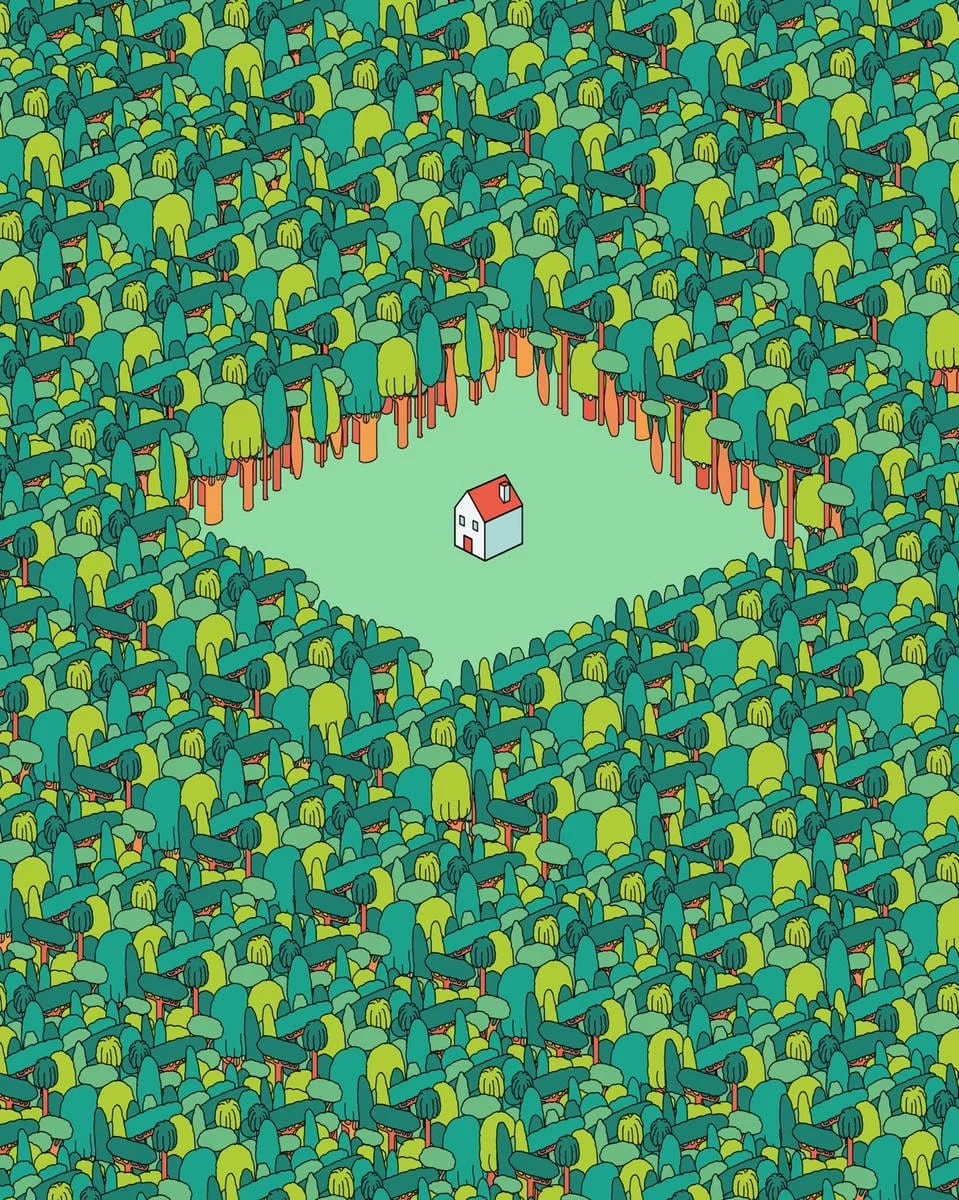
- Clearing: A house sits in a perfectly square, cleared patch of land, surrounded by an endless, impenetrable forest. It visualizes the fragility of human settlement and the illusion of "taming" the wild.
- Plastic Wind: A figure stands on a cliffside, witnessing a plastic bag blowing in the wind as if it were a natural phenomenon like a bird or a leaf. This reflects the reality that synthetic waste has become a permanent part of the Earth’s geological and atmospheric record.
Official Responses: The Artist’s Perspective
In rare statements provided to art commentators and through the studio’s self-description, the artist behind Sour Soda Studio has offered insights into the motivations driving the project. The decision to remain anonymous is perhaps the most significant "official" stance of the studio.

On the Voice of the Project
"It didn’t come from a change of direction, or from a manifesto," the artist stated regarding the project’s inception. "It came from something simpler: the need to say different things with a different voice." This suggests that Sour Soda is an outlet for the "unfiltered" anxieties that a commercial career often requires one to suppress.
On the Nature of the Images
The artist describes the works as "images that can be poetic, decorative, narrative, or something harder to name." By refusing to categorize the work as purely "activist art," the artist maintains a level of ambiguity that forces the viewer to engage more deeply. The goal is not to provide a solution but to document a relationship: "Many of them touch on nature, ecosystems, consumption, and the relationship between people and the world they live in."

On the ‘Visual Alphabet’
The artist emphasizes the importance of the "visual alphabet" created through digital vectors. By using simple forms and colors, the studio creates a world that is accessible and "decorative" at first glance, which serves as a Trojan horse for the "harder to name" anxieties regarding the future of the planet.
Implications: Art as a Mirror to the Anthropocene
The work of Sour Soda Studio carries significant implications for the role of art in the 21st century. As the world grapples with "climate anxiety," the studio’s approach suggests that humor and aesthetic beauty may be more effective tools for engagement than traditional "doom and gloom" reporting.

The Role of Dark Humor in Activism
Psychological studies on climate communication suggest that constant exposure to catastrophic imagery can lead to "compassion fatigue" or paralysis. Sour Soda Studio’s use of dark humor and "visual side-eye" offers a different entry point. By making the viewer laugh or feel a sense of "playful unease," the work bypasses the brain’s defense mechanisms, allowing the underlying message about environmental collapse to resonate more effectively.
The Digital Pivot in Social Commentary
The studio’s reliance on digital tools like the iPad and vector software reflects a broader trend in social commentary. High-quality, shareable digital art has become a primary medium for political and environmental discourse. The "clean" look of vector art is particularly suited for the digital age, where images must compete for attention in crowded social media feeds. Sour Soda Studio’s success on Behance demonstrates that there is a significant audience for art that combines professional-grade aesthetics with profound, unsettling themes.

Conclusion: A Warning Wrapped in Soda-Pop Colors
Sour Soda Studio represents a sophisticated evolution in environmental art. It does not preach; it observes. It does not shout; it gives a "side-eye." By documenting the absurdities of our current era—where sirens are canned, lumberjacks chop burning trees, and plastic bags are part of the breeze—the studio provides a mirror to a society that is often too distracted by the "sweetness" of consumption to notice the "sour" reality of its consequences. As we move deeper into the Anthropocene, the "visual alphabet" of Sour Soda Studio will likely serve as an essential, if unsettling, record of how we lived, what we consumed, and what we chose to ignore.