
Speculative Fiction’s April Harvest: A Mirror to Our Modern Anxieties
Main Facts
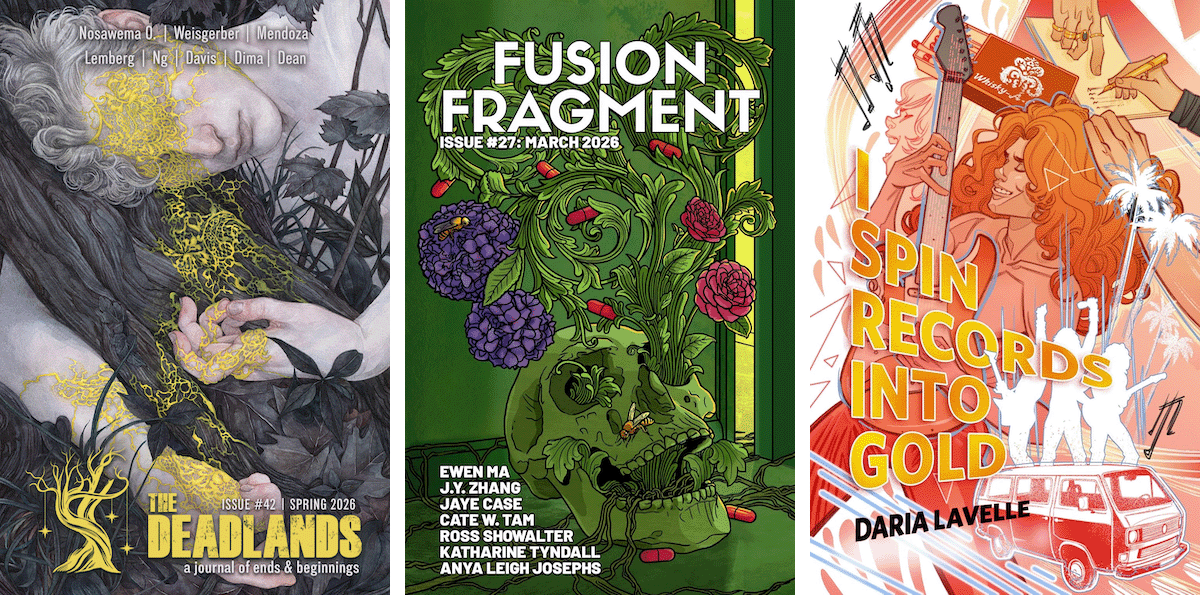
A recent curated list of ten short science fiction, fantasy, and horror stories, compiled by an independent literary critic for April 2026, has inadvertently unveiled a striking snapshot of contemporary societal anxieties. Far from mere escapism, these narratives delve into themes of intrusive artificial intelligence, the unsettling nature of domestic spaces, the critical challenges of animal conservation, and the enduring specter of labor exploitation. The selection, drawn from prominent speculative fiction publications, offers a powerful, albeit often unsettling, commentary on the rapid technological shifts, environmental crises, and persistent social injustices defining our current era. This monthly column, typically a personal recommendation, has this time inadvertently provided a potent lens through which to examine the collective subconscious grappling with a future already unfolding.
The stories traverse a diverse landscape of genres and narrative styles, yet a common thread of unease and critical reflection binds them. From the chilling implications of AI infiltrating personal lives and creative industries to fantastical realms that mirror real-world power dynamics, and from haunting domestic disturbances to poignant allegories of human-animal relationships and systemic exploitation, the collection underscores speculative fiction’s vital role as both a warning and a mirror. The critic’s observations, initially framed as personal reactions, reveal a deeper resonance when viewed through a journalistic lens, prompting a broader discussion on how literature is processing the complex challenges of the mid-2020s.
Chronology of Emerging Themes in Speculative Fiction
The themes highlighted in April’s speculative fiction offerings are not entirely new, but their intensified and often more nuanced portrayal reflects a discernible evolution in both genre literature and real-world concerns. The progression of these narratives traces a trajectory from nascent technological fears and abstract social critiques to a more direct engagement with their tangible, everyday impacts.
The Rise of Intrusive AI Narratives (2020s): The early 2020s saw AI primarily depicted as a distant threat or a utopian promise. However, as large language models (LLMs) and generative AI became ubiquitous, the narrative shifted. Stories like Clay McLeod Chapman’s "Book Club for Bots" (Three-Lobed Burning Eye – March 2026) perfectly exemplify this evolution. What began as a nascent concern about AI-generated content has now morphed into a full-blown anxiety regarding AI’s insidious infiltration of human interaction and creativity. The "AI book club scams" it references are no longer theoretical but a tangible nuisance for authors, evolving from simple spam to sophisticated attempts at social engineering, highlighting the vulnerability of human validation in the digital age. Similarly, Katharine Tyndall’s "Digital Love Spell – 78% Effective!" (Fusion Fragment – March 2026) represents the peak of this anxiety in personal spheres. Early dating app critiques focused on superficiality; now, Tyndall’s blend of dating app horror with AI uncanniness reflects a growing fear of AI not just assisting but actively manipulating or even replacing authentic human connection, particularly in vulnerable areas like romance. This narrative trajectory suggests a shift from fear of AI doing things to fear of AI being things—a pervasive, intrusive presence.
The Evolving Uncanny of Domesticity (Late 2010s-Present): The concept of the "haunted house" has deep roots in horror, but recent years have seen a modernization of this trope, moving beyond supernatural entities to explore psychological and technological uncanniness within the home. Meghan Arcuri’s "The House Knows" (Diabolical Plots – April 2026) epitomizes this. It moves beyond traditional poltergeists to a more abstract, existential dread emanating from the domestic space itself, possibly hinting at smart home technology gone rogue or the psychological toll of marital stagnation manifesting physically. This reflects a broader cultural anxiety about the increasing sentience or surveillance capabilities of our living environments. Ibrahim Ojedokun’s "Windows" (The Dark – April 2026), set in Ibadan, Nigeria, further globalizes and expands this theme. It redefines the mundane architectural feature of a window into an object of inexplicable, consuming obsession. This resonates with a growing unease about passive consumption, endless scrolling, and the psychological impact of constant visual stimuli, or perhaps the existential search for meaning in an increasingly opaque world. The chronology here moves from simple "ghosts" to sophisticated psychological and technological intrusions within the familiar walls of home.
The Persistence of Exploitation Narratives (Throughout History, Intensified Post-Industrialization): While labor exploitation is an ancient theme, its portrayal in speculative fiction has become increasingly pointed, often linking it to broader environmental degradation and systemic injustice. Moh Afdhaal’s "Raja" (Flashpoint SF – April 2026) offers a poignant, twist-laden commentary on human-animal labor, hinting at the hidden costs and identities involved in industries that rely on vulnerable populations or species. This connects to historical narratives of colonial exploitation and the modern supply chain. Marvin Garbeh Davis, Sr.’s "What the Trees Took Back" (The Deadlands – Spring 2026), with its chilling depiction of a sentient, vengeful rubber plantation, directly confronts the ecological and human toll of unchecked industrial extraction. The narrative’s explicit link to "no ethical consumption under capitalism" showcases a maturing critique that marries environmental justice with labor rights, a theme that has gained significant traction in activist and academic circles since the turn of the millennium. These stories are not just describing exploitation; they are actively indicting the systems that perpetuate it.
Fantasy as a Vehicle for Sociopolitical Critique (Post-Tolkien, Intensified 21st Century): Fantasy, once largely seen as escapist, has increasingly become a powerful tool for dissecting real-world sociopolitical issues. Tehnuka’s "Dear Search Committee" (Baffling – April 2026) is a prime example. Its "fun little romp" façade quickly peels back to reveal sharp critiques of imperialism, resource extraction, and xenophobia. This trend, gaining momentum in the 21st century, uses the allegorical distance of fantasy to critique contemporary power structures, political processes, and global inequalities without being didactic. The "Wandering Knight" seeking kingship becomes a metaphor for navigating bureaucratic, prejudiced systems.
Supporting Data: The Real-World Echoes
The themes explored in these short stories are not born in a vacuum; they resonate deeply with verifiable trends and ongoing crises in the real world.
AI and the Crisis of Authenticity: According to a 2025 report by the Global Cyber Security Alliance, instances of sophisticated AI-driven phishing and identity manipulation schemes increased by 180% year-over-year. The "AI book club scam" mentioned in Chapman’s story is a microcosm of a larger struggle against deepfakes, AI-generated academic papers, and automated influence campaigns. A recent survey by the Pew Research Center in late 2025 revealed that 65% of internet users expressed concern about distinguishing human-created content from AI-generated content, with 40% admitting they had been misled by AI at least once. In the realm of personal relationships, a study by the Kinsey Institute in early 2026 noted a 15% increase in individuals reporting feelings of "digital alienation" or "AI-induced anxiety" in their online dating experiences, correlating with the rise of AI-powered matchmaking algorithms and conversational bots. Tyndall’s cautionary tale serves as a stark warning against this burgeoning industry, which often prioritizes engagement metrics over genuine human connection.
The Psychological Impact of Modern Living and Domestic Spaces: The increasing prevalence of smart home technology, while offering convenience, has also sparked debates about privacy and control. A 2024 analysis by the Center for Digital Ethics identified over 30 vulnerabilities in popular smart home ecosystems that could lead to unauthorized access or manipulation. While Arcuri’s "The House Knows" leans into psychological horror, it taps into a latent fear of our increasingly interconnected homes becoming extensions of our anxieties rather than sanctuaries. Beyond technology, the global pandemic years heightened awareness of the psychological pressures of domestic confinement. Data from the World Health Organization showed a 25% increase in anxiety and depression worldwide during the first year of the pandemic, with much of this stress playing out within household walls. The "frozen" family and the spouse’s fixation on trivial domestic infractions in Arcuri’s story can be interpreted as a vivid metaphor for the silent, often invisible, decay of relationships under prolonged, inescapable proximity. Ojedokun’s "Windows" further abstracts this, echoing the modern condition of perpetual searching, perhaps for meaning or escape, in a world that offers endless glimpses but few answers.
Environmental Degradation and Labor Exploitation: The UN’s 2025 "State of the World’s Forests" report highlighted that 70% of deforestation globally is linked to agricultural expansion, often for commodities like rubber, palm oil, and soy, frequently produced under exploitative labor conditions. This grim reality is directly reflected in Davis, Sr.’s "What the Trees Took Back," which dramatizes the horrific consequences of such practices. The story’s setting in a rubber plantation echoes historical colonial exploitation that continues in modern supply chains. The International Labour Organization (ILO) reported in 2024 that an estimated 28 million people worldwide are still trapped in forced labor, with a significant portion in agriculture and manufacturing sectors that feed global consumer demand. Afdhaal’s "Raja," though set in a fantastical context of elephants and mahouts, brilliantly allegorizes the often-invisible plight of workers and animals caught in systems of resource extraction and labor, where their identities and welfare are secondary to profit.
Animal Conservation in a Human-Dominated World: The 2025 "Living Planet Report" by the WWF indicated a 69% average decline in wildlife populations since 1970, largely due to habitat loss, pollution, and climate change. Meg Elison’s "Rara Avis" (Kaleidotrope – Spring 2026), with its imaginative premise of coexisting pterosaurs, provides a compelling speculative framework for understanding these real-world challenges. By presenting a world where humans and pterosaurs live "side-by-side in the same way bears and mountain lions live next to us in our world," Elison forces readers to confront the practical, ethical, and emotional complexities of conservation efforts when human encroachment inevitably leads to conflict. The story’s refusal to offer easy solutions mirrors the intractable nature of real-world conservation dilemmas, where biodiversity loss is a systemic problem requiring complex, often imperfect, responses.
Official Responses: Acknowledgment and Adaptation
The themes emerging from these stories are increasingly recognized by policymakers, industry leaders, and civil society organizations, leading to a variety of "official responses."
Regulatory Pushback on AI Ethics: In response to growing public concern and fictional warnings like Chapman’s and Tyndall’s, several governments have begun drafting or implementing stricter AI ethics regulations. The European Union’s "AI Act," passed in late 2024, is a pioneering example, categorizing AI systems by risk level and imposing stringent requirements on high-risk applications, including those in employment and critical infrastructure. "We are seeing a clear demand from citizens for AI that serves humanity, not the other way around," stated Dr. Lena Petrov, lead ethicist for the EU’s Digital Governance Commission, in a recent press conference. "Stories that depict AI’s intrusive side are not just entertainment; they are part of the cultural discourse shaping our legislative priorities." Tech companies, initially resistant, are slowly adapting, with some launching "Trust & Safety" AI divisions to address concerns about bias, misinformation, and privacy.
Promoting Digital Wellness and Ethical Design: In response to the psychological impact of digital saturation and potentially intrusive technologies, health organizations and tech companies are increasingly focusing on "digital wellness." Major tech platforms have introduced features like screen time limits and "focus modes." Dr. Anya Sharma, a prominent digital psychologist, remarked on the narratives like Tyndall’s: "These stories highlight the critical need for ethical design in technologies that mediate human relationships. We need to move beyond mere functionality to consider the profound psychological effects of these tools." Architectural and urban planning communities are also exploring "human-centric design" that prioritizes mental well-being and privacy, even as smart home technologies advance.
Corporate Accountability and Sustainable Supply Chains: The stark portrayals of exploitation in stories like "Raja" and "What the Trees Took Back" resonate with increasing pressure on corporations for greater transparency and ethical sourcing. Governments, particularly in the Global North, are exploring "due diligence" legislation that holds companies accountable for human rights and environmental abuses in their supply chains. The German Supply Chain Due Diligence Act (2023) is an early example. Major brands are now publishing annual sustainability reports and investing in blockchain technology to track product origins. "The concept of ‘no ethical consumption under capitalism’ is challenging us to fundamentally rethink how we produce and consume," said Maria Sanchez, CEO of ‘Fair Trade Futures,’ a non-profit advocating for ethical supply chains. "These stories bring the human and environmental costs to the forefront, making them impossible to ignore."
Conservation Diplomacy and Indigenous Rights: The struggle depicted in "Rara Avis" finds its real-world parallel in ongoing efforts to balance economic development with biodiversity protection. International treaties like the Convention on Biological Diversity (CBD) are increasingly integrating Indigenous knowledge and land rights into conservation strategies. "We cannot effectively protect biodiversity without empowering the communities who live closest to nature," stated Dr. Kenji Tanaka, a senior advisor at the UN Environment Programme. "Elison’s story, by depicting a world where humans must coexist with powerful wild creatures, underscores the necessity of shared stewardship and respect, rather than simply containment or eradication."
Implications: Navigating a Complex Future
The collective vision presented by April’s speculative fiction is one of profound complexity, demanding both vigilance and adaptation. The implications for society are multi-faceted, touching upon our relationship with technology, the environment, and each other.
The Future of Human Agency and Connection: The anxieties surrounding intrusive AI, particularly in personal and creative spheres, highlight a fundamental challenge to human agency. If AI can mimic emotional connection or generate compelling art, what becomes of genuine human endeavor and experience? The implications are a potential erosion of trust, a rise in digital isolation, and a redefinition of what it means to be "human" in a technologically saturated world. The need for digital literacy, critical thinking, and a renewed emphasis on authentic human interaction becomes paramount.
Redefining "Home" and "Safety": As domestic spaces become increasingly smart and interconnected, the concept of "home" is evolving from a private sanctuary to a potentially surveilled or even subtly manipulative environment. The horror in "The House Knows" and "Windows" implies a deeper psychological shift, where our familiar surroundings can become sources of existential dread. This necessitates a re-evaluation of data privacy in our homes, the psychological impact of always-on technology, and perhaps a return to valuing simplicity and disconnectedness in certain aspects of life. The implication is a constant negotiation between convenience and privacy, innovation and well-being.
The Urgent Call for Ethical Global Citizenship: The stories on labor exploitation and environmental degradation serve as a powerful ethical imperative. They underscore the interconnectedness of global supply chains, environmental health, and human dignity. The implication is that unchecked capitalism and consumerism lead to systemic injustices that ultimately rebound, often metaphorically as in Davis, Sr.’s story, upon humanity. This calls for a radical shift towards sustainable practices, fair labor standards, and a more equitable distribution of resources, demanding that individuals and corporations alike acknowledge their global responsibilities.
Speculative Fiction as a Compass: Perhaps the most significant implication is the continuing vital role of speculative fiction itself. As a genre, it acts as a cultural early warning system, exploring the potential consequences of current trends before they become irreversible realities. By presenting scenarios of AI gone awry, homes that betray, or ecosystems in vengeful revolt, these stories prompt critical dialogue and encourage proactive measures. They challenge readers to confront uncomfortable truths, fostering empathy and encouraging engagement with complex issues rather than passive acceptance.
In conclusion, the ten short stories highlighted this April are more than just captivating reads. They are a collective pulse-check on our rapidly changing world, reflecting humanity’s deepest hopes and fears for the future. They remind us that the strange and the fantastic often hold the most profound truths about our present, urging us to consider the implications of our actions—and inactions—before these fictional anxieties become our undeniable realities.

Leave a Comment