The Unforeseen Void: Navigating the Aftermath of Widow’s Bay’s Exceptional First Season
FOR IMMEDIATE RELEASE
[City, State] – [Date] – The critical and fan darling Widow’s Bay has captivated audiences with its unique blend of clever horror, surprising twists, and masterful storytelling. As the first season concludes, leaving viewers reeling from its exceptional final episode, a collective sentiment of bittersweet satisfaction permeates the cultural landscape. While the show has been officially renewed for a highly anticipated second season and is poised for a prominent run throughout the upcoming awards season, the immediate void left by its absence is undeniable. Shows of this caliber—so intelligent, unpredictable, meticulously crafted, and genuinely enjoyable—are a rare commodity in today’s television landscape. For those grappling with the conclusion of Widow’s Bay and searching for the next compelling watch to fill that specific, delightful dread, a carefully curated watchlist becomes essential.
Widow’s Bay, often a tapestry woven with intricate horror references and concepts, possesses a singular identity that defies easy categorization. Its brilliance lies in its ability to fuse genuine scares with sharp wit, set against the backdrop of a seemingly idyllic, yet deeply unsettling, small coastal community. This article aims to deconstruct the elements that make Widow’s Bay so special and, by extension, offer a guide to films and series that capture various facets of this incredible horror-comedy phenomenon.
Deconstructing the Phenomenon: The Thematic Pillars of Widow’s Bay
The resounding success of Widow’s Bay stems from its multifaceted appeal. From its initial episodes, which quickly garnered buzz for their inventive narrative hooks, to its climactic finale, the series consistently delivered. Critics have lauded its innovative approach to genre, praising its ability to subvert expectations while paying homage to horror classics. The show’s renewal for a second season, announced amidst widespread acclaim, signals confidence in its creative direction and its growing cultural impact. Furthermore, its multiple nominations for prestigious awards underscore its status as a standout production in a crowded field. This widespread recognition confirms what fans already knew: Widow’s Bay is not just good; it’s important.
At its core, Widow’s Bay excels by mastering the delicate balance between horror and comedy. It’s a show that understands the power of a well-placed jump scare as much as it does the art of a perfectly timed punchline. The narrative, often unpredictable, keeps viewers on the edge of their seats, oscillating between genuine dread and uproarious laughter. Its characters are richly drawn, flawed yet endearing, making their struggles within the bizarre confines of their community all the more compelling. The show’s intricate plot, laden with municipal monsters and nods to classic horror, creates a rich, immersive world that is both terrifying and inviting. It’s a testament to the creators’ vision that such a complex blend of tones and genres feels so cohesive and, above all, so much fun.
Filling the Silence: A Curated Watchlist for Widow’s Bay Aficionados
For those yearning to recapture the unique essence of Widow’s Bay, whether it’s the small-town dread, the masterful horror-comedy blend, or the rich, character-driven narrative, this watchlist offers a journey through cinematic and television experiences that echo its brilliance.
Storm of the Century: Stephen King’s Underrated Small-Town Nightmare
It’s almost impossible to discuss Widow’s Bay without acknowledging the towering influence of Stephen King. The show’s creators have openly cited King as a significant inspiration, and his thematic fingerprints are evident throughout the series, particularly in its depiction of isolated communities facing unimaginable horrors. Among King’s vast oeuvre, the often-overlooked 1999 miniseries Storm of the Century stands out as a particularly potent companion piece. Unlike many of King’s adaptations, this was an original screenplay for television, allowing the master of horror to craft a narrative unburdened by prior literary expectations.
Storm of the Century plunges viewers into the remote Little Tall Island, Maine, as a colossal snowstorm descends, bringing with it a mysterious and malevolent stranger named Andre Linoge. As the islanders are cut off from the mainland, they discover Linoge’s sinister connection to the storm and the impossible, soul-shattering choices he demands of them. The miniseries is a direct thematic precursor to some of Widow’s Bay‘s most unsettling final episodes, exploring themes of communal sacrifice, the darkness lurking beneath civility, and the erosion of morality under extreme pressure. King’s unparalleled ability to dissect small-town relationships and expose the fragility of human nature shines here, culminating not in a fantastical, cosmic monster, but in a far more chilling examination of human complicity. It’s a quiet masterpiece that perfectly encapsulates King’s enduring legacy and remains one of his finest original works of the last few decades.
Midnight Mass: Flanagan’s Masterful Meditation on Faith and Fear
While not officially based on a Stephen King story, Mike Flanagan’s Midnight Mass is undeniably imbued with the spirit of the horror maestro. Flanagan, often hailed as a "Stephen King whisperer" for his respectful and insightful adaptations of King’s work, crafts a narrative that feels like a spiritual successor to King’s own vampire epic, ‘Salem’s Lot, arguably surpassing its official screen adaptations. For fans coming off the high of Widow’s Bay, Midnight Mass offers a similarly rich, character-driven horror experience, enhanced by its unique exploration of faith and community.
Set on the isolated Crockett Island, the series follows the arrival of a charismatic young priest who seemingly brings miracles, igniting a fervent spiritual revival among the dwindling population. What unfolds is a deeply poignant and genuinely terrifying examination of the allure and corrupting power of blind faith. Midnight Mass delves into the monsters born from desperate hope for a savior, as well as the monsters created when hearts harden against the possibility of something better. It’s a profound meditation on grief, addiction, and redemption, all wrapped in a genuinely unsettling horror package. The series also features a career-defining performance from Hamish Linklater, whose powerful and nuanced portrayal in Midnight Mass resonates strongly with his standout role in Widow’s Bay, suggesting a shared intensity and dramatic depth. Many critics consider this to be Flanagan’s greatest creation, a testament to its thematic ambition and emotional resonance.
Ravenous: A Morbidly Humorous Tale of Survival and Sin
Speaking of Hamish Linklater, fans who appreciated the actor’s impactful flashback episode in Widow’s Bay might naturally gravitate towards Robert Eggers’ beloved New England folk horror, The Witch. However, for those who have already delved deep into Eggers’ chilling vision, Antonia Bird’s 1999 cult classic, Ravenous, offers a similarly unsettling, yet darkly humorous, period piece with a unique flavor.
Set during the tumultuous Mexican–American War, Ravenous follows Captain John Boyd, a disgraced soldier relegated to a remote Sierra Nevada outpost. There, his small group of soldiers encounters a mysterious stranger, F.W. Colqhoun, whose harrowing tale of survival involving cannibalism soon implicates them in an ancient, flesh-eating curse. Ravenous is frequently described as a horror-comedy, though its humor is less about overt gags and more about the escalating absurdity and horrific irony of increasingly bad decisions unfolding in an extreme situation—a tone that Widow’s Bay masters with its own brand of morbid wit. The film’s unsettling score, visceral violence, and unsettling exploration of human depravity and the will to survive make it a compelling watch. It’s also a striking, albeit extreme, entry into the "men would rather" subgenre, where societal norms and sanity crumble under dire circumstances.
Blow the Man Down: Maritime Mystery with a Dark Undercurrent
While not strictly a horror film, Blow the Man Down shares a deep atmospheric and thematic kinship with Widow’s Bay, making it an ideal follow-up watch. There are several compelling reasons for this recommendation. Firstly, it embodies the quintessential small, isolated fishing village aesthetic that Widow’s Bay leverages so effectively. Secondly, it features a compelling narrative driven by strong female characters navigating dark secrets. And thirdly, it allows us to celebrate the inimitable Margo Martindale. While one could tenuously link Martindale to Widow’s Bay through her Americans connection with Matthew Rhys, the truth is, any opportunity to praise her exceptional talent is a good one.
This 2019 neo-noir thriller uses traditional sea shanties as a loose narrative framework, telling the story of sisters Mary Beth and Priscilla Connolly. After a tragic incident, they find themselves diving headfirst into the surprisingly deep and murky underbelly of their quaint Maine fishing town, all while desperately attempting to conceal a murder. Few films capture the perpetually foggy, melancholic feel of a small coastal community quite like this one. Even fewer utilize that evocative atmosphere to craft such a compelling story about the profound secrets people keep from those they know best. The film’s exploration of sisterhood, community bonds, and the quiet desperation of small-town life resonates powerfully with the character dynamics and hidden layers of Widow’s Bay.
In The Mouth of Madness: Carpenter’s Homage to Cosmic Dread
John Carpenter, a titan of horror cinema, has a filmography ripe for recommendation to any horror fan. While The Fog might seem like the most obvious thematic counterpart to Widow’s Bay due to its seaside setting and cursed community, In the Mouth of Madness offers a far more specific and fascinating connection. Indeed, one rarely needs an explicit reason to recommend any Carpenter film; if you enjoyed Widow’s Bay, why not watch Big Trouble in Little China? Because, why not?
However, In the Mouth of Madness shares an incredibly unique plot element with Widow’s Bay: a fictional small town constructed almost entirely from horror tropes. The film follows insurance investigator John Trent as he searches for a missing horror novelist, Sutter Cane, whose terrifying works are blurring the lines between fiction and reality. Trent’s journey leads him to Hobb’s End, a town that is, in essence, the physical manifestation of Cane’s nightmarish creations. This brief, disorienting trip through Hobb’s End perfectly evokes that same feeling of being wrapped in a warm, yet unsettlingly spooky, blanket that Widow’s Bay so joyfully delivered week after week. It’s a meta-commentary on horror itself, much like Widow’s Bay‘s playful subversion of genre conventions. The film also serves as a potent reminder of why series like Castle Rock, which attempted a similar concept with King’s universe, rarely achieved the dizzying heights of dread and cleverness seen here.
Tucker and Dale vs Evil: Subverting Slasher Tropes with Hilarity
For those who appreciated Widow’s Bay‘s deft handling of horror and comedy, Tucker and Dale vs Evil is an absolute must-see, albeit with a slightly different comedic lean. While it may not balance genuine scares and laughs with the same precise equilibrium as Widow’s Bay, it is undeniably one of the absolute funniest horror movies ever made. You might stumble upon an errant scare in this delightful romp, but its cult classic status is firmly cemented by its comedic brilliance, not its frights.
The film brilliantly subverts the "hicksploitation" subgenre, turning the tables on typical horror tropes. It follows two wholesome, well-meaning hillbillies, Tucker and Dale, who are simply trying to enjoy a peaceful vacation at their newly acquired fixer-upper cabin in the woods. Unfortunately, a group of college kids camping nearby mistakenly perceives them as menacing, murderous rednecks, leading to a series of increasingly elaborate and hilariously gruesome accidental deaths. You don’t need an encyclopedic knowledge of horror tropes to appreciate its genius; a vague awareness of "young people in peril in the woods" is more than enough. While one could certainly write an essay on how the movie cleverly examines our ingrained habit of creating villains out of others, it primarily serves as a fantastic excuse to watch two of the kindest good ol’ boys imaginable become utterly befuddled as a group of terrified youngsters repeatedly, and inadvertently, dispatch themselves around them.
Bodkin: Podcasters Unraveling Irish Village Quirks
Beyond the overt curses and monstrous entities, the true terror and charm of small towns often lie in the subtle oddities—the things that make you wonder if what you’re witnessing is merely eccentric or genuinely unsettling. This delicate tightrope walk between outsider suspicion and intuitive dread is something Bodkin explores with considerable flair, making it a fitting companion to Widow’s Bay‘s own brand of localized weirdness.
This Netflix series follows a motley crew of podcasters (yes, I know, but hear me out—it’s worth it) who venture to a picturesque, yet peculiar, Irish coastal town to investigate a decades-old murder mystery. Initially, they suspect they’ve stumbled upon nothing more than the world’s quaintest village, full of charming local characters and folklore. However, before you can utter "Midsommar," the team uncovers that many of the seemingly innocuous quirks and traditions they’ve been documenting are, in fact, tell-tale signs of something far more sinister brewing beneath the surface. It’s Bodkin‘s blend of comedic undertones, its embrace of the genuinely bizarre, and its gradual unraveling of a community’s dark secrets that forge a natural connection to Widow’s Bay‘s distinctive style. For those seeking a slightly more traditional, yet still witty, murder mystery with a similar vibe, Prime Video’s Deadloch also comes highly recommended.
Messiah of Evil: A Dreamlike Descent into Lovecraftian Dread
For Widow’s Bay fans with a particularly adventurous palate—or, more accurately, a high tolerance for deeply weird, surreal, and deliberately lethargic horror—Messiah of Evil is an essential, albeit challenging, addition to your watchlist. This 1973 independent film is less a conventional narrative and more a waking nightmare, a hallucinatory descent into creeping dread.
Though nominally set in a California coastal town, the film’s true locale feels more akin to a particularly strange corner of a bizarre, Lovecraftian hellscape. The plot follows Arletty, who travels to a remote seaside community to find her missing artist father. Instead, she stumbles upon a town populated by eerie, emotionless residents who are slowly transforming into flesh-eating ghouls, awaiting the arrival of a mysterious "Dark Stranger." This surrealist painting of a slow-burn nightmare takes the idea of a cursed, isolated town to often indescribable new levels. Its dreamlike logic, unsettling atmosphere, and sense of pervasive, inescapable evil make it a truly unique experience. While not for every Widow’s Bay fan, for those who appreciate the profound and lingering psychological impact of the truly bizarre, Messiah of Evil promises to forever linger on the edges of your mind.
The Devonsville Terror: Obscure Witchcraft and Patriarchy
It goes without saying that The Wicker Man (both the 1973 original and even the more campy remake) is a foundational piece of cinematic folk horror and a clear influence on Widow’s Bay‘s plot and style, particularly its exploration of insular communities and pagan rituals. However, for those craving something a touch more obscure, a hidden gem that still captures that distinct "village in the fall" vibe, allow me to recommend the 1983 cult film, The Devonsville Terror.
Is The Devonsville Terror "good" in a conventional sense? Perhaps not, but to ask such a question misses the point entirely. The joy lies in basking in the glorious, often perplexing, spectacle of a possibly half-drunk Donald Pleasance investigating a quaint New England town. The town is supposedly cursed due to its historical violence against accused witches, a legacy that begins to manifest when three new women arrive. The film, while undeniably rough around the edges in its production and pacing, delivers immaculate autumnal village aesthetics. What’s particularly striking, and surprisingly subtle for a film that feels like it sprung from an unpublished pulp horror paperback, is its acknowledgment that the historical crusades against witches were less about genuine malevolence and more about a brutal power play by the patriarchy. This thematic undercurrent adds a layer of depth to its otherwise schlocky, yet charming, folk horror premise, echoing Widow’s Bay‘s own critical eye on societal structures within its spooky narrative.
Grabbers: Drunken Defense Against Alien Invasion
Despite possessing a title that might either elicit an eye-roll or a chuckle, depending on one’s sense of humor, the 2012 Irish horror-comedy Grabbers is, in its own wonderfully ridiculous way, a minor masterpiece. Its commitment to pure, unadulterated fun, even amidst grotesque creature feature elements, makes it an endearing sibling to Widow’s Bay.
The film kicks off with an incredibly familiar premise: the residents of a small, picturesque Irish fishing village find themselves under attack from mysterious, tentacled extraterrestrial creatures. An unlikely pair of local Garda officers, the straight-laced Lisa Nolan and the perpetually tipsy Ciarán O’Shea, are tasked with stopping them. However, in an incredible and genuinely ingenious twist, they soon discover that the only effective protection against these bloodthirsty monsters is to get, and crucially, stay really, really drunk, as the creatures are allergic to alcohol. Setting the story in an isolated, quirky community, Grabbers‘ most endearing similarity to Widow’s Bay is its unwavering dedication to maintaining a lighthearted, enjoyable tone at every turn, never letting the horror overshadow the inherent charm and humor of its premise and characters. It’s a delightful romp that proves horror and hilarity can coexist spectacularly.
Wellington Paranormal: Bureaucratic Bumbling in the Supernatural Realm
Wellington Paranormal occupies a comedic plane directly parallel to Widow’s Bay, offering a similarly charming, yet distinctly different, take on municipal figures grappling with the supernatural. Both shows feature dedicated (or in Wellington Paranormal‘s case, somewhat bewildered) members of a local authority dealing with a relentless series of bizarre, otherworldly events. However, where Widow’s Bay skillfully weaves these adventures with serialized, compelling character drama, Wellington Paranormal leans into deeply, delightfully silly episodic narratives.
Created by the comedic geniuses Taika Waititi and Jemaine Clement, renowned for their work on What We Do in the Shadows (of which Wellington Paranormal is a soft spin-off), this mockumentary series reimagines the familiar format of reality police shows like Cops. Here, the police officers are not just dealing with mundane crime, but with vampires, ghosts, demons, and various other cryptids plaguing the New Zealand capital. It’s a show best savored by those who find inexplicable pleasure in watching the most earnestly incompetent, yet impossibly bureaucratic, people in the world attempt to navigate the surreal chaos of supernatural investigations. The deadpan humor, the characters’ unwavering commitment to protocol in the face of the absurd, and the sheer inventiveness of its monster-of-the-week format provide a constant stream of laughs, offering a lighter, but equally engaging, exploration of localized supernatural phenomena.
The Babadook: A Modern Horror Icon and Meme Foundation
While not a small-town horror or horror-comedy in the vein of most other recommendations, The Babadook holds a unique and essential place in Widow’s Bay lore. This critically acclaimed 2014 Australian psychological horror film is famously the inspiration behind one of series creator Katie Dippold’s most iconic and beloved tweets, cementing its status within the show’s foundational mythology.
Beyond its meta-textual connection, The Babadook is a fantastic movie in its own right and stands as one of the most important and influential horror films of the modern era. It masterfully explores themes of grief, trauma, and the monstrous aspects of motherhood through the terrifying manifestation of the titular entity, a creature from a mysterious pop-up book. The film is a masterclass in atmospheric horror, relying on psychological dread rather than cheap jump scares. Its lasting impact on the genre, its profound emotional depth, and its emergence as a powerful cultural touchstone (even inspiring a generational meme) make it a crucial watch. For fans who appreciate Widow’s Bay‘s ability to blend deep emotional resonance with its horror elements, The Babadook offers a more intense, singular, yet equally rewarding, experience.
Bonus Patricia Double Feature: Final Girl & Party Chaos
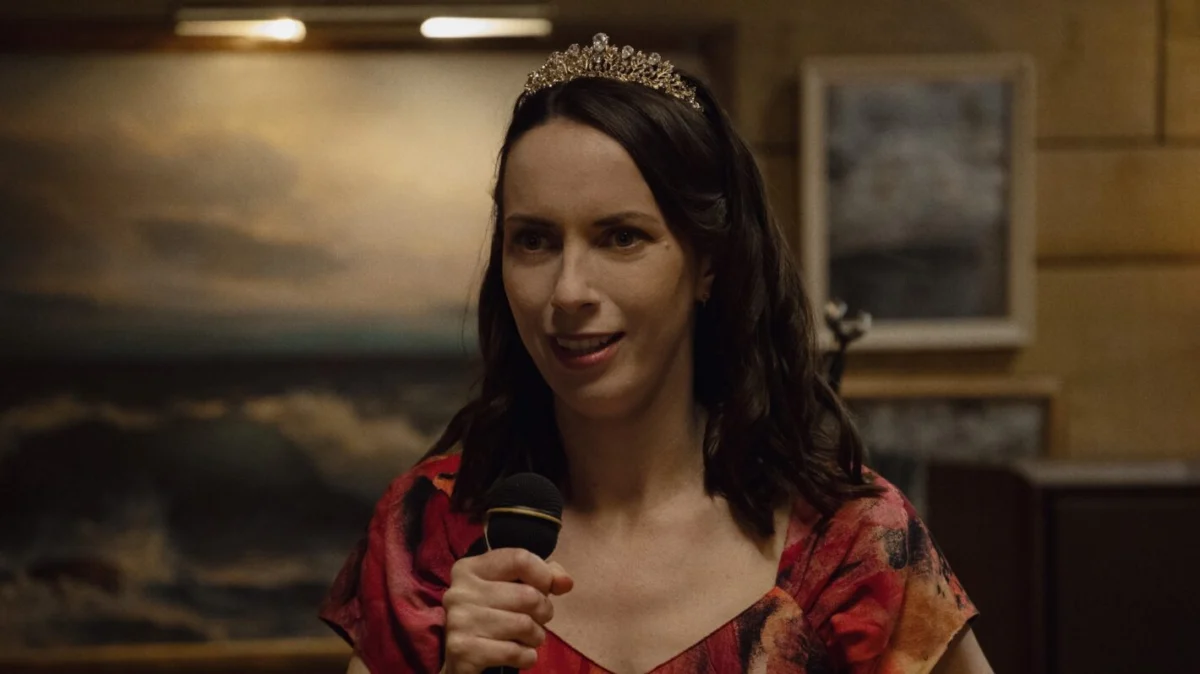
Kate O’Flynn’s portrayal of Patricia in Widow’s Bay was undeniably a breakout performance, with the character often stealing scenes with her eccentricities and unexpected depths. Two of Patricia’s most memorable moments—aside from the town’s baffling lack of appreciation for her magnificent book van—occur during her utterly chaotic dinner party and the revelation that she has long been a "final girl" hiding in plain sight. For fans captivated by these distinct facets of Patricia’s character, a double feature awaits.
Friday the 13th Part 2: Ginny Field, the Archetypal Final Girl
If your affinity for Patricia leans towards her "final girl" capabilities, then Friday the 13th Part 2 is a prime choice. While Patricia’s survivalist spirit might more closely align with the resourceful Laurie Strode of Halloween, and one might struggle to convince certain audiences that any Friday the 13th entry is a masterpiece (despite a lifelong fondness for them), this sequel stands out. It is not only one of the best-crafted films in the extensive franchise but also features one of horror history’s most iconic and impactful final girls: Ginny Field. Intelligent, resourceful, relentlessly determined, and crucially, unafraid to truly live as well as survive, Ginny is both a foundational archetype and a nuanced subversion of many final girl tropes that would later become clichés. Her strategic thinking and emotional resilience make her a compelling figure, echoing Patricia’s own hidden strengths and surprising capacity for survival.
Pearl: Mia Goth’s Generational Performance in a Ti West Masterpiece
For those who reveled in Patricia’s glorious, slightly unhinged "chaos party host" persona, Pearl is an absolute must-see. Not only was this acclaimed prequel directed by Ti West, who also helmed one of Widow’s Bay‘s most memorable episodes, "Our History," but it features a truly generational performance from Mia Goth. Set in 1918, Pearl delves into the origin story of the villain from West’s previous film, X, portraying a young woman desperate for stardom amidst the restrictive confines of her rural farm life during a global pandemic. While Patricia isn’t quite as desperate or murderous as Pearl, the unmistakable twinkle of madness in Pearl’s eyes as she envisions a moment of grandiose stardom undeniably recalls the look on Patricia’s face when she, for a fleeting moment, believes she has become the undisputed party princess of the island. It’s a powerful, unsettling, and darkly humorous character study that explores ambition, repression, and the terrifying birth of a monster.
The Enduring Legacy: Why Widow’s Bay and its Kin Resonate
The conclusion of Widow’s Bay‘s first season marks not an end, but a pause in what promises to be a remarkable journey. The show has masterfully carved out a niche within the horror and comedy genres, demonstrating that a blend of genuine scares, sharp wit, and profound character development can resonate deeply with audiences. The recommendations provided here, from Stephen King’s small-town dread to Mike Flanagan’s thematic explorations, from darkly comedic subversions to surreal Lovecraftian nightmares, all share a common thread: they explore the fascinating and terrifying dynamics of communities under duress, often with a unique genre twist.
As fans eagerly await the return of Widow’s Bay, this curated watchlist serves as more than just a distraction; it’s an invitation to explore the rich tapestry of films and series that celebrate similar thematic depths, atmospheric tensions, and genre-bending creativity. The enduring appeal of Widow’s Bay lies in its ability to make us laugh in the face of fear, to question the familiar, and to remind us that even in the most charming locales, darkness can always find a way to creep in. And sometimes, that darkness is hilariously, terrifyingly fun.