
Jonathan Maberry: A Master Storyteller’s Enduring Legacy and the Evolving Tides of Genre Fiction

SAN DIEGO, CA – With a prolific career spanning decades and an impressive 57th novel on the horizon, Jonathan Maberry stands as an undeniable titan in the realm of genre fiction. A five-time Stoker Award winner, revered editor of Weird Tales, and the creative force behind numerous beloved series, comic books, and anthologies, Maberry’s influence on contemporary storytelling is profound. In an extensive interview with Black Gate magazine, the author offered a candid look into his journey, reflecting on the dramatic shifts within the publishing industry, the genesis of his storytelling passion, and the disciplined approach that has allowed him to thrive amidst constant change.
From his gritty childhood in Philadelphia’s Kensington neighborhood to his current stature as a literary luminary, Maberry’s trajectory is a testament to unwavering dedication and a keen adaptability. The discussion, so expansive it necessitated a two-part serialization, delves into the past, present, and future of a writer who has not only observed the evolution of his craft but actively shaped it.
The Evolving Landscape of Modern Publishing
Maberry’s journey into fiction began with the publication of his debut novel, Ghost Road Blues, in 2006 – a pivotal moment that coincided with a monumental transformation in the publishing world. He recounts an industry on the cusp of a digital revolution, where traditional paradigms were rapidly giving way to new formats and independent voices.
"My first novel came out in 2006, which is just around the time that digital was rising," Maberry explained, detailing the swift decline of physical audio formats like CDs and cassettes in favor of digital downloads. This initial wave of change was merely a precursor to the broader shifts that would redefine the entire literary ecosystem.
The Rise of Independent Publishing: One of the most significant evolutions, according to Maberry, has been the ascendancy of independent publishing. What once might have been perceived as a domain of amateurish output has matured into a formidable segment producing work comparable to, and often indistinguishable from, traditional publishing houses. This transformation, ironically, was catalyzed by an economic downturn.

"During the economic downturn, a lot of people in publishing, a lot of editors, agents, and so on lost their jobs," Maberry observed. "And those folks, a lot of them went freelance. So the indie crowd is now able to hire professional freelancers that worked in traditional publishing to be able to edit their books, design their books and so on, which raised the quality of indie to be somewhat comparable to traditional publishing." While Maberry himself remains 100% traditionally published, he acknowledges the undeniable quality emerging from the independent sector.
Digital Formats and AI’s Double Edge: The proliferation of e-books also marked a significant change, though not in the way many industry pundits initially predicted. "For a while, a lot of industry folks thought that [e-books] were going to explode and be the dominant form for books," Maberry noted. "But it turned out to be in third place." Print continues to reign supreme, followed by audiobooks, with e-books forming a smaller, albeit growing, segment. Maberry anticipates a potential shift, particularly in light of current economic pressures. "Print relies on oil and everything from the chainsaws that cut down trees to the paper mills and trucks that drive them to the bookstore—that’s all oil," he posited, suggesting that rising costs could propel e-books to greater prominence.
However, not all technological advancements have been met with enthusiasm. Maberry voiced strong reservations about the increasing use of generative AI in creative fields. "We’ve also had the rise of CGI and AI which can be good or can be really bad," he stated. "I’m not a fan of generative AI at all—I’m part of that big Anthropic lawsuit in fact." This stance highlights a growing ethical debate within the creative community regarding intellectual property and the future of human artistry.
Community Building in a Connected World: Beyond format and production, Maberry champions the power of digital tools to foster community. "My personal favorite part of this is building a community because I’ve always been a community builder in the writing world anyway," he affirmed. For over 26 years, he has actively cultivated spaces for writers to share knowledge and mutually benefit, notably through the Writers Coffeehouse, a free three-hour networking group that has expanded nationwide, with a thriving chapter in San Diego.
The advent of platforms like Zoom and Facebook Live has revolutionized how writers connect and learn. Maberry utilizes these utilities to conduct online masterclasses—often as charity fundraisers—virtual panels, and book events, broadening access to mentorship and industry insights. This embrace of digital connectivity stands in stark contrast to some of his peers. "The friends of mine who don’t like it, who are very much analog in their approach to writing, got left behind," he reflected. "Business has always changed and you have to change with it. That’s a fact of life."

From Martial Arts to Marvel: A Storyteller’s Genesis
Maberry’s path to becoming a novelist was anything but linear, rooted in an innate storytelling impulse that predated his ability to write. "Honestly, I think I was born that way," he mused. "I can remember even before I could write, I was telling stories with toys. Storytelling was always baked into my DNA in some way."
The Lure of Journalism: As a child, he envisioned a career in comics, but his interests shifted dramatically in high school. The post-Watergate and Vietnam era saw journalists like Woodward, Bernstein, and Walter Cronkite emerge as public heroes, voices of truth in a turbulent world. "I wanted to be that," Maberry recalled, shifting his focus to nonfiction and pursuing a journalism scholarship at Temple University. His initial ambition was to be an investigative journalist, exposing corruption. However, a college course on magazine features proved more engaging, leading him to a decades-long career as a part-time feature writer.
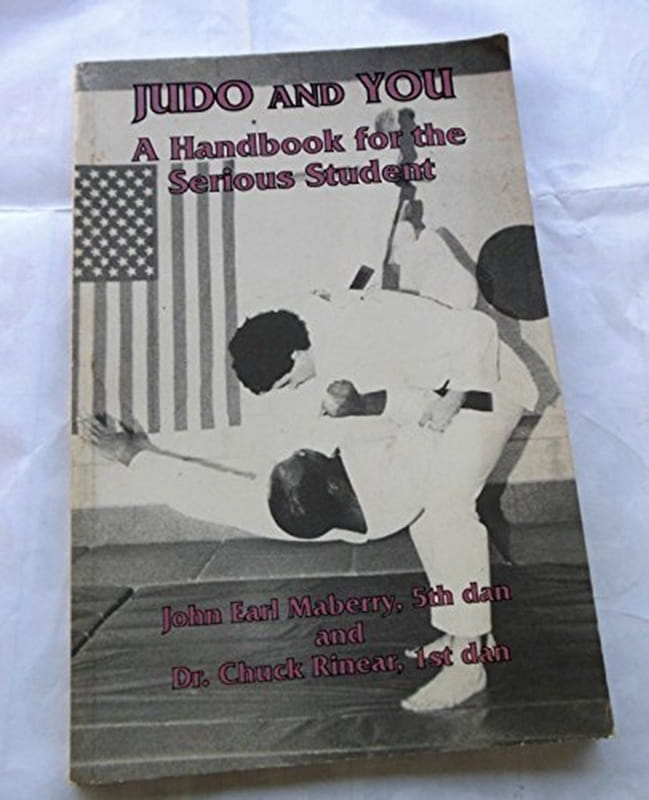
A Foundation in Martial Arts: Concurrently, Maberry’s "day job" centered around his lifelong passion for martial arts. Having begun training at age five, he taught jujutsu, women’s self-defense, and martial arts history at Temple University for 14 years. This expertise naturally informed his early writing, adhering to the adage "write what you know." His very first published book, Judo & You: A Handbook for the Serious Student (1991), was a judo textbook co-authored for a colleague.
His nonfiction portfolio expanded to cover a wide array of personal interests: skydiving, music, travel, theater, bartending, holidays, and parenting, resulting in approximately 1,200 feature articles and 3,000 reviews and filler pieces.
The Call of Fiction: The pivotal turn towards fiction came around the year 2000, spurred by research for a nonfiction book titled The Vampire Slayers’ Field Guide to the Undead. Published under the pen name Shane MacDougall to avoid confusing his martial arts publisher, this book explored historical beliefs about monsters. "While researching folklore, it made me want to find novels that use the folkloric versions of monsters," Maberry explained. Finding such works scarce, his wife offered a life-changing suggestion: "Why don’t you just write it."
This simple prompt ignited a five-year period of intensive study, during which Maberry immersed himself in the "carpentry" of novel writing, meticulously learning the elements of craft: pacing, tone, voice, point of view, figurative and descriptive language, and the three-act structure. The result was Ghost Road Blues, a novel he initially wrote "just to get it out of my system." To his surprise, it quickly secured an agent and was sold to the second publisher who saw it, launching his celebrated career in fiction. This June 6th, the novel celebrates its 20th anniversary, a date that also marks Maberry receiving the Lifetime Achievement Award from the Horror Writers Association – a fitting confluence of milestones.
Mastering the Craft: Process, Productivity, and Community
Maberry’s ability to navigate the diverse demands of his career is rooted in a highly refined and adaptable professional process. While he has scaled back his martial arts teaching due to physical demands – now focusing on workshops for writing fight scenes and consulting on Spec-Ops and SWAT – writing remains his primary occupation.
The Journalist’s Discipline: His prodigious output, which now includes writing a "long novel every three months," is a direct legacy of his journalism training. "When you’re trained to be a newspaper reporter, you’re not trained to write slow," Maberry asserted. "Editor says, ‘go out and give me 2,000 words on that 5-alarm fire and phone it in.’ That isn’t waiting for the muse to whisper to you, or going out and waiting for the fire to speak to you. A reporter goes there, gets the information, finds a hook that makes that article different from every other article on the subject, writes it quick and dirty, fixes it in the rewrite, and moves on." This "mindset and process" allows him to be both highly productive and efficient, ensuring time for his family—a crucial balance.
Genre-Hopping as a Palate Cleanser: Maberry finds creative rejuvenation in genre-hopping. "I actually find jumping from genre to genre is like a palate cleanser," he revealed. "It freshens up your mind; it allows you to let the other things sit and think for a little bit while you go in and do something else, and then when you come back it’s ready for you to work on it." His typical schedule involves a novel every three months, interspersed with short stories, comic book issues, online workshop packets, and public appearances. Even while teaching multiple classes at a writers’ conference, he maintains a daily output of at least 3,000 words.
Running a Career as a Business: Maberry approaches his writing career with the rigor of a business enterprise. "Everything goes on my calendar," he explained. "I run my writing career like a business because it is a business." He employs a contract assistant, Dana Fredsti, herself a working novelist and freelance editor, to help manage the workload. This efficient, business-oriented approach, combined with a willingness to evolve with the industry, has enabled him to sustain both a thriving professional life and a rich family life.
Venturing into Shared Worlds: The Art of Tie-in Writing
Maberry’s versatility extends to writing in established, licensed literary universes, a specialized craft he champions as the current president of the International Association of Media Tie-in Writers (IAMTW). This organization supports authors who contribute to popular franchises like Star Wars, Star Trek, CSI, and adaptations of movies and video games.
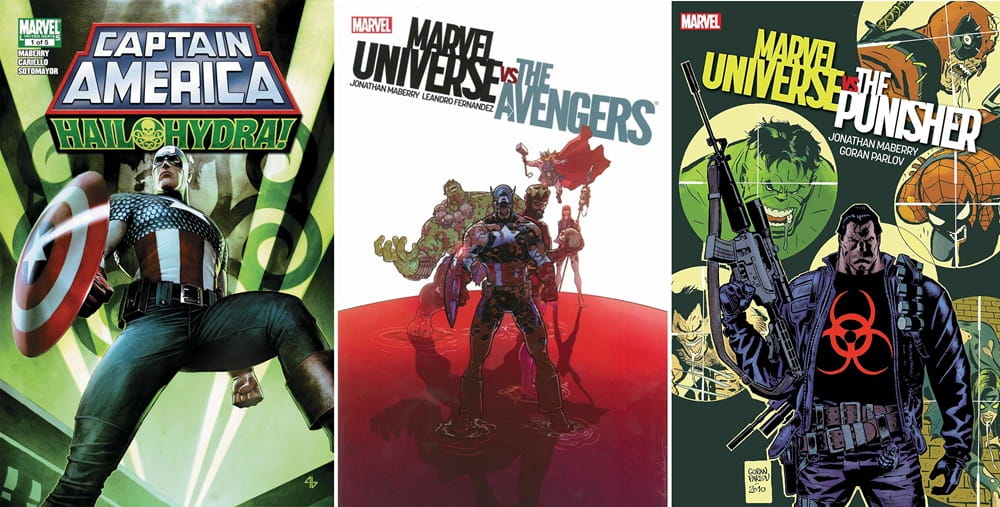
Maberry’s own impressive portfolio of tie-in works includes contributions to Hellboy, Planet of the Apes, True Blood, John Carter of Mars, Aliens vs. Predator, and X-Files. His first bestseller, The Wolfman (2010), was a tie-in novel. His entry into Marvel Comics, a childhood dream, came after his novel Patient Zero (2009) garnered attention, leading to him writing for iconic characters like Wolverine, The Punisher, Deadpool, and Doctor Doom.
Navigating the Bedrock of Character: The challenge of tie-in writing lies in honoring established characters while injecting fresh perspectives. "It’s a matter of learning what is kept as bedrock by all writers working on that license and then to find an entry to tell something new without reinventing someone else’s character," Maberry elaborated. For example, he noted that Wolverine will never be passive, nor will The Punisher regret killing a villain.
Instead, Maberry seeks "another element of their life that you would like to add another note to." In his Wolverine stories, he explored the psychological toll of tragic events, such as the character being forced to kill a loved one, a scenario initially crafted by another writer. For The Punisher, he introduced side characters to bring elements of personality and humor, providing different points of view without altering the core anti-hero. This nuanced approach allows him to explore these beloved characters with depth and respect while leaving his own distinctive mark.
A Legacy in Progress
Jonathan Maberry’s career is a masterclass in literary evolution, demonstrating that success in a dynamic industry demands not just talent, but also relentless discipline, strategic adaptability, and an unwavering commitment to the craft. His insights into the changing publishing landscape, his personal journey from martial artist to acclaimed author, and his methodical approach to productivity offer invaluable lessons for aspiring and established writers alike. As he continues to push creative boundaries and advocate for the writing community, readers eagerly await the second part of his enlightening conversation with Black Gate, anticipating further revelations from this extraordinary storyteller.



Leave a Comment