
The Synod of Whitby: A Defining Moment for Early English Christianity

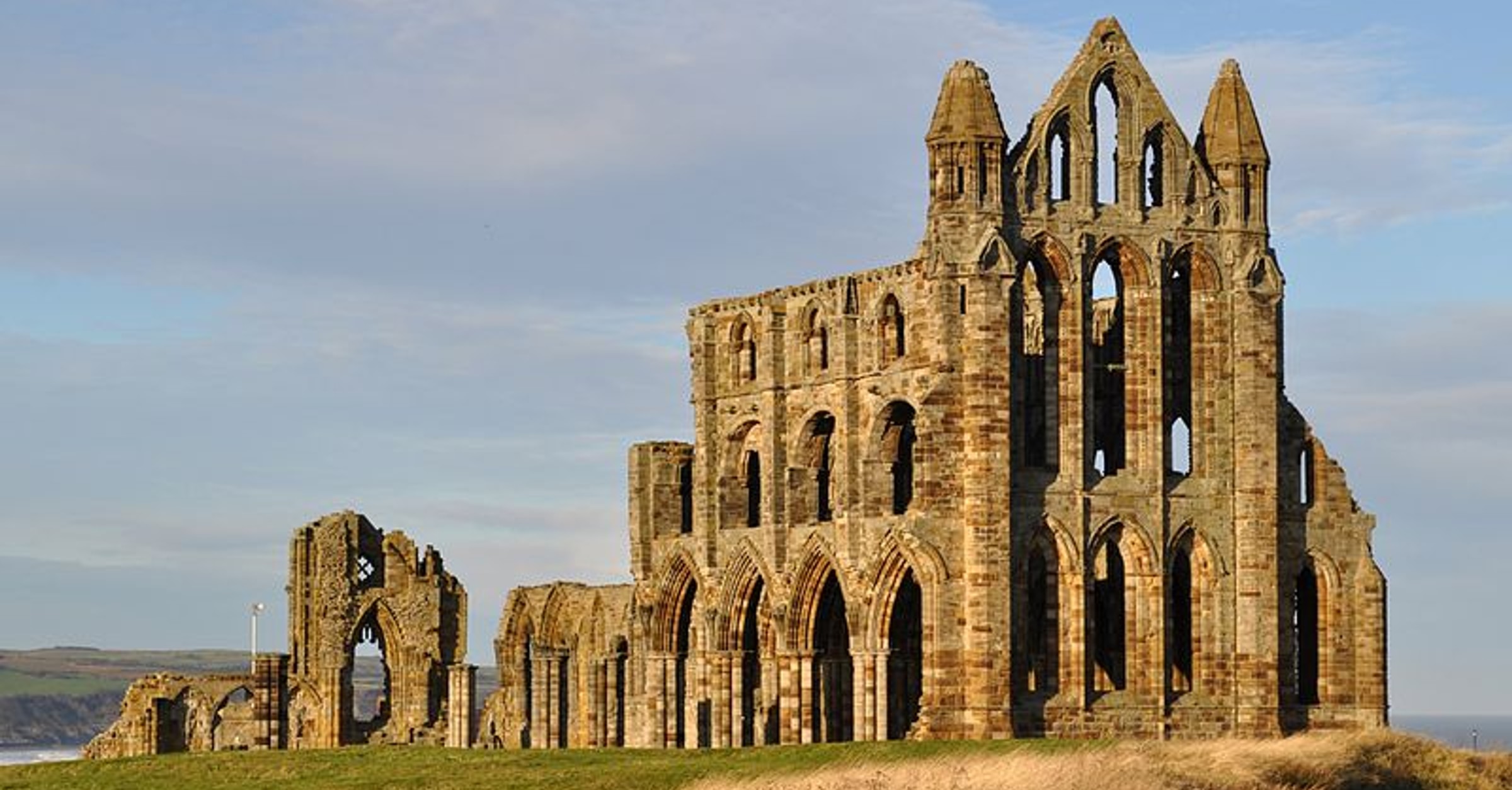
Whitby, Northumbria, 664 AD – In a pivotal assembly held amidst the windswept cliffs of Streanæshalch, later known as Whitby Abbey, King Oswiu of Northumbria convened a synod that would irrevocably shape the religious and political landscape of early medieval England. The primary contention: the calculation of the date of Easter, a seemingly esoteric theological debate that masked deeper power struggles and cultural clashes between two prominent Christian traditions – the insular customs championed by Irish monks from Iona and the burgeoning Roman practices spreading across continental Europe. The synod’s ultimate decision to adopt Roman customs marked a significant step towards the unification of the English Church with the wider European Christian world, a legacy that continues to resonate through history.
Main Facts
The Synod of Whitby, held in 664 AD at Saint Hilda’s monastery, was an ecclesiastical and political council presided over by King Oswiu of Northumbria. Its central purpose was to resolve the divergence in Christian practices within his kingdom, particularly concerning the method for calculating Easter. Northumbria, a powerful Anglo-Saxon kingdom encompassing parts of modern-day northern England and southern Scotland, found itself a crossroads of Christian influence. King Oswiu, having been raised in exile in the Irish kingdom of Dál Riata, adhered to the customs of the Ionan monks, a tradition often termed ‘Celtic Christianity.’ His queen, Eanflæd, and his son, Alhfrith, however, followed the ‘Roman’ practices prevalent in the south of England and continental Europe.
The main protagonists in the debate were Colman, Bishop of Lindisfarne and a staunch advocate for the Ionan tradition, and Wilfrid, a cleric who had studied in Rome and vigorously promoted Roman customs. Despite his personal leanings towards the Ionan way, King Oswiu ultimately ruled in favour of the Roman calculation of Easter, a decision that had profound implications beyond mere liturgical uniformity. While contemporary accounts, particularly Bede’s Ecclesiastical History of the English People, emphasize the theological arguments, modern historical analysis reveals that the synod was as much a political manoeuvre designed to consolidate Oswiu’s power and align Northumbria with the dominant European Christian power structure. The outcome was a reconciliation of the two traditions under the Roman banner, integrating Northumbrian Christianity more closely with the practices observed across mainland Europe and laying foundational groundwork for a more unified English Church.
Chronology
The Synod of Whitby did not occur in a vacuum but was the culmination of decades of intertwined religious and political developments within Northumbria and the wider Anglo-Saxon kingdoms.
Pre-Synod Context
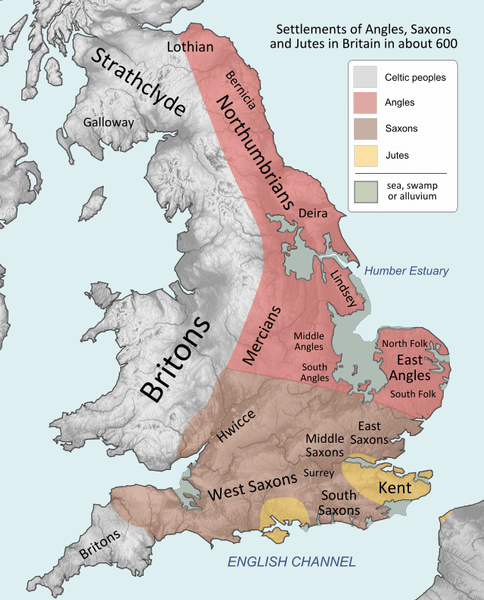
The Christianisation of Northumbria began in earnest during the early 7th century, driven by two distinct missionary efforts. The initial wave was heavily influenced by Irish monasticism, particularly from the prominent monastery on the island of Iona. King Oswald, Oswiu’s brother and predecessor, had invited missionaries from Iona, most notably Aidan, who established the influential monastery of Lindisfarne. This ‘Celtic’ Christianity, characterized by its unique monastic structures, tonsure, and crucially, its method of calculating Easter, became deeply embedded in Northumbrian religious life, influencing figures like Oswiu himself, who spent his formative years in Dál Riata.
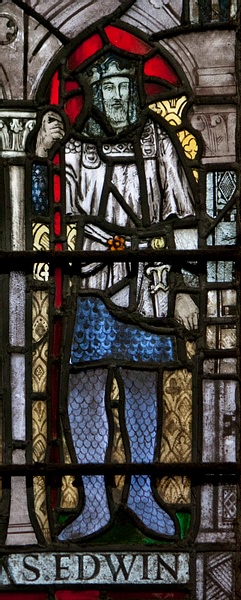
However, a ‘Roman’ tradition had simultaneously taken root in the southern Anglo-Saxon kingdoms, notably Kent, following Augustine of Canterbury’s mission in 597 AD. This Roman practice, aligned with papal authority and continental European norms, entered Northumbria through Queen Eanflæd. Daughter of Edwin, a previous king of Deira (one of Northumbria’s constituent kingdoms), Eanflæd had been raised in Kent amidst Roman Christian customs. Her marriage to Oswiu thus created a curious disunity within the royal household: the King and Queen celebrated Easter on different dates, a tangible symbol of the broader liturgical friction.
This religious divergence was not merely a domestic inconvenience; it became increasingly politicized. Oswiu’s eldest son, Alhfrith, aligned himself strongly with the Roman faction, cultivating a close friendship with Wilfrid, a zealous proponent of Roman customs who had studied in Rome. Alhfrith demonstrated his Roman allegiance by expelling Ionan monks from Ripon monastery and replacing them with Wilfrid, who promptly instituted Roman practices. This act was likely an assertion of Alhfrith’s growing independence and a challenge to his father’s authority, especially as his prospects for succession might have felt threatened by Oswiu’s younger son, Ecgfrith (Eanflæd’s son).
Furthermore, Oswiu’s political standing as ‘bretwalda’ (overlord) of the southern Anglo-Saxon kingdoms was waning. Following his victory at the Battle of Winwaed in 655, Oswiu had been at the apex of his power, even holding sway over Mercia. By 664, however, Mercia, under King Wulfhere, had reasserted its independence, eroding Oswiu’s authority. Many of these southern kingdoms, crucial to Oswiu’s ‘bretwalda’ status, followed Roman traditions. The death of Deusdedit, Archbishop of Canterbury, shortly before the synod presented Oswiu with a critical opportunity: to appoint a new archbishop and reassert his influence, but such an appointment required papal approval, which would be difficult to secure if he continued to adhere to Ionan customs. These interlocking religious and political pressures created an undeniable impetus for a formal resolution.
The Synod Itself
On an unspecified date in 664 AD, the assembly gathered at Streanæshalch, the double monastery presided over by the influential Abbess Hilda, herself a follower of the Ionan tradition. King Oswiu acted as the arbiter, with his son Alhfrith and his ally Wilfrid representing the Roman side, and Bishop Colman of Lindisfarne defending the Ionan customs.
Bede’s account of the synod, while highly influential, presents a somewhat simplified narrative focused on the theological debate. According to Bede, Oswiu instructed both parties to explain and defend their respective traditions. Colman argued that their Easter calculation derived from St. John the Evangelist and had been faithfully transmitted through St. Columba and the monks of Iona. Wilfrid countered by tracing the Roman practice back to St. Peter and St. Paul, emphasizing its universality across the Christian world and its endorsement by the Papacy.
The climax of Bede’s narrative occurs when Wilfrid famously appeals to the authority of St. Peter, to whom Christ supposedly gave the keys to the Kingdom of Heaven. Oswiu, in a seemingly pious moment, asks if Colman’s St. Columba was given such authority. When Colman concedes not, Oswiu declares, "I dare not contradict the decrees of him who keeps the doors of the kingdom of heaven, for fear that when I arrive at those doors there may be no one to open them." This dramatic pronouncement, while potentially embellished by Bede, served to legitimise Oswiu’s decision as divinely inspired rather than politically motivated. The outcome was clear: Northumbria would adopt the Roman method of computing Easter and other associated practices.
Post-Synod Events
The immediate aftermath saw Colman, unwilling to abandon the traditions he had faithfully upheld, resign his bishopric and return to Iona, taking with him many of the Irish monks from Lindisfarne. This departure signified a definitive shift in Northumbrian ecclesiastical leadership. Oswiu initially appointed Tuda, a clergyman raised in Ireland but adhering to Roman customs, as the new Bishop of Northumbria, a seemingly conciliatory choice. However, Tuda succumbed to the plague shortly thereafter, leading to a period of instability.
Significantly, Alhfrith, emboldened by the synod’s outcome, requested his own bishopric in Deira, implying a desire to split Northumbria into two episcopal sees. Oswiu initially appeared to consent, and Alhfrith sent Wilfrid to the continent for consecration as bishop. However, while Wilfrid was abroad, Alhfrith’s ambitions took a drastic turn. Shortly after the synod, he revolted against his father. The details are scarce, but Alhfrith disappears from the historical record, suggesting his rebellion was swiftly crushed. This event allowed Oswiu to reverse his earlier concessions to Alhfrith. He moved Northumbria’s episcopal seat from Lindisfarne to York, the royal city of Deira, and appointed Chad, a former pupil of Aidan and a figure with strong ties to the Ionan tradition (albeit now accepting Roman Easter), as Bishop of all Northumbrians. Wilfrid, upon his return, found his patron defeated and his path to power blocked, eventually withdrawing to Ripon.
The Synod of Whitby, while appearing to resolve a religious dispute, effectively neutralized a significant political challenge to Oswiu’s rule. By aligning Northumbria with Rome, Oswiu simultaneously asserted his authority over his ambitious son and strengthened his diplomatic position among the southern Anglo-Saxon kingdoms, which also followed Roman customs.
Supporting Data
Understanding the Synod of Whitby requires careful examination of its primary sources and subsequent historical interpretations, which often diverge on the event’s true nature and significance.
Primary Sources
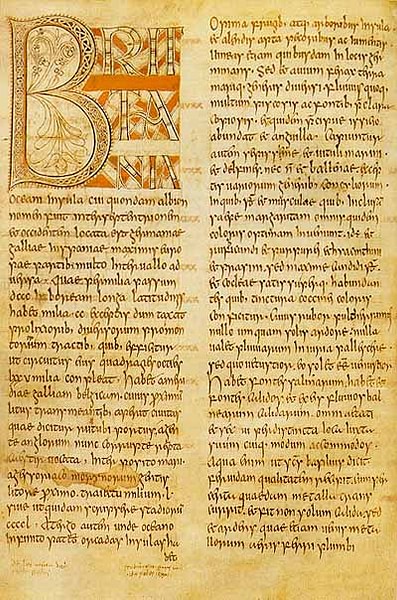
Two principal contemporary sources illuminate the events of the synod: Stephen of Ripon’s Vita Sancti Wilfrithi (Life of Saint Wilfrid) and Bede’s Historia Ecclesiastica Gentis Anglorum (Ecclesiastical History of the English People).
Stephen of Ripon’s Life of Wilfrid is a biography written by one of Wilfrid’s companions, providing a partisan account. It naturally casts Wilfrid in a heroic light, emphasizing his intellectual prowess and unwavering commitment to Roman orthodoxy. While offering valuable insights into Wilfrid’s character and influence, its clear pro-Wilfrid bias necessitates a critical reading, as it aims to glorify its subject rather than provide a neutral historical record.
Bede’s Ecclesiastical History, written a few decades after the synod (Bede was born in 673 AD), is a broader narrative of the English Church. For Bede, a Northumbrian monk deeply invested in the unification of the English Church and the scientific study of computus (calendar dates), the Synod of Whitby was a moment of immense importance. His account, therefore, is not merely descriptive but prescriptive, shaping how the synod was understood for centuries. Bede meticulously details the theological arguments, particularly the Easter controversy, and portrays Oswiu’s decision as a divinely guided choice motivated by fear for his soul and respect for St. Peter’s authority. While invaluable, Bede’s narrative has been scrutinized by modern historians for its clear agenda: to present the Roman victory as inevitable, righteous, and beneficial for the nascent English Church. He downplays the political machinations and the personal struggles involved, creating an enduring image of the synod as primarily a religious triumph.
Historical Interpretations
The relative scarcity of independent sources presents a significant challenge for historians. Modern scholarship has increasingly moved beyond Bede’s purely liturgical interpretation to emphasize the complex interplay of religious, political, and cultural factors.
The debate over the "Romanization" of English Christianity is central. While the synod undeniably marked a formal adoption of Roman practices in Northumbria, many historians argue it was not a sudden, transformative event but rather a stage within a broader, ongoing trend of religious homogenisation. Even before Whitby, some Irish communities had begun adopting the Roman Easter calculation, suggesting that the Ionan traditions were already becoming outliers. The synod, therefore, accelerated a process already underway rather than initiating a complete paradigm shift.
Crucially, contemporary research highlights the profound political impetus behind the synod. Historians like Walter Goffart and Richard Abels have argued that the religious questions were magnified by Bede, while the political aspects, particularly Oswiu’s relationship with his ambitious son Alhfrith and his efforts to consolidate his weakening ‘bretwalda’ status, were minimized. The synod offered Oswiu a means to:
- Neutralize Alhfrith’s challenge by co-opting the Roman faction.
- Reassert his authority over the southern kingdoms, many of which were Roman-aligned.
- Facilitate papal approval for his appointment of a new Archbishop of Canterbury, a critical move for unifying the English Church under his influence.
Northumbria itself, as a powerful kingdom geographically situated between the Celtic West and the Romanised South and East, was a melting pot of cultural influences. The synod can be seen as a decision to firmly anchor Northumbria within the continental European sphere, aligning it with the intellectual and ecclesiastical currents emanating from Rome and Gaul. This strategic choice would have long-term implications for Northumbria’s future development and its role within a wider Anglo-Saxon England.
Official Responses
The "official responses" to the Synod of Whitby refer to the immediate declarations, actions, and consequences enacted by King Oswiu and the ecclesiastical figures involved, solidifying the new religious direction for Northumbria.
King Oswiu’s Edict
Following the debates, King Oswiu made his decisive ruling: Northumbria would officially adopt the Roman calculation of Easter and other associated practices, such as the Roman tonsure. This was a royal decree, binding on his kingdom. While Bede presents this as a religiously motivated choice, driven by Oswiu’s reverence for St. Peter and the desire for salvation, the political advantages for the king were undeniable. By aligning with Rome, Oswiu:
- Eliminated a source of friction within his own household and kingdom.
- Demonstrated his orthodoxy, which was crucial for maintaining influence over the southern kingdoms that already followed Roman customs.
- Undercut Alhfrith’s political leverage, as Alhfrith had championed the Roman cause, but Oswiu now claimed that cause for himself, effectively disarming his son.
- Paved the way for papal recognition of his authority in appointing ecclesiastical leaders, such as the Archbishop of Canterbury.
This edict fundamentally altered the religious landscape of Northumbria, moving it away from its Ionan roots and towards a uniform practice with the broader Roman Christian world.
Ecclesiastical Reactions
The immediate ecclesiastical responses were varied and reflected the deep convictions of the individuals involved:
- Bishop Colman’s Resignation: Colman, a man of deep faith and loyalty to the Ionan tradition, refused to compromise his principles. He resigned his bishopric of Lindisfarne and, along with many of his Irish monks, departed Northumbria for Iona, eventually settling in Ireland. His departure symbolized the end of the direct Ionan ecclesiastical influence in Northumbria.
- Appointment of Tuda: Oswiu’s initial choice for Colman’s successor, Tuda, was a pragmatic one. Tuda was Irish by birth but had adopted the Roman Easter calculation. This appointment might have been an attempt by Oswiu to bridge the divide and offer a degree of continuity, demonstrating that the decision was about practice, not nationality. However, Tuda’s death from the plague shortly after his appointment created further instability.
- Alhfrith’s Rebellion and Wilfrid’s Initial Setback: Alhfrith’s subsequent rebellion against Oswiu, likely fueled by frustrated ambition, had significant ecclesiastical repercussions. Wilfrid, Alhfrith’s ally, was initially intended to become Bishop of Deira but found his prospects dashed when his patron was overthrown. This highlights the intertwined nature of church and state in this period; ecclesiastical appointments were deeply entangled with royal power and dynastic struggles.
- Appointment of Chad and the See of York: Oswiu eventually appointed Chad, a respected monk who had been trained in the Ionan tradition but had accepted the Roman Easter, as Bishop of all Northumbrians, with the episcopal seat moved to York. This move was strategically significant, placing the ecclesiastical centre in the heart of the royal city of Deira, further consolidating Oswiu’s power and ensuring the Roman tradition would be enforced from a central location. Wilfrid would eventually gain the bishopric of York years later, but not without further struggles, illustrating the complex power dynamics at play.
The official responses to Whitby thus were not merely about implementing a new Easter date; they involved a restructuring of ecclesiastical authority, a reassertion of royal power, and a clear signal of Northumbria’s commitment to Roman orthodoxy.
Implications
The Synod of Whitby was not merely a footnote in obscure ecclesiastical history; its implications reverberated through the religious, political, and cultural fabric of England for centuries to come.
Religious Impact
The most immediate and tangible religious impact was the standardization of Easter calculation across Northumbria and, by extension, eventually across all the Anglo-Saxon kingdoms. This eliminated the practical inconvenience and theological discord of having different communities celebrate the central Christian feast on varying dates. Beyond Easter, the synod encouraged a broader shift towards Roman liturgical practices, monastic rules (especially Benedictine monasticism), and ecclesiastical hierarchy based on diocesan bishops reporting to an archbishop, rather than the more decentralized, monastic-centric model of the Ionan tradition.
Crucially, the synod marked a decisive step towards the integration of the English Church with Continental Christianity and the Papacy. This alignment meant access to a wider stream of theological learning, art, and organizational structures emanating from Rome. It fostered a sense of unity within the nascent English Church, providing a common identity and a shared spiritual foundation that transcended individual kingdoms. Conversely, it led to the decline of direct Ionan influence in England, although Celtic Christianity continued to thrive in Ireland and parts of Scotland for some time. The synod effectively ended the "dual tradition" within the most powerful Anglo-Saxon kingdom, paving the way for a more unified and Roman-aligned national church.
Political Impact
The political implications of Whitby were profound, solidifying Oswiu’s authority and shaping England’s relationship with Europe.
- Strengthening of Oswiu’s Authority: By decisively settling the religious dispute, Oswiu showcased his power as a king who could arbitrate fundamental matters of faith. His cunning manipulation of the synod’s outcome also served to defeat Alhfrith’s political aspirations, consolidating Oswiu’s dynastic control. By aligning with Rome, Oswiu also bolstered his overlordship of the southern kingdoms, many of whom were already Roman in their practices, thus lending legitimacy to his claim as ‘bretwalda.’
- Alignment with European Power Structures: Northumbria’s adoption of Roman customs facilitated broader diplomatic and cultural ties with the powerful Frankish kingdoms and the Papacy. This alignment was not just religious; it was a strategic political move that connected England more closely to the mainstream of European intellectual and political life, opening avenues for trade, scholarship, and diplomatic exchange.
- Towards a Unified English Identity: While a unified English kingdom was centuries away, the synod was a significant step towards a unified "English" ecclesiastical identity. A common church structure and shared religious practices provided a crucial underpinning for later political unification efforts, fostering a sense of shared belonging among disparate Anglo-Saxon peoples.
Cultural and Intellectual Legacy
The synod had a lasting impact on the cultural and intellectual development of England. The adoption of Roman computus, for instance, spurred scientific and mathematical inquiry, as seen in the work of Bede himself. The emphasis on Latin learning, encouraged by Roman traditions, led to a flowering of scholarship and literacy, particularly in monastic centres.
Whitby Abbey itself, though initially following the Ionan tradition under Hilda, continued as a significant religious house, adapting to the Roman customs. Its historical importance was cemented by the synod, making it a focal point for understanding the transition of early English Christianity. The enduring debate about "Celtic" versus "Roman" Christianity, often framed by the legacy of Whitby, continues to fascinate historians, highlighting the rich and complex tapestry of early medieval English identity.
In conclusion, the Synod of Whitby was far more than a debate over the date of Easter. It was a crucible where religious conviction, political ambition, and cultural identity converged, forging a new path for Northumbria and laying crucial groundwork for the future of England as a unified, Roman-aligned Christian nation within the broader European sphere. Its reverberations continue to inform our understanding of the forces that shaped the early medieval world.



Leave a Comment