The Multibillion-Dollar Shadow: Can ‘Spider-Man: Brand New Day’ Eclipse the Legacy of ‘No Way Home’?

Introduction
In the high-stakes arena of global cinema, few franchises carry the gravitational pull of the Marvel Cinematic Universe (MCU), and within that pantheon, Spider-Man remains the undisputed crown jewel. As the industry pivots toward the release of Spider-Man: Brand New Day, the fourth solo outing for Tom Holland’s Peter Parker, the shadow cast by its predecessor, Spider-Man: No Way Home, looms larger than ever. Released in 2021, No Way Home did more than just break records; it redefined the ceiling for theatrical performance in a post-pandemic landscape.
As we look toward the 2026 slate, the financial and cultural benchmarks set five years ago present a formidable challenge. With Spider-Man: Brand New Day positioned as a pivotal chapter in the MCU’s Phase 6, the question is no longer just whether it will be a hit, but whether it can replicate a feat of dominance that saw its predecessor outgross its nearest competitor by more than a billion dollars.
Main Facts: The Statistical Titan of 2021
To understand the pressure facing Spider-Man: Brand New Day, one must first quantify the sheer scale of No Way Home’s success. In 2021, the film industry was still grappling with fluctuating theater capacities and a hesitant public. Despite these headwinds, Spider-Man: No Way Home generated a staggering $1.91 billion at the global box office.
This figure did not merely place it at the top of the year’s charts; it isolated the film in a category of its own. To put this in perspective, the second-highest-grossing film of 2021, the Chinese war epic The Battle at Lake Changjin, earned approximately $902 million. The gap between first and second place was an unprecedented $1.008 billion. In any other year, a $900 million haul would be a cause for worldwide celebration; in 2021, it was less than half of what the web-slinger achieved.
Furthermore, No Way Home solidified its place in the historical record as the third highest-grossing MCU film of all time, trailing only the "event" finales Avengers: Infinity War ($2.04 billion) and Avengers: Endgame ($2.79 billion). By surpassing several Avengers titles and every other solo superhero film, Spider-Man proved that the character’s individual brand equity is rivaled only by the collective power of the entire Marvel roster.
Chronology: From Multiversal Spectacle to a ‘Brand New Day’
The journey to this current juncture has been marked by a strategic evolution of the character’s narrative arc.

The "Home" Trilogy (2017–2021)
The initial trilogy—Homecoming, Far From Home, and No Way Home—focused on Peter Parker’s integration into the wider MCU.
- 2017: Spider-Man: Homecoming reintroduced the character with a focus on high-school stakes, earning $880 million.
- 2019: Spider-Man: Far From Home dealt with the aftermath of Endgame, becoming the first Spider-Man film to cross the $1 billion mark ($1.13 billion).
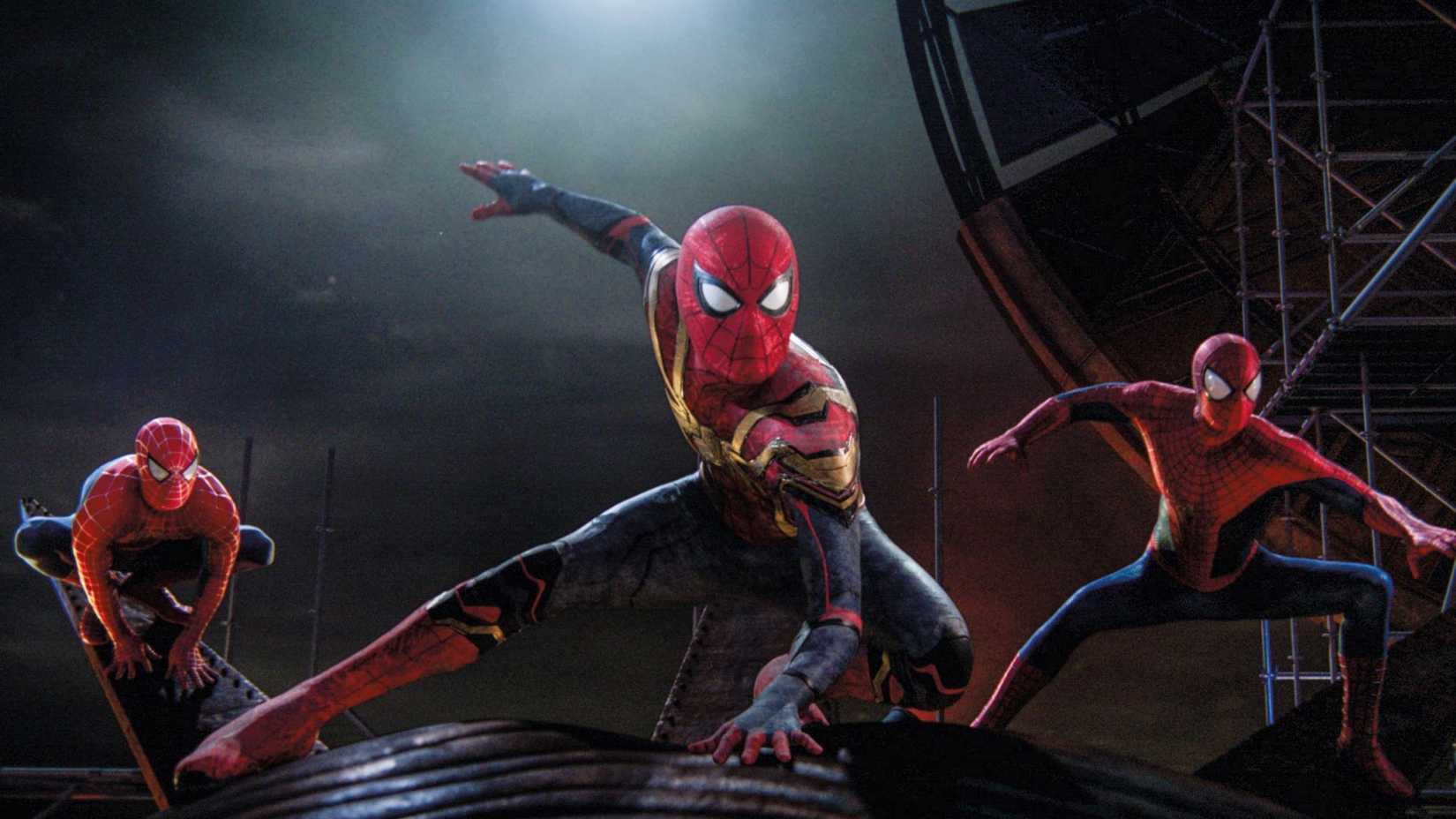
- 2021: No Way Home utilized the "Multiverse" concept to bring together three generations of cinema history, featuring Tobey Maguire and Andrew Garfield. This was the "lightning in a bottle" moment that propelled the film to $1.91 billion.
The Interim and the Road to 2026
Following the emotional conclusion of No Way Home, where the world forgets Peter Parker’s identity, the franchise entered a period of calculated silence. During this time, the MCU expanded into the Multiverse Saga, while Sony explored its own Spider-Verse through animation and spin-offs.
The announcement of Spider-Man: Brand New Day for a 2026 release signaled a "soft reboot" of the live-action series. The title, borrowed from a famous 2008 Marvel Comics arc, suggests a back-to-basics approach. However, the commercial expectations remain tied to the blockbuster heights of the previous era, creating a paradox: how does a "smaller, street-level" story compete with a multiversal event?
Supporting Data: Analyzing the 2021 and 2026 Landscapes
The $1 billion gap in 2021 was not just a result of Marvel’s strength, but also a reflection of the competition’s relative struggle.
2021 Competitive Analysis:
- The Battle at Lake Changjin: $902 million (Primary market: China).
- No Time to Die: $774 million (The final Daniel Craig Bond film).
- F9: The Fast Saga: $726 million.
No Way Home earned more than No Time to Die and F9 combined. This dominance was attributed to the "spoiler culture" that drove immediate ticket sales and the nostalgic appeal of returning villains like Willem Dafoe’s Green Goblin and Alfred Molina’s Doc Ock.
2026 Market Projections:
The environment for Spider-Man: Brand New Day is significantly different. The 2026 box office is already showing signs of heavy-hitter density:
- The Super Mario Galaxy Movie: Currently leading the year with over $1.1 billion, proving that video game adaptations are now a primary threat to superhero dominance.
- Avengers: Doomsday: Scheduled for release in the same year, this film features the return of Robert Downey Jr. (as Doctor Doom), which will likely siphon some of the "event" energy away from Spider-Man’s solo outing.
For Brand New Day to reach the $1.9 billion mark, it would need to capture a similar "must-see" cultural zeitgeist without the crutch of multiversal cameos that fueled its predecessor.

Official Responses and Industry Sentiment
While Marvel Studios and Sony Pictures maintain a standard "no comment" policy on specific box office projections, internal sentiments gathered from trade reports suggest a cautious optimism.
Kevin Feige, President of Marvel Studios, has previously hinted that the future of Spider-Man would involve a more "grounded" Peter Parker. Industry analysts suggest that this shift is a creative necessity to avoid "Multiverse fatigue," even if it poses a commercial risk.
Sony Pictures’ leadership, including Amy Pascal, has frequently emphasized the "enduring soul" of the character. "It’s not always about the size of the explosion; it’s about the heart of the kid from Queens," Pascal noted in a recent industry summit. This suggests that the studios are prepared for a scenario where Brand New Day might not hit the $1.9 billion peak, but instead focuses on long-term franchise health and critical acclaim.
However, shareholders remain focused on the "Spider-Man Effect." Financial analysts from firms like Cowen & Co. have noted that Spider-Man is one of the few remaining "sure bets" in a theatrical market that has become increasingly hit-or-miss. The expectation is that even a "modest" Spider-Man film should comfortably clear $1.2 billion.
Implications: The Future of the Web-Slinger
The performance of Spider-Man: Brand New Day will have profound implications for the MCU and the theatrical industry at large.
1. The Viability of "Street-Level" Stories
If Brand New Day succeeds financially (clearing $1.5 billion+) without the gimmick of multiple Spider-Men, it will prove that the character—and by extension, the MCU—can survive on narrative quality rather than just "event" spectacles. It would validate the move toward more personal, character-driven storytelling.
2. The 2026 Box Office Crown
The race for the top spot in 2026 is currently a three-way battle between Spider-Man, The Super Mario Galaxy Movie, and Avengers: Doomsday. If Spider-Man manages to outgross Avengers, it would officially crown Peter Parker as the new face of the Marvel brand, surpassing even the ensemble films in terms of reliable ROI.
3. The Sony-Marvel Partnership
The financial split between Sony and Disney remains a complex tapestry. A massive success for Brand New Day would solidify this partnership for another decade, ensuring that Spider-Man remains integrated into the MCU rather than being pulled back into a standalone Sony universe.
4. Overcoming the "Billion-Dollar Gap" Legacy
The ultimate legacy of No Way Home is that it made the impossible look routine. By outgrossing the rest of 2021 by $1 billion, it set a psychological benchmark that may be impossible to repeat. Brand New Day faces the "sequel curse" in reverse: it must follow a film that wasn’t just a movie, but a historic cultural event.
Conclusion
As Spider-Man: Brand New Day swings toward its 2026 debut, it carries the weight of a multi-billion-dollar legacy. While the $1.91 billion haul of No Way Home remains a towering achievement, the true measure of the next film’s success may not be in whether it beats that number, but in how it establishes the character for a new generation. In the world of the MCU, records are made to be broken, but as Peter Parker knows all too well, with great success comes great responsibility—and even greater expectations.