
Reappraising Ancient Faith: A Critical Examination of Alain de Benoist’s "On Being a Pagan"
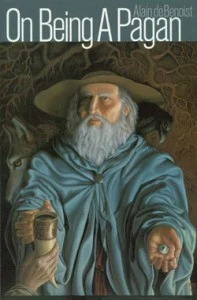
Paris, France – In the vast landscape of contemporary religious and philosophical thought, few works have provoked as much intellectual debate and introspection within burgeoning spiritual movements as Alain de Benoist’s seminal text, On Being a Pagan. The multidisciplinary French thinker, a prominent figure associated with the Nouvelle Droite, offers a profound critique of the prevailing Judeo-Christian worldview and its pervasive secular offshoots, simultaneously articulating a vision for a "new paganism" loosely rooted in historical European traditions. However, while the book delivers several compelling insights, its overarching conceptual framework, rooted in a distinctly humanistic paradigm, has drawn considerable scrutiny from scholars and practitioners alike, raising fundamental questions about the nature of divinity and the interpretation of ancient spiritualities in the modern age.
Published in its English translation in 2004 (originally Comment peut-on être païen? in French, 1981), Benoist’s work transcends a mere historical account, instead proposing a philosophical reorientation away from what he perceives as the inherent dualism and moral absolutism of monotheistic systems. He champions an antagonistic pluralism of values, an immanent divine, and a cyclical understanding of time, drawing parallels to ancient Germanic cosmology. Yet, the reviewer contends that Benoist’s intellectual rigor, while commendable in its analytical scope, ultimately falters in its treatment of the sacred, inadvertently reducing divinity to human construct and thereby creating a new form of the very dualism he so fiercely denounces. This review delves into the book’s core arguments, contextualizes its genesis, dissects its philosophical underpinnings, and explores its broader implications for contemporary paganism and Western thought.
Main Facts: A Philosophical Manifesto for a "New Paganism"
Alain de Benoist’s On Being a Pagan serves as both a comprehensive critique and a philosophical manifesto. At its core, the book challenges the foundational tenets of the Judeo-Christian worldview, extending its analysis to what Benoist identifies as its secularized manifestations that continue to shape Western modernity. He argues that this Abrahamic legacy—characterized by an insistence on a strict division between creator and creation, good and evil, sacred and profane—has fostered an intellectual and moral framework detrimental to human flourishing and genuine spiritual understanding.
In response, Benoist articulates a vision for a "new paganism." This is not a call for a simplistic, anachronistic revival of ancient rites, but rather a profound philosophical engagement with the underlying principles he discerns in historical European paganism. Key among these principles is the rejection of linear, progressive time in favor of a cyclical, mythological understanding, where the past is not merely bygone but a living dimension of the present, constantly transformed and transforming. As Benoist eloquently states, the revival of paganism is "a question of referring to the ‘memory’ of paganism not in a chronological way… but in a mythological way, to seek for that which, through time, surpasses time and still speaks to us today."
Central to his critique of monotheism is its inherent dualism. Benoist posits that the insistence on dividing the world into incommensurable halves—God versus the world, good versus evil, the sacred versus the profane—is the crux of this worldview. In contrast, he finds paganism characterized by the absence of such rigid divisions. He notes that "in ancient Europe the sacred was not conceived as opposed to the profane but rather encompassed the profane and gave it meaning," and that "[t]he divine is immanent in and consubstantial with the world." This immanence, coupled with polytheism’s pluralistic theology, naturally fosters an attitude of tolerance and respect for diversity, both divine and human. Benoist describes European paganism as resting on an "antagonistic pluralism of values," which, unlike radical dualism, resolves itself into a harmonious whole. This leads to a worldview that is "beyond good and evil" in the Nietzschean sense, freeing it from moralistic crusades.
However, the reviewer argues that Benoist’s insights, while often perceptive, are ultimately undermined by an overarching humanistic framework. Benoist’s assertions that "man is the law of the world and the measure of all things" and that "Gods are made in the image of men" reveal a profound anthropocentric bias. This perspective, the critique posits, reduces divinity to a mere human construct, rendering the gods superfluous and their values as the only truly important elements. This subjectivism, ironically, reinstates a form of dualism where humanity replaces God as the "uncreated being," and divinity becomes a product of human caprice, a departure from the very spirit of historical paganism that Benoist purports to champion.
Chronology: Contextualizing a Controversial Work
The intellectual journey of On Being a Pagan begins much earlier than its English publication date. Alain de Benoist’s original French work, Comment peut-on être païen?, was released in 1981, a period marked by significant intellectual ferment in Europe. Benoist himself had already established a controversial profile as a leading intellectual of the Nouvelle Droite (New Right) movement, which emerged in France in the late 1960s. This movement sought to redefine the political right by emphasizing cultural identity, European traditions, and a critique of liberalism, egalitarianism, and Americanization, often drawing on figures like Nietzsche, Heidegger, and Carl Schmitt.
The Genesis of Benoist’s Thought
Benoist’s philosophical development was deeply intertwined with the Groupement de recherche et d’études pour la civilisation européenne (GRECE), a think tank he co-founded in 1968. GRECE’s mission was to challenge the intellectual hegemony of the left and to promote a distinctively European cultural identity, often through a critical re-evaluation of Western history and philosophy. Within this context, the critique of Judeo-Christianity became a central tenet, viewed as an exogenous influence that had undermined indigenous European spiritual and philosophical traditions. His interest in paganism was thus not merely academic but ideologically driven, aimed at providing an alternative foundational narrative for European identity.
The Rise of Neopaganism
The late 20th century also witnessed a growing interest in neopaganism and polytheistic spiritualities across the Western world. As traditional religious institutions faced decline and secularization advanced, many individuals sought spiritual paths rooted in ancient indigenous traditions, ecological awareness, and a rejection of monotheistic doctrines. Benoist’s book, therefore, emerged into a nascent but increasingly vocal landscape of individuals and communities actively exploring paganism, though often from vastly different political and philosophical standpoints. His work offered a sophisticated, if controversial, philosophical framework for understanding paganism, appealing to some for its intellectual rigor while alienating others due to its author’s political associations and anthropocentric interpretations of divinity.
Intellectual Influences
Benoist’s arguments are deeply steeped in continental philosophy, particularly the works of Friedrich Nietzsche, whose influence is explicitly acknowledged and frequently quoted throughout On Being a Pagan. Nietzsche’s critique of Christian morality, his concept of the will to power, and his declaration of "God is dead" resonate strongly with Benoist’s project. Other influences, though perhaps less explicitly stated in the reviewed text, include figures who questioned Enlightenment rationalism and universalist ideologies, contributing to Benoist’s emphasis on particularism, tradition, and the inherent pluralism of values. This intellectual lineage helps to explain the book’s complex blend of historical analysis, philosophical polemic, and proposed spiritual reorientation.
Supporting Data: Dissecting Benoist’s Arguments and Their Limitations
Benoist’s On Being a Pagan offers a nuanced critique of monotheism and an evocative portrayal of pagan virtues, yet it is precisely in the details of his proposed "new paganism" that the reviewer identifies significant philosophical inconsistencies and departures from historical paganism.
The Nuance of Pagan Pluralism
One of the book’s most compelling sections elucidates the concept of "antagonistic pluralism of values." Benoist argues that polytheism, by its very nature, embraces a multitude of divine expressions and corresponding ethical frameworks, preventing the emergence of a singular, absolute moral code. This inherent pluralism, he suggests, naturally leads to greater tolerance and a less dogmatic approach to human affairs. He elaborates on the treatment of enemies, contrasting the monotheistic imperative for conversion or extermination (viewing the enemy as an embodiment of absolute evil) with the pagan tendency to see adversaries as specific individuals or groups with conflicting, yet understandable, interests. In heroic literature from ancient Europe, enemies are frequently honored as worthy opponents, a testament to a worldview that transcends absolute moral binaries. This insight highlights a crucial difference in ethical frameworks: where monotheism often seeks to universalize and enforce a single moral truth, paganism, as envisioned by Benoist, acknowledges and even celebrates the inherent multiplicity of valid perspectives and ethical stances.
Reclaiming Power and Agency
Benoist also offers a sharp critique of the biblical portrayal of power as inherently evil, particularly the valorization of weakness. He argues that the Bible often equates "justice" with "weakness," implying that the powerful are inherently evil by virtue of their strength. This perspective, Benoist contends, undermines the human capacity for agency and self-determination. He asserts that freedom—the ability to direct one’s own life—and justice—the fulfillment of mutually agreed-upon rights and duties—are not granted but must be actively won and maintained. This necessitates the exercise of power, a concept that pagan worldviews, with their emphasis on heroism, divine strength, and human prowess, have historically embraced rather than condemned. This re-evaluation of power is a significant contribution, challenging a deeply ingrained ethical bias in Western thought.
The Humanistic Quagmire: Man as the Measure
Despite these strengths, the reviewer identifies a fundamental flaw in Benoist’s conceptual framework: a profound and ultimately reductive humanism. Benoist’s statements—"man is the law of the world and the measure of all things," "man founds and creates the world by the meaning he gives to things," and "Gods are made in the image of men"—reveal an anthropocentric worldview where humanity is the ultimate arbiter of meaning and the primary creative force. This culminates in the assertion that "there is no need to ‘believe’ in Jupiter or Wotan… gods and beliefs may pass away, but the values remain."
The reviewer argues that this stance transforms paganism into a mere set of human-derived values, stripping the gods of their independent existence and the sacred of its numinous power. This is seen as a crude subjectivism, ironically reinstating the very dualism Benoist criticizes: humanity becomes the "uncreated being" (the subjective pole), while divinity is relegated to the "created being" category (the objective, or rather, the subjectively created pole). This contradicts Benoist’s own excellent formulation that the sacred is "immanent in and consubstantial with the world," implying a reality beyond human construction.
The False Dichotomy of Nature and Culture
Further exacerbating this humanistic bias is Benoist’s tendency to equate the nonhuman world (animals, plants, mountains, rivers) with a "biologically deterministic ‘nature’," creating a false and "quintessentially Christian" dichotomy between "nature" and "culture." He suggests that his pagan "does not deify [the world]… but makes it a place where the deity can emerge," implying that the sacred is a human projection onto an otherwise inert natural world.
Historical paganism, the critique argues, operated without such a rigid rift. The nonhuman world was permeated with agency, spirit, and even "culture" in the broader sense. Concepts like shapeshifting, commonplace in ancient mythologies, demonstrate a fluidity between human and animal, nature and culture, that Benoist’s framework fails to capture. For ancient pagans, the divine was not merely "emerging" from nature as a human interpretation, but was inherently present within and acting through it. The reviewer draws on phenomenological insights from Maurice Merleau-Ponty to highlight the intertwining of perceiver and perceived, emphasizing that human statements about gods or animals are co-creations, originating as much from the perceived reality as from the human observer. Humanity, then, is a "co-creator" in the world’s tireless self-creation, not its sole architect.
The Absence of the Numinous
Perhaps the most telling criticism stems from Benoist’s own admission in a later essay, "Thoughts on God": "I have not personally had any experience of the divine (I am the opposite of a mystic)… As I have a theological mentality, the interest I bring to belief systems is of a purely intellectual order." This revelation, according to the reviewer, explains much of Benoist’s disregard for genuine divinity. To write a book on theology—a field traditionally concerned with the experience and nature of the sacred—without any personal experience of the numinous is akin to a gardener writing a comprehensive guide without ever having planted a seed. The heart of paganism, the reviewer contends, lies at the intersection of the numinous and the flesh—the entirety of the greater-than-human world. By dismissing or devaluing both the spiritual and the animal, reducing them to "ultimately frivolous whims of a single, ultimately frivolous species," Benoist’s brand of paganism remains superficial, ironically falling into the "puerile forms" he himself criticizes.
Official Responses and Broader Scholarly Discourse
Alain de Benoist’s On Being a Pagan has elicited a varied and often polarized response across different intellectual and spiritual communities. Within the academic sphere of religious studies and philosophy, the book is generally recognized for its intellectual ambition and its trenchant critique of Western monotheism. Scholars often engage with Benoist’s work as an important contribution to the philosophy of religion, particularly concerning the concepts of dualism, immanence, and the historical development of European thought. His command of philosophical and historical sources is frequently acknowledged, and his ability to articulate a coherent, albeit controversial, alternative worldview is seen as significant.
Reception within Pagan Communities
However, the reception within self-identified pagan and polytheistic communities has been far more contentious. While some pagans appreciate Benoist’s philosophical grounding for a non-Abrahamic worldview and his critique of modern secularism, many others view his work with deep suspicion, primarily due to his association with the Nouvelle Droite. Benoist’s political ideology, often linked to ethnocentric or identitarian movements, clashes fundamentally with the diverse, often inclusive, and anti-racist ethos prevalent in many contemporary pagan traditions. For these communities, the philosophical strengths of On Being a Pagan are often overshadowed by concerns about its potential use to legitimize problematic political agendas. The humanistic interpretation of divinity, reducing gods to mere values or human constructs, is also a point of strong disagreement for many pagans who experience their deities as autonomous, objective realities.
Scholarly Critiques and Benoist’s Further Engagements
Beyond the immediate pagan sphere, academic critiques often echo the concerns raised by the reviewer in the article. Scholars scrutinize Benoist’s selective use of history, his potential for essentializing "European paganism," and the inherent contradictions between his critique of dualism and his own anthropocentric framework. The tension between intellectual reconstruction and lived spiritual experience is a recurring theme in discussions of Benoist’s work. His own admission of a lack of mystical experience, as cited in the review, has often been highlighted as a critical limitation in his theological project. Benoist, a prolific writer, has continued to engage with these themes in subsequent essays and books, often refining his arguments but largely maintaining his core philosophical stance. His work remains a touchstone for debates about the philosophical foundations of paganism and the challenges of creating modern spiritualities rooted in ancient traditions.
Implications: The Enduring Debate on Paganism’s Essence
The intellectual debate ignited by Alain de Benoist’s On Being a Pagan carries profound implications for the ongoing development of contemporary paganism and for broader philosophical inquiries into the nature of religion and human experience.
Shaping Contemporary Pagan Discourse
For modern pagans and polytheists, Benoist’s book serves as both an inspiration and a cautionary tale. Its strengths lie in providing a sophisticated philosophical language for critiquing monotheistic hegemonies and articulating core pagan principles such as immanence, pluralism, and an alternative ethical framework. This intellectual rigor can empower those seeking to articulate paganism as a coherent worldview, rather than a mere collection of disparate practices. However, the book also highlights the dangers of divorcing philosophical reconstruction from authentic spiritual experience. The reviewer’s critique underscores that a purely intellectual approach, devoid of the numinous, risks reducing vibrant spiritual traditions to mere human constructs, ultimately undermining their transformative power and depth. This forces contemporary paganism to grapple with the critical question: What constitutes the "essence" of paganism—is it primarily a philosophical stance, a cultural identity, or a living spiritual path rooted in direct experience of the divine?
Re-evaluating Western Thought and its Foundations
Beyond paganism, Benoist’s work, even with its internal contradictions, compels a re-evaluation of the foundational assumptions of Western thought. By meticulously dissecting the enduring influence of Judeo-Christian dualism on secular modernity, he challenges the notion of a truly "post-religious" society. The critique also implicitly questions the uncritical adoption of humanism as a universally benevolent philosophy, demonstrating how an anthropocentric perspective can inadvertently replicate the very dualisms and alienations it seeks to overcome, particularly in its relationship to the nonhuman world. This prompts a wider philosophical inquiry into the relationship between humanity, divinity, and the cosmos, urging a move beyond simplistic binaries.
The Challenge of Authenticity and Revival
The review’s conclusion that Benoist’s work, despite its many praiseworthy insights, ultimately represents paganism in "yet another ‘puerile form’" is a stark challenge. It suggests that a truly robust and profound "new paganism" cannot simply be a intellectual exercise or a projection of human values onto an indifferent universe. Instead, it must emerge from a deep engagement with the sacred, recognizing divinity not as a human creation but as an inherent, active force "immanent in and consubstantial with the world." The authentic revival of paganism, therefore, requires a delicate balance: intellectual rigor to understand and articulate ancient traditions, a critical awareness of modern philosophical pitfalls, and, crucially, a genuine openness to the numinous, the spiritual experiences that connect humanity to the vast, complex, and outrageously greater-than-human world. The enduring legacy of On Being a Pagan lies not just in its arguments, but in the vital, ongoing conversation it sparks about what it truly means to be pagan in the 21st century.

Leave a Comment