
Legend in the Mist: A New Dawn for Narrative RPGs in a Tag-Driven World
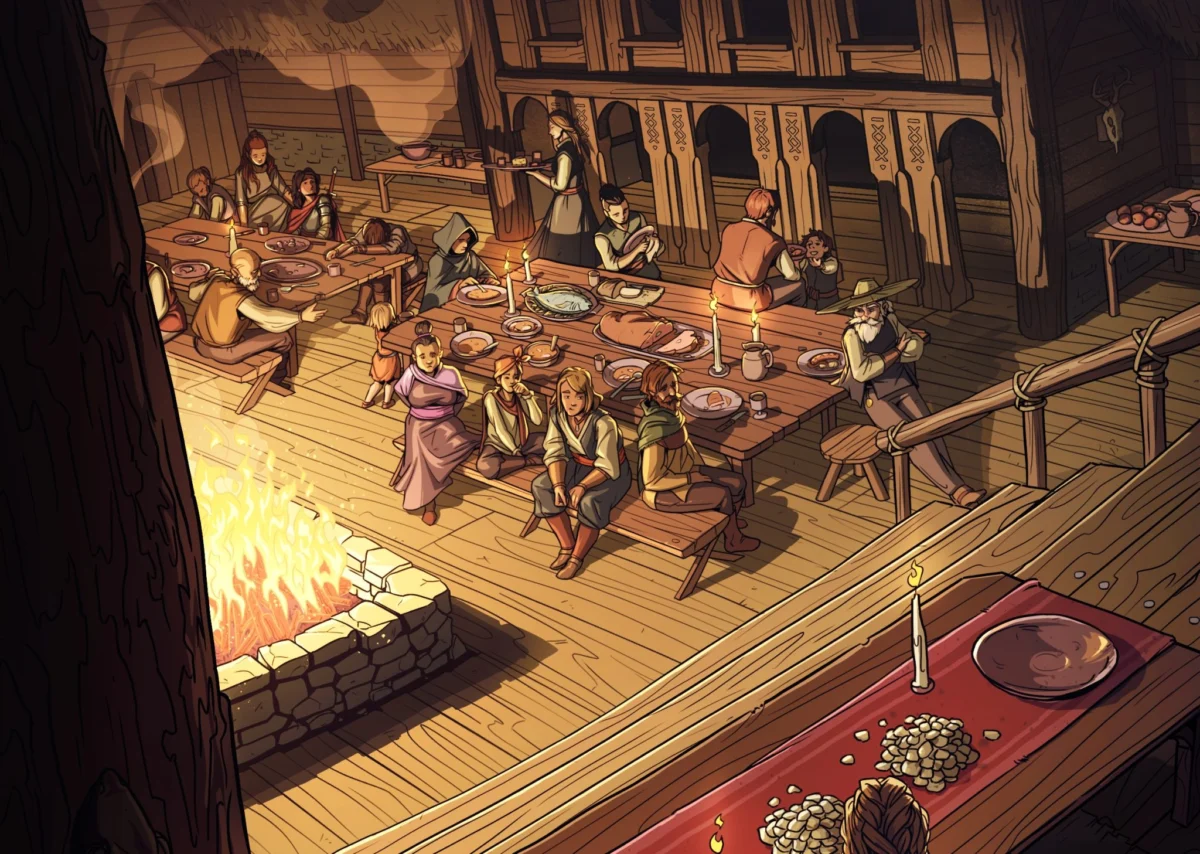
Tag, you’re everything! Go from being a fighter to a mage to a thief in Legend in the Mist.
The landscape of tabletop roleplaying games (RPGs) has been shaped for over half a century by the foundational principles laid down by titles like Dungeons & Dragons. In an era spanning more than fifty years, one might be forgiven for assuming that true innovation in the genre has become a rare commodity, with new releases often appearing as variations on familiar themes. However, a compelling new contender has emerged from Son of Oak Game Studio, promising to redefine character evolution and narrative immersion: Legend in the Mist. While it shares conceptual echoes with other narrative-focused systems such as City of Mist (from the same acclaimed studio) or Fate, Legend in the Mist carves out its own distinct identity through a revolutionary "tag" system that permeates every aspect of gameplay.
This ambitious RPG invites players into a world where their characters are not bound by rigid classes or predetermined paths but are instead fluid entities, constantly shaped and reshaped by their actions, successes, and failures. Imagine a journey where a battle-hardened fighter can seamlessly transition into a cunning mage or a nimble thief, shedding their former identity entirely, if the narrative demands it. This dynamic transformation is at the heart of Legend in the Mist, offering an unprecedented level of player agency and storytelling potential, albeit one that requires a commitment to its intricate, evolving mechanics.
The Genesis of a Narrative Revolution
The origins of tabletop RPGs trace back to 1974 with the release of Dungeons & Dragons, a game that codified many of the tropes and mechanics still prevalent today, from character classes and hit points to intricate combat rules. For decades, the genre largely followed this template, with variations emerging that tweaked dice systems, settings, and power progression. However, the turn of the millennium saw a growing appetite for games that prioritized narrative over simulation, character arc over combat prowess, and player-driven stories over pre-scripted adventures.
This shift paved the way for systems like Fate and, more recently, City of Mist, which introduced concepts like "aspects" or "mythos" to define characters narratively rather than solely through statistical attributes. Son of Oak Game Studio, the publisher behind Legend in the Mist, gained significant recognition for City of Mist, a game celebrated for its unique blend of film noir aesthetics and urban fantasy, powered by a tag-based system that allowed characters to manifest mythical powers.
Building on this foundation, Legend in the Mist represents a significant evolution of the tag system. While City of Mist used tags to define a character’s "Rifts" (mythical powers) and "Logos" (mundane life), Legend in the Mist extends this concept to encompass literally everything. Every ability, every item, every personal trait, and even environmental factors become a "tag." This ubiquitous application of tags is not merely a rebranding; it’s a fundamental reimagining of character definition and interaction within the game world. The development likely involved extensive playtesting and refinement to ensure the system’s flexibility didn’t lead to ambiguity, creating a robust framework that supports deep narrative exploration. This journey from D&D‘s fixed classes to Legend in the Mist‘s infinitely adaptable tags reflects a broader trend in RPG design towards greater narrative freedom and player empowerment.
Unpacking the Tag System: The Core of Legend in the Mist
At its heart, Legend in the Mist operates on a principle of radical fluidity, a design choice made possible by its comprehensive "tag" system. Unlike traditional RPGs where characters are defined by a fixed set of stats, skills, and classes, in Legend in the Mist, everything is a tag. This includes abilities (e.g., "Expert Swordsman," "Silver Tongue"), possessions (e.g., "Rusty Dagger," "Ancient Tome"), character traits (e.g., "Brave," "Cautious"), and even temporary conditions (e.g., "Wounded," "Inspired"). These tags are not static; they are in a constant state of flux, reflecting the ever-changing narrative and the impact of player choices and consequences.

Types of Tags and Their Significance:
To manage this vast lexicon of narrative elements, tags are color-coded, providing both visual clarity and immediate functional cues:
- Descriptors (Yellow): These are broad, descriptive tags that define a character’s innate qualities, background, or general proficiencies. For example, "Strong," "Agile," "Scholar," "Streetwise." They represent fundamental aspects of who the character is.
- Power and Weakness Tags (Orange): These tags represent specific advantages or disadvantages that a character possesses. A "Power" tag might be "Firespark Manipulation" for a mage, while a "Weakness" tag could be "Fear of Heights" for a rogue. They directly influence the difficulty and outcome of actions.
- Limits (Red): These are significant narrative restrictions or vulnerabilities. A "Limit" tag might be "Bound by an Oath" or "Cursed Bloodline." They often impose serious challenges or ethical dilemmas on the character.
- Status Tags (Green): These are temporary conditions or states that affect a character, often for a limited duration. Examples include "Injured Leg," "Exhausted," or "Under the Influence." They reflect immediate consequences of actions or environmental factors.
Skill Checks: A Narrative-Driven Resolution:
The game employs three distinct types of skill checks, all managed by the Game Master (GM) to maintain narrative flow and challenge:
- Simple Check: For straightforward actions where the outcome is largely predetermined or of minor consequence, the GM simply narrates the result without dice rolls. This keeps the pace brisk for less critical moments.
- Quick Skill Check: This is the most common check for actions with a degree of uncertainty. The player rolls 2d6. All relevant positive tags for the action (e.g., "Acrobatic" for jumping a chasm) add to the roll, while negative tags (e.g., "Clumsy," or a relevant "Weakness") subtract from it. A result of 6 or higher signifies a success. A result of 10 or higher achieves a "success without complication," meaning the action is completed perfectly, potentially yielding additional benefits or narrative advantage.
- Detailed Skill Check: Used for high-stakes or contested actions, this check mirrors the Quick check’s 2d6 mechanic. However, its crucial difference lies in its consequence: tags are applied to whichever side "loses" the check. This means that failure doesn’t just mean "nothing happens"; it results in narrative consequences directly inscribed onto the character or situation through new, often negative, tags. For instance, losing a Detailed combat check might result in the "Wounded" or "Disarmed" status tag being applied. The GM decides the type of check required before the dice are rolled, ensuring appropriate narrative weight.
Continuous Character Revision: The Dynamic Core:
What truly sets Legend in the Mist apart from systems like Fate or City of Mist is the continuous revision of character tags. Characters are not fixed entities; they are constantly evolving based on their experiences:
- Success and Growth: When a character succeeds, especially at a challenging task, they may gain new positive tags or strengthen existing ones, reflecting their learned experience and newfound proficiency.
- Failure and Consequence: Conversely, significant failures can lead to the loss of tags or the acquisition of negative ones, mirroring real-life setbacks where bad experiences can erode confidence or skills.
- Narrative Sacrifice: Players can even choose to temporarily remove a powerful tag from their character sheet to gain a substantial, one-time bonus, enabling them to overcome a dire predicament. This offers a potent narrative choice, forcing players to weigh immediate survival against long-term character identity and capability, recognizing that they will be "less" for it afterwards.
This dynamic system allows for radical character transformations. A warrior who loses their blade in a climactic battle and is forced to rely on cunning might shed "Master Swordsman" for "Streetwise Opportunist," evolving into a thief. A scholar who accidentally unleashes magical powers could abandon their books for a life of arcane study, becoming a mage. This fluidity reflects the unpredictability of life and adventure, where talents unused might atrophy, and traumatic experiences can permanently alter one’s path.

Abstracting Combat and Interaction:
In Legend in the Mist, the emphasis on narrative extends to how combat and challenges are resolved. There are no explicit rules for weapon damage numbers or armor soaking a specific amount of damage. Instead, the effects of weapons, armor, and spells are described narratively and resolved through tags. Spells are not chosen from a rigid list; they are created by players on the fly, limited only by their character’s relevant tags and the GM’s narrative judgment.
This abstraction means that combat isn’t about whittling down hit points. Instead, characters (and monsters/threats) have "tracking cards" or "themes" that represent their overall resilience and narrative integrity. A character is "down" when one of these tracking cards is worn down, signifying a significant narrative defeat or incapacitation, rather than merely reaching zero health. This approach encourages players and GMs to think creatively about consequences beyond simple numerical attrition, fostering a more cinematic and story-driven experience.
Expert Commentary and Critical Reception
The initial reception of Legend in the Mist, as articulated by early reviewers, highlights both its groundbreaking potential and its inherent challenges. The professional journalistic tone of the review praises the game for its commitment to a fully immersive, story-driven experience, positioning it as a significant departure from traditional RPG mechanics.
Strengths Highlighted:
- Narrative Priority: Reviewers consistently laud the game’s dedication to prioritizing story over rigid rules. The tag system and abstract combat mechanics are seen as powerful tools for fostering rich, evolving narratives where player choices have profound, lasting impact.
- Dynamic Character Arcs: The continuous revision of tags is a major selling point. The ability for characters to undergo radical transformations, shedding old identities and acquiring new ones, is described as "fascinating, well thought out and extensively tested." This allows for character development that feels organic and responsive to the campaign’s events.
- Exceptional GM Tools: The second Core Rulebook is commended for its comprehensive guidance for Game Masters. The inclusion of approximately 100 pages of examples, NPCs, encounters, creatures (all with relevant tags), and a "brilliant" section on campaign building using the "mountain" analogy (peak as end-boss, descending to sub-bosses) is particularly praised. This structure provides GMs with an intuitive and powerful framework for designing compelling, escalating campaigns.
- Player Agency: The design choice for the GM not to roll dice, placing all agency in the hands of the players, is noted as a strong point for experienced GMs who can deftly weigh player actions and interpret outcomes, further empowering the narrative.
- Aesthetic Appeal: The physical books themselves are described as "beautiful, bright and evocative," with a layout that makes following complex concepts easy. The inclusion of a 50-page graphic novel in the first Core Rulebook to illustrate gameplay and GM decision-making styles is particularly innovative and effective.
- Potential for Stunning Results: The reviewer concludes that for those willing to invest the necessary time and effort, the results of playing Legend in the Mist can be "stunning," delivering epic deeds and actions within long-form campaigns. The "Play It? YES" verdict underscores its value for its target audience.
Challenges and Considerations:
- Steep Learning Curve: A recurring point of caution is that Legend in the Mist is "not immediately intuitive for new players and GMs." The sheer volume of rules—around 600 pages when including the Action Grimoire and creature packs (the review examined two Core Rulebooks, the Action Grimoire, and two creature packs)—can be daunting. This system "presumes that those playing have played before," implying a higher barrier to entry than simpler, more streamlined RPGs.
- Extensive Tracking and Recording: The dynamic nature of tags, with constant additions, removals, and revisions, requires "a lot more tracking and recording… in every session" compared to most systems. This administrative overhead might deter players and GMs who prefer less bookkeeping.
- Open Interpretation vs. Structure: While the "endless list of tags" allows for immense creativity ("whatever you can think of, you can make a tag of it"), this very openness can be a "negative for those still trying to find their way in the world of RPGs." The balance between immersive freedom and initial guidance is a delicate one.
- Not for One-Shots: The game’s core tenet of constant change and evolution means it "doesn’t lend itself as well to one-shot games." Its true enjoyment and potential are realized over extended campaigns where character arcs can fully develop.
- "Toolkit" Mentality: The review frames the books as a "toolkit." While experienced players and GMs will know "which bits you need to use and which to disregard," beginners might struggle with this discernment, needing to "know your way around a roleplaying game in the first place" to effectively utilize the system.
Despite these caveats, the consensus leans heavily towards Legend in the Mist being a rewarding experience for its intended audience: seasoned RPG enthusiasts seeking a fresh, deeply immersive, and narratively rich challenge. Its origin from the same studio as City of Mist suggests a dedicated audience already accustomed to innovative, tag-based systems.

Implications for the Future of Tabletop RPGs
Legend in the Mist stands as a bold statement in the evolving world of tabletop roleplaying games, carrying significant implications for both game design and player experience.
Reshaping RPG Design Paradigms:
By completely dismantling traditional class structures and numerical attribute systems in favor of ubiquitous, fluid "tags," Legend in the Mist challenges core tenets that have defined RPGs for decades. It pushes the boundaries of narrative-first design, demonstrating that deep character customization and progression don’t require complex statistical frameworks. This could inspire other designers to explore more abstract, narratively driven mechanics, moving further away from wargame origins and towards systems optimized for storytelling. The "mountain" campaign structure, with its visual and scalable design, also offers a powerful, intuitive model for campaign building that prioritizes story flow and dramatic tension over linear progression.
Deepening Player Immersion and Agency:
The game demands a high level of player investment, but it promises an unparalleled sense of immersion and agency in return. Characters are not merely avatars; they are dynamic entities whose identities are continually forged and reforged by their choices and the unfolding narrative. The ability to radically change one’s character, even shedding past skills and traits, offers a profound sense of consequence and evolution that few other systems can match. This fosters a deeper emotional connection to the character and the story, as players truly feel responsible for shaping their hero’s (or anti-hero’s) destiny. The GM’s role as a non-dice-rolling arbiter further emphasizes player agency, ensuring that player actions and decisions are the primary drivers of the narrative.
The Learning Curve and Accessibility Debate:
While celebrated for its innovation, Legend in the Mist‘s complexity and sheer volume of rules present a significant barrier to entry for newcomers. This raises important questions about accessibility within the hobby. Is it acceptable for a game to demand such a high degree of prior experience and dedication, or does it risk alienating potential new players? The "toolkit" approach, while empowering for veterans, can be overwhelming for those without a foundational understanding of RPGs. This highlights a growing divide in the RPG market between streamlined, beginner-friendly systems and complex, deeply customizable experiences for niche audiences. Legend in the Mist firmly plants itself in the latter category, cultivating a dedicated following rather than aiming for mass appeal.
Fostering Community and Longevity:
Given its lineage from City of Mist, Legend in the Mist is likely to cultivate a passionate and dedicated community. Its emphasis on long-form campaigns ensures that players and GMs will spend significant time within its world, fostering shared narratives and encouraging community-driven content, house rules, and expansions. The game’s open-ended tag system practically invites player creativity, allowing for endless customization and adaptation to various genres and settings, ensuring its longevity and replayability for those who embrace its core philosophy.
A Step Towards the Future of Narrative RPGs:
Ultimately, Legend in the Mist represents a significant evolutionary step in the realm of narrative-first tabletop RPGs. It embodies the idea that a game can be both mechanically robust and incredibly flexible, offering a rich tapestry for storytelling that evolves organically with its players. For seasoned adventurers and GMs willing to invest the time and effort, it offers a deeply rewarding experience that challenges conventions and delivers truly epic, player-driven sagas. It stands as a testament to the enduring innovation within the tabletop gaming hobby, proving that even after fifty years, there are still new frontiers to explore in the art of shared storytelling.
Review by John Dodd

PLAY IT?
YES
A fully immersive game that prioritizes story over everything – you’ll have to work to get the best out of it, but isn’t that the point of adventuring?
Legend in the Mist Game Details
Designers: Amit Moshe, Eran Aviram, Itamar Karbian, Kelly Blac
Publisher: Son of Oak Game Studio
Pages: 256 (Core Rulebook, additional content reviewed separately)
Age: 12+
RRP: £80




Leave a Comment