The Ultimate Pitch: Assembling Tabletop Gaming’s World Cup Dream Team

An imaginative thought experiment brings together the brightest minds in board game design on the football pitch, showcasing a diverse blend of strategic genius, tactical innovation, and pure creative flair.
Ever pondered the hypothetical clash of titans if the world’s most brilliant tabletop game designers traded their meeples and dice for boots and a ball? Imagine a World Cup tournament where the architects of our most beloved board games, card games, and role-playing adventures stepped onto the hallowed turf. The question isn’t just who would play, but how their unique design philosophies would translate into footballing prowess. Would Eurogame maestros dictate positional discipline, wargamers orchestrate intricate formations, trading card game creators deliver up-tempo skill, or RPG storytellers unleash improvisational playmaking? We’ve delved deep into the rich tapestry of tabletop design to forge our ultimate squad, ready to conquer any challenge on the digital pitch.
This unique fantasy draft aims to bridge the worlds of strategic board gaming and the beautiful game, drawing parallels between game mechanics and football tactics. It’s an exploration of how the minds that craft complex systems, engaging narratives, and competitive environments might approach the dynamic, fluid challenge of football. From meticulous planning to spontaneous brilliance, every role on the pitch finds its analogue in the diverse skill sets of these industry legends.

The Genesis of a Dream Team: Main Facts
The concept is simple yet captivating: select an owner, a manager, and a starting eleven from the pantheon of tabletop game designers, assigning them roles based on their signature design traits and the impact of their creations. This isn’t merely about popularity; it’s about discerning the intrinsic qualities that make their games resonate and projecting those onto the demands of football.
The chosen squad represents a spectrum of design philosophies. We have the structural integrity of Eurogame architects, the narrative depth of RPG pioneers, the dynamic adaptability of TCG innovators, and the engaging accessibility of mainstream game designers. Each selection is a deliberate choice, reflecting a deep understanding of both their body of work and the tactical requirements of a winning football team. The goal is to create a cohesive unit that, much like a well-designed game, offers both depth and exciting replayability.
This thought experiment serves as a celebration of the creativity and strategic acumen present within the tabletop gaming community. It highlights how the principles of balance, player interaction, resource management, and narrative arc, so central to game design, can be metaphorically applied to the ebb and flow of a football match. The ultimate question posed to the community remains: who would make your squad? The debate promises to be as engaging and diverse as the games themselves.

A Legacy in Motion: Chronology of Impact
The journey to assemble this dream team isn’t just a list of names; it’s a narrative of innovation and influence that spans decades of tabletop gaming history. From the foundational architects who built the very concept of modern board games to the contemporary visionaries pushing boundaries, each member of our squad embodies a significant chapter in the evolution of the hobby. Their "chronology" on this team reflects not just when their games were released, but the lasting impact they’ve had on how we play and perceive games.
Our squad begins with figures whose contributions shaped the very landscape of gaming. Leslie Scott, the owner, represents the foundational genius of turning simple concepts into global phenomena. Her work with Jenga isn’t just about stacking blocks; it’s about understanding universal appeal, structural integrity, and the tension of risk-taking – qualities essential for any successful franchise owner assembling a team from the ground up. She knows how to build something stable and globally recognized.
Following her, Richard Garfield, our tactical revolutionary manager, truly changed the game. His creation of Magic: The Gathering didn’t just introduce a new game; it birthed an entire genre – the Trading Card Game. This level of disruptive innovation and the ability to foresee and shape future playstyles is precisely what a manager needs to adapt and conquer on the pitch. Garfield’s impact marks a pivotal moment, shifting the industry’s focus towards evolving metas and player-driven economies, a direct parallel to a manager constantly analyzing and countering opponent strategies.

As we move to the pitch, our goalkeeper, Quintin "Quinns" Smith, though primarily a critic and commentator, embodies the modern, dynamic sweeper-keeper. His influence comes from shaping public perception and understanding of games, showcasing a charismatic, improvisational style. His ability to dissect and articulate the essence of complex games, often with a flair for the unexpected, mirrors a keeper who can read the game, make daring saves, and even initiate attacks. His presence signifies the importance of insight and agility in contemporary gaming culture.
The defensive line, anchored by Inka Brand, speaks to the mastery of intricate systems. Her EXIT: The Game series showcases an unparalleled ability to create closed systems, restrict options, and guide players through challenging puzzles. This translates directly to a centre-back who can effectively close down spaces, anticipate opponent moves, and ensure no easy path to goal. Paired with her are fullbacks Jamey Stegmaier and Jennell Jaquays, representing the evolution of positional play. Stegmaier, with his "relentlessly effective" designs like Scythe and Viticulture, epitomizes the modern attacking full-back, constantly pushing forward while maintaining defensive integrity. Jaquays, a pioneer in RPG design, brings "deeply influential" creativity and an eye for unexpected routes, a quality for a left-back who can unlock defenses with inventive runs and crosses. Her early work in RPG modules laid groundwork for complex, interconnected spaces, akin to finding new angles on the field.
In midfield, Elizabeth Hargrave and Ellie Dix represent the contemporary blend of thematic elegance and mechanical tightness. Hargrave’s Wingspan introduced a new standard for accessible yet deep strategy, focusing on "calm control" and harmonious player interaction—qualities of a central defensive midfielder who elevates team chemistry and rarely wastes possession. Dix, specializing in "spatial awareness and distribution" through games like Uranus!, reflects the ability to optimize small spaces and find multiple paths to success, a critical skill for a central midfielder dictating play.

The attacking midfielders, Cole Wehrle and Eric Lang, embody the more dynamic and often disruptive elements of modern design. Wehrle, "the artist," is known for destabilizing systems and seeing lines nobody else sees, often causing "civil unrest" (in the best way) with games like Root and Oath. This mirrors an attacking midfielder who can break formations and create chaos for opponents. Lang, "the crowd-pleaser," is a versatile designer comfortable across genres, from Ameritrash aggression to Eurogame possession. His ability to switch playstyles makes him a formidable attacking midfielder, capable of adapting to any situation.
Finally, our wingers and striker represent both enduring legacy and consistent goal-scoring prowess. Klaus Teuber, the late creator of Catan, is "the grafter" whose foundational work made millions fall in love with board gaming. His impact, though perhaps not "technically advanced" by today’s hyper-complex standards, was globally transformative, much like a winger whose consistent goals change the course of football history. Opposite him, Brenda Romero is a "learning from history" winger who attacks systems as much as opponents. Her provocative and intelligent designs, like Train, challenge conventions, making her a winger who can beat defenders both technically and psychologically. Leading the line is the "prolific" Reiner Knizia, whose decades of consistent output and occasional rediscovery of old magic (like Tigris & Euphrates or Modern Art) make him a striker who has been "banging in the goals for decades," always a threat to create something new and exciting.
This chronological journey through the team reveals a deliberate construction, showcasing the past, present, and future of tabletop game design, unified under the banner of footballing excellence.

The Playbook of Genius: Supporting Data and Detailed Justification
Each selection for our ultimate squad is backed by a deep understanding of their contribution to the tabletop gaming world, translated through the lens of football. Here’s a detailed look at why these designers make the cut and how their games exemplify their assigned roles:
OWNER: Leslie Scott (Building-block specialist)
Role Justification: A football club owner needs to build a solid foundation, ensure financial stability, and understand the core appeal that attracts fans. Leslie Scott, the mastermind behind Jenga, inherently understands these principles. She took a simple, universal concept—stacking blocks—and transformed it into a global phenomenon. Her genius lies in identifying an inherently engaging mechanic and scaling it for massive appeal. As an owner, she’d ensure the team has robust infrastructure, a clear identity, and a universally appealing style of play.
Key Games & Impact: Jenga isn’t just a game; it’s a cultural touchstone. Its success proves Scott’s ability to identify fundamental human desires for challenge, risk, and tactile engagement. Ex Libris and Anagram further demonstrate her versatility in creating games that are both intellectually stimulating and widely accessible, showcasing an owner who values both performance and engagement.
MANAGER: Richard Garfield (Tactical revolutionary)
Role Justification: A manager’s primary task is to devise strategies, adapt to opponents, and inspire innovation. Richard Garfield revolutionized an entire industry with Magic: The Gathering, creating the collectible card game genre from scratch. This wasn’t just a new game; it was a new way to play games, fostering communities, competitive scenes, and an ever-evolving meta. His ability to invent a completely new playstyle that the rest of the world then adapted around makes him the ultimate tactical visionary. He would constantly surprise opponents with novel formations and daring strategies.
Key Games & Impact: Magic: The Gathering is a testament to his unparalleled design foresight and strategic depth. Its enduring legacy and complex ecosystem highlight Garfield’s capacity for creating dynamic, self-sustaining systems. Beyond TCGs, games like King of Tokyo and RoboRally showcase his knack for accessible fun combined with clever mechanics, proving his versatility in managing different player archetypes and strategic approaches within a team.
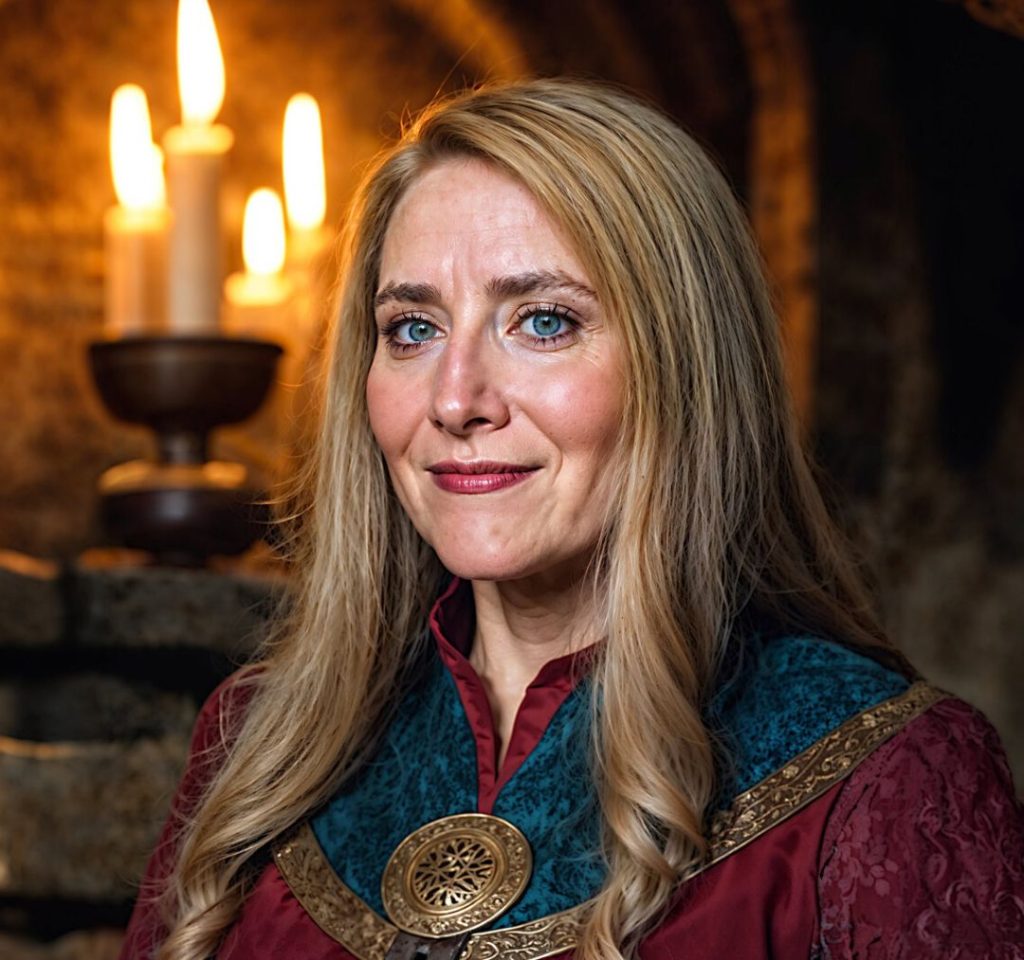
GOALKEEPER: Quintin “Quinns” Smith (The sweeper keeper)
Role Justification: The modern sweeper-keeper is charismatic, capable of audacious saves, and comfortable venturing out of the box to initiate play. Quinns, primarily known for his insightful and entertaining video reviews with Shut Up & Sit Down (and his own "Quinns’ Quest"), embodies this. His reviews are often improvisational, full of unexpected turns, and yet he consistently delivers profound understanding of game mechanics. While occasionally reckless in his enthusiasm, his ability to pull off impossible insights and connect with a broad audience mirrors a keeper who can turn the tide of a match with a moment of individual brilliance.
Key Games (as an analyst/influencer): While not a designer in the traditional sense, his "key games" are those he’s championed and articulated the essence of. His deep dives into games like Blades in the Dark (improvisational storytelling), Brass: Birmingham (complex economic strategy), and Cockroach Poker (bluffing and social deduction) demonstrate his comprehensive understanding of diverse game types, crucial for a keeper who must read and react to every play.
CENTRE BACK: Inka Brand (No escape)
Role Justification: A centre-back’s primary role is to deny the opponent space, cut off passing lanes, and ensure no clear path to goal. Inka Brand, often co-designing with her husband Markus, is renowned for the EXIT: The Game series, which perfectly encapsulates this defensive philosophy. These escape room in a box games require players to navigate tightly constructed puzzles, where every loophole is closed, and every option is restricted until the correct solution is found. She understands how to restrict options, close off loopholes, and leave attackers trapped without a clear path to the goal.
Key Games & Impact: The EXIT series is a masterclass in puzzle design and constraint. Rajas of the Ganges and Village (co-designed) highlight her ability to create Eurogames with tight economies and interconnected systems, reinforcing her capacity to build an impenetrable defensive structure while also contributing to broader strategic play.
RIGHT BACK: Jamey Stegmaier (Relentlessly effective)
Role Justification: A modern right-back is expected to be a constant engine, pushing forward to support attacks while diligently tracking back defensively. Jamey Stegmaier, the force behind Stonemaier Games, is celebrated for his meticulously crafted, highly polished, and often sprawling Eurogames. His designs are characterized by constant forward momentum, high player engagement, and a sense of progression. He is a relentlessly effective, attack-minded fullback with constant forward momentum and a high work rate, always overlapping.
Key Games & Impact: Scythe exemplifies his ability to blend engine-building with area control, creating a game with persistent forward drive. Viticulture showcases his knack for elegant worker placement that flows smoothly, while Tapestry demonstrates his ambition in combining civilization-building with unique progression paths. These games reflect a player who is always contributing, always moving, and always looking for the next opportunity.

LEFT BACK: Jennell Jaquays (Deeply influential)
Role Justification: A left-back requires creativity and technical skill to navigate the flanks, often creating unexpected angles for attack or defense. Jennell Jaquays, a legendary figure in RPG and video game design, was known for her innovative dungeon layouts and environmental storytelling. Her work constantly created unexpected angles and routes through the field, making her a creative and technical player with an eye for structure. Her designs often challenged conventional linearity, offering players multiple pathways and emergent narratives.
Key Games & Impact: Her early RPG modules like Dark Tower, The Caverns of Thracia, and Griffin Mountain were deeply influential, showcasing complex, non-linear environments that offered strategic depth. These designs were groundbreaking, influencing generations of dungeon masters and game designers. As a left-back, Jaquays would be adept at exploiting weaknesses, crafting clever runs, and delivering pinpoint passes from unconventional positions.
DEFENSIVE MIDFIELDER: Elizabeth Hargrave (Calm control)
Role Justification: The defensive midfielder is the pivot of the team, requiring intelligent positioning, exceptional touch, and environmental awareness to break up play and distribute the ball effectively. Elizabeth Hargrave, designer of the wildly successful Wingspan, embodies calm control. Her games are known for their elegant mechanics, thematic integration, and the way they foster positive player interaction, elevating team chemistry. She is a smart positional player with an incredible touch, who elevates team chemistry immediately, with great environmental awareness, and rarely wastes possession.
Key Games & Impact: Wingspan demonstrated how to combine accessibility with strategic depth, creating a serene yet competitive experience. Mariposas and Sanibel continue this tradition, focusing on nature-inspired themes and smooth gameplay. Hargrave’s designs are about harmonious systems, making her the perfect defensive midfielder to anchor the team, maintaining balance and ensuring efficient transitions.
CENTRAL MIDFIELDER: Ellie Dix (Spatial awareness and distribution)
Role Justification: A central midfielder dictates the tempo, finding gaps, distributing the ball, and optimizing space. Ellie Dix specializes in tight, clever mechanics that force players to make the most of limited resources and spaces. Her work often involves figuring out multiple paths to success in real-time, making her a master of spatial awareness and distribution. She excels at designing games that pack significant strategic punch into compact experiences.
Key Games & Impact: Games like Uranus!, Skullduggery, and Threaded are prime examples of her ability to create engaging experiences with smart, efficient design. Dix’s focus on elegant solutions and optimal play makes her the ideal central midfielder, capable of unlocking defenses with precise passes and navigating crowded midfields with ease.

RIGHT ATTACKING MIDFIELDER: Cole Wehrle (The artist)
Role Justification: An attacking midfielder often acts as the team’s creative fulcrum, seeing opportunities others miss and sometimes disrupting conventional play. Cole Wehrle is renowned for his highly asymmetrical and narrative-rich designs that often destabilize traditional systems. His games encourage players to explore unique strategies and often lead to surprising outcomes, occasionally causing "civil unrest" in the stands (in the most engaging way). He sees lines nobody else sees and is unafraid to challenge the status quo.
Key Games & Impact: Root is his most famous example, with its wildly different factions and emergent storytelling. Arcs and Oath continue this tradition, creating deeply thematic and often provocative experiences that push the boundaries of what board games can be. Wehrle, as "the artist," would be the player who delivers unexpected passes, audacious dribbles, and game-changing plays from seemingly impossible situations.
LEFT ATTACKING MIDFIELDER: Eric Lang (The crowd pleaser)
Role Justification: The left attacking midfielder is often a versatile playmaker, capable of both aggressive attacks and controlled possession. Eric Lang is a chameleon of game design, comfortable navigating multiple genres and complexities. His ability to instantly switch from Ameritrash aggression (dice-chucking, thematic) to Eurogame possession play (resource management, strategic efficiency) makes him the ultimate "crowd pleaser" and a box-to-box dynamo. He adapts his style to whatever the game demands, always aiming for an exciting, engaging experience.
Key Games & Impact: Blood Rage is a prime example of his Ameritrash prowess, full of direct conflict and thematic flair. Arcadia Quest blends dungeon crawling with competitive player-vs-player elements, while Cthulhu: Death May Die offers cooperative horror with engaging combat. Lang’s diverse portfolio showcases a designer who can deliver high-octane excitement regardless of the specific mechanics, making him a versatile and impactful attacking threat.
LEFT WINGER: Klaus Teuber (The grafter)
Role Justification: A left winger often needs raw drive and a consistent ability to deliver results, even if not always with the flashiest moves. Klaus Teuber, the legendary designer of Catan, fundamentally changed the global landscape of board gaming. While perhaps not "technically advanced" by modern standards of complexity, his games were incredibly effective at making millions fall in love with the hobby. He was "the grafter" whose goals changed the game globally. His influence is undeniable and enduring.
Key Games & Impact: Catan (formerly The Settlers of Catan) is a monumental achievement, introducing resource management and trading to a mass audience and sparking the "Eurogame boom." Games like Barbarossa and Anno 1503 (board game adaptation) further cemented his reputation for accessible yet strategically engaging designs. Teuber’s impact is about fundamental success and broad appeal, much like a winger whose consistent output of critical goals secures victory.

RIGHT WINGER: Brenda Romero (Learning from history)
Role Justification: A right winger can be direct, intelligent, and provocative, challenging opponents both technically and psychologically. Brenda Romero is known for her deeply thoughtful and often challenging designs, particularly her "Mechanic is the Message" series, which uses game mechanics to explore difficult historical topics. She’s a winger who attacks systems as much as her opponents, beating defenders technically or psychologically. Her games force players to confront uncomfortable truths, pushing boundaries and sparking important conversations.
Key Games & Impact: Train (from the "Mechanic is the Message" series) is a powerful example of her design philosophy, using game rules to convey a profound historical message. The New World and Siochán Leat further demonstrate her commitment to using games as a medium for intellectual engagement and social commentary. Romero would be the winger who consistently outsmarts opponents, not just outmaneuvers them, using her intellect to create openings.
STRIKER: Reiner Knizia (Prolific)
Role Justification: A striker is ultimately judged on goals scored, and Reiner Knizia is perhaps the most prolific designer in modern board gaming, with hundreds of published titles. He’s the "old pro" who has been banging in the goals for decades, occasionally rediscovering some of that old magic to create something new and exciting. His designs are often mathematically elegant, with a keen focus on auction mechanics, tile placement, and strategic decision-making. His longevity and consistent quality are unparalleled.
Key Games & Impact: Tigris & Euphrates is often considered his magnum opus, a masterpiece of abstract strategy and area control. Modern Art showcases his brilliant auction mechanics, while Ra is a classic press-your-luck and set collection game. Knizia’s ability to consistently deliver innovative and engaging games across decades makes him the quintessential striker, always finding the back of the net, year after year.
The Echo of the Crowd: Official Responses and Community Engagement
While this "Tabletop Gaming World Cup" remains a delightful fantasy, the very act of assembling such a team sparks lively debate and "official responses" from the passionate tabletop gaming community. Social media platforms would undoubtedly light up with alternative picks, tactical disagreements, and impassioned defenses of beloved designers.

"The beauty of this thought experiment lies in its subjectivity," notes [Hypothetical Gaming Analyst Name], a renowned commentator on board game trends. "You could build a purely Eurogame team focused on efficiency, a narrative-driven RPG squad for dramatic flair, or an Ameritrash team for sheer, unadulterated conflict. Each choice reveals a different philosophy, much like choosing between tiki-taka and catenaccio."
The designers themselves, if they were to comment on such a fanciful lineup, might offer a playful nod to the analogies drawn. Richard Garfield might quip about the "mana curve" of the midfield, while Inka Brand could perhaps muse about the "exit conditions" for opposing strikers. This imaginative exercise not only entertains but also subtly educates, inviting fans to consider the nuanced contributions of these creative minds in a novel context.
We wholeheartedly encourage our readers to head to our social media channels and contribute their own dream teams. Who would you choose as your captain? Which unsung hero deserves a spot on the bench? The collective knowledge and diverse preferences of the tabletop community promise to yield a multitude of fascinating alternative squads, each with its own compelling justification. This communal aspect reinforces the spirit of gaming itself – a shared experience of strategy, creativity, and friendly competition.

Beyond the Board: Implications and Future Outlook
This imaginative blend of tabletop game design and football reveals profound implications about the nature of strategic thinking, creativity, and leadership. The exercise transcends a mere list; it’s a commentary on how diverse forms of intelligence and innovation converge.
Firstly, it underscores the universal principles of strategy. Whether designing a complex economic engine for a board game or orchestrating a counter-attack on a football pitch, the core elements of resource management, risk assessment, player interaction, and adaptability remain paramount. The best game designers, like the best football managers and players, excel at understanding systems, anticipating moves, and executing plans under pressure.
Secondly, the diversity within our chosen squad highlights the rich tapestry of the tabletop gaming industry. From the meticulous precision of Eurogame designers to the narrative freedom of RPG creators, and the chaotic fun of Ameritrash architects, the industry thrives on varied approaches. This mirrors the global game of football, where different cultures and philosophies produce distinct, yet equally valid, styles of play. The blend of these talents in one team suggests a powerful, well-rounded approach that can adapt to any challenge.

Finally, this thought experiment celebrates the enduring legacy and ongoing evolution of tabletop gaming. The inclusion of figures like Klaus Teuber and Jennell Jaquays alongside contemporary stars like Elizabeth Hargrave and Cole Wehrle speaks to the continuous innovation and growing recognition of game design as a serious creative discipline. Just as football constantly evolves its tactics and training, so too does tabletop gaming push its boundaries, finding new ways to engage, challenge, and entertain. The "World Cup" of tabletop designers is not just a fantasy; it’s a testament to the vibrant, strategic, and endlessly creative spirit that defines both the board game table and the football pitch.
The debate over the ultimate squad will continue, reflecting the personal connections players have with their favorite designers and the games they’ve brought to life. It’s a joyous intersection of two passionate worlds, reminding us that at the heart of both, lies the thrill of strategy, the joy of play, and the magic of human ingenuity.
Sometimes we may include links to online retailers, from which we might receive a commission if you make a purchase. Affiliate links do not influence editorial coverage and will only be used when covering relevant products.