
A Glimpse into the Future: Speculative Fiction’s Early 2026 Literary Wave Promises Unforgettable Journeys
MAIN FACTS
The speculative fiction landscape is set to experience a vibrant surge in early 2026, as a diverse array of highly anticipated novels and collections from acclaimed and emerging authors prepare to hit bookshelves. From the humorous depths of post-apocalyptic alien rule to the lyrical realms of award-winning folklore, and from intricate multi-world narratives to hardboiled fantasy steeped in revised history, the upcoming releases in February and March promise to challenge perceptions, ignite imaginations, and offer profound insights into the human (and non-human) condition. This impressive roster features works by genre stalwarts like Adrian Tchaikovsky and Richard K. Morgan, alongside the inventive storytelling of Amal El-Mohtar, Jeffrey Ford, and the collaborative genius of Darkly Lem, ensuring a rich tapestry of science fiction, fantasy, and genre-bending narratives that will captivate a broad spectrum of readers. The collective impact of these releases underscores the enduring vitality and expansive creativity within speculative fiction, cementing its role as a powerful lens through which to explore complex societal, philosophical, and emotional truths.
CHRONOLOGY: The Spring 2026 Publishing Calendar Unfurls

The publishing calendar for early 2026 is strategically punctuated with a series of significant speculative fiction releases, carefully timed to capture the attention of readers emerging from the holiday season and looking for fresh narratives. The bulk of these highly anticipated titles are slated for release in February and March, indicating a concerted effort by publishers to establish a strong presence in the literary market early in the year, potentially setting the stage for future award considerations and sustained reader engagement.
February 2026 kicks off the literary season with a blend of witty science fiction, profound collections, and intricate philosophical mysteries. Edward Ashton’s After the Fall leads with its comedic take on alien occupation, offering a unique blend of humor and poignant commentary. Jeffrey Ford’s Pandemonium Waltz brings its signature weird fiction to the forefront, while Francis Spufford’s Nonesuch transports readers to a fantastical London Blitz. A.D. Sui introduces a captivating new voice with The Iron Garden Sutra, blending SF mystery with deep philosophical inquiry. Makana Yamamoto also returns to a beloved world with The Obake Code, promising a high-stakes sci-fi heist.
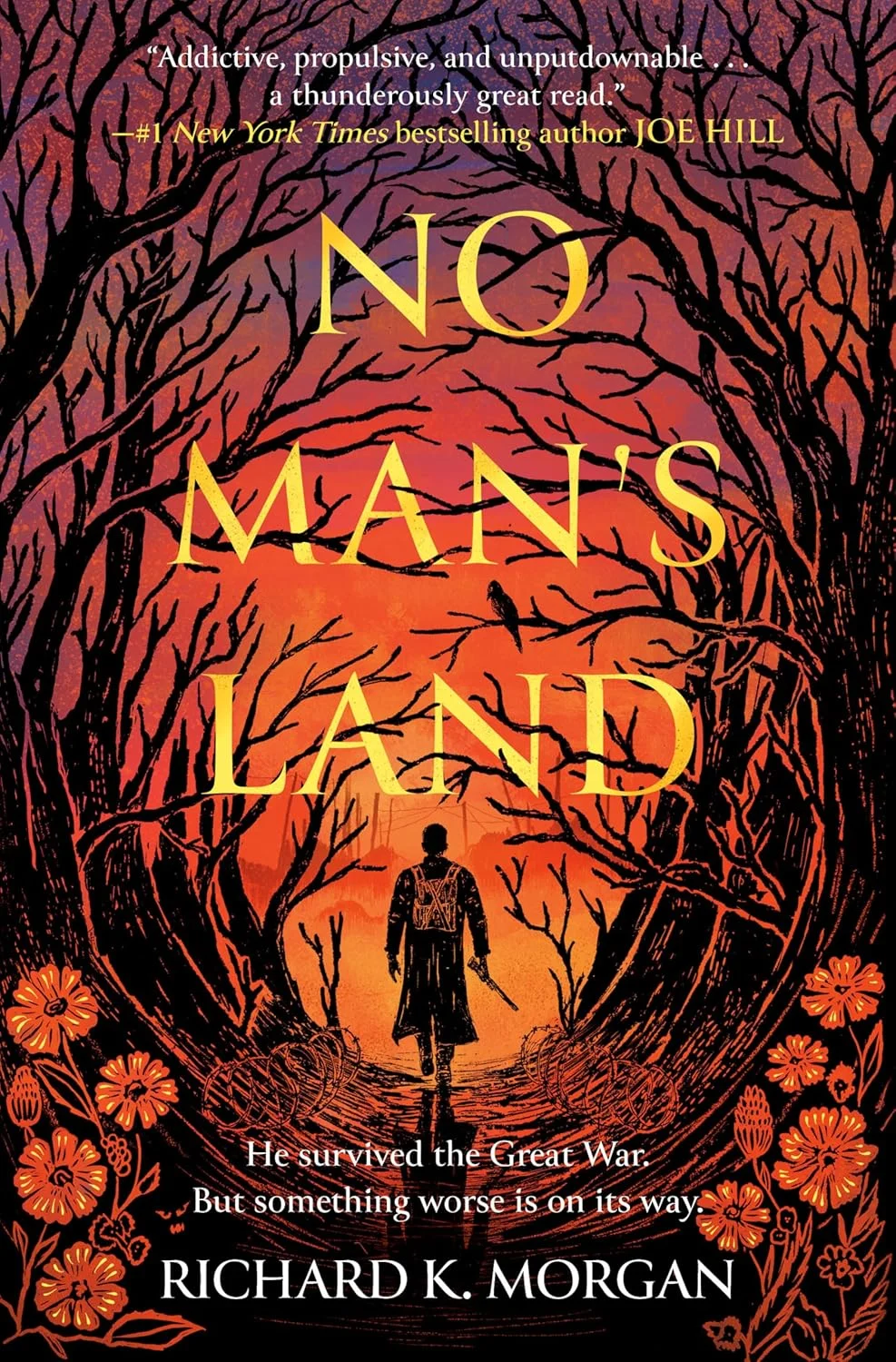
As the calendar turns to March 2026, the momentum continues with a lineup featuring critically acclaimed authors and genre-defining series continuations. Amal El-Mohtar’s Seasons of Glass & Iron stands out as a collection showcasing her award-winning lyrical prose and diverse inspirations. Darkly Lem’s Transmentation | Transgression delves deeper into its innovative many-worlds saga, pushing the boundaries of multiversal storytelling. Richard K. Morgan ventures into hardboiled fantasy with No Man’s Land, offering a dark and gritty vision of post-WWI Britain. Adrian Tchaikovsky further expands his celebrated Children of Time universe with Children of Strife, promising more evolutionary marvels and cosmic mysteries. Finally, Sheree Renée Thomas introduces her The Root and Sky series with Mojorhythm, a collection rich in Hoodoo, myth, and folklore. This concentrated release schedule ensures that the early months of 2026 will be a fertile ground for speculative fiction enthusiasts, offering a compelling array of narratives that explore the vast reaches of imagination.

SUPPORTING DATA: Deep Dives into the Forthcoming Releases
The breadth and depth of these upcoming titles reflect the dynamic evolution of speculative fiction, with each book offering a distinct narrative voice and thematic exploration.
Edward Ashton, After the Fall (St. Martin’s, February 2026)
Ashton’s After the Fall promises a refreshingly humorous take on the alien invasion trope, set over a century after Earth’s civilization crumbled and a hundred years into an alien occupation. The novel centers on John, whose unusual bond with Martok Barden, one of the "good" alien grays, forms the core of a narrative that quickly spirals into comedic chaos when John’s bond becomes collateral for a disastrous business deal. Critics have already lauded the book for its unique blend of wit and depth. Gabino Iglesias describes it as "Entertaining, smart, fast-paced, and funny," emphasizing that it’s "science fiction for people who like their alien stories with a side of chuckles but also profoundly human." This assessment suggests Ashton masterfully navigates the balance between lighthearted absurdity and insightful commentary on human resilience and interspecies relationships in a post-cataclysmic world. The premise alone hints at a narrative rich with satire, exploring themes of subservience, cultural clash, and the unexpected bonds that can form in extraordinary circumstances, all wrapped in an accessible and engaging package.

Amal El-Mohtar, Seasons of Glass & Iron (Tordotcom, March 2026)
Amal El-Mohtar’s new collection, Seasons of Glass & Iron, is a testament to her poetic prowess and imaginative range. Comprising 14 stories and four poems, all originally published between 2008 and 2023, the collection is anchored by its eponymous title story, a narrative that has already garnered significant critical acclaim, winning the Hugo, Nebula, and Locus Awards. The inspirations for these pieces are remarkably diverse, spanning from classic folklore and haunting murder ballads to pressing contemporary issues. Gary K. Wolfe highlights the unifying element: "a stylistic thread that runs through all eighteen of these selections… a kind of intense lyricism, mediated by a degree of intellectual rigor." This description underscores El-Mohtar’s ability to infuse her narratives with profound emotional resonance while maintaining intellectual sharpness, making her work both beautiful and thought-provoking. Readers can anticipate a collection that not only entertains but also challenges and enchants, pushing the boundaries of modern fantasy with its intricate prose and deep thematic explorations of power, identity, and storytelling itself.
Jeffrey Ford, Pandemonium Waltz (Lethe, February 2026)
Jeffrey Ford, a celebrated master of the weird and the uncanny, delivers his eighth collection, Pandemonium Waltz, solidifying his reputation as an "ever-surprising author with a distinctive knack for mixing the real world with the weird." This volume features 17 stories, predominantly from the last five years, alongside one new piece and, notably, "a delightful and incisive interview with Kelly Link." Gary K. Wolfe’s praise underscores Ford’s consistent ability to craft narratives that blur the lines between reality and the fantastical, often with unsettling and profound effects. Ford’s work is characterized by its literary quality, often exploring philosophical concepts through the lens of the bizarre and the surreal. This collection promises to be another compelling journey into the intricate and often unsettling corners of human experience, filtered through Ford’s unique speculative vision. Readers can expect a rich tapestry of short fiction that delights in unexpected turns and leaves a lasting impression.
Darkly Lem, Transmentation | Transgression (Blackstone, March 2026)
Transmentation | Transgression is the eagerly awaited follow-up to Transmentation | Transience, continuing the complex and innovative series from the writers’ collective Darkly Lem (Josh Eure, Craig Lincoln, Ben Murphy, Cadwell Turnbull, and M. Darusha Wehm). The narrative picks up shortly after the first volume, plunging readers deeper into a universe of body-hopping individuals traversing multiple realities, each driven by their own often-obscure agendas. A central thread follows Burel Hird’s ambition to impose order across all worlds, predictably encountering fierce opposition. Alexandra Pierce notes that "This volume digs a bit deeper into the mechanics of body-hopping, but leaves much still to be investigated," highlighting the series’ commitment to complex world-building and its embrace of mystery. Pierce concludes, "This series is doing bold and clever new things with many-worlds narratives and anyone with an interest in such ideas needs to be reading it." Transmentation | Transgression continues to be a pioneering work in multiversal science fiction, pushing the boundaries of what is possible in serialized speculative storytelling and inviting readers into a truly expansive and intellectually stimulating saga.

Richard K. Morgan, No Man’s Land (Del Rey, March 2026)
Richard K. Morgan, renowned for his gritty cyberpunk and dark fantasy, offers a standalone hardboiled fantasy novel with No Man’s Land. Set in a Britain profoundly altered by a fae invasion that abruptly ended WWI, leading to magical reforestation, the novel introduces ex-soldier Duncan Silver. Scarred by war and consumed by fury, Silver embarks on a relentless quest to recover children stolen by the fae. Alexandra Pierce acknowledges that "A reader expecting a retread of Altered Carbon or The Steel Remains may be disappointed in No Man’s Land; no outrageous technology, no great prophecies." However, she emphatically adds, "I, however, loved it." This divergence from Morgan’s more famous works signals a fresh direction, showcasing his versatility. The novel promises a dark, atmospheric, and character-driven narrative, blending the harsh realities of post-war trauma with the unsettling magic of a changed world, offering a unique contribution to the grimdark fantasy subgenre with a historical twist.
Francis Spufford, Nonesuch (Faber & Faber UK, February 2026; Scribner, March 2026)
Francis Spufford returns to the tumultuous backdrop of London during the Blitz for his latest literary fantasy novel, Nonesuch. This narrative centers on an independent young woman who finds herself thrust into a desperate struggle against time-traveling fascists intent on altering history. Ian Mond praises the novel’s captivating blend of spectacle and grounded historical detail: "As much as I loved the spectacle — which at one point has Iris hundreds of feet in the sky as German bombers hammer London — it’s the authentic moments, grounded in history, that hit home." Spufford, known for his masterful historical fiction blended with speculative elements, appears to deliver another compelling narrative that intertwines grand fantastical stakes with deeply human experiences. Nonesuch is poised to be a thought-provoking exploration of history, resistance, and the courage found in ordinary people amidst extraordinary circumstances, appealing to readers who appreciate literary depth within their fantasy.
A.D. Sui, The Iron Garden Sutra (Erewhon, February 2026)
A.D. Sui’s debut novel, The Iron Garden Sutra, is an ambitious blend of philosophy and an engaging science fiction mystery. The story follows Vessel Iris, a death monk of the Starlit Order, as she undertakes sacred rites for the long-dead crew of a recently recovered spaceship. However, her mission takes a sinister turn when she discovers an unknown entity stalking academic explorers within the ship’s vegetation-covered interior. This premise suggests a narrative rich with atmosphere, psychological tension, and intellectual inquiry. Sui’s work is expected to delve into profound questions of life, death, belief systems, and the mysteries of the cosmos, all while unraveling a compelling whodunit. The unique concept of a "death monk" and a living, breathing spaceship hints at a fresh and original voice in speculative fiction, promising a novel that is both thought-provoking and thrilling.

Adrian Tchaikovsky, Children of Strife (Orbit US, March 2026)
Adrian Tchaikovsky continues to expand his acclaimed Children of Time series with Children of Strife, the fourth installment in this far-future science fiction saga. This novel masterfully combines new, expansive ideas with the rich history of the series and the return of familiar characters. The plot revolves around terraformers who, in their ambition to play god, inadvertently create something horrific that ultimately destroys them. Generations later, a research vessel rediscovers this lost world, but most of its crew soon vanishes, leaving only a single human, an uplifted mantis shrimp captain, and an AI to decipher the unfolding mystery. Paul Di Filippo enthusiastically states, "Tchaikovsky ends on that note of Roddenberry excitement and optimism that promises many new Children books to come." This highlights Tchaikovsky’s ability to craft intricate biological and technological narratives that are both intellectually stimulating and emotionally resonant. Children of Strife promises to further cement the series’ reputation as a landmark achievement in modern science fiction, exploring themes of evolution, intelligence, and humanity’s place in a complex, alien-filled universe.
Sheree Renée Thomas, Mojorhythm (Third Man, November 2025 – Note: Original text shows 11/25, slightly outside the Feb/Mar window but still relevant as a recent release)
Sheree Renée Thomas introduces The Root and Sky series with Mojorhythm, a captivating collection of 14 stories (eight new) that showcases her multi-genre versatility. This volume focuses on HooDoo, fantasy, myths, and folklore, weaving together a vibrant tapestry of cultural heritage and speculative imagination. Wole Talabi praises Thomas’s unique narrative approach: "Thomas wields literary tools to induce a heady sense of wonder… in the amalgamation of multiple ideas, styles, conventions, histories and forms into a vibrant, beautiful collage that connects past, present and future, and makes reality feel more magical, full of the potential for change." This description underscores Thomas’s ability to create rich, immersive worlds that are deeply rooted in cultural tradition while simultaneously pushing the boundaries of genre. Mojorhythm is poised to be a significant contribution to contemporary speculative fiction, offering a powerful and enchanting exploration of identity, history, and the magic inherent in everyday life.
Makana Yamamoto, The Obake Code (Harper Voyager US, February 2026)
Makana Yamamoto returns to the vibrant world of their popular debut novel, Hammajang Luck, with The Obake Code, an entertaining standalone heist novel. Malia, once the notorious hacker known as the Obake, has retired after a successful heist, seemingly set for life. However, boredom and a crossing of local gangsters force her back into the fray. Tasked with taking down a crooked politician, Malia quickly finds herself embroiled in a conspiracy far larger and more dangerous than she anticipated. This narrative promises a fast-paced, action-packed adventure filled with clever twists and turns, showcasing Yamamoto’s skill in crafting engaging plots and memorable characters. The return to the established world of Hammajang Luck will delight fans while offering a compelling entry point for new readers, blending elements of cyber-thriller, crime, and science fiction into a captivating read.

OFFICIAL RESPONSES: Critical Acclaim and Industry Buzz
The pre-publication buzz and early critical assessments surrounding these releases paint a picture of an exceptionally strong season for speculative fiction. Industry insiders and reviewers are already highlighting the distinctive voices and ambitious narratives on offer. The critical reception for Amal El-Mohtar’s Seasons of Glass & Iron, for instance, is exceptionally high, building on the multi-award-winning success of its title story. Gary K. Wolfe’s observation of its "intense lyricism, mediated by a degree of intellectual rigor," speaks to a sophisticated literary approach that elevates genre storytelling.
Similarly, the collective Darkly Lem’s Transmentation | Transgression is being hailed for "doing bold and clever new things with many-worlds narratives," as noted by Alexandra Pierce. This kind of endorsement from respected critics signals a significant contribution to the evolving landscape of science fiction, particularly in its exploration of complex theoretical physics concepts within a compelling narrative framework. Richard K. Morgan’s No Man’s Land also receives a strong, albeit nuanced, "loved it" from Pierce, suggesting that while it might defy expectations of his previous works, it delivers a powerful and satisfying experience on its own terms.

Publishers, through their promotional materials and advance reader copies, are clearly positioning these titles as tentpole releases. St. Martin’s Press with Edward Ashton’s witty After the Fall, Tordotcom with Amal El-Mohtar’s lyrical collection, and Orbit with Adrian Tchaikovsky’s next installment are all leveraging the established reputations of their authors while championing the originality of their new works. The sustained positive critical dialogue around these books prior to their widespread release suggests a confident literary market ready to embrace both innovation and the continued evolution of beloved series and authors.
IMPLICATIONS: Shaping the Future of Speculative Fiction
The release of these ten diverse titles in early 2026 carries significant implications for the broader speculative fiction genre, highlighting several key trends and promising to shape future literary discussions.

Firstly, the sheer variety of subgenres represented—from humorous post-apocalyptic SF and intricate multiversal narratives to hardboiled historical fantasy and folklore-infused collections—underscores the genre’s immense breadth and its capacity to continually reinvent itself. This diversity caters to a wider audience, demonstrating that speculative fiction is not monolithic but a rich ecosystem of ideas and storytelling approaches. It signals a healthy marketplace where niche interests can thrive alongside mainstream appeal.
Secondly, the presence of both established titans like Adrian Tchaikovsky and Richard K. Morgan, alongside award-winning voices like Amal El-Mohtar and exciting collectives like Darkly Lem, showcases a vibrant generational shift and collaborative spirit within the genre. This blend ensures continuity with beloved universes while pushing creative boundaries through new voices and experimental narrative structures. It speaks to a genre that values its history while being unafraid to innovate.
Thirdly, many of these works demonstrate a sophisticated blend of entertainment and intellectual depth. Edward Ashton’s humor in After the Fall comes with a "profoundly human" core, while A.D. Sui’s The Iron Garden Sutra weaves philosophy into its mystery. Francis Spufford’s Nonesuch grounds its fantastical spectacle in "authentic moments" of history. This trend suggests a growing demand for speculative fiction that not only offers escapism but also engages with complex societal issues, philosophical questions, and historical reflection, using fantastical elements as a powerful metaphor or lens.

Finally, the strong critical reception and early buzz surrounding these titles indicate a robust and engaged critical discourse around speculative fiction. This level of attention, particularly from prominent reviewers, helps to elevate the genre’s literary standing and broaden its appeal beyond its traditional readership. These books are not just stories; they are contributions to an ongoing conversation about what it means to be human, the nature of reality, and the endless possibilities of the imagination. As such, the early 2026 releases are poised to leave an indelible mark on the speculative fiction landscape, inspiring both readers and future generations of writers.



Leave a Comment