
The Eternal Struggle: Marcell Jankovics’ Animated "The Myth of Sisyphus" Captures the Absurd Hero
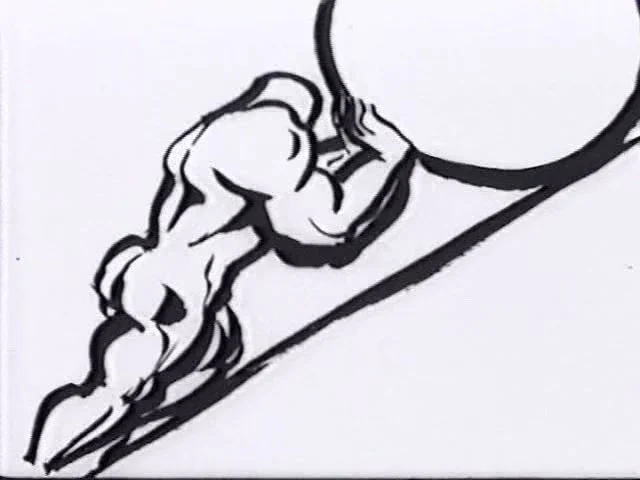
A visually stunning 1974 short film, based on the ancient Greek myth and interpreted through the lens of Albert Camus’ existential philosophy, offers a timeless meditation on the human condition.
May 26, 2026 – The enduring power of ancient myths to resonate with modern audiences is a testament to their fundamental insights into the human experience. Among these timeless narratives, the story of Sisyphus, condemned to an eternity of futile labor, stands as a potent metaphor for struggle and perseverance. This profound myth has been brought to vivid life in a breathtaking animated short film created by Hungarian animator Marcell Jankovics in 1974. Titled "The Myth of Sisyphus," the film transcends its source material, drawing deep inspiration from Albert Camus’ seminal philosophical essay of the same name. Available to a new generation of viewers, this concise yet impactful work continues to spark contemplation on the nature of the absurd, the meaning of life, and the inherent dignity in facing our challenges.
Jankovics’ animation, a masterclass in minimalist yet dynamic visual storytelling, presents the myth in a single, unbroken shot. This deliberate artistic choice mirrors the relentless cycle of Sisyphus’ punishment and, by extension, the cyclical nature of human endeavors. The animation itself is a fluid, evolving line drawing, depicting Sisyphus, the immense boulder, and the formidable mountainside in a continuous, almost hypnotic flow. This visual approach not only captures the physical exertion of Sisyphus’ task but also imbues the scene with a sense of existential weight. The film’s artistic merit was recognized at the time of its release, earning a nomination for Best Animated Short Film at the 48th Academy Awards, a significant achievement that underscores its artistic and narrative significance.
The Ancient Myth and Its Philosophical Echo
The legend of Sisyphus, King of Corinth, is a cornerstone of Greek mythology, chronicling a king renowned for his cunning, craftiness, and deceitful nature. His transgressions against the gods, including cheating death, ultimately led to a particularly harsh and eternal punishment. Sisyphus was condemned to roll an enormous boulder up a steep hill, only to witness it inevitably tumble back down to the base upon reaching the summit. This Sisyphean task, destined to be repeated for all eternity, became a powerful symbol of pointless and arduous labor.
It is this very concept of eternal, seemingly meaningless struggle that captivated the 20th-century existentialist philosopher Albert Camus. In his influential 1942 essay, "The Myth of Sisyphus," Camus reinterprets the myth not as a tale of divine retribution alone, but as a profound metaphor for the human condition. Camus posits that life itself is inherently absurd – a universe devoid of inherent meaning or divine purpose. In this absurd landscape, humanity’s persistent search for meaning in a meaningless existence creates a fundamental conflict.
Camus identifies Sisyphus as the ultimate "absurd hero." For Camus, Sisyphus’s defiance lies not in his ability to overcome his punishment, but in his consciousness of it. When Sisyphus descends the mountain to retrieve the boulder, he is fully aware of the futility of his task, yet he continues. This conscious acceptance and embrace of his fate, Camus argues, is an act of rebellion. By acknowledging the absurdity and continuing to push the boulder, Sisyphus asserts his freedom and creates his own meaning in the face of meaninglessness. "The struggle itself toward the heights is enough to fill a man’s heart," Camus famously concluded, suggesting that the meaning of life is found not in the destination, but in the journey and the conscious engagement with it.
Marcell Jankovics’ Vision: A Chronology of Animation
Marcell Jankovics, a prominent figure in Hungarian animation, was born in 1941. His artistic career spanned decades, marked by a distinctive visual style and a deep engagement with mythology, folklore, and philosophical themes. "The Myth of Sisyphus" was created in 1974, a period when Jankovics was already establishing himself as a significant voice in the animation world.
The film’s production in 1974 was a remarkable feat, especially considering the technological limitations of the era compared to contemporary digital animation. Jankovics’ approach relied on traditional animation techniques, meticulously crafting each frame to achieve the fluid, continuous motion that defines the film. The decision to present the narrative in a single, unbroken shot was a bold artistic choice that demanded exceptional planning and execution. This unbroken take not only serves the thematic purpose of representing the eternal cycle but also showcases Jankovics’ mastery of pacing and visual composition.
The animation’s nomination for an Academy Award in 1976 (for films released in 1975) marked a significant international recognition of Jankovics’ talent and the film’s artistic merit. This nomination placed Hungarian animation on the global stage and highlighted the potential for animation to tackle profound philosophical and mythological themes.
The film’s enduring appeal is evident in its continued accessibility. The presence of the animation on platforms like YouTube, accompanied by annotations that detail its creation and context, allows new audiences to discover and engage with Jankovics’ masterpiece. The fact that an earlier version of the article discussing this film appeared on Open Culture in 2015 further emphasizes its lasting impact and continued relevance in discussions of film, philosophy, and art.
Supporting Data: The Power of Line and Movement
The artistic brilliance of "The Myth of Sisyphus" lies in its deceptively simple yet incredibly effective visual language. The animation is characterized by:
- Dynamic Line Drawing: The entire film is rendered as a continuously evolving line drawing. This minimalist approach strips away unnecessary detail, focusing the viewer’s attention on the essential elements: Sisyphus, the boulder, and the mountain. The lines are fluid and expressive, conveying the immense effort and strain of Sisyphus’s labor.
- Single, Unbroken Shot: As mentioned, the film is presented in one continuous take. This narrative device is crucial to its impact. It eliminates the jarring cuts that might disrupt the sense of Sisyphean repetition and instead immerses the viewer in the relentless cycle of Sisyphus’s fate. The camera, or rather the perspective of the drawing, moves dynamically, following Sisyphus’s struggle up the hill and his descent.
- Abstract Representation: While clearly depicting Sisyphus and his task, the animation employs a degree of abstraction. The figures and landscape are not rendered with photorealistic detail but rather with an emphasis on form and movement. This abstraction allows the audience to project their own interpretations and emotions onto the narrative, making the myth’s themes more universally relatable.
- Emphasis on Physicality and Effort: The animation masterfully conveys the physical toll of Sisyphus’s labor. The taut lines of Sisyphus’s body, the strained muscles, and the sheer weight of the boulder are palpable. The viewer can almost feel the effort, the sweat, and the eventual exhaustion.
- The Boulder’s Inertia: The visual representation of the boulder’s descent is as crucial as its ascent. The animation captures the inexorable force of gravity and the crushing disappointment of seeing the progress erased. This moment is often visually emphasized, highlighting the futility of the immediate past effort.
The film’s success in achieving these artistic goals without relying on complex CGI or extensive character animation is a testament to Jankovics’ skill and vision. It demonstrates that powerful storytelling can be achieved through refined technique and a deep understanding of visual metaphor.
Official Recognition and Cultural Impact
The nomination for the Academy Award for Best Animated Short Film at the 48th Academy Awards (for films released in 1975) stands as the most significant official recognition of Marcell Jankovics’ "The Myth of Sisyphus." This nomination was a prestigious honor, placing the film among the best animated shorts globally and highlighting its artistic and technical achievements. The Academy Awards are a benchmark for cinematic excellence, and a nomination in this category signifies a film’s ability to captivate and impress industry professionals and a wider audience.
Beyond this formal recognition, the film’s cultural impact can be seen in its enduring presence in discussions of animation, philosophy, and art. It serves as:
- An Educational Tool: The film acts as an accessible entry point into understanding both the ancient Greek myth and Camus’s philosophical interpretation. It makes complex ideas tangible and relatable through visual art.
- A Source of Inspiration: For animators, filmmakers, and artists, Jankovics’ work offers a masterclass in minimalist storytelling and the power of dynamic line animation. It demonstrates that profound themes can be explored with relatively simple yet artful means.
- A Cultural Touchstone: The phrase "Sisyphean task" has become a common idiom for any endeavor that is arduous, monotonous, and ultimately futile. Jankovics’ film visually embodies this idiom, reinforcing its meaning and resonance in popular culture.
- A Catalyst for Discussion: The film, much like Camus’s essay, provokes thought and discussion about the meaning of life, the nature of struggle, and the human capacity for resilience in the face of adversity. Its continued availability and discussion online indicate its ongoing relevance.
Implications: The Enduring Relevance of the Absurd Hero
The enduring power of "The Myth of Sisyphus," both the ancient tale and Jankovics’ animated interpretation, lies in its profound and timeless exploration of the human condition. In an era often characterized by rapid change, existential uncertainty, and the relentless pursuit of goals that may ultimately prove ephemeral, the myth of Sisyphus offers a powerful lens through which to understand our own struggles.
Camus’s concept of the absurd, brilliantly visualized by Jankovics, remains acutely relevant. We are constantly bombarded with messages that promise meaning and fulfillment, yet the inherent lack of a predetermined cosmic purpose can leave us feeling adrift. The film reminds us that the search for external validation or ultimate answers may be a futile endeavor. Instead, it points towards an internal strength, a conscious engagement with our reality, and the creation of our own meaning.
The implications of Jankovics’ film extend beyond mere artistic appreciation. It serves as a philosophical prompt, encouraging viewers to:
- Embrace the Struggle: The film suggests that the value of life is not in achieving a final, perfect state, but in the process of striving. The act of pushing the boulder, with full awareness of its eventual descent, can be a source of dignity and self-definition.
- Find Freedom in Acceptance: By accepting the absurdity of existence, we can paradoxically liberate ourselves from the anxiety of seeking an unattainable meaning. This acceptance allows us to focus on what we can control: our attitude and our actions.
- Cultivate Resilience: The story of Sisyphus is a testament to the human capacity for resilience. Even in the face of overwhelming and seemingly insurmountable challenges, the will to continue, to adapt, and to persevere is a fundamental aspect of our being.
- Appreciate the Present Moment: In the continuous cycle of ascent and descent, there are moments of intense effort, fleeting moments of perceived progress, and the inevitable return to the beginning. Each push of the boulder, each descent, is a present moment to be experienced and engaged with.
Marcell Jankovics’ "The Myth of Sisyphus" is more than just an animated film; it is a visual manifesto on the human spirit. By masterfully adapting an ancient myth through the prism of existential philosophy, Jankovics has created a work that continues to challenge, inspire, and resonate with audiences, reminding us that even in the face of an absurd universe, the act of pushing forward, with consciousness and defiance, can be a profoundly meaningful endeavor. The boulder may always roll back down, but the hero who pushes it, with full awareness and unwavering resolve, is the one who truly defines his own existence.



Leave a Comment