
The Kineticism of Desire: Ben Smith’s ‘Yearn’ and the Animation of Inanimate Awakening
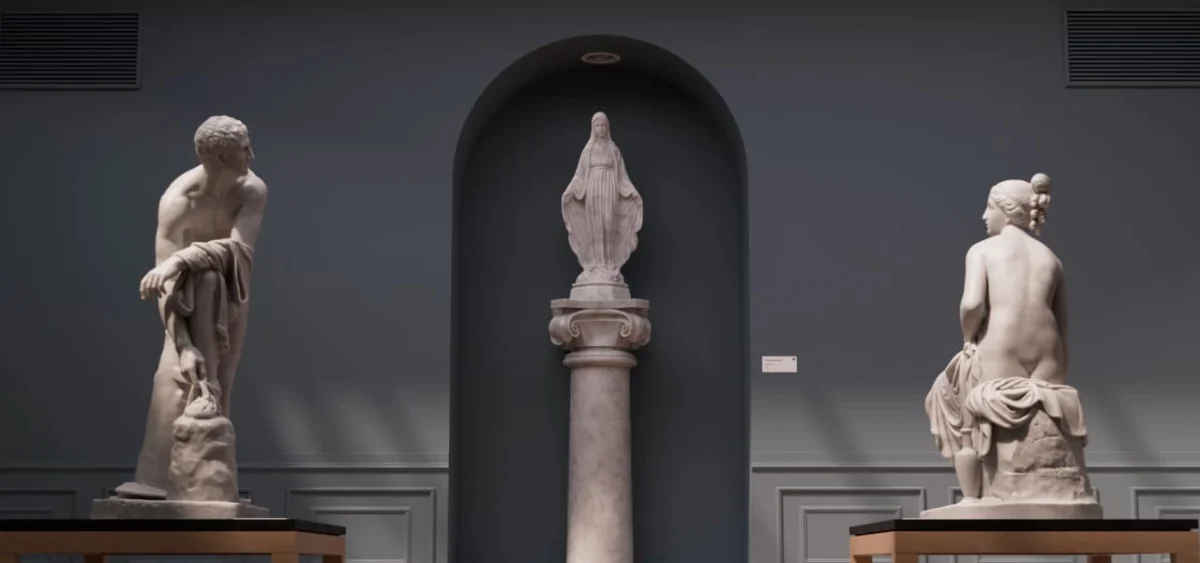
In the world of contemporary independent animation, the boundary between technical simulation and emotional storytelling is becoming increasingly blurred. Nowhere is this more evident than in Yearn, the latest short film from director Ben Smith. After a prestigious run on the international film festival circuit—earning more than a dozen official competition selections—the four-minute CG (computer-generated) masterpiece has finally arrived online, offering a wider audience the chance to witness an unlikely erotic awakening triggered by a seismic event.
Yearn is not merely a technical exercise in physics-based animation; it is a deeply personal exploration of the human condition, told through the medium of cold, unyielding marble. By stripping away traditional character animation and dialogue, Smith has created a visceral experience that relies on the language of movement, the precision of camera angles, and the evocative power of sound to convey a narrative of liberation.
Main Facts: A Symphony of Marble and Motion
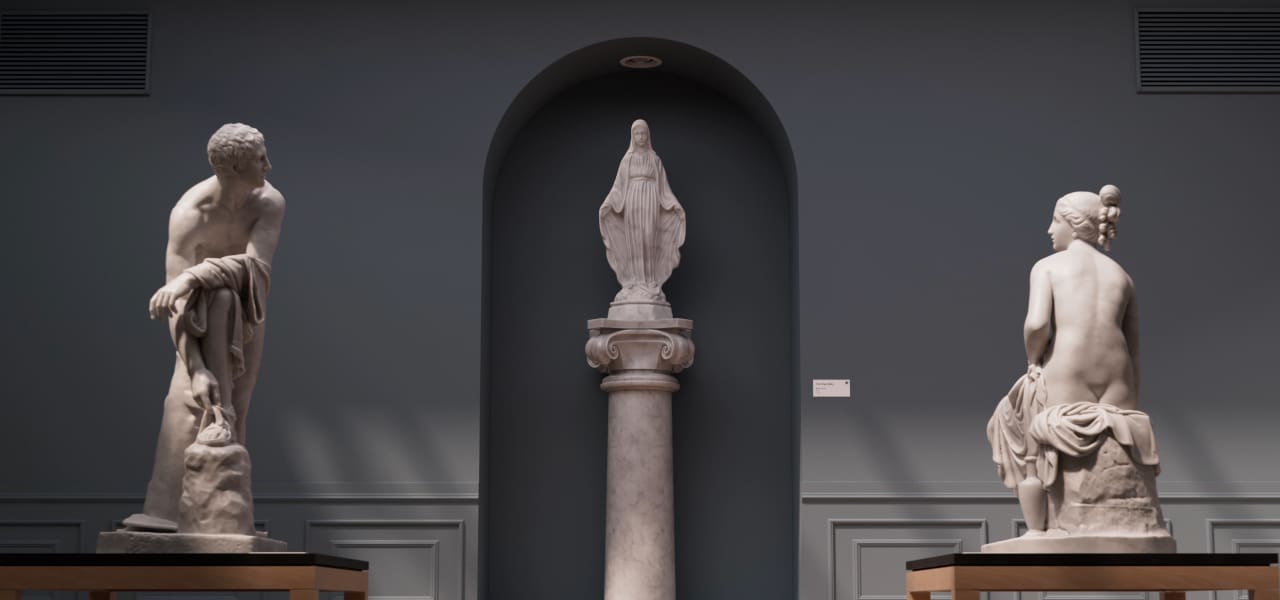
At its core, Yearn tells the story of two museum statues. These figures, carved into poses of eternal nakedness, have spent centuries positioned directly across from one another. They are locked in a perpetual gaze—a forced intimacy that is simultaneously absolute and agonizingly distant. For years, their only reality has been the fixed eyeline of their counterpart, a silent witness to the passage of time within the sterile walls of a museum exhibition.
The narrative catalyst is an earthquake. As the ground shakes, the rigid environment of the museum begins to fail. Pedestals tremble, paintings react to the vibrations, and the marble bodies—once thought to be permanent fixtures of history—begin to slide, collide, and interact. Through this chaotic kineticism, the film transforms a natural disaster into a moment of profound romantic and erotic connection.
Director Ben Smith, a seasoned veteran in the CG space, spent two years bringing this vision to life. The film’s brevity—clocking in at just four minutes—belies the complexity of its production. Eschewing traditional "acting" in the sense of facial expressions or manual limb movement, Smith opted for a "simulated movement" approach. Every interaction between the statues is the result of meticulously choreographed physics, designed to feel both accidental and intentional.
Chronology: From Concept to Global Recognition
The journey of Yearn began roughly three years ago, born from Smith’s desire to experiment with the limitations of inanimate objects. The production phase lasted two full years, a timeline that reflects the painstaking nature of CG simulation. Unlike traditional character animation, where an animator "poses" a model, Smith’s work involved setting up complex physical parameters and "directing" the chaos of an earthquake to ensure the statues’ movements felt emotionally resonant.
Following its completion, Yearn entered the competitive festival circuit. Its unique premise and technical execution quickly garnered attention from curators worldwide. The film secured over a dozen official selections, appearing at festivals known for celebrating cutting-edge animation and experimental storytelling. This "fruitful festival run," as Smith describes it, served as a validation of his unconventional approach to narrative.
On May 26, 2026, the film was officially released online, featured prominently by Cartoon Brew as a "Pick of the Day." Its digital release marks the final chapter of its initial rollout, moving from the exclusive halls of cinema festivals to the global stage of the internet, where its themes of desire and liberation can reach a broader demographic.
Supporting Data: The Technical Architecture of Silence
The technical profile of Yearn provides a fascinating look into the capabilities of modern CG software when applied to non-traditional storytelling. Several key elements define the film’s aesthetic and emotional impact:
- Duration and Format: At 240 seconds, the film is a masterclass in economy. There is no "filler" footage; every frame is dedicated to the slow-burn tension or the eventual kinetic release.
- Simulation vs. Animation: The film relies on "simulated movement." This involves calculating the weight, friction, and momentum of marble as it interacts with gravity and seismic force. By using simulation rather than manual keyframing for the primary action, Smith achieves a level of "clumsy grace" that feels more authentic to the objects’ material.
- Visual Choreography: The environment is as much a character as the statues. Sliding pedestals and "reactive paintings" were integrated into the choreography, ensuring that the entire museum space felt like it was participating in the statues’ awakening.
- Auditory Narrative: Without dialogue, the sound design and original score carry the narrative weight. The score transitions from the cold, ambient silence of the museum to a crescendo that mirrors the statues’ rising passion and eventual liberation.
The lack of traditional character animation is perhaps the film’s most daring choice. By removing the ability for the statues to "speak" or "express" through their faces, Smith forces the audience to project emotion onto the movement of their forms and the angles of the camera. This creates a more immersive, subjective experience for the viewer.
Official Responses: Ben Smith on Inspiration and Repression
In discussing the film’s deeper meaning, Ben Smith has been remarkably candid about the personal history that shaped Yearn. While the film is playful and at times comedic, its roots lie in a struggle with religious dogma and the reclamation of the physical self.
"The story is told entirely through the creative movements and camera angles of inanimate objects interacting during an earthquake," Smith explained in a statement to Cartoon Brew. However, the technical description is only the surface. Smith identifies his evangelical Christian upbringing as the primary driver for the film’s themes.
According to Smith, Yearn is "a story about love, lust, and letting go of regressive messages about our bodies and our desires." For Smith, the museum serves as a metaphor for the restrictive environments—whether religious, social, or cultural—that demand we remain "statue-like": beautiful to look at, but frozen, repressed, and devoid of agency. The earthquake, therefore, represents the external or internal "shock" required to break those bonds and allow the body to experience its natural inclinations.
This personal connection elevates Yearn from a clever animation short to a piece of visual testimony. It explores the vulnerability inherent in "letting go" and the rebellion involved in embracing desire after a lifetime of enforced stillness.
.png)
Implications: The Future of Inanimate Storytelling
The success and release of Yearn have several implications for the animation industry and the broader landscape of digital storytelling.
The Rise of Physics-Based Narrative
Traditionally, physics simulations in CG (like water, smoke, or falling debris) have been used as secondary effects to support a character-driven story. Yearn flips this hierarchy, making the simulation the primary storyteller. This suggests a burgeoning sub-genre of animation where "emergence"—the unpredictable results of digital physics—is harnessed for emotional resonance. This approach could lead to more "organic" feeling animations that move away from the hyper-polished, often sterile movements of traditional CGI.
The Subversion of the "Uncanny Valley"
By choosing statues as his protagonists, Smith cleverly avoids the "uncanny valley"—the phenomenon where human-like robots or animations feel unsettling because they are almost but not quite real. Because the audience knows these are marble objects, their "inhuman" movements are accepted without cognitive dissonance. This allows the director to push the boundaries of eroticism and vulnerability in a way that might feel jarring or explicit with human-like CG characters.
Animation as a Tool for De-Stigmatization
Smith’s use of animation to address "regressive messages" about the body highlights the medium’s unique ability to handle sensitive or taboo subjects. By abstracting human desire through the lens of museum artifacts, Yearn invites viewers to reflect on their own relationship with their bodies and societal expectations. It proves that animation remains one of the most potent tools for exploring the complexities of the human psyche, precisely because it can strip away the baggage of reality.
A New Life for Short-Form Content
The online release of Yearn underscores the importance of platforms like Cartoon Brew and Vimeo in sustaining the ecosystem of independent animation. In an era dominated by feature-length franchises, the "short" remains the R&D lab of the industry. Yearn demonstrates that a four-minute investment can deliver as much emotional and intellectual depth as a two-hour blockbuster, provided the vision is clear and the execution is precise.
In conclusion, Ben Smith’s Yearn is a landmark achievement in minimalist storytelling. It proves that even the coldest marble can burn with desire when touched by the right creative spark. As it finds its home online, the film stands as a testament to the power of breaking free—from pedestals, from repression, and from the static expectations of the past.



Leave a Comment