
Enlil: The Unquestionable Sovereign of the Sumerian Pantheon
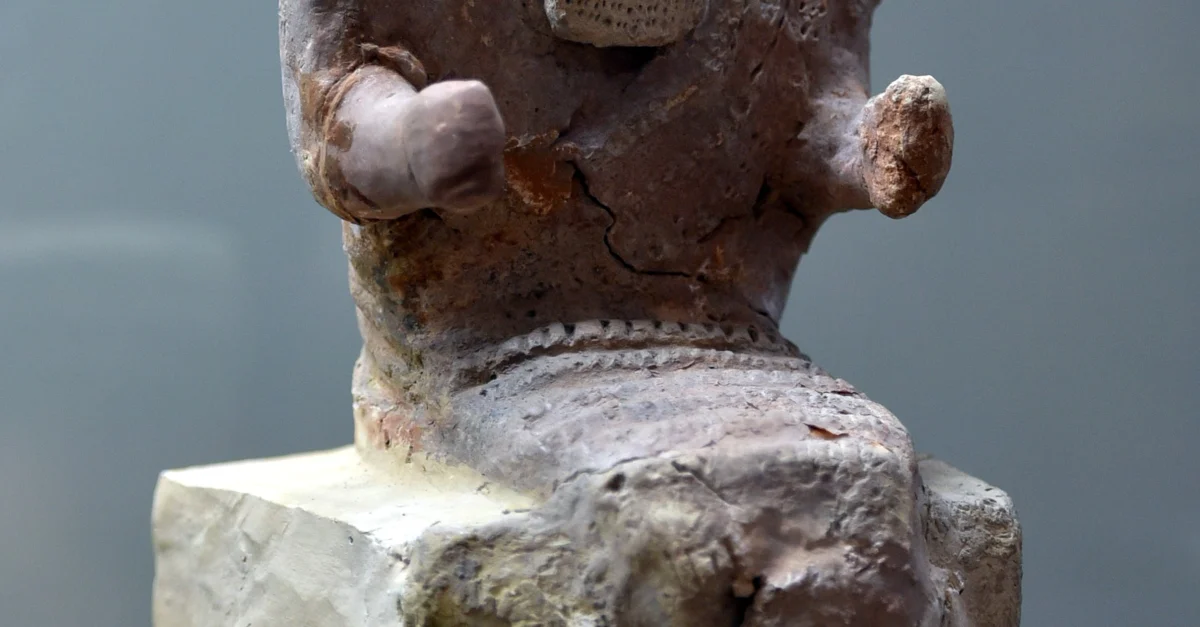
Nippur, Mesopotamia – Within the rich tapestry of the ancient Mesopotamian pantheon, few deities commanded as much awe and reverence as Enlil. Known also as Ellil and Nunamnir, Enlil transcended his initial designation as the Sumerian god of the air to become the undisputed King of the Gods, a figure whose pronouncements shaped the cosmos and whose authority was rarely challenged. Featured prominently in numerous pivotal Mesopotamian texts, his influence permeated every facet of life, from the celestial order to the very fate of humanity.
Main Facts: Architect of Cosmos and Fate
Enlil’s preeminence stemmed from his lineage and his unparalleled power. He was the son of Anu (or An), the primordial god of the heavens, placing him at the very apex of the divine hierarchy. Together with Anu and Enki, the sagacious god of wisdom and waters, Enlil formed a formidable cosmic triad. This divine triumvirate was responsible for governing the fundamental realms of existence: the heavens, earth, and underworld, or, in some interpretations, the universe, sky and atmosphere, and the terrestrial plane.
After Anu, Enlil stood as the most potent of the Mesopotamian gods. His authority was concretized by his guardianship of the Tablets of Destiny, sacred artifacts containing the predestined fates of both gods and mortals. This immense power rendered him an unstoppable force, a deity whose decisions were beyond question and whose will was absolute. His name itself, often translated as "Lord of Air," belied a far greater dominion, encompassing not merely the winds and storms but the very breath of life and the pervasive, unseen forces that govern existence. He was the embodiment of divine executive power, the celestial CEO overseeing the cosmic operations.
The ancient city of Nippur served as the central seat of Enlil’s worship, home to his magnificent temple-ziggurat known as "the Mountain House" or E-kur. Described as "glistening" and splendid in the hymn Enlil in the E-Kur, this sacred complex was not merely a religious site but a powerful symbol of Enlil’s earthly and heavenly dominion. While Nippur remained his primary cult center, Enlil was also honored in Babylon and numerous other cities across Mesopotamia, testament to his widespread veneration. His unique position granted him direct access to Anu, the ultimate controller of the universe, a privilege that underscored his immense prestige. Paradoxically, despite Anu’s supreme status, Enlil’s decisions often appeared final, leading to scholarly debate regarding the precise extent of Anu’s direct influence over his powerful son.
Enlil’s epithets further illustrate his towering status. He was referred to as "Father of the Black-headed People" (a common designation for the Sumerians) and "Father of the Gods" in some inscriptions, highlighting his role as a progenitor and ultimate authority. While other texts attribute the creation of human beings to Enki, and the genesis of the gods to either Anu and Uras (Heaven and Earth) or Apsu and Tiamat (Fresh and Salt Water) as per the Babylonian Enuma Elish, Enlil’s consent was ultimately necessary for the divine plan to unfold.
Scholar Stephen Bertman offers a helpful analogy to clarify Enlil’s position within the divine bureaucracy: "If Anu was the heavenly chairman of the board, Enlil was the heavenly corporation’s CEO, or chief executive officer. His cosmic headquarters were based at Nippur. His executive assistant was his son Nuska. Enlil/Ellil was a family man, married to Ninlil (also called Sud), and with her he raised a brood that included – among others – the moon-god Nanna/Sin, the sun-god Utu-Shamash, the weather god Ishkur/Adad, and the love-goddess Inanna/Ishtar." This familial structure further cemented his role as a central figure, a divine patriarch whose children represented vital cosmic and earthly phenomena.
Chronology: From Ancient Roots to Enduring Legacy
The worship of Enlil boasts an exceptionally long and dynamic history, tracing its origins back to the Early Dynastic Period I (circa 2900-2750/2700 BCE) at Nippur. His prominence became firmly established by the time of the Akkadian Empire (2350/2334 – 2154 BCE) and continued unabated for millennia. This enduring veneration reflects his central role in the Mesopotamian worldview, where he was consistently counted among the Seven Divine Powers, alongside Anu, Enki, Inanna, Nanna, Ninhursag, and Utu-Shamash. His epithet Nunamnir, thought to mean "He Who is Respected," perfectly encapsulates the deep reverence he commanded.
However, Enlil’s trajectory in the pantheon was not static. As Mesopotamian civilizations rose and fell, and cultural influences blended, the attributes and narratives surrounding deities often shifted. During the reign of Hammurabi of Babylon (1792-1750 BCE), a significant transformation occurred: Enlil was gradually absorbed and assimilated into the ascendant Babylonian god Marduk, son of Enki. This syncretic process, driven by political and theological shifts, saw many of Enlil’s most important qualities — his supreme authority, his role as king of the gods, and his dominion over cosmic order — transferred to Marduk.
Even after this assimilation, Enlil’s legacy persisted. He continued to be honored widely throughout Mesopotamia, albeit often through the lens of Marduk or as a foundational figure whose power had been willingly conferred upon the younger god. His temples remained active well into the Neo-Assyrian Empire (circa 912-612 BCE), a period when gods like Assur, Marduk, and Nabu held supreme sway. Notably, later deities were sometimes referred to as the "Assyrian Enlil" or the "Enlil of the gods," underscoring the enduring power and archetypal significance of his name.
The ultimate decline of Enlil’s worship followed the fall of the Assyrian Empire in 612 BCE. Gods heavily associated with Assyrian rule often suffered the fate of having their statues destroyed and temples sacked. While Marduk, having transcended his initial Babylonian ties, managed to survive this period, Enlil’s distinct veneration slowly waned. By approximately 141 BCE, with the concurrent decline of Marduk’s cult, Enlil, as a standalone deity, was largely forgotten, his formidable presence subsumed into the annals of ancient history.
Supporting Data: Mythological Narratives and Scholarly Interpretations
The complexities of Enlil’s character and influence are best understood through the rich tapestry of Mesopotamian myths and the insights offered by modern scholarship. These narratives, often contradictory due to millennia of regional variations and cultural adaptations, paint a vivid picture of a god both formidable and, at times, fallible.
The E-kur: Enlil’s Glistening Mountain House
Nippur was not merely a city; it was the spiritual heartland of Sumer, and the E-kur was its pulsating core. Enlil’s temple-ziggurat, whose name means "Mountain House," was a monumental structure designed to bridge the gap between heaven and earth. Ziggurats, stepped pyramid-like temples, were believed to be literal stairways for the gods to descend to earth and for priests to ascend to the divine. The Enlil in the E-kur hymn, also known as Enlil A, offers a poetic description of this sacred precinct, portraying it as a place of dazzling splendor and immense power, where the very fate of the land was decided. The complex included not just the towering ziggurat but also various shrines, administrative buildings, workshops, and living quarters for priests and temple staff, making it a vibrant economic and social hub. The grandeur of the E-kur reflected Enlil’s status; it was a physical manifestation of his supreme authority and the reverence he commanded from all other deities and mortals.
The Enlil and Ninlil Narrative: Fertility, Transgression, and Transformation
The early myth of Enlil and Ninlil offers a fascinating glimpse into Enlil’s character before the creation of humanity. Set in a primordial Nippur, a divine urban center governed by strict laws, the myth portrays Enlil as a young, impetuous god. He is captivated by the beautiful goddess Ninlil (Sud), despite her mother Nisaba’s warnings against encouraging his advances by bathing in the river. Ninlil, ignoring the counsel, succumbs to Enlil’s seduction, resulting in her pregnancy with the moon god Nanna. This act of transgression against divine law leads to Enlil’s ritual impurity and subsequent exile to the underworld by the other gods.
What follows is a complex journey of transformation. Ninlil, also exiled, follows him. Enlil, in a series of cunning disguises as various underworld gatekeepers, repeatedly encounters Ninlil. Each time, he seduces her, leading to the birth of three more deities: Nergal (god of war and the underworld), Ninazu (god of healing and the underworld), and Enbilulu (god of canals and irrigation). These repeated acts of procreation in the underworld, despite his banishment, symbolically represent Enlil’s pervasive generative power, transforming his initial transgression into a celebration of fertility and the continuous cycle of life, even in the realm of death. The myth concludes by praising Enlil’s virility, suggesting it celebrates the fertility of the earth itself. This narrative arc—from rebellious youth to a figure capable of generating essential elements of civilization—foreshadows his later role as the ultimate authority and enforcer of divine law, a testament to the dynamic evolution of his character within Mesopotamian theology.
The Anzu Bird and the Tablets of Destiny: Upholding Cosmic Order
Enlil’s role as the supreme god, guardian of cosmic order, is powerfully illustrated in the Babylonian Myth of Anzu (early 2nd millennium BCE). The Tablets of Destiny are central to this epic, representing the very blueprint of the universe, legitimizing divine rule, and containing the fates of all beings. In the myth, the malevolent Anzu bird, a symbol of chaos and tempest, covets these tablets to usurp Enlil’s authority.
As scholar E. A. Wallis Budge recounts, Anzu seizes an opportune moment when Enlil has removed his crown and is washing his face, snatching the Tablets and fleeing to the mountains. This act plunges the cosmos into disarray, as the affairs of heaven and earth fall into disorder without the guiding power of the Tablets. Anu calls upon the gods to retrieve them, but fear prevents anyone from acting. In different versions of the myth, heroes such as Lugalbanda, Ninurta (Enlil’s son), or Marduk step forward to confront Anzu and restore the tablets to Enlil. This myth unequivocally portrays Enlil as the legitimate king of the gods, whose rule is divinely sanctioned and whose authority is essential for maintaining cosmic harmony. His temporary loss of the Tablets underscores their critical importance and the chaos that ensues when order is disrupted, reinforcing Enlil’s image as the ultimate arbiter of fate and order.
The Atrahasis Epic: Divine Frustration and Human Predicament
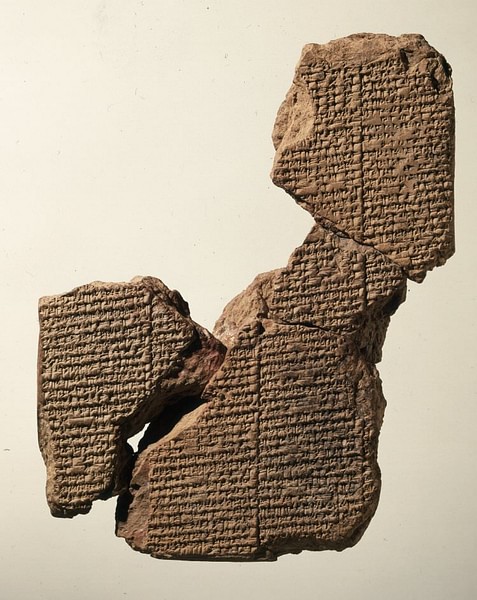
Perhaps one of the most poignant and influential myths featuring Enlil is The Atrahasis (circa 17th century BCE), which provides the Mesopotamian account of the Great Flood. This epic addresses profound questions about the nature of humanity, divine-human relations, and the origins of suffering.
The narrative begins with the elder gods enjoying leisure while the younger gods toil incessantly to maintain the universe. Weary of their labor, the younger gods appeal for relief. Enki proposes the creation of lesser beings—humans—to undertake the arduous work. The god We-llu is sacrificed, and from his flesh, blood, and intelligence, combined with clay, the mother goddess Ninhursag fashions 14 human beings, seven male and seven female. Initially, humans fulfill their purpose, maintaining the land and offering worship and sacrifices to the gods.
However, humans prove exceptionally fertile, their population rapidly multiplying. Their incessant noise becomes an unbearable cosmic disturbance, preventing the gods from resting. Enlil, increasingly frustrated, decides to reduce their numbers. He sends a series of calamities: drought, pestilence, and famine. Each time, however, humans appeal to their creator, Enki, who, benevolent and cunning, secretly advises them on how to survive and restore balance. Enlil, bewildered by the humans’ resilience, grows furious and, in a moment of extreme frustration, decrees their total annihilation by a Great Flood.
Despite Enki’s disagreement, Enlil’s decree, once made, is immutable. Yet, Enki, ever the trickster, circumvents the decree by whispering the impending doom to the sage Atrahasis through a reed wall, instructing him to build an ark and load two of every animal. The flood devastates the earth, wiping out all life. Enlil is almost immediately consumed by regret, and the gods mourn the loss of their creatures. Upon the flood’s recession, Atrahasis offers a sacrifice, its sweet aroma reaching the starving gods in the heavens. Enlil, enraged by human survival, confronts Enki. Enki defends his actions, arguing for a new plan: to create humans who are less fertile, have shorter lifespans, and are subject to daily threats, thus preventing future overpopulation and noise. Enlil, recognizing the wisdom in this compromise, agrees. This myth profoundly shaped Mesopotamian understanding of human existence, positing that suffering, mortality, and infertility were divine decrees intended to manage humanity’s place in the cosmos, and crucially, highlighting Enlil’s ultimate authority in defining human destiny.
Contradictions and Syncretism: A Dynamic Pantheon
The apparent contradictions in Enlil’s family tree, such as Inanna being depicted as both Enki’s and Enlil’s daughter, or Enki being identified as Ishkur/Adad’s twin (making him Enlil’s son in some genealogies), are not anomalies but rather characteristic features of Mesopotamia’s long and complex religious history. These discrepancies stem from several factors:
- Regional Variations: Different city-states and regions often developed their own local myths and genealogies for the gods, sometimes integrating them into existing pantheons in unique ways.
- Temporal Evolution: Over thousands of years, religious beliefs and political landscapes shifted. As one city or culture gained prominence, its preferred deities might be elevated, and their relationships with other gods redefined to suit new theological or political agendas.
- Scribal Traditions: Ancient scribes, acting as theologians and historians, frequently rewrote or adapted existing tales to align with contemporary beliefs, justify political changes, or simply to create new narratives. This "editorial freedom" led to a rich but sometimes inconsistent mythological corpus.
- Syncretism: The process of blending distinct religious traditions, where deities from different cultures or periods merged or absorbed each other’s attributes, was common. This is most evident in the assimilation of Enlil’s qualities into Marduk, where the younger god inherited the functions and prestige of the older.
These "contradictions" highlight the dynamic, living nature of ancient Mesopotamian religion, where narratives were not fixed dogmas but fluid stories constantly reinterpreted and reshaped across time and space.
Official Responses: The Divine Mandate and Earthly Reverence
In the context of ancient Mesopotamia, "official responses" refer to the ways in which religious institutions, royal decrees, and scribal traditions formally articulated and propagated the understanding of a deity’s role and power. For Enlil, these responses solidified his position as the supreme authority.
The construction and maintenance of his grand temple at Nippur, the E-kur, represented the most significant "official response" to Enlil’s divinity. Royal inscriptions from various dynasties frequently mentioned their patronage of the E-kur, linking their own legitimacy and prosperity to their devotion to Enlil. This monumental architecture served as a constant, tangible affirmation of his supreme status.
Scholarly interpretations, such as Stephen Bertman’s "Heavenly Corporation’s CEO" analogy, serve as modern "official responses" to aid our understanding of Enlil’s complex administrative role within the pantheon. While a contemporary construct, it reflects the careful analysis of ancient texts that portray Enlil as the active manager of the cosmos, implementing Anu’s overarching vision.
The Enlil in the E-kur hymn (Enlil A) itself can be seen as an "official response" in poetic form. It is a carefully crafted liturgical text designed to praise Enlil, describe his temple’s splendor, and affirm his power and benevolence. Such hymns were not just literature; they were ritualistic declarations, recited in temples, reinforcing collective belief and devotion.
Furthermore, the integration of Enlil’s attributes into Marduk during the reign of Hammurabi was a highly "official" act. This was not a casual shift but a deliberate theological and political maneuver to elevate Babylon and its patron god. The Enuma Elish, the Babylonian creation epic, systematically re-narrated the cosmic history to place Marduk at the pinnacle, absorbing the powers and titles previously held by Enlil. Even then, the narrative often stressed that Enlil and Anu willingly conferred their powers upon Marduk, maintaining a semblance of continuity and legitimacy for the older gods even as their direct cults diminished. This demonstrates how ancient "official responses" managed religious change while preserving a sense of historical and divine order.
Implications: Enlil’s Enduring Influence on Mesopotamian Thought and Beyond
Enlil’s long and prominent reign as King of the Gods left an indelible mark on Mesopotamian thought, with implications that resonated throughout the ancient Near East and, indirectly, influenced later religious traditions.
His most significant implication lies in defining the paradigm of divine kingship and ultimate authority. Enlil embodied the concept of a powerful, often stern, but ultimately just ruler whose decrees maintained cosmic order. His guardianship of the Tablets of Destiny established the idea that supreme power was tied to the knowledge and control of fate itself. This model of a chief deity, wielding ultimate power and responsible for both creation and judgment, provided a blueprint for later supreme gods in various pantheons, including aspects of Marduk and even, arguably, the monotheistic God of Abrahamic religions.
The impact of his myths on understanding human purpose and suffering is another profound implication. The Atrahasis epic, in particular, offered a theological framework for explaining human mortality, toil, and the inherent challenges of existence. It posited that these were not random misfortunes but divine decisions, a consequence of humanity’s proliferation and a necessary balance within the cosmic order. This provided a sense of meaning and justification for the human condition, even in its hardships. The flood narrative itself, with Enki as the benevolent trickster saving humanity against Enlil’s wrath, resonates strongly with later flood myths, notably the one in the Hebrew Bible.
Enlil’s story also highlights the dynamic process of religious syncretism that characterized ancient Near Eastern religions. The gradual absorption of his qualities into Marduk demonstrates how powerful deities could evolve, adapt, and persist through the transference of attributes. This process allowed core religious concepts to endure even as specific cults declined, ensuring that Enlil’s legacy, though under a different name, continued to shape theological understanding. Even in the Neo-Assyrian period, the use of epithets like "Assyrian Enlil" for their supreme god Assur, or "Enlil of the gods" for other powerful deities, explicitly acknowledged his archetypal significance and the enduring power associated with his name.
Finally, Enlil’s rise and fall illustrate the broader cultural significance of Mesopotamian deities in shaping ancient Near Eastern religions. The elaborate temple complexes, the rich mythological narratives, and the intricate theological systems built around gods like Enlil provided a foundational framework for understanding the universe, humanity’s place within it, and the proper relationship between mortals and the divine. These Mesopotamian innovations, with Enlil at their forefront for millennia, laid crucial groundwork for the religious and philosophical developments that followed, impacting civilizations far beyond the fertile crescent. While his name may have faded by 141 BCE, the cosmic order he established, the human dilemmas he addressed, and the divine authority he embodied continued to resonate in the cultural memory and spiritual landscape of the ancient world.




Leave a Comment