
Echoes of Division, Whispers of Freedom: A Glimpse of Berlin Just Months Before the Wall’s Unforeseen Demise
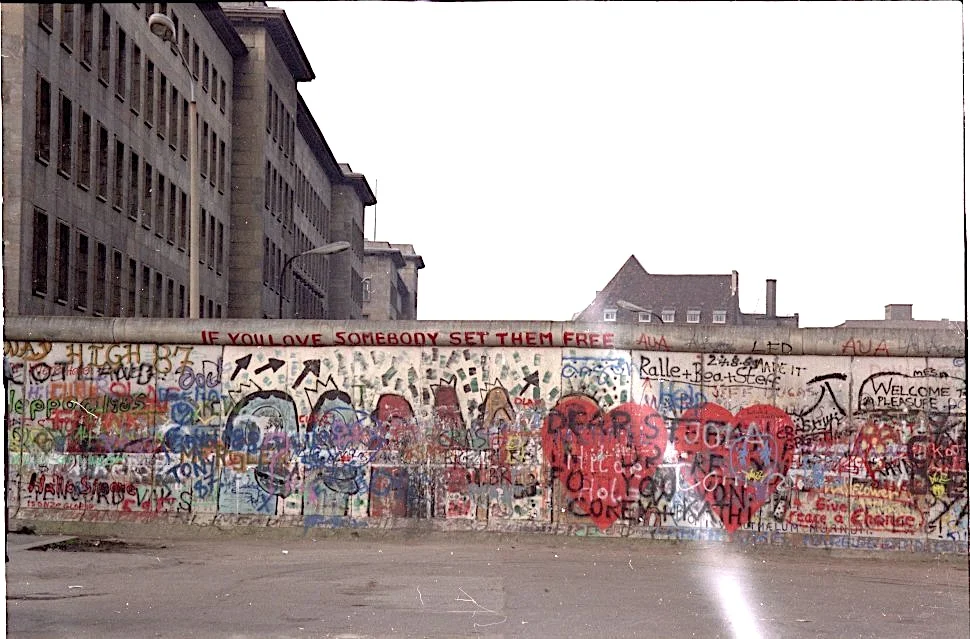
May 27, 2026 – The iconic image of the Berlin Wall, a stark scar across the heart of Europe, is indelibly etched in historical memory. Officially, its dramatic fall on November 9, 1989, heralded the end of an era and the reunification of a continent. Yet, a poignant visual record from the summer of 1989, just months before this seismic shift, offers a chillingly different perspective. It captures a city seemingly frozen in time, a place where the very notion of the Wall’s imminent collapse was an unimaginable prospect, even to the most informed observers.
This unearthed footage, shot by a traveler navigating the vicinity of the Wall during that fateful summer, paints a picture starkly at odds with the jubilant scenes that would soon erupt. It reveals a Berlin that, despite lingering echoes of faded grandeur, felt suspended, a "dullsville" at the epicenter of Cold War geopolitics. The brutal concrete edifice, the ever-present, menacing guards, and the cacophony of political and apolitical graffiti were the dominant, almost unchanging, realities. This was not a city on the cusp of liberation, but one seemingly resigned to its divided fate, where the dreams of freedom were tragically punctuated by the ultimate price paid by those who dared to pursue them.
The Unforeseen Dawn: A Night of Astonishment
The official narrative of the Berlin Wall’s fall on November 9, 1989, often focuses on the celebratory throngs that breached its barriers. However, the preceding months paint a picture of deep-seated stability, a perception that the Wall would stand for decades to come. The suddenness of its demise was not merely surprising; it was profoundly shocking. Even on the very day of the opening, officials involved were unaware of the cascade of events that would unfold. The catalyst was a seemingly innocuous press conference held by Günter Schabowski, the Socialist Unity Party of Germany’s (SED) Secretary of Information.
In a moment that would forever alter the course of history, Schabowski, appearing ill-prepared and possibly misinformed, declared that new regulations allowing for liberalized border travel would be effective "immediately, without delay." This unplanned, almost accidental, pronouncement unleashed a torrent of pent-up desire for freedom. As word spread like wildfire through East Berlin, citizens began to converge on the border crossings, their hopes amplified by the ambiguous but electrifying words broadcast on national television.
By approximately 11:00 PM that night, the beleaguered border guards, overwhelmed by the sheer number of people and the lack of clear directives, could no longer hold the line. The gates creaked open, and an unprecedented tide of humanity surged across. For those who experienced it firsthand, the ensuing scene was nothing short of the "biggest street festival of their lives." The joy, the disbelief, the sheer exuberance of newfound freedom transformed the streets of both East and West Berlin into a spontaneous, city-wide celebration that would be etched in their memories for generations. To those of us who could only witness this unfolding drama from afar, it may seem almost unbelievable that such a monumental shift could occur with so little forewarning.
A City Frozen in Time: The Summer of 1989
The footage from the summer of 1989, captured by an intrepid traveler, offers a stark counterpoint to the later euphoria. It presents a Berlin where the palpable tension of the Cold War was present, yet the city itself seemed to exist in a state of stasis. The urban landscape, while showing signs of wear and tear – "faded grandeur" as the original text describes it – did not betray any immediate sense of impending upheaval. For West Berliners, accustomed to a certain urban dynamism, the reality of East Berlin’s built environment was a stark contrast, revealing a more utilitarian and perhaps even somber existence.
The Wall itself, the omnipresent symbol of division, dominated the visual narrative. Its "brutishness of its form" was undeniable, a concrete manifestation of ideological separation. The presence of guards, their routines seemingly mundane yet inherently menacing, underscored the constant vigilance and control. The Wall’s surface, a canvas for myriad expressions, was adorned with graffiti that ranged from the overtly political, denouncing the regime, to the seemingly apolitical, offering a form of personal catharsis for its creators. This layered visual commentary spoke volumes about the suppressed desires and the simmering discontent that lay beneath the surface.
Memorials to Lost Dreams: The Human Cost of Division
Amidst the stark visual of the Wall, the traveler’s camera captured a more somber and profoundly human element: the memorials to those who had perished in their attempts to cross it. These makeshift tributes served as a chilling reminder of the ultimate price of freedom. The footage highlights the memorial for Chris Gueffroy, who, in February of 1989, became the last person to be shot while attempting to escape from East to West. His tragic end, captured in the footage, underscores the desperation and the deadly risks undertaken by those seeking a life beyond the Wall’s confines.
However, Gueffroy was not the last to die in pursuit of freedom. That grim distinction belongs to Winfried Freudenberg. In March of 1989, just months before the Wall would crumble, Freudenberg met his end when a balloon he had constructed to fly across the border malfunctioned, leading to a fatal fall. These poignant memorials, standing as silent testaments to lives cut short, contrast sharply with the bustling, vibrant, and reunited Berlin of today. The transformed city, now a popular European capital, would be unrecognizable to Gueffroy and Freudenberg, a testament to the profound urban evolution and the swift healing of a nation. The East Berlin they desperately sought to escape and the West Berlin they yearned for no longer exist in the same form, a profound irony in their tragic sacrifice.
The Unseen Currents of Change: Precursors to Collapse
While the summer of 1989 appeared outwardly static, subtle currents of change were undeniably at play. The footage, viewed through the lens of historical hindsight, can be interpreted as capturing the simmering discontent and the yearning for something more. The very act of the traveler documenting the Wall, its graffiti, and its memorials, speaks to an ongoing fascination with this symbol of division, a fascination that was beginning to shift from passive observation to active questioning.
The increasing visibility of political and apolitical graffiti on the Wall itself could be seen as a burgeoning form of dissent, a way for citizens to reclaim public space and express their suppressed voices. The very existence of these memorials, though tragic, indicated a growing awareness and a collective memory of the human cost of the division. These were not isolated incidents but part of a broader, albeit slow-moving, tide of dissatisfaction with the status quo.
Furthermore, the geopolitical landscape was beginning to shift. The reforms initiated in other Eastern Bloc countries, particularly in Poland and Hungary, were creating a ripple effect. The opening of the Hungarian border to Austria in May 1989, for instance, had already created a new escape route for East Germans, demonstrating that the Iron Curtain was not as impermeable as it once seemed. While these developments might not have been widely publicized or understood by the general populace in East Berlin, they undoubtedly contributed to a growing sense of unease within the SED regime and a growing awareness among those seeking escape that change, however improbable, was indeed possible.
The Unfolding Implications: A World Transformed
The sudden and largely unforeseen fall of the Berlin Wall had profound and far-reaching implications, not just for Germany and Europe, but for the entire global order.
The Immediate Aftermath: Euphoria and Uncertainty
The initial days and weeks following November 9, 1989, were characterized by an overwhelming sense of euphoria. Families reunited, friends embraced, and a palpable sense of liberation swept across East and West Berlin. The "biggest street festival" was not a fleeting moment but a sustained period of joyous celebration and exploration. People from the East poured into the West, marveling at the abundance and freedoms they had been denied for decades. Conversely, West Berliners, often greeted with a mixture of curiosity and camaraderie, experienced the opening of their city in a new and profound way.
However, beneath the surface of jubilation, a complex set of challenges began to emerge. The economic disparities between East and West Germany were vast, and the integration of two vastly different economic systems presented an enormous undertaking. The dismantling of state-owned enterprises in the East, the privatization of industries, and the introduction of a market economy were processes fraught with difficulty, leading to significant unemployment and economic dislocation in the former GDR.
The Path to Reunification: A Political and Social Undertaking
The political reunification of Germany, officially occurring on October 3, 1990, was a testament to the speed at which historical forces can move. However, the process was far from seamless. Integrating legal systems, administrative structures, and political institutions required extensive negotiation and compromise. The legacy of decades of separation meant that there were deeply ingrained differences in societal norms, cultural practices, and political ideologies that needed to be reconciled.
The psychological impact of reunification was also significant. Many East Germans felt a sense of loss of identity and a perceived marginalization in the new Germany, while some West Germans struggled to accept the financial burden and the perceived inefficiencies associated with integrating the former GDR. The concept of "Ossis" (East Germans) and "Wessis" (West Germans) became shorthand for these lingering divisions, highlighting the ongoing process of forging a unified national identity.
A Global Reshaping: The End of the Cold War and Beyond
The fall of the Berlin Wall was a potent symbol of the unraveling of the Soviet Union and the end of the Cold War. It signaled a decisive victory for democratic and capitalist ideals and ushered in a new geopolitical era. The dissolution of the Warsaw Pact and the eventual collapse of the Soviet Union in 1991 fundamentally reshaped the global balance of power.
The reunification of Germany not only created a more powerful economic and political entity in the heart of Europe but also paved the way for the eastward expansion of NATO and the European Union. This expansion, while seen by many as a consolidation of democratic values, was also viewed with apprehension by Russia, contributing to ongoing geopolitical tensions.
The legacy of the Berlin Wall serves as a powerful reminder of the human cost of division and the enduring desire for freedom. The footage from the summer of 1989, capturing a city seemingly trapped in time, allows us to appreciate the magnitude of the transformation that occurred and the profound impact of a single, unexpected pronouncement that brought down a barrier and reshaped the world. The echoes of that division, though muted, continue to inform contemporary discussions about borders, identity, and the perpetual human aspiration for unity and self-determination.

Leave a Comment