
America’s Shifting Naming Landscape: A Move Towards Light, Strength, and Optimism

New data from the Social Security Administration reveals a significant trend in American baby names, signaling a cultural pivot away from cynicism and towards values of clarity, strength, and uplift. As the nation navigates a period of societal transition, parents are increasingly choosing names that reflect a desire for a brighter, more hopeful future.
The Social Security Administration’s (SSA) annual release of baby name data, analyzed from the raw 2025 birth files, offers a fascinating glimpse into the evolving sentiments of American parents. While established favorites like Liam and Olivia continue their reign at the top for the seventh consecutive year, the most compelling narrative lies in the substantial shifts occurring just beyond the top 10. A distinct thematic trend has emerged: a pronounced inclination towards names that evoke light, fire, clarity, strength, and uplift. This movement suggests a collective yearning for positivity and resilience, mirroring broader societal currents.
The Reigning Monarchs and Emerging Contenders
For the seventh year running, Liam has held the undisputed top spot for boys’ names, while Olivia has maintained its dominance for girls. This enduring popularity underscores a certain stability in parental preference for classic, well-established names. However, the real dynamism of the 2025 data is evident in the significant upward mobility of less common names and the subtle, yet telling, departure of others.
Charlotte has ascended to the second position for girls, a testament to its enduring appeal and classic elegance. More notably, Eliana has made a significant debut, entering the top 10 for the first time. Conversely, Ava, a perennial favorite, has dropped out of the top 10, a departure that, as we will explore, may be linked to emerging cultural associations. While the very apex of the naming charts remains relatively stable, the underlying currents of parental choice are demonstrably shifting, driven by a desire for names that resonate with a more optimistic outlook.
Unpacking the Rise of Luminosity and Strength
The raw count changes from 2024 to 2025 paint a vivid picture of this thematic shift. Several names have experienced dramatic surges, indicating a strong parental embrace of their inherent meanings. Ailany, for instance, saw an impressive increase of 4,530 babies. Klarity, a name that directly signifies clearness, more than quadrupled its previous year’s count, rising from a modest 87 to 344. Madisson climbed from 203 to 958, and Scottie experienced a substantial jump from 1,519 to 2,228. Eloise, with its elegant and somewhat ethereal connotations, gained 808 new bearers.
Beyond these headline-grabbing increases, other notable risers further solidify the trend. Kasai, a Japanese name meaning "fire," and Akari, also from Japanese, signifying "light" or "brightness," are gaining traction. The Hawaiian names Ailani, meaning "sky" or "heaven," and a cluster of similar "-lani" names, all sharing meanings related to the heavens and expansiveness, have also seen increased adoption. The common thread running through these rising names is a palpable evocation of light, energy, clarity, positivity, and expansive horizons. These are names that inherently feel bright, energetic, and noble, suggesting a conscious or subconscious desire to imbue children with these qualities.
The Decline of Echoes from a Previous Era
In tandem with the rise of luminous and strong names, a discernible decline is occurring in names associated with earlier cultural waves. Zendaya, a name that gained significant popularity in the wake of the actress’s rise, has fallen from 281 to 195. Aubrie has seen a similar dip, dropping from 258 to 163. Many names ending in "-den," such as Aiden, Dylan, and Jordan, which were once ubiquitous, continue their sharp decline, signaling a departure from a particular stylistic trend that dominated the late 1990s and early 2000s.
Furthermore, names like Luna, Mia, Camila, and Ava, all of which have enjoyed considerable popularity in recent years, have experienced significant absolute numerical losses. This collective slide suggests parents are actively pulling back from names that were strongly linked to 2010s celebrity culture or characterized by heavily stylized spellings. Instead, there’s a clear embrace of alternatives that are perceived as more robust, luminous, or inherently positive.
Generational Theory and the "Fourth Turning" Narrative
To contextualize these naming trends, the Strauss-Howe generational theory offers a compelling framework. According to this model, the United States is currently situated in the late stages of a "Fourth Turning," a period characterized by profound institutional strain, cultural upheaval, and widespread pessimism. This era of crisis, the theory posits, is historically followed by a "New High," a period marked by renewed optimism, strengthened institutions, and a resurgence of civic confidence, typically emerging in the 2030s and 2040s.
The children born in 2025 primarily belong to the "Homeland Generation," an archetype described as resilient and community-oriented. Their Millennial parents, who are navigating the uncertainties of the current Fourth Turning, appear to be proactively selecting names that anticipate and, perhaps, even help usher in the coming New High. Names imbued with meanings of light, fire, clarity, and the expansive beauty of the sky align perfectly with a cultural mood that is beginning to value hope, inner strength, and illumination over the cynicism and fragmentation that have characterized recent years. These children are poised to come of age during the predicted period of the next High, roughly between 2045 and 2055, a timeframe that strongly suggests their names are a reflection of the societal aspirations for that future.
Baby Names as Leading Indicators of Cultural Mood
Baby names, often perceived as a superficial trend, can in fact serve as powerful leading indicators of deeper cultural shifts. The act of naming a child is inherently an emotional and long-term investment in the world parents wish for their offspring. The 2025 data from the SSA strongly suggests a collective recalibration away from aesthetics that lean towards "grimdark" or morally ambiguous narratives, and a decisive move towards values that are inherently brighter and more virtuous.
This shift is evident in the preference for clarity over moral ambiguity, for light and energy over perceived darkness, and for strength and uplift over a perceived "coolness" that might be associated with detachment or cynicism. After years where narratives emphasizing morally complex characters and a degree of societal disillusionment have dominated popular culture, parents appear to be actively seeking out stories, values, and names that champion hope, genuine heroism, and the enduring power of light to prevail.
Implications for Storytellers and Cultural Observers
The insights gleaned from the 2025 baby name data offer practical applications for writers and anyone seeking to understand the evolving cultural zeitgeist.
For Writers:

- Character Naming for Future Settings: When crafting stories set in the 2040s or 2050s, drawing character names from the current list of rising names will lend a greater sense of authenticity and foresight than those names that peaked in the 2010s. This subtle detail can significantly enhance reader immersion and credibility.
- Thematic Resonance: Themes of clarity breaking through confusion, the power of fire as a symbol of renewal and passion, light piercing through darkness, and the rebuilding of strong, foundational values are likely to resonate more deeply with audiences. As the cultural mood continues to shift, these narratives will likely find a more receptive and appreciative audience.
For Cultural Observers:
- Tracking Societal Sentiment: The consistent analysis of baby name trends provides a valuable, albeit unconventional, method for tracking shifts in societal mood and parental aspirations. The data offers a tangible, quantifiable reflection of collective optimism, values, and hopes for the future.
- Understanding Generational Shifts: By correlating naming trends with generational theories, we can gain a deeper understanding of how each generation perceives the world and what qualities they wish to impart to the next. The current naming patterns suggest a generational desire to move beyond the challenges of the present and embrace a more positive and constructive future.
Expert Commentary and Nuances
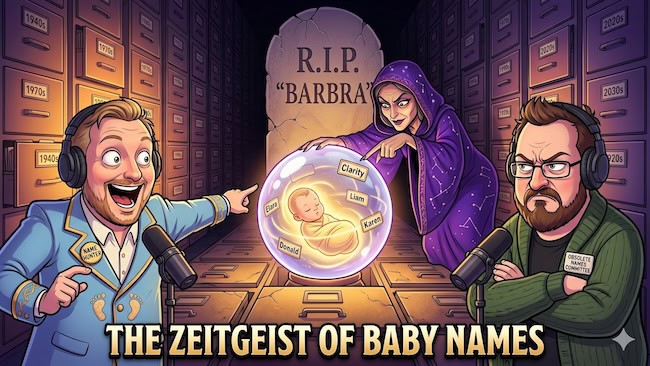
The interpretation of these trends is further enriched by the insights of name enthusiasts and cultural commentators. Thomas, a self-described "name nerd," highlights the long-standing data availability from the SSA, which has allowed for meticulous tracking of naming popularity over extended periods. He notes the subconscious awareness most people possess regarding the generational shifts in name popularity, observing that "Barbara would not be a baby name today. That is a grandma name."
Thomas also points out the differing trajectories of male and female names. While some male names, like John, have maintained consistent popularity for generations, others have seen a significant decline. The trend towards "bright, energetic, optimistic names" is a recurring observation, with the decline of "-aiden" names and names like Zendaya illustrating this point. He also offers a unique perspective on Ava’s decline, suggesting a possible association with the increasing prevalence of AI characters named Ava in popular fiction, leading parents to seek more distinct alternatives.
Jonathan, another commentator, raises the intriguing possibility that popular cultural franchises, such as the regency-era dramas like Bridgerton, may be contributing to the resurgence of older, more classic names. By reintroducing these names in a modern, attractive context, these shows could be influencing parents to see them in a new light, prompting a revival.
The discussion also touches upon the unique landscape of naming in the United States compared to other countries. Thomas points out that many European nations, particularly Germanic countries, have legal restrictions on names, often requiring them to be selected from an approved list. This contrasts with the relative freedom of choice in the U.S., where the SSA data reflects a more organic and culturally driven evolution of naming conventions.
Conclusion: A Cultural Renaissance in Naming
The Social Security Administration’s 2025 baby name data is more than just a statistical report; it is a cultural barometer. The clear directional tilt towards names signifying light, fire, clarity, strength, and uplift signals a profound shift in the collective consciousness of American parents. As the nation transitions through a challenging societal phase, the names bestowed upon its newest generation are a powerful testament to a growing desire for optimism, resilience, and a future illuminated by hope and noble values. This trend is not merely about aesthetics; it is a deep-seated aspiration for a world that is clearer, stronger, and more brightly lit, a sentiment that will undoubtedly shape the cultural narrative for years to come.




Leave a Comment