
"The Eternal City": A Journey Through Rome’s Enduring Legacy in Speculative Fiction
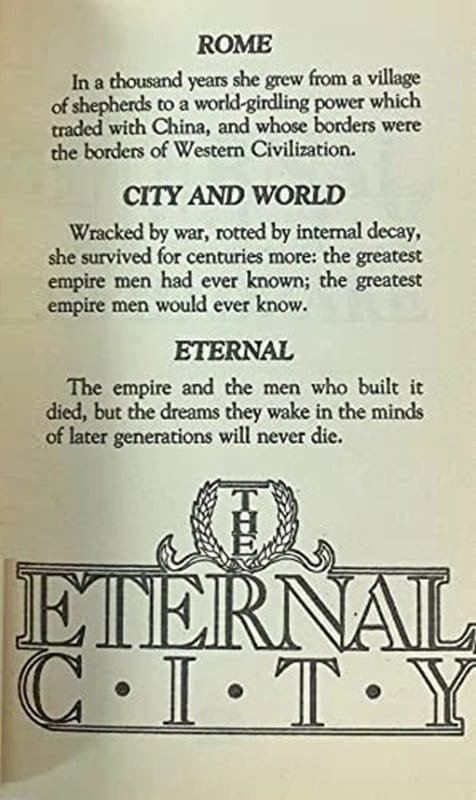
January 1990, Baen Books – From the grand imperial sweep to the subtle echoes of its decline, the concept of Rome has captivated storytellers for millennia. In a testament to this enduring fascination, Baen Books released The Eternal City, a compelling anthology edited by David Drake, Martin Greenberg, and Charles G. Waugh. Featuring a striking cover by John Rheaume, this collection promised readers a diverse exploration of Rome’s influence, real and imagined, across the vast landscape of speculative fiction. More than just a compilation of tales, The Eternal City serves as a fascinating lens through which to view how science fiction, fantasy, and even horror engage with one of history’s most pivotal civilizations.
For many, like the ardent Robert E. Howard completist who first encountered this volume, the lure of a specific author was the initial draw. Howard’s "Kings of the Night," a seminal crossover featuring Bran Mak Morn and Kull, was a powerful magnet, embodying the raw, mythic heroism often associated with ancient epochs. Yet, as the reviewer discovered, the anthology offered far more than a single celebrated tale, proving itself an "entertaining collection" that thoughtfully curated a spectrum of narratives spanning various subgenres and eras. Drake, Greenberg, and Waugh, seasoned anthologists known for their keen editorial eye, assembled a rich tapestry that explored Rome not merely as a historical setting but as a powerful idea, a cultural touchstone, and a recurring motif in the collective human imagination.
The Enduring Allure: Main Facts of "The Eternal City"
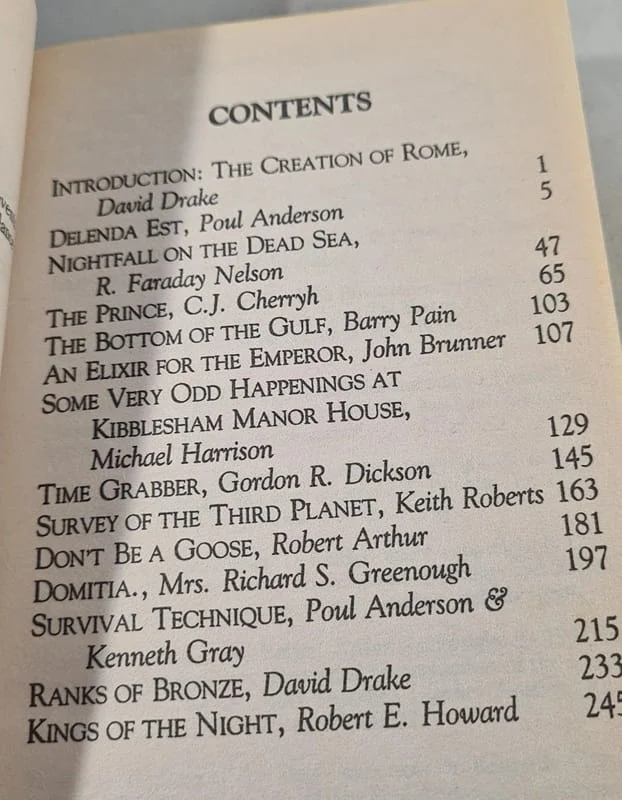
The Eternal City, published by Baen Books in January 1990, is a meticulously curated anthology designed to explore the multifaceted legacy of Rome through the lens of speculative fiction. Edited by a triumvirate of respected names in the genre – David Drake, Martin Greenberg, and Charles G. Waugh – the collection comprises fourteen stories and an introductory essay, each offering a distinct perspective on Rome, its history, its myths, and its pervasive influence. The vivid cover art by John Rheaume immediately evokes the grandeur and mystery associated with the subject matter, setting the stage for the imaginative journeys within.
The anthology’s central premise revolves around stories that, however directly or tangentially, connect to Rome. This broad interpretative scope allows for an eclectic mix of genres, from classic science fiction and historical fantasy to unsettling horror and whimsical humor. The inclusion of authors ranging from genre titans like Poul Anderson, Robert E. Howard, and C. J. Cherryh to earlier literary figures like Barry Pain and Mrs. Richard S. Greenough, speaks to the editors’ ambition to present a comprehensive, if not exhaustive, panorama of Roman-themed narratives in speculative literature. The collection stands as a testament to the enduring power of Rome as a narrative catalyst, capable of inspiring tales that transcend time, explore alternate histories, or simply delve into the human condition against a backdrop of imperial might and eventual decline.
A Historical Trajectory: Chronology and Context
The publication of The Eternal City in 1990 by Baen Books places it firmly within a period of prolific anthology publishing in speculative fiction. Baen, established by Jim Baen in 1983, quickly became known for its strong focus on military science fiction, space opera, and epic fantasy, often characterized by accessible storytelling and a robust sense of adventure. Themed anthologies were a cornerstone of Baen’s strategy, providing a platform for both established authors and promising newcomers, while also exploring popular concepts or historical periods. This anthology, dedicated to Rome, aligned perfectly with Baen’s interest in historical settings and their imaginative reinterpretations.
The choice of editors was also strategic. David Drake, a highly respected author of military science fiction and fantasy, particularly known for his "Hammer’s Slammers" series and his deep understanding of military history (including Roman), brought an authentic historical sensibility to the project. Martin Greenberg, a legendary anthologist, was renowned for his ability to compile vast and varied collections across numerous themes and genres, often in collaboration. Charles G. Waugh, another prolific anthologist, frequently partnered with Greenberg, bringing a scholarly breadth to their selections. Together, they possessed the combined expertise to sift through decades of speculative fiction to unearth stories that genuinely resonated with the Roman theme.
The enduring appeal of Rome itself is a critical contextual element. From Gibbon’s Decline and Fall to modern historical fiction, the Roman Empire has served as an inexhaustible wellspring of inspiration. Its intricate political machinations, legendary figures, epic conquests, philosophical currents, and eventual collapse offer fertile ground for exploring universal themes of power, morality, fate, and the cyclical nature of civilization. In speculative fiction, Rome has been a particularly potent setting for alternate histories (what if Rome never fell?), time travel narratives (witnessing key events), and even cosmic encounters (aliens observing or interacting with Roman society). The Eternal City thus capitalizes on a deeply ingrained cultural fascination, presenting it through the imaginative and often subversive lens of genre storytelling. The anthology’s contents, drawing from stories published as early as 1872 and as late as 1986, reflect a century-long engagement between writers and the Roman motif, showcasing its versatility across different literary periods and stylistic trends.
Unearthing the Past and Future: Supporting Data and Detailed Analysis
The true strength of The Eternal City lies in its diverse table of contents, which meticulously weaves together different interpretations of the Roman theme. As the original review notes, the connection to Rome can be "fairly tenuous" in some cases, highlighting the editors’ broad approach to the subject. This elasticity allows for a rich thematic exploration, encompassing direct historical narratives, time-travel scenarios, allegorical tales, and even stories where Rome’s influence is felt more subtly through cultural echoes or philosophical underpinnings.
The anthology opens with an "Introduction: The Creation of Rome" by David Drake, setting an academic yet engaging tone for the collection. Drake, with his background, was ideally positioned to frame the historical and literary significance of Rome, preparing readers for the imaginative departures to follow.
Key Stories and Their Roman Connection:
-
"Delenda Est, a Time Patrol tale" by Poul Anderson (F&SF, December 1955): This is unequivocally hailed as a "classic," and for good reason. Anderson’s "Time Patrol" series is a cornerstone of science fiction, and "Delenda Est" is one of its most celebrated entries. The title itself, a direct reference to Cato the Elder’s famous phrase, "Carthago delenda est" ("Carthage must be destroyed"), immediately signals its focus. The story masterfully explores the catastrophic implications of altering history, specifically preventing the destruction of Carthage. It’s a complex narrative that delves into the butterfly effect, the ethical dilemmas of time travel, and the profound impact of Roman history on the subsequent development of Western civilization. Its classic status stems from its intricate plot, philosophical depth, and Anderson’s command of historical detail.
-
"Kings of the Night" by Robert E. Howard (Weird Tales, November 1930): The primary draw for the original reviewer, this story is a cornerstone of heroic fantasy. It exemplifies Howard’s unique blend of historical settings, mythic grandeur, and visceral action. The tale famously brings together two of Howard’s iconic characters: Bran Mak Morn, the last king of the Picts, and Kull of Atlantis, transported across time to aid Bran against Roman legions. The "meeting of mythic figures" against a backdrop of ancient British resistance to Roman conquest is a powerful fantasy trope, showcasing Howard’s ability to imbue historical conflict with a sense of cosmic struggle. Its appeal lies in its raw energy, the clash of cultures, and the archetypal struggle for freedom against imperial might.
-
"Nightfall on the Dead Sea" by Ray Faraday Nelson (F&SF, September 1978): Described as "much enjoyed," this story likely offers a more contemplative or mysterious take on the Roman theme. Given Nelson’s reputation for thought-provoking science fiction, this could involve archaeological discoveries tied to Roman Judea, an alternate history involving Roman presence in the Middle East, or a post-apocalyptic scenario where remnants of Roman influence persist. The "Dead Sea" in the title suggests a narrative steeped in historical mystery and perhaps a darker, more reflective tone.
-
"An Elixir for the Emperor" by John Brunner (Fantastic, Nov. 1964): Another "enjoyed" story, Brunner’s work often blended scientific rigor with sharp social commentary. This title evokes historical intrigue, perhaps a quest for immortality or a potent solution within the Roman court. It could explore themes of power, corruption, and the lengths to which emperors would go to secure their legacy or prolong their lives, filtered through a fantastical or alchemical lens. Brunner’s ability to craft intricate plots and explore human nature would make such a premise compelling.
-
"Survey of the Third Planet" by Keith Roberts (F&SF, January 1966): This story, also "enjoyed," suggests an outsider’s perspective on Earth, possibly during the Roman era or observing its legacy. Roberts, known for his elegant prose and thoughtful science fiction, might present an alien civilization’s dispassionate analysis of human history, with the Roman Empire serving as a focal point for understanding human ambition, conquest, and societal structures. This kind of narrative often serves as a powerful commentary on humanity itself.
-
"Some Very Odd Happenings at Kibblesham Manor House" by Michael Harrison (F&SF, April 1969): Labelled "the strangest of the bunch" and "grotesque enough to make itself a horror story," this piece likely connects to Rome through ancient artifacts, lingering curses, or the ghostly remnants of Roman occupation in Britain. Harrison, a master of weird fiction and supernatural tales, would excel at crafting a chilling narrative where the ancient past intrudes violently upon the present, possibly through a haunted location linked to Roman history. The grotesque elements would likely involve unsettling imagery or psychological horror.
-
"The Prince, Heroes in Hell tale" by C. J. Cherryh (Far Frontiers Vol. IV, 1986): This story, part of Cherryh’s "Heroes in Hell" series, was considered "weak" by the reviewer. The "Heroes in Hell" concept involves historical figures (often military or political leaders) trapped in a chaotic afterlife. A story titled "The Prince" would almost certainly feature a Roman emperor or general. The weakness might stem from a perceived lack of originality within the established series’ tropes, or perhaps the portrayal of the Roman figure failed to resonate with the reviewer’s expectations for a character of such historical weight.
-
"Don’t Be a Goose" by Robert Arthur (Argosy, May 3, 1941) & "Survival Technique" by Poul Anderson & Kenneth Gray (F&SF, March 1957): These two tales were singled out as "very hilarious." Humor in Roman-themed fiction often comes from juxtaposing modern sensibilities with ancient customs, or from satirical takes on imperial bureaucracy and military life. Arthur, known for his mystery and fantasy stories, and Anderson, with his sharp wit, could easily craft comedic scenarios involving time travel mishaps, absurd historical misunderstandings, or satirical observations of Roman society.
-
"Ranks of Bronze" by David Drake (Galaxy, August 1975): Drake’s own contribution, this short story was preferred over its novel-length expansion. This is a common sentiment for some readers, as short stories can often deliver a more concentrated impact. "Ranks of Bronze" typically involves a Roman legion transported to an alien world, forcing them to adapt their military discipline and tactics to a completely foreign environment. The short story’s strength likely lies in its taut pacing, focus on character and action, and the powerful theme of Roman resilience and adaptability in the face of the utterly unknown.
-
Other Notable Inclusions:
- "The Bottom of the Gulf" by Barry Pain (Stories in the Dark, 1901): An early example of weird or horror fiction, its Roman connection might be subtle, perhaps involving an ancient curse, a rediscovered Roman ruin with malevolent properties, or a psychological horror born from a historical site.
- "Time Grabber" by Gordon R. Dickson (Imagination, December 1952): Dickson’s work often dealt with military themes or human evolution. "Time Grabber" could be a time-travel adventure to Roman times, or a future society attempting to retrieve Roman technology or individuals.
- "Domitia" by Mrs. Richard S. Greenough (Arabesques: Monarè, Apollyona, Domitia, Ombra, 1872): This is a rare inclusion from the 19th century, likely a piece of historical fiction or romance centered around a Roman figure named Domitia, offering a glimpse into earlier literary interpretations of the period.
The Editors’ Collaborative Vision:
The collaboration between Drake, Greenberg, and Waugh was crucial to the anthology’s success. Drake’s expertise in military history and his own writing in the genre ensured the historical accuracy and narrative depth of many selections, particularly those involving Roman military life. Greenberg and Waugh, with their vast experience in compiling anthologies, brought a breadth of literary knowledge, ensuring a diverse range of styles, tones, and publication dates. Their combined efforts allowed The Eternal City to transcend a simple collection of stories and become a curated experience, showcasing the multifaceted ways in which authors have engaged with the Roman world. The inclusion of very early pieces alongside contemporary ones demonstrates a conscious effort to trace the literary lineage of Roman-themed speculative fiction.
Critical Echoes: Official Responses and Legacy
While specific "official responses" in the form of contemporaneous critical reviews for The Eternal City are challenging to pinpoint decades later without extensive archival research, we can infer its likely reception and enduring legacy based on its contents and the reputation of its editors and publisher.
At the time of its release, The Eternal City would have been welcomed by fans of themed anthologies, a popular format in the late 1980s and early 1990s. Baen Books’ reputation for delivering accessible, engaging, and often action-oriented speculative fiction meant the anthology likely found a ready audience. The presence of genre luminaries like Poul Anderson, Robert E. Howard, and C. J. Cherryh would have been a significant selling point, ensuring visibility and attracting readers who followed these authors. The quality of the individual stories, particularly the inclusion of widely acclaimed pieces like Anderson’s "Delenda Est," would have cemented its value among discerning readers.
The anthology’s strength also lies in its curatorial approach. By presenting a broad spectrum of interpretations of the "Roman theme," it avoided monotony and showcased the versatility of speculative fiction. This editorial choice likely garnered appreciation from readers interested in the intellectual exercise of connecting disparate narratives through a common historical thread. The inclusion of older, less commonly reprinted stories (like those by Barry Pain or Mrs. Richard S. Greenough) would have also appealed to readers with an appreciation for the history of genre fiction, offering them a chance to discover forgotten gems.
Over the years, The Eternal City has likely maintained a quiet but steady presence in the collections of genre enthusiasts and historians. It serves as a valuable resource for those studying the intersection of history and speculative fiction, particularly the enduring fascination with Rome. Its legacy is not necessarily one of groundbreaking innovation but rather of successful compilation and thematic exploration, solidifying Baen’s reputation for producing solid, entertaining, and thoughtful anthologies that resonated with their target audience. The evocative cover by John Rheaume, with its classical motifs, would have also contributed to its lasting visual identity and appeal on bookshelves.
Echoes Through Time: Implications and Enduring Significance
The Eternal City stands as more than just a collection of stories; it is a profound exploration of humanity’s enduring fascination with one of its most influential empires. The anthology’s implications stretch across several domains:
The Lasting Allure of Rome: The most obvious implication is the testament to the inexhaustible narrative potential of the Roman Empire. Why does Rome continue to captivate? Its rise and fall offer a template for understanding power, ambition, technological innovation, cultural assimilation, and societal decay. It provides a mirror for contemporary concerns about empire, governance, and human nature. Authors, regardless of their primary genre, continually return to Rome because its themes are universal and its history is rich with dramatic potential, making it a timeless backdrop for exploring humanity’s highest achievements and its most profound failures.
The Versatility of Speculative Fiction: The anthology demonstrates the remarkable adaptability of speculative fiction genres. Science fiction tackles time travel and alternate histories, fantasy conjures mythic clashes and ancient sorcery, and horror explores the lingering dread of the past. The Eternal City showcases how these genres are not merely about escapism but can serve as powerful tools for historical commentary, philosophical inquiry, and psychological exploration, enriching our understanding of historical periods rather than simply retelling them.
The Role of Anthologies: In an era increasingly dominated by novels and serialized content, The Eternal City reminds us of the invaluable role of anthologies. They serve as vital curatorial exercises, preserving and showcasing short fiction that might otherwise be forgotten. They introduce readers to new authors while reminding them of classic works. Themed anthologies, in particular, offer a structured journey through a specific concept or historical period, allowing for a multifaceted understanding that a single novel cannot provide. They are a critical component of genre literature, offering diversity and intellectual depth.
For the Completist and the Curious: For completists like the original reviewer, such anthologies are essential for accessing otherwise rare or out-of-print stories. For new readers, they provide an accessible entry point into complex themes and celebrated authors. The Eternal City offers a curated syllabus of Roman-themed speculative fiction, making it a valuable resource for anyone interested in this niche.
In conclusion, The Eternal City is a remarkable achievement in anthology editing. David Drake, Martin Greenberg, and Charles G. Waugh successfully brought together a compelling array of stories that, collectively, illuminate the multifaceted ways in which the Roman legacy continues to resonate in the imaginative literature of the past two centuries. From the epic clashes of Howard’s heroic fantasy to the temporal paradoxes of Anderson’s science fiction, and the grotesque horrors lurking in ancient ruins, this collection proves that the influence of Rome is truly eternal, providing endless inspiration for stories that challenge, entertain, and provoke thought. It remains a significant milestone in the history of themed anthologies and a testament to the enduring power of history reimagined.


Leave a Comment