
China Executes Gaming Tycoon’s Killer as Global Sci-Fi Franchise Faces Dark Shadow
BEIJING, CHINA – In a development sending ripples through the global entertainment and tech industries, Chinese authorities have executed Xu Yao, the man convicted of poisoning billionaire gaming tycoon Lin Qi, whose company held the film adaptation rights to the critically acclaimed science fiction trilogy, The Three-Body Problem. The high-profile murder case, which captured international attention due to its connection to the Netflix series 3 Body Problem, culminated in Xu’s execution, confirmed this week by Lin Qi’s former company, Yoozoo Games. This stark resolution underscores China’s stringent capital punishment laws and casts a somber note over a franchise that has recently achieved global recognition.
The news broke with a BBC report, swiftly followed by confirmations from various media outlets, detailing the grim end to a corporate rivalry that escalated into a fatal act. Xu Yao’s conviction in 2024 and subsequent execution, reportedly carried out on May 21 and confirmed on Tuesday, brings a definitive close to a saga marked by betrayal and extreme violence within the upper echelons of China’s burgeoning tech sector.
A High-Stakes Betrayal and a Capital Punishment
The narrative of Lin Qi’s murder is a chilling tale of ambition, perceived slight, and lethal revenge. Lin Qi, the charismatic founder and CEO of Yoozoo Games, was a prominent figure in China’s rapidly expanding gaming industry, having built his company into a powerhouse. His most significant cultural coup was securing the adaptation rights for Liu Cixin’s The Three-Body Problem, a seminal work of Chinese science fiction that would eventually become a major Netflix series.
Xu Yao, an executive at Yoozoo’s subsidiary that managed the sci-fi adaptations, reportedly harbored deep resentment after being sidelined by Lin Qi. This perceived marginalization occurred shortly after Xu had played a pivotal role in securing the lucrative Netflix deal for the beloved trilogy. The BBC, citing local media, reported that a "disgruntled Xu Yao poisoned Lin for sidelining him." The intensity of the motive speaks volumes about the cutthroat environment of China’s tech world, where fortunes are made and lost, and professional slights can take on disproportionate significance. The finality of capital punishment in China sends a clear, severe message about the consequences of such actions, particularly in high-profile cases involving influential figures.
The Poison Plot Unveiled
Details from an AP News story shed light on the meticulous and chilling nature of Xu Yao’s murder plot. Investigations revealed that Xu went to extraordinary lengths to acquire and administer the poisons, spending hundreds of thousands of yuan (tens of thousands of U.S. dollars) to purchase highly toxic substances online. Among these deadly compounds was alpha-amanitin, a potent and lethal toxin commonly found in certain poisonous mushrooms.
The method of delivery was insidious, designed to be undetectable and insidious. Xu disguised the poisons as probiotic pills, a common health supplement, and also introduced them into everyday consumables such as coffee capsules, water containers, and whiskey bottles. These contaminated items were then shared with Lin Qi and, alarmingly, other employees of the company. Lin Qi was hospitalized in December 2020, suffering severe symptoms, and tragically died a few days later at the age of 39. While Lin was the primary target, several other individuals also fell ill from exposure to the tainted items, though fortunately, they recovered. This broader targeting suggests a wider scope of malice, or perhaps a reckless disregard for collateral damage, further highlighting the premeditated and dangerous nature of Xu’s actions. Weibo comments, a prominent Chinese social media platform, further indicated Xu Yao’s early involvement in the deal-making stages of The Three-Body Problem‘s Netflix adaptation, adding weight to the "sidelining" motive.
Industry Reactions and Judicial Finality
Yoozoo Games, Lin Qi’s company, issued a statement confirming Xu’s execution and expressing profound sorrow. "Justice has ultimately been served," the statement declared, reflecting a sense of closure for the company and its employees. It continued, "We deeply mourn Mr. Lin and extend our heartfelt condolences to his family." The statement also highlighted the company’s appreciation for the judicial process: "As colleagues who fought alongside him, all members of the company are grateful for the impartiality of the judicial process." This official response underscores the severe impact Lin’s death had on his organization and the collective relief that the legal proceedings have concluded.
The execution not only closes a chapter on a tragic corporate crime but also serves as a stark reminder of the legal consequences in China, where capital punishment is regularly applied for serious offenses, particularly murder. The swift progression from conviction to execution, occurring within months, exemplifies the efficiency and severity of the Chinese legal system in handling such cases.

Broader Implications for China’s Tech and Justice Landscape
The execution of Xu Yao for the murder of Lin Qi has significant implications for China’s tech and entertainment sectors, as well as for its legal system. For the tech industry, the incident highlights the intense pressures and rivalries that can exist within high-growth companies, where enormous wealth and influence are at stake. It also serves as a cautionary tale about internal conflicts and the need for robust corporate governance.
From a judicial perspective, the case reinforces China’s unwavering commitment to capital punishment for heinous crimes. While human rights organizations often criticize China’s use of the death penalty, the public sentiment within China often supports it for crimes perceived as particularly egregious, such as the premeditated murder of a prominent figure. The case also brings unwanted notoriety to The Three-Body Problem franchise, a cultural touchstone that has now become inextricably linked to a dark real-life drama. As the Netflix series continues to garner international viewership, the story of its original rights holder’s tragic demise adds a layer of complexity and somberness to its global reception.
Cultural Tributes and Enduring Legacies
Beyond the somber news from China, the world of arts and culture offered moments of celebration and reflection, honoring iconic figures and beloved franchises.
Bob Dylan’s 85th: A Comic Book Ode
In a unique celebration of musical legend Bob Dylan’s 85th birthday, Brian Cronin of CBR.com compiled an exhaustive list titled "85 Bob Dylan Comic Book References." This annual tradition, which Cronin has meticulously maintained since Dylan’s 70th birthday, showcases the enduring and often surprising influence of the Nobel laureate on the comic book medium.
Cronin’s project began with adding a single new reference each year, but for Dylan’s 80th, he embarked on an ambitious quest to uncover "80 new references that I had not previously used," demonstrating the depth of Dylan’s pervasive cultural footprint. For his 85th, Cronin returns to adding one new, carefully selected reference, inviting long-time followers to discover the latest addition. The compilation serves as a testament to Dylan’s status as a lyrical and cultural touchstone, with his songs, imagery, and poetic sensibilities subtly woven into the fabric of comic book narratives. One charming example highlighted is the character "Kwinn the Eskimo" from G.I. Joe: A Real American Hero #2, a clear homage to Dylan’s classic track, "Quinn the Eskimo (The Mighty Quinn)." This intricate web of references underscores how artists across different mediums draw inspiration from and pay tribute to figures whose work transcends generations and genres, cementing Dylan’s legacy not just in music, but in the broader tapestry of popular culture.
Masters of the Universe: A Marketing Spectacle
The upcoming Masters of the Universe live-action movie is making waves long before its release, thanks to an aggressive and innovative marketing campaign. Cora Buhlert, a keen observer of pop culture, offered her insights in "Cora’s Thoughts on the Latest Masters of the Universe Trailers and Other Footage and the Marketing Campaign in General." Her analysis reveals the sheer scale of the promotional efforts, which extend far beyond traditional trailers and TV spots.
The marketing blitz includes a constant stream of featurettes, behind-the-scenes footage, and interviews with the cast and crew, designed to generate continuous buzz. What truly stands out are the spectacle-driven events, such as a "massive, world record breaking drone show in the skies above Los Angeles." This elaborate display, which saw drones illuminating the night sky to form iconic Masters of the Universe imagery, was not even the first of its kind, following another drone show over a congested California highway. Buhlert, from her European perspective, muses on the regulatory differences, noting that such drone spectacles, particularly over public thoroughfares, might face significant hurdles in Germany due to safety concerns regarding driver distraction. This observation highlights the varying approaches to public space and advertising, while also underscoring the creative lengths to which studios will go to capture audience attention in a crowded media landscape, signaling a determined effort to reintroduce He-Man and his cohorts to a new generation.
The Roddenberry Archive Opens its Vault for Star Trek’s 60th
As Star Trek approaches its 60th anniversary, TrekCore.com announced an exciting new video series, "Inside the Roddenberry Archive," offering fans an unprecedented glimpse into the origins and legacy of the iconic franchise. Led by Rod Roddenberry, son of Star Trek creator Gene Roddenberry, the series promises to unlock a treasure trove of rare artifacts and never-before-seen memorabilia.

The series debuted with two videos: an introduction by Rod Roddenberry himself, teasing the vastness of the archive, and a deep dive into the current state of the 34-inch USS Enterprise model. This particular model, originally built in 1964 for the pilot episode "The Cage," held a mythical status among fans after going missing for decades, only to be miraculously recovered in 2024. Each episode of "Inside the Roddenberry Archive" will feature an expert guest, providing detailed context and historical significance to the showcased items. This initiative not only celebrates Star Trek‘s enduring impact but also emphasizes the importance of preserving the physical history of such a groundbreaking cultural phenomenon. The recovery and restoration of the original Enterprise model symbolizes the ongoing dedication to honoring Gene Roddenberry’s vision and ensuring that the creation and legacy of Star Trek can be experienced by fans in a whole new, intimate way.
Vincent Price: The Undisputed Voice of Horror
May 27th marked the birthday of Vincent Price, a name synonymous with horror, whose distinctive voice and imposing presence left an indelible mark on cinema. Paul Weimer’s tribute eloquently captures the essence of Price’s enduring appeal, recalling his own early encounters with the "Master of Horror."
Weimer’s journey into Price’s filmography began with the gory and fun Dr. Phibes movies, broadcast on WPIX. It was Price’s unmistakable voice, "oily, horror fueled," that first captivated him, a voice so unique that it allowed him to recognize the actor even in vastly different roles, such as the very different-looking Dr. Egghead in the 1960s Batman cartoon. Price’s career saw him repeatedly starring in genre classics, from adaptations of Edgar Allan Poe like The Pit and the Pendulum to a memorable appearance in Columbo and numerous Roger Corman horror films. Weimer highlights the haunting image from Price’s version of The Fly, even while preferring Jeff Goldblum’s take, emphasizing the sheer terror Price could evoke. Ultimately, Price’s legacy boils down to "the voice of horror," a vocal instrument so perfectly suited to tales of the macabre that, as Weimer aptly concludes, "who else could have been the narrator voice for the music video Thriller?" His influence extends beyond the silver screen, proving that a truly unique talent can transcend specific roles to become a cultural archetype.
Preserving History and Pushing Boundaries
From safeguarding literary heritage to navigating the perils of space, these stories reflect humanity’s ongoing efforts to understand its past and boldly venture into its future.
The British Library’s "Book Blinders" Controversy
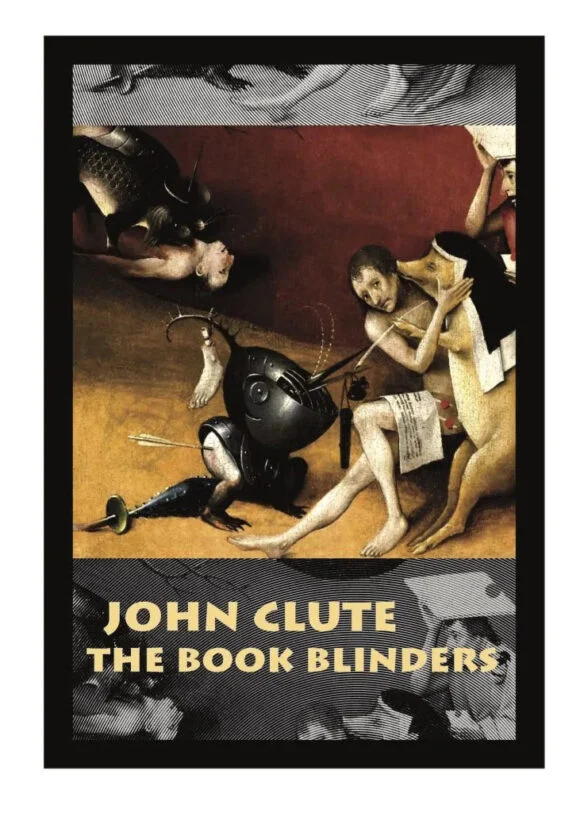
The esteemed British Library, a bastion of knowledge and cultural preservation, has come under scathing criticism from John Clute, a respected authority from The Science Fiction Encyclopedia. In his piece "Burning Mappemonde To The Ground," Clute decries the library’s historical practice of destroying millions of dust jackets, a practice he dissects in his 2024 book, The Book Blinders: Annals of Vandalism at the British Library: A Necrology.
Clute’s central argument is a passionate indictment: he views the destruction of these dust jackets, dating back to 1819, as nothing less than a "Puritan war of choice against the huge terpsichorean flow of culture and context and wisdom and flummery and mummery conveyed through those covers." For Clute, each dust jacket is a "theatre of arrival," a "mapping of the story of the world," and a proclamation of the "world within." The loss of these covers, he argues, is the closing of these metaphorical theatres, a significant erasure of historical and cultural context. The book The Book Blinders focuses on practices up to around 1990, when the British Library ostensibly began to retain some categories of fiction dust jackets. However, Clute points out the inadequacy of these later efforts, noting that these jackets were often stored hundreds of miles away in warehouses, sorted by date of transfer, making them practically inaccessible and effectively lost to researchers seeking specific historical or artistic context. This ongoing debate highlights the complex challenges faced by cultural institutions in balancing preservation with practicalities, and the enduring importance of seemingly ephemeral details in understanding the broader narrative of human culture.
Apollo 13’s Ingenious Return: A Testament to Human Resolve
The harrowing journey of Apollo 13 in April 1970 remains one of humanity’s most dramatic tales of survival and ingenuity in space. Space Daily revisited this pivotal moment, reminding us of the extraordinary measures taken by the crew to navigate their crippled spacecraft home: by manually aligning it with Earth’s terminator – the precise line where day met night on the planet they desperately sought – and timing a critical fourteen-second engine burn with a wristwatch.
The conditions inside the lunar module were dire: near-freezing temperatures, the guidance computer shut down to conserve precious battery power for reentry, and the navigation platform cold and dark. The crew faced the monumental task of executing a precise engine burn that, if even slightly off, would doom them to either skip off Earth’s atmosphere or incinerate upon reentry. With their advanced technology rendered useless, they turned to rudimentary methods: the reticle etched in the lunar module window, the Earth’s distinct terminator line, and the invaluable Omega Speedmaster wristwatch of astronaut Jack Swigert. The procedure, developed on the ground and relayed to the crew, was based on a technique astronaut Jim Lovell had quietly experimented with during Apollo 8. Lovell controlled the yaw, Fred Haise handled the pitch, and Swigert, in the freezing cabin, called out the crucial fourteen seconds. This incredible feat underscores not only the quick thinking and resourcefulness of the astronauts but also the profound collaboration between the crew and ground control, demonstrating human brilliance under extreme duress and solidifying Apollo 13’s place as a powerful symbol of perseverance.

China’s Accelerating Lunar Ambitions: A New Space Race
China is aggressively ramping up its lunar exploration efforts, consolidating its robotic and human spaceflight programs into a unified Lunar Exploration Program. Space.com reports that the nation has set an ambitious target: landing its first astronauts on the moon by 2030, a goal for which it "will spare no effort."
The announcement was made by Zhang Jingbo, spokesman for the China Manned Space Agency (CMSA), during a pre-launch event for the Shenzhou-23 crew, bound for China’s Tiangong Space Station. This strategic integration of the Chang’e lunar probe activities with human spaceflight aims to "fully leverage the technological expertise and practical experience accumulated over decades." By combining "missions, resources, and teams," China seeks to streamline its efforts and accelerate its progress towards becoming a dominant force in lunar exploration. This move signals an intensifying space race, particularly with the United States, which has also articulated plans for a human return to the moon. China’s systematic and determined approach, building on its impressive track record of robotic lunar missions, positions it as a formidable contender in the quest for establishing a long-term human presence on the moon, with significant geopolitical and scientific implications for the coming decade.
Fan Perspectives and Cinematic Explorations
The intricate relationship between original literary works and their screen adaptations continues to fascinate, as demonstrated by one dedicated fan’s extensive dive into Philip K. Dick’s cinematic universe.
Philip K. Dick’s Cinematic Universe: A Fan’s Comprehensive Ranking
Moid Moidelhoff, the charismatic leader of the Media Death Cult and a fervent admirer of Philip K. Dick, recently embarked on an epic cinematic journey, spurred by the unwelcome arrival of the "deadly man-flu." From the confines of his sickbed, Moid undertook the ambitious task of watching and ranking every cinematic adaptation of Dick’s science fiction novels and short stories.
Moid’s dedication to Dick’s work is well-established; he successfully completed his personal mission of reading all of Dick’s SF novels last year. His cinematic endeavor, however, came with specific parameters. He meticulously focused solely on film adaptations, consciously skipping television series such as The Man in the High Castle and the animated Blade Runner content, aiming for a pure theatrical experience. Furthermore, he excluded non-Anglophone and non-science fiction works. A particular challenge arose with Radio Free Albemuth, which proved prohibitively expensive and difficult to access in "Brit Cit" (the UK), adding a humorous note of frustration to his quest. In a comprehensive 21-minute video, Moid presents his definitive rankings, inviting his substantial following to engage in spirited debate: do they agree, disagree, or find themselves somewhere in the middle of his "tremendous taste in Dick"? This passionate fan project not only highlights the enduring appeal and adaptability of Philip K. Dick’s visionary, often reality-bending, narratives but also showcases the deep, analytical engagement that dedicated fan communities bring to the works they cherish.
This article compiles news and commentary from various sources, including BBC News, AP News, CBR.com, CoraBuhlert.com, Encyclopedia of Science Fiction, TrekCore.com, Space Daily, Space.com, and SF Concatenation.



Leave a Comment