
Zoi: A Profound Journey into the Biological Unknown and the Human Psyche
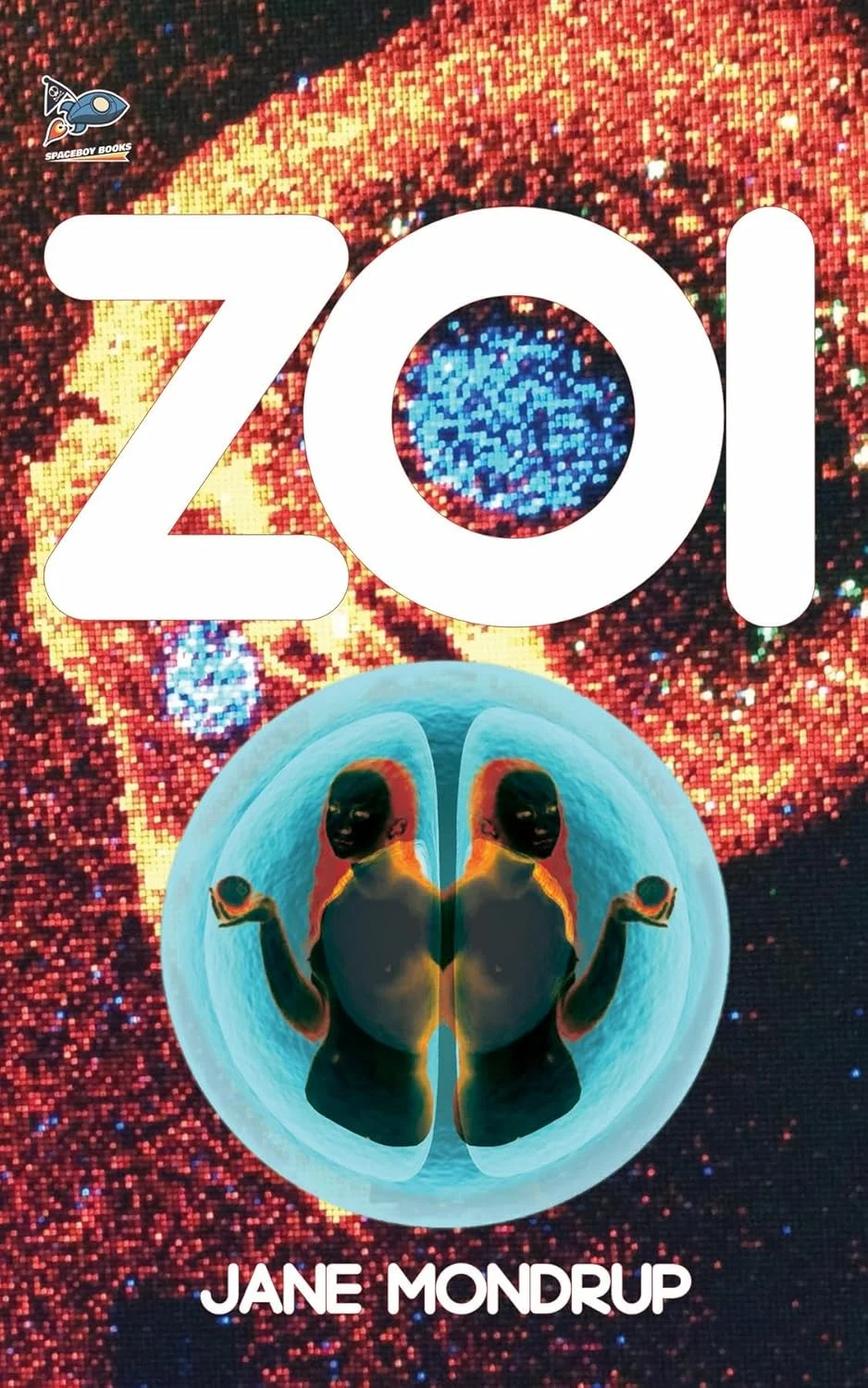
In a bold re-imagining of first contact, Jane Mondrup’s novel Zoi plunges humanity into an encounter not with monolithic alien constructs, but with living, evolving entities that challenge our very understanding of intelligence, adaptation, and our place in the universe. Departing from the technological marvels often depicted in science fiction, Zoi introduces mysterious, amoebae-like beings that journey through our solar system, offering both the promise of interstellar travel and a profound, unsettling transformation for those who dare to enter them.
The novel, recently highlighted in critical reviews, has garnered attention for its intimate scale and deep psychological exploration, setting it apart from grander, more conventional narratives of cosmic discovery. At its heart, Zoi is a story of a one-way voyage, a scientific mission that becomes an existential crucible for its human participants, forcing them to confront the terrifying reciprocity of true alien interaction. It raises critical questions about human exceptionalism, the ethics of exploration, and the fundamental compromises inherent in encountering life so profoundly different from our own.
Main Facts: The Arrival of the Living Vessels
The premise of Zoi is anchored in a near-future scenario where humanity’s long-held dream—or dread—of extraterrestrial life is finally realized. A series of enigmatic objects begins to enter our solar system, one after another. These aren’t the metallic, geometric spacecraft of popular imagination, nor are they dead asteroids. Instead, they are colossal, living entities, which humanity dubs "zoi." Their arrival is singular: each zoi enters, lingers for a period, and then departs, only to be succeeded by another, maintaining a continuous, perplexing presence.
These titular zoi are an enigma wrapped in biological mystery. They defy conventional human attempts at communication and analysis. Unmanned probes sent to investigate the first arrivals are met with no discernible reaction, rendering traditional technological approaches moot. Yet, a breakthrough occurs when a human makes direct physical contact. The otherwise impenetrable surface of a zoi yields, creating a cavity precisely sized for a human body. This unprecedented response signals a form of active, if alien, hospitality, a stark contrast to the passive or overtly hostile aliens often depicted in fiction.
The core narrative focuses on Amira, the novel’s narrator, and her three crewmates—Kiah, Evardo, and Linn. They are scientists and explorers, chosen for a mission of ultimate dedication: to enter a zoi and travel with it as it departs the solar system, with no control over their destination or return. Their objective is grand: to understand the zoi well enough to unlock the secrets of interstellar travel, potentially for all of humanity. However, this dedication comes with immense personal cost, as the journey quickly devolves into a struggle for psychological and biological adaptation, blurring the lines between explorer and explored, self and other.
Chronology: From Childhood Dream to Cosmic Commitment
The narrative of Zoi is masterfully woven through two distinct temporal strands: Amira’s past, chronicling her lifelong obsession with the zoi, and her present, detailing the harrowing reality of her mission inside one of these living vessels.
Early Encounters and Amira’s Awakening
The human encounter with the zoi begins with their sequential, mysterious arrivals in the solar system. Initially, these colossal, shimmering entities between the stars are objects of scientific curiosity and public awe. Scientists launch unmanned probes, attempting to glean data, but the zoi remain unresponsive to technological overtures. This initial period of observation is characterized by a collective human struggle to categorize and comprehend something entirely outside known biological or technological frameworks.
It is during this era that a young Amira, a mere five-year-old, first beholds a zoi. The sight captivates her, igniting a lifelong obsession. For her, the "shining lump between the stars" is not just a scientific phenomenon but a source of wonder and an almost anthropomorphic connection. Her early, innocent perception of the zoi as perhaps "hurt because we never came up to see it" (p. 10) sets the stage for her future journey, contrasting sharply with the pragmatic, objectifying approach of adult science. This childhood dream, fostered by her idealist uncle Karim, becomes an "unwavering drive" to one day visit and study them, "no matter how long [that path] turned out to be" (p. 35).
The Breakthrough of Human Interaction
The turning point in human understanding of the zoi comes with the audacious act of an astronaut making physical contact. This pivotal moment reveals the zoi’s biological responsiveness, its surface "suck[ing] inwards, leaving a cavity fit for the size of a human body" (p. 33). This breakthrough transforms the zoi from an inert object of observation into an actively engaging, if still deeply alien, entity. Subsequent interactions reveal further astonishing capabilities: when an astronaut removes her glove inside a zoi and makes contact with its interior fluid, the liquid reacts, forming bubbles that grow and merge into pockets of breathable atmosphere (pp. 63-64). The zoi are not just living; they are actively shaping their interior to accommodate human biology, demonstrating a profound, if unsettling, form of hospitality.
The One-Way Voyage: Present Day Inside the Zoi
Amira’s present-day narrative strand picks up as she and her three crewmates—Kiah, the mission psychologist; Linn, the biotech expert; and Evardo, whose specific role is less detailed but implied to be technical—are already deep within a zoi. This zoi has begun its departure from the solar system, a journey from which there is no return. They are cut off from real-time communication with Earth, their mission a solitary commitment to the unknown.
Amira’s lifelong dream of being among the zoi clashes violently with the harsh reality of her choice. The physical environment of the zoi, while accommodating, is inherently alien. The crew experiences profound biological and psychological shifts: mood swings, sickness, inexplicable urges and aversions (p. 71). Amira, once driven by a pure sense of discovery, finds herself grappling with fear, anger, and a growing sense of self-alienation. Her relationship with Kiah, once close, becomes strained due to Kiah’s seemingly "quick and efficient adaptation to the environment" (p. 9), while she clings to Linn, whose body struggles dramatically, Linn’s "immune defense system seems to be especially hostile to the external influence" of the zoi (p. 7). This internal drama unfolds against the backdrop of their accelerating journey into interstellar space, transforming the mission from a scientific endeavor into a test of human endurance and identity.
Supporting Data: Deconstructing Humanity’s Place in the Cosmos
Zoi distinguishes itself through its nuanced exploration of themes that challenge conventional science fiction narratives, particularly those centered on first contact. The novel uses its unique premise to delve into the biological and psychological dimensions of alien interaction, offering a critique of human-centric perspectives and an unsettling vision of interdependence.
The Rama Comparison: A Divergent Path
The most "obvious point of comparison" (p. 2) is Arthur C. Clarke’s classic Rendezvous with Rama (1973), and this comparison serves as a crucial thematic anchor for Zoi. Both novels center on the exploration of mysterious extra-solar entities with potentially massive ramifications for humanity. However, Zoi intentionally takes this similar premise in a "very different direction" (p. 2). Clarke’s Rama is a "massive, monolithic O’Neill cylinder" (p. 3), a technological marvel, an empty vessel with "neat, human-habitable worlds on their inner surfaces" (p. 3). Its alienness is primarily structural and technological, raising questions of "Who built this, where are they, what are they like?" (p. 7). The beings who created Rama are presupposed to be "intelligent, tool-using, megastructure-building aliens that operate much like humans" (p. 7), albeit with superior technology. The environment, though dangerous, is largely a "passive backdrop on which humans act" (p. 7).
Zoi, by contrast, presents entities that are not "monolithic O’Neill cylinders" (p. 3). The zoi are "living entities, similar—and entirely dissimilar—to giant, space-borne amoebae" (p. 3), replete with "organelles," "cytosol fluid," and "transparent membrane[s]" (p. 2). Their communication is not through signals or technology, but through biological reciprocity. While Rama is a technological mystery, the zoi are a biological one. This fundamental difference highlights Zoi’s "altogether more ambiguous understanding of humanity’s place in the universe" (p. 2), suggesting that true alienness might lie beyond our technological or even cognitive frameworks, residing instead in the very fabric of life itself.
The Intimate Horror of Biological Adaptation
The zoi’s active hospitality, while initially welcoming, quickly reveals a darker, more complex side. The crew learns that while the zoi alters itself to fit them, they, in turn, are being altered to fit it. This reciprocal adaptation is the source of Amira’s profound dread. Her childhood dreams of discovery give way to a nightmare of "extreme—and eventually quite literal—self-alienation" (p. 5). The crew experiences "mood swings and sickness, impulses and aversions, ‘powerful urge[s] to do specific things, and to avoid others’" (p. 5, p. 71). Amira struggles to discern which feelings are her own and which are imposed by the zoi, leading to a breakdown of her sense of self and autonomy. Her lament about the "blind, childish faith [she] used to have in the zois" (p. 5, p. 54) underscores the chasm between romanticized alien contact and its unsettling reality.
The character dynamics further illuminate this struggle. Kiah, the psychologist, adapts "quick and efficient[ly]" (p. 9), a response that Amira finds deeply unsettling, provoking "fear and anger." In contrast, Amira clings to Linn, whose body "struggles to adapt" (p. 7) and whose immune system is "especially hostile to the external influence" of the zoi (p. 7). This juxtaposition highlights Amira’s discomfort with the implications of her choice: acceptance and adaptation to the zoi. Her embrace of Linn’s suffering suggests a desperate need to cling to a familiar, struggling humanity, while Kiah’s seamless integration represents a terrifying loss of self.
The Critique of Human-Centric Exploration
Zoi critiques the human tendency to view the universe through a self-serving, anthropocentric lens. Amira, initially an "archetypal explorer" (p. 6), arrives aboard the zoi with a clear agenda: "to analyze and categorize and make the zoi useful" (p. 6). The mission’s overarching goal is to "fabricate both components and entirely new devices out of materials synthesized from zoi substances" (pp. 21-22) and to use the zoi as a means for "the fulfilment of a dream […] for all of humanity" (p. 58). In this framework, the zoi is reduced to an "object" (p. 6), a resource to be exploited for human advancement.
This perspective is starkly contrasted with the zoi’s own biological agency. Amira initially dismisses the zoi as not "sentient in any human sense of the word, but they react to stimuli with something resembling purposeful behavior" (p. 36), hedging any acknowledgment of its agency with qualifiers. Yet, the zoi clearly distinguishes between living beings and their tools, learning and responding to human biology on a fundamental level. Amira’s horror when Kiah suggests that "air-filled spaces aren’t natural for the zoi" and "they could be harmful to it in the long run" (p. 44) reveals her ingrained assumption that human comfort takes precedence, deeply uncomfortable with any suggestion of human accommodation to the zoi’s needs. The novel provocatively asks: "Why are human attempts to adapt the zoi to our needs any less or more horrifying than the inverse?" (p. 9).
Official Responses: The Scientific Imperative vs. Biological Reality
Within the world of Zoi, the "official response" to the alien entities evolves from initial scientific bewilderment to a pragmatic, resource-oriented approach, which ultimately clashes with the profound biological reality experienced by the human crew.
Initial Scientific Categorization and Failure
Upon the initial arrival of the zoi, the scientific establishment’s response is predictable and rational: to observe, categorize, and attempt to communicate using established technological methods. The deployment of "unmanned probes" (p. 3) reflects humanity’s reliance on instruments and machines to mediate interaction with the unknown. However, the zoi’s complete lack of reaction to these conventional means of communication highlights the inadequacy of human-centric scientific paradigms when faced with truly alien life. The zoi do not operate on a technological or even an easily discernible cognitive wavelength. This initial failure underscores a fundamental limitation in humanity’s approach to extraterrestrial intelligence, predicated on assumptions derived from our own species’ developmental path.
The Shift to Biological Exploitation
The breakthrough of human physical contact, and the zoi’s subsequent biological responsiveness, shifts the "official" understanding. No longer a mere object of observation, the zoi becomes a potential key to humanity’s grandest ambitions. The mission given to Amira and her crew embodies this new directive: to "learn how to make the zoi produce human-model technology" (p. 6). The vision is clear: "it should be possible to fabricate both components and entirely new devices out of materials synthesized from zoi substances" (pp. 21-22). The ultimate goal is nothing less than "interstellar travel, for ‘the fulfilment of a dream […] for all of humanity’" (p. 58).
This "official response" frames the zoi not as an entity to be understood on its own terms, but as a resource to be harnessed. It represents a collective human decision to prioritize utility and progress over genuine, reciprocal engagement. The inclusion of Linn, the biotech expert, whose intended role was "to find ways to use the zoi to produce human technology" (p. 8), perfectly encapsulates this exploitative intent. The official mandate is to reduce the zoi to an "exploitable object/environment" (p. 8), a living machine capable of fulfilling human desires for expansion and technological advancement.
The Unforeseen Reciprocity: A Challenge to Official Doctrine
The irony, and the novel’s core conflict, lies in the fact that this "official" mission, predicated on control and exploitation, is utterly undermined by the zoi’s biological nature. While humanity seeks to adapt the zoi to its needs, the zoi simultaneously adapts humanity to its own. The crew’s psychological and biological transformations are not part of the mission briefing; they are the unforeseen, terrifying consequence of interacting with a truly alien intelligence that communicates through hormonal alterations and cellular interactions—a "far more universal language even on our own planet" (p. 9).
Kiah, the mission psychologist, whose original task was "studying the zoi from a psychological and communicative perspective" (p. 36), perhaps best understands this reciprocity. Her easy adaptation and her questioning of human impact on the zoi ("air-filled spaces aren’t natural for the zoi" and "they could be harmful to it in the long run," p. 44) directly challenge the official, one-sided view of the zoi as a passive resource. The "official response" on Earth may have dictated the terms of engagement, but inside the zoi, a different, more profound, and unsettling form of communication and adaptation takes hold, one that questions the very foundation of human dominance and control.
Implications: Redefining First Contact and Human Identity
Zoi stands as a significant contribution to the science fiction genre, particularly in its redefinition of first contact and its profound implications for human identity and our relationship with the natural world.
Philosophical Inquiry and Existential Questions
The novel operates on a relatively intimate scale, focusing on four characters within a limited setting, yet it raises monumental philosophical questions. By presenting a biological, rather than technological, alien intelligence, Zoi challenges our narrow definitions of sentience and communication. It forces readers to consider: "Why should it surprise us that a biological entity might communicate on the level of hormonal alterations or cellular interactions… rather than human speech?" (p. 9). This question extends to broader implications about consciousness, the myriad forms life might take, and the arrogance of assuming human-like intelligence as the universal benchmark.
The core implication for humanity is a profound re-evaluation of its place in the universe. The zoi is not a passive backdrop, nor an overt antagonist, but an active, living environment that demands reciprocal adaptation. This challenges the deeply ingrained human notion of being external to the world we inhabit, or that the environment is merely a source of "raw material to be shaped and used" (p. 7). The novel suggests that we cannot "separate ourselves so easily from the biological environments in which we exist, and without which the human body cannot survive" (p. 9). This ecological perspective is a powerful undercurrent, subtly nudging readers towards a more interconnected understanding of life.
A Novel Take on First Contact
Zoi offers a "novel take on the age-old premise of first contact" (p. 10) by shifting the focus from technological prowess to biological vulnerability. It avoids the tropes of alien invasion or benevolent guidance, instead presenting an encounter that is both wondrous and terrifyingly intimate. The "compromises that even friendly contact with an alien lifeform would entail" (p. 10) are explored not through intergalactic diplomacy or warfare, but through the deeply personal and visceral experience of bodily and psychological alteration. This approach enriches the genre by pushing beyond conventional narratives, exploring the profound impact of alien life on the individual human psyche.
Literary Style and Enduring Message
Despite its sparse descriptive prose and intimate cast, Zoi maintains a compelling narrative pace, driven by "concept and character" (p. 10). The mystery of the zoi and the unfolding character drama keep the reader engaged without relying on conventional action. Amira, despite her flaws and moments of dread, remains a sympathetic character whose internal struggle with her "lifelong dream now revealed a nightmare" (p. 10) is deeply relatable.
Ultimately, Zoi is a story of "scientific exploration and personal transformation" (p. 10). It emphasizes the "sometimes-unsettling implications of our biological nature, our interdependence with environments and organisms we all too often fail not consider" (p. 10). For readers interested in science fiction that prioritizes authentic reactions to the alien and delves into the profound questions of existence beyond human exceptionalism, Jane Mondrup’s Zoi offers a challenging, thought-provoking, and deeply rewarding experience. It is a powerful reminder that true discovery often involves not just understanding the other, but fundamentally redefining ourselves in the process.




Leave a Comment