
Barbarian’s Vendetta Threatens Capital’s Fragile Peace in Jedediah Berry’s "Kill All Wizards"
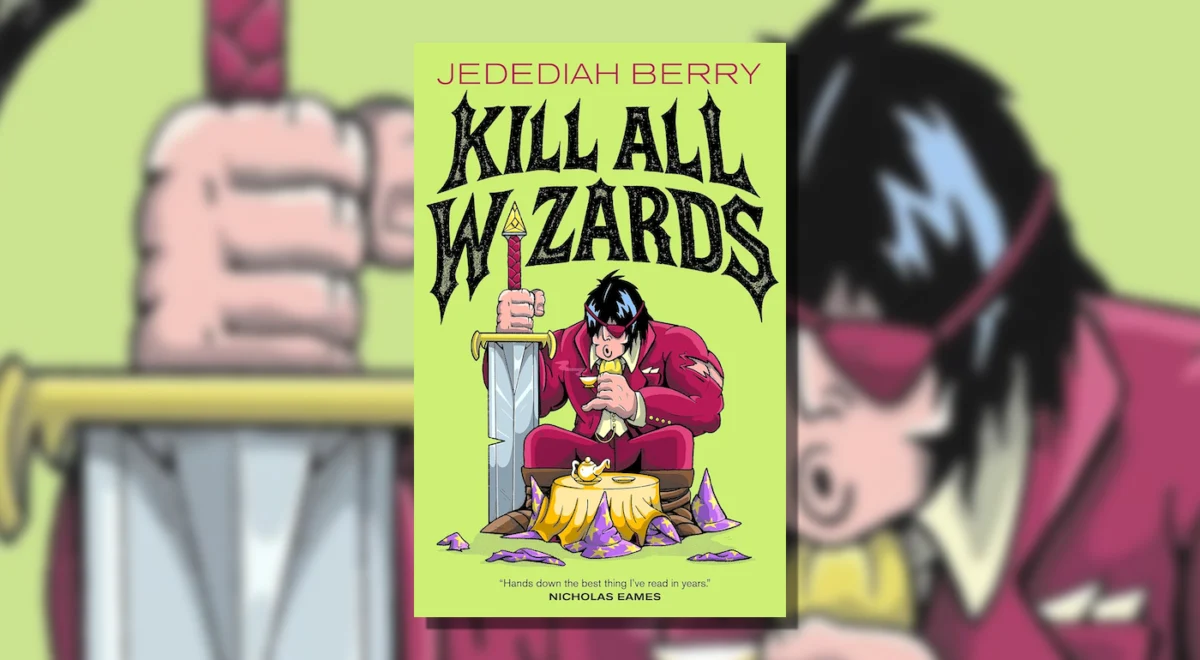
New York, NY – June 10, 2026 – Tordotcom Publishing is set to release Jedediah Berry’s highly anticipated sword and sorcery novella, Kill All Wizards, on June 16th. The forthcoming work promises a unique blend of high fantasy action, intricate world-building, and a darkly humorous take on the clash between raw power and stifling bureaucracy. An exclusive excerpt reveals the chilling premise: a barbarian, wronged by the powerful wizards of the empire, embarks on a meticulously planned campaign of revenge, infiltrating their sophisticated society with a singular, violent objective.
The novella introduces Gotchimus, a figure of formidable presence whose savage heart burns with a desire for vengeance against the very sorcerers who ensorcelled him, exploited his strength, and brazenly stole his legendary sword. His quest for retribution forces him to navigate the gilded cages of imperial society – donning finery, partaking in exclusive tea clubs, and reserving prime theater boxes – all while harboring a profound loathing for the very customs he adopts. The excerpt offers a tantalizing glimpse into a world where ancient magic clashes with modern urban intrigue, and a barbarian’s brutal resolve threatens to unravel the carefully constructed order of a seemingly tranquil empire.
A Capital Under Siege: The Unfolding Wizard Murders
The narrative opens in a land ostensibly characterized by "great tameness," where "cats licked their paws, the trains ran on time, our bellies and our calendars were full." Yet, beneath this veneer of order, a palpable tension simmers, punctuated by a series of increasingly gruesome wizard murders. The capital, a sprawling metropolis built upon the colossal skull of a nameless god, finds its complacency shattered as the bodies of prominent magic-users begin to surface.
Gotchimus, known in these circles as a "delver, a drifter, an outlander," quickly emerges as the prime suspect. His unconventional lifestyle, splitting time between sampling cigars at exclusive establishments and plundering ancient tombs, marks him as an outsider. Described as "beautiful in the way that certain rare and deadly beasts are beautiful," with a "sardonic crookedness" and eyes "the gray of storm clouds at dawn," Gotchimus possesses an undeniable magnetism that both intrigues and unnerves the city’s inhabitants. Despite his outward conformity to societal norms – impeccably tailored suits, a distinguished sable eyepatch – his true nature remains untamed, residing in a peculiar tent of bone and hide in the city’s rough river district, dreaming "barbaric dreams."
The latest victim, the Head of Ven, a revered mechanician of the highest order and a powerful member of the ruling Fifth Committee, was found smothered in a bucket of naphtha within his own floating tower workshop. The peculiar melancholy of his automatons, or "cogsbodies," now patrolling the city with a diminished whir, serves as a poignant testament to the city’s disturbed equilibrium. These killings have sent ripples of fear and suspicion through the capital, disrupting the carefully managed peace. "The tameness was ruffled," the narrator observes, as "would-be sleuths made charts, took drugs, skulked about the harbor," and the Committee Lamentables, black-robed enforcers with "light-knife smiles," escalated their patrols. Even the reclusive witches of the High Godsward, sensing a profound shift, hid their souls in smooth stones, urging their granddaughters to "try not to think on your dreams for a while."
A Debt of Information: The Barbarian and the Thief
Central to Gotchimus’s intricate plan is his unlikely alliance with Hecksley, a portly, astute thief-turned-fence with a lustrous dark hair and eyes "like unpolished sapphires." Their breakfast meeting at the Unnamable, an exclusive club housed within the easternmost eye socket of the nameless god’s skull, provides the initial framework for the novella’s unfolding mystery. From their vantage point high above Charnel Square, overlooking the city’s vibrant, if unsettling, morning activities – knife grinders, the majestic ghost tortoise of Bloodletters Pond, and the distant Thousandfold Tower, headquarters of the formidable Fifth Committee – Hecksley confronts Gotchimus about the escalating wizard deaths.
Hecksley, ever the pragmatist, warns Gotchimus of the perilous enemies he is making, emphasizing the retaliatory power of the wizards and their Committee. The thief’s own mechanical brass hand, a "pretty contraption" stolen from the recently deceased Head of Ven, underscores his personal connection to the dangerous world of arcane power and criminal enterprise.
Gotchimus, however, is undeterred. His objective is not merely to evade suspicion, but to gather vital intelligence. He reveals a hidden cache of magnificent gemstones, "liquid puddles of light caged in faultless geometries," offering them not for coin, but for information about a very specific wizard: a man with short-cropped gray hair, plain robes, extraordinary power, a "voice like dark velvet," and "bright green eyes," rumored to "walk the inbetween places." This wizard, Gotchimus reveals, is directly connected to the loss of his left eye and the distinctive sable eyepatch he now wears.
The exchange escalates into a tense negotiation. Hecksley, sensing a deeper, more dangerous story, demands the "whole story" of Gotchimus’s eye in exchange for the information. In a move that reveals the barbarian’s sharp intellect and understanding of human nature, Gotchimus counters, requesting Hecksley’s own tale of how he acquired his mechanical hand. The two, a barbarian of savage origins and a sophisticated thief, settle into a pact, agreeing to share their deeply personal and dangerous histories, setting the stage for a narrative steeped in secrets and past traumas.
The Labyrinth of Bureaucracy and a God’s Wrath
The novella then plunges into a flashback, revealing the origins of Gotchimus’s vendetta and the calamitous events that led to his injury and his burning hatred for the wizards. It begins with his attempts to secure an audience with the Fifth Committee at the Thousandfold Tower, a structure designed for "maximum inhospitality." His initial encounters with the Gracious Assessor, a colossal, cobalt-blue being with six arms, highlight the empire’s suffocating bureaucracy. Gotchimus, then still possessing both eyes and dressed in crude attire, found himself ensnared in an endless loop of arcane paperwork and expired forms, a stark contrast to his usual direct approach to problems. His very name, Gotchimus, was deemed "outlandish," his lack of a family name or permanent address marking him as an unacceptable "freelancer" in their rigid system.
After multiple rejections, a sudden, inexplicable approval of his audience request signals a sinister turn. The quiet chiming of a tiny silver bell is the last thing Gotchimus remembers before waking in a "wild glen," disoriented and alone. His sword, typically confiscated at the tower’s entrance, was planted ominously nearby. This arbitrary displacement, far from the capital’s confines, suggests a calculated act by the wizards – not merely expulsion, but a deliberate placement into a deadly predicament.
It is in this primeval setting that Gotchimus encounters the "wild god," a towering, twelve-foot-tall entity resembling a man fashioned from gnarled bark, covered in moss, flowers, and a cloud of bees. This god, ancient and deeply wounded, emanates palpable rage and pain, its roars echoing through the glen. Gotchimus, recognizing the divine power he faces, attempts to de-escalate, but the god, a "thing of the forest – or the forest a thing of the god," is intent on violence, summoning jackdaws and other forest creatures as its minions.

The ensuing battle is a brutal testament to Gotchimus’s warrior prowess and desperate will to survive. Despite his reluctance to fight a god, especially one seemingly thrust upon him by the wizards, he defends himself against the god’s thorn-tipped talons, the lacerating claws of jackdaws, and the fiery stings of bees. Severely wounded and losing blood, Gotchimus identifies a critical vulnerability: a broken spear shaft protruding from a lichen-crusted wound on the god’s side. In a final, desperate gambit, he uses the spear to propel himself upwards, delivering a single, decisive blow that cleaves the god’s head clean off.
The vivid, almost editorialized description of this act, where the narrative voice pauses to discuss the ethics of depicting such violence, underscores the inherent brutality and moral ambiguity of Gotchimus’s world and his actions. The sight of the forest beasts mourning their fallen sovereign, and Gotchimus joining them in grief, adds a layer of unexpected pathos to the scene, revealing the barbarian’s complex relationship with the natural world and the profound consequences of his deeds. The killing of the wild god, it becomes clear, is not merely a survival story but a pivotal moment that defines Gotchimus’s resolve and cements his path toward vengeance against those who manipulated him into such a confrontation. This brutal encounter in the wild glen is the untold story behind his eyepatch, the "proper explanation" Hecksley so eagerly seeks.
Supporting Data: A Tapestry of Magic, Bureaucracy, and Ancient Power
Jedediah Berry meticulously weaves a rich tapestry of supporting details that define the world of Kill All Wizards. The capital city itself is a marvel of contrasts, where the ancient and the modern, the sublime and the squalid, coexist. The fact that the most exclusive club, the Unnamable, is housed within the skull of a nameless god speaks volumes about the deep, often unsettling, history that underpins this society. The Sundering, mentioned as the event where "Rosefrost Derby herself had parted it from its owner’s body," hints at a tumultuous past where gods and mortals clashed, shaping the current political landscape dominated by ruling families like the Derby and powerful magical entities like the Fifth Committee.
The magical systems presented are equally diverse and intriguing. The wizards of the Fifth Committee represent a highly organized, bureaucratic form of magic, capable of ensorceling, exploiting, and creating complex automatons like the Head of Ven’s cogsbodies. These creations, like the waiters at the Unnamable or Hecksley’s own mechanical hand, blend seamlessly into the urban fabric, yet their sentience and emotional responses (e.g., the melancholic timbre of Ven’s automatons) suggest a deeper, more unsettling ethical dimension to their existence. In contrast, the witches of the High Godsward practice a more primal, intuitive form of magic, hiding their souls in stones, indicating a connection to ancient traditions and a wary awareness of encroaching dangers.
The bureaucracy of the Thousandfold Tower, with its Gracious Assessor and endless forms, serves as a poignant social commentary, highlighting how even in a world of magic, power can be wielded through mundane, frustrating systems designed to exclude and control. This stark contrast between the raw, untamed power of Gotchimus and the stifling, yet equally potent, power of imperial administration forms a core thematic tension of the novella. The narrative’s distinctive "we" voice, observing events with a mix of fascination, judgment, and collective memory, further enriches this world, making the reader feel like an inhabitant of this curious, opinionated society.
Official Responses: The Empire’s Unsettled Grip
The official response to the wizard killings, as depicted in the excerpt, is one of heightened alert and veiled panic. The "tameness" of the land is visibly "ruffled," and the ruling Fifth Committee mobilizes its forces. The increased presence of "Committee Lamentables," whose "razor-sharp smiles" and "dowsing rods swishing" hint at their magical abilities and intimidating nature, signifies the seriousness with which the authorities perceive these threats. Their role extends beyond mere policing; they are agents of a magical government, tasked with maintaining order and protecting the interests of the powerful wizarding elite.
While no direct "official statements" are quoted, the actions of the Lamentables and the atmosphere of suspicion effectively convey the Committee’s stance. Gotchimus is clearly a person of interest, if not the primary suspect, and the wizards are "hunting for the killer." The public’s reaction, from the "would-be sleuths" to the letter-writers, indicates a society grappling with fear and uncertainty, attempting to make sense of events that defy their established order. The Gracious Assessor’s unexpected approval of Gotchimus’s audience request, followed by his immediate removal to a dangerous wilderness, can be interpreted as a subtle "official response"—a tactic to eliminate a perceived threat without direct confrontation, or perhaps a test of his capabilities. This calculated manipulation by the wizards demonstrates their ruthless pragmatism and their willingness to exploit anyone, even a powerful barbarian, for their own ends.
Hecksley’s urgent warnings to Gotchimus further reflect the pervasive fear of the Fifth Committee’s retribution. His concern is not just for his own safety, but for Gotchimus’s life, highlighting the Committee’s reputation for brutal tortures and unwavering pursuit of those who cross them. The "prickly" demeanor of the Head of Ven’s cogsbodies, serving tea at the Unnamable, also offers a subtle, unofficial response, hinting at a collective, almost sentient grief and suspicion directed at Gotchimus.
Implications: Revenge, Identity, and the Fragility of Civilization
The implications of Gotchimus’s quest for revenge are far-reaching, threatening not only the lives of individual wizards but the very fabric of the empire’s "tameness." His journey is more than a simple vendetta; it is a profound exploration of identity. Forced to navigate a society he despises, Gotchimus’s efforts to blend in underscore the tension between his "savage heart" and the refined manners he adopts. The eyepatch, a constant visual reminder of his past trauma and his singular purpose, becomes a powerful symbol of his transformation and his unwavering commitment to his goal.
The novella raises crucial questions about the nature of civilization itself. Is the "tameness" of the capital merely a façade, maintained through bureaucratic obfuscation, magical exploitation, and the suppression of primal forces? Gotchimus, the "outlander in every land," embodies the untamed spirit that challenges this manufactured order. His willingness to "stain his hands with blood rather than ink" highlights a rejection of the empire’s convoluted systems in favor of direct, brutal justice.
The confrontation with the wild god, a creature embodying primeval pain and ecological power, deepens the thematic resonance. Gotchimus’s act of killing a god, even one weakened and manipulated, carries immense weight. It positions him not merely as a barbarian seeking personal revenge, but as a force capable of reshaping the spiritual and natural landscape of the world. This event likely marks him as a figure of significant, potentially terrifying, power in the eyes of the wizards who orchestrated his predicament.
As Gotchimus and Hecksley prepare to exchange their stories, the novella promises to delve into the complex interplay of personal history, societal expectations, and the relentless pursuit of justice. The quest for the specific wizard with "bright green eyes" is the ultimate focal point, suggesting a confrontation that will not only reveal the truth behind Gotchimus’s injury but also force him to confront the architects of his suffering. Kill All Wizards is poised to deliver a compelling narrative about the costs of revenge, the blurred lines between savagery and sophistication, and the inherent fragility of any power structure built upon deception and exploitation. Jedediah Berry’s novella invites readers into a richly imagined world where the most civilized veneer can hide the most barbaric truths, and where one man’s singular vendetta could ignite a revolution.


Leave a Comment