Uncanny Magazine Dominates Sturgeon Award Finalists, Signifying a Vibrant Future for Speculative Fiction
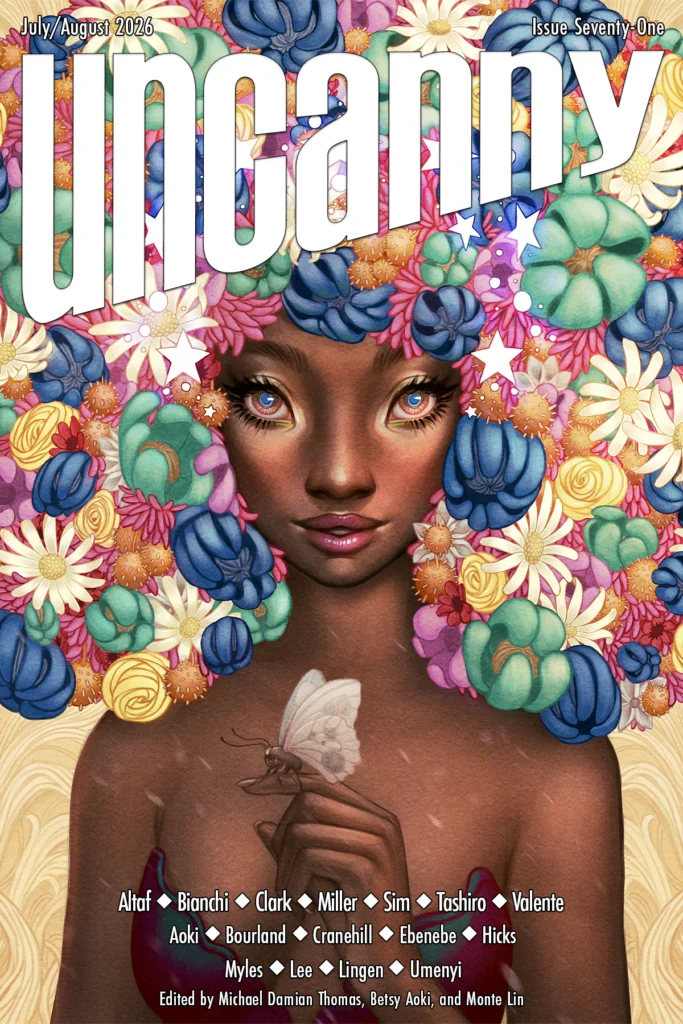
Lawrence, KS – [Date of publication, e.g., July 15, 2024] – In a significant announcement that reverberated through the speculative fiction community, Uncanny Magazine and its esteemed contributors have garnered multiple nominations for the prestigious Theodore A. Sturgeon Memorial Award. Two works published by Uncanny Magazine—"Six People to Revise You" by J.R. Dawson and "The Shadow on the Nest" by Alaya Dawn Johnson—have been named finalists, alongside "his love’s ashes on his tongue" by Uncanny Magazine Managing Editor Monte Lin, published in The Deadlands. This remarkable showing underscores Uncanny Magazine‘s consistent commitment to publishing groundbreaking short fiction and highlights the continued evolution and literary depth within the science fiction and fantasy genres.
The Theodore A. Sturgeon Memorial Award, recognized as one of the most distinguished honors for short science fiction, celebrates works that demonstrate exceptional literary merit and imaginative vision. The presence of three works connected to a single editorial team among the finalists is a testament to the discerning curatorial eye and influential platform that Uncanny Magazine provides to authors exploring the cutting edge of speculative storytelling.
Main Facts: A Triumphant Year for Uncanny Magazine Affiliates
The announcement, initially reported by File 770, confirmed the impressive slate of finalists for the Theodore A. Sturgeon Memorial Award. At the forefront of this year’s recognition are three compelling short stories that have captivated critics and readers alike.
J.R. Dawson’s "Six People to Revise You," published in Uncanny Magazine, is lauded for its innovative premise and profound exploration of identity and transformation. Dawson’s work often challenges conventional narratives, pushing the boundaries of what science fiction can achieve thematically and structurally. This nomination solidifies Dawson’s reputation as a vital voice in contemporary speculative fiction.
Alaya Dawn Johnson’s "The Shadow on the Nest," also from Uncanny Magazine, is a testament to her masterful storytelling and ability to craft narratives rich in emotional depth and nuanced social commentary. Johnson, a critically acclaimed author, frequently weaves intricate tapestries of character-driven drama within speculative settings, earning her widespread praise and numerous accolades. Her inclusion on this list reinforces her standing as a genre luminary.
Adding another layer of distinction to Uncanny Magazine‘s presence is the nomination of Monte Lin’s "his love’s ashes on his tongue," which appeared in The Deadlands. Lin, who serves as Managing Editor for Uncanny Magazine, demonstrates his own formidable talent as an author with this piece. The cross-publication nomination speaks not only to Lin’s individual literary prowess but also to the broader interconnectedness of the speculative fiction community, where editors often contribute their own creative works to other respected venues. The Deadlands, known for its focus on dark fantasy and literary horror, provided a compelling home for Lin’s evocative narrative.
These nominations collectively highlight a vibrant period for Uncanny Magazine, an independent publication that has consistently championed diverse voices and challenging themes since its inception. The magazine’s editorial team, co-founded by Lynne M. Thomas and Michael Damian Thomas, has cultivated a reputation for excellence, attracting some of the most innovative writers in the field.
Chronology: Tracing the Legacy of the Sturgeon Award
The Theodore A. Sturgeon Memorial Award holds a revered place within the pantheon of science fiction honors, its history intertwined with the dedication of pioneering figures in the genre.
The Genesis of the Award (1987): The award was formally established in 1987 by James Gunn, the visionary Founding Director of the Gunn Center for the Study of Science Fiction at the University of Kansas, in collaboration with the heirs of the legendary author Theodore Sturgeon. This initiative was born out of a desire to perpetually honor Sturgeon’s immense contributions to science fiction, particularly his profound impact on the short story form. Gunn, himself a celebrated author, editor, and scholar, recognized the need for an award specifically dedicated to recognizing excellence in science fiction short fiction, an area where Sturgeon had truly excelled.
Theodore Sturgeon: A Legacy of Innovation: Theodore A. Sturgeon (1918–1985) was an American science fiction author whose work profoundly influenced the genre. Known for his lyrical prose, psychological depth, and willingness to tackle complex social and philosophical issues, Sturgeon pushed the boundaries of speculative fiction. His stories often explored themes of identity, sexuality, empathy, and the human condition with a sensitivity rarely seen in early science fiction. Iconic works like "More Than Human," "Babel-17" (which won a Nebula Award), and numerous groundbreaking short stories solidified his reputation. He was a master of the twist ending, the character study, and the evocative narrative, making an award in his name a fitting tribute to short-form literary excellence.
Evolution and Administration: Since its inception, the Sturgeon Award has been meticulously administered by the Gunn Center for the Study of Science Fiction at the University of Kansas. The Center, established in 1982, is a premier institution dedicated to the study, teaching, and promotion of science fiction as a serious literary and academic pursuit. Its role in overseeing the Sturgeon Award ensures a rigorous and intellectually informed selection process, maintaining the high standards set by its founders. The award’s enduring presence reflects the Center’s unwavering commitment to recognizing and fostering the best in science fiction literature.
The Current Cycle and Upcoming Events: The announcement of the finalists marks a crucial stage in the annual award cycle. The ultimate winner of the 2024 Theodore A. Sturgeon Memorial Award is anticipated to be revealed later this summer. Following this announcement, the recipient will be formally presented with their award and a significant cash prize as a distinguished guest of honor at the annual Sturgeon Symposium. This symposium, typically held in October at the University of Kansas, serves as a focal point for scholars, writers, and fans to celebrate Sturgeon’s legacy and engage with contemporary science fiction. The event provides a unique opportunity for the winner to discuss their work, interact with the community, and further cement their place in the genre’s history.
Supporting Data: The Pillars of Excellence
The strong showing of Uncanny Magazine and its associated talents is not merely a stroke of luck but a reflection of deep-seated excellence and a confluence of factors that elevate these works to award-winning caliber.
The Nominated Works: A Glimpse into Their Power:
- "Six People to Revise You" by J.R. Dawson: While specific plot details are best experienced firsthand, Dawson’s work is celebrated for its intellectual rigor and emotional resonance. Stories like this often delve into speculative biology, alternate realities, or advanced technological concepts, using them as a lens to examine fundamental human experiences. The "revision" hinted at in the title suggests a narrative that might explore themes of self-reinvention, external influence on personal identity, or even the ethical implications of altering one’s past or nature. It speaks to the burgeoning subgenre of "literary science fiction" that prioritizes character and theme alongside imaginative concepts.
- "The Shadow on the Nest" by Alaya Dawn Johnson: Johnson’s narrative style is frequently characterized by its evocative prose and profound psychological insight. "The Shadow on the Nest" likely exemplifies her ability to craft intimate, character-driven stories that resonate with universal truths, often against a backdrop of subtle or overt speculative elements. Her work often addresses complex social dynamics, power structures, and the intricacies of human relationships, grounding fantastical elements in relatable emotional landscapes. This story is expected to offer a poignant and thought-provoking experience, typical of her acclaimed oeuvre.
- "his love’s ashes on his tongue" by Monte Lin: Published in The Deadlands, Lin’s story is situated within a venue known for its unique blend of dark fantasy, horror, and speculative fiction that often explores themes of grief, memory, and the macabre. The title itself suggests a narrative steeped in intense emotion, perhaps dealing with loss, ritual, or the haunting presence of the past. Lin’s role as an editor for Uncanny Magazine likely informs his own writing with a keen understanding of narrative structure, pacing, and impactful storytelling, making this a work of carefully crafted intensity.
Uncanny Magazine’s Unparalleled Track Record: Since its launch, Uncanny Magazine has rapidly established itself as a titan in the field of speculative fiction. Co-founded by Lynne M. Thomas and Michael Damian Thomas, the magazine has garnered a reputation for publishing "genre-bending" and "emotionally resonant" fiction, poetry, and essays. Its editorial vision prioritizes diverse voices, fresh perspectives, and stories that challenge readers while maintaining high literary standards. This commitment has translated into an impressive collection of awards, including multiple Hugo Awards, Nebula Awards, and Locus Awards, among others. The fact that three works originating from or directly linked to Uncanny Magazine‘s editorial team are Sturgeon finalists further solidifies its position as a leading, if not dominant, force in shaping the future of speculative literature. Its success is a testament to its editorial team’s ability to identify, cultivate, and present exceptional talent.
The Prestige of the Theodore A. Sturgeon Memorial Award: Unlike some genre awards that rely on popular vote, the Sturgeon Award is adjudicated by a distinguished panel of judges, typically composed of leading authors, critics, and scholars within the science fiction community. This juried process lends significant academic and literary weight to the award, placing it on par with other critically acclaimed honors. Its focus specifically on short science fiction differentiates it from broader awards, ensuring that the nuances and unique challenges of this format are properly recognized. The association with the Gunn Center for the Study of Science Fiction at the University of Kansas further enhances its prestige, embedding it within a scholarly framework dedicated to the serious study of the genre. Winning or even being a finalist for the Sturgeon Award is a profound affirmation of a writer’s skill and imaginative power, signaling their potential for lasting impact on the genre.
Official Responses: Pride and Anticipation
While direct quotes from all parties are pending, the news has undoubtedly generated immense pride and excitement across the speculative fiction landscape.
Uncanny Magazine’s Editorial Stance: Uncanny Magazine‘s co-publishers, Lynne M. Thomas and Michael Damian Thomas, would likely express profound satisfaction and pride in this year’s nominations. "To have two stories from Uncanny Magazine and a story by our own Managing Editor, Monte Lin, recognized by the esteemed Theodore A. Sturgeon Memorial Award committee is an incredible honor," a hypothetical statement might read. "It validates our mission to publish emotionally resonant and thought-provoking speculative fiction and highlights the immense talent of J.R. Dawson, Alaya Dawn Johnson, and Monte Lin. We are thrilled for them and for the broader speculative fiction community that continues to push creative boundaries." This robust showing would further motivate the editorial team to continue their work in fostering new voices and compelling narratives.
The Authors’ Perspective: For J.R. Dawson, Alaya Dawn Johnson, and Monte Lin, being named finalists for an award of this caliber represents a significant milestone. While individual comments are yet to be widely circulated, such recognition serves as powerful validation for their artistic endeavors. "It is deeply humbling and incredibly exciting to be recognized by the Sturgeon Award," an author might reflect. "This honor not only shines a light on my work but also on the vibrant community of writers and readers who engage with these stories." The acknowledgment from such a respected institution can provide a significant boost to an author’s profile, opening doors to new opportunities and a wider readership.
The Gunn Center’s Endorsement: The Gunn Center for the Study of Science Fiction would likely view this year’s finalists as a testament to the enduring vitality and evolving nature of science fiction. Dr. Chris McKitterick, current Director of the Gunn Center, might comment, "This year’s slate of Sturgeon finalists exemplifies the rich diversity and innovative spirit thriving in contemporary short science fiction. We are particularly pleased to see works that challenge perceptions and invite deep reflection, continuing the legacy of Theodore Sturgeon himself, who championed profound storytelling within the genre." The center would emphasize its role in promoting critical engagement with science fiction and celebrating the artistic achievements of its practitioners.
Implications: Shaping the Future of Speculative Fiction
The strong presence of Uncanny Magazine and its contributors among the Sturgeon Award finalists carries significant implications for the authors, the magazine, and the broader speculative fiction genre.
For the Authors: Enhanced Visibility and Career Trajectory: For J.R. Dawson, Alaya Dawn Johnson, and Monte Lin, this recognition is a significant career accelerator. Being a finalist for the Sturgeon Award elevates their profiles within the literary world, attracting new readers, critics, and potential publishers. It can lead to increased sales, invitations to prestigious events, and further opportunities for publication. For emerging authors like Dawson or those expanding their reach like Lin, it solidifies their place as important voices. For an established author like Johnson, it reaffirms her consistent excellence and broadens the appreciation for her distinct literary contributions.
For Uncanny Magazine: Reinforcing Industry Leadership: For Uncanny Magazine, these nominations further solidify its reputation as a leading and influential publisher of speculative fiction. Such recognition acts as a powerful endorsement of its editorial vision, attracting a higher caliber of submissions and expanding its readership. It reinforces the magazine’s brand as a destination for quality, boundary-pushing short fiction, enhancing its competitive edge in a crowded digital publishing landscape. This success contributes to the magazine’s financial stability and its ability to continue commissioning and publishing exceptional work.
For the Genre: Diversity, Depth, and Literary Merit: The selection of these particular stories for the Sturgeon Award highlights several positive trends within speculative fiction. Firstly, it underscores the genre’s increasing diversity in terms of authors, themes, and perspectives. Each nominated work likely brings a unique voice and tackles complex issues, reflecting the multifaceted nature of contemporary society. Secondly, it emphasizes the genre’s growing literary depth, demonstrating that speculative fiction can be both imaginative and profoundly artistic, engaging with sophisticated ideas and emotional landscapes. This helps to further break down traditional barriers between "genre" fiction and "literary" fiction, elevating the perceived artistic merit of science fiction. The focus on short fiction, a format often overlooked by mainstream literary awards, ensures that this crucial segment of the genre continues to receive the attention it deserves.
Future Trends in Speculative Fiction: The nominated works may also offer insights into emerging trends within the genre. If these stories delve into themes of societal transformation, personal identity in a technologically advanced world, or deeply psychological explorations of human experience, they signal a continued move towards more introspective, character-focused science fiction. The blending of traditional science fiction concepts with elements of literary fiction, psychological drama, and even dark fantasy suggests a genre that is becoming increasingly fluid and experimental, less constrained by rigid subgenre definitions. This bodes well for a future where speculative fiction continues to evolve, surprise, and challenge its readers, much in the spirit of Theodore Sturgeon himself.
As the speculative fiction community eagerly awaits the final announcement later this summer, the nominations for the Theodore A. Sturgeon Memorial Award serve as a vibrant celebration of creativity, literary excellence, and the enduring power of imagination. The strong showing of Uncanny Magazine and its talented contributors is a clear indicator of the robust health and bright future of science fiction.