
Navigating the D&D Multiverse: A Comprehensive Guide to Essential Settings
Dungeons & Dragons, the venerable tabletop role-playing game, has captivated generations of players with its intricate mechanics and boundless opportunities for adventure. Beyond its dice rolls and character sheets, a core pillar of D&D’s enduring appeal lies in its rich, diverse, and meticulously crafted settings. These universes, each with its own history, cultures, conflicts, and unique magical tapestry, offer Dungeon Masters (DMs) and players an endless canvas for storytelling. For those seeking to delve deeper into these imaginative realms or to transport their campaigns to entirely new vistas, a robust collection of setting guides and supplements serves as an indispensable resource.
This article provides an in-depth exploration of several pivotal D&D setting guides, examining their foundational elements, historical significance, unique thematic offerings, and the profound implications they hold for gameplay. From the high-fantasy familiarity of the Forgotten Realms to the gothic horrors of Ravenloft, the magitech marvels of Eberron, the urban sprawl of Ravnica, the unforgiving arctic of Icewind Dale, and the mind-bending realities of the Planescape, these books collectively showcase the incredible breadth and depth of the D&D multiverse.
The Enduring Allure of D&D’s Worlds
Since its inception, Dungeons & Dragons has been synonymous with immersive world-building. The game’s designers at Wizards of the Coast (WotC) have consistently fostered a philosophy of creating environments that are not merely backdrops but active participants in the narrative. Each setting is designed to offer distinct challenges, inspire unique character concepts, and facilitate specific types of stories, ensuring that the game remains fresh and engaging across countless campaigns.
The commitment to developing rich lore is evident in the sheer volume of material available. Players appreciate the deep histories, complex pantheons, political intrigue, and diverse ecologies that define these worlds. This dedication allows for unparalleled replayability; a group might conclude a heroic saga in one setting only to embark on a grim survival tale in another, leveraging the game’s core rules while experiencing vastly different narrative tones and thematic explorations. Setting guides are the conduits through which DMs can master these complexities, transforming a simple adventure into an epic, world-spanning saga. They provide not just maps and monster stats, but the very soul of a world, enabling DMs to immerse their players fully in its realities.
Spotlight on Key Setting Guides
The following guides represent a cross-section of the most popular and influential settings available for Dungeons & Dragons Fifth Edition, each offering a distinct flavor of adventure.

Sword Coast Adventurer’s Guide
Main Facts: The Sword Coast Adventurer’s Guide serves as an essential entry point into the Forgotten Realms, D&D’s most iconic and widely recognized campaign setting. It provides a focused exploration of the northwestern region of Faerûn, a land teeming with ancient history, powerful magic, and legendary cities.
Chronology & Historical Context: The Forgotten Realms has been the default setting for D&D for decades, a vast high-fantasy world that has been meticulously detailed across numerous editions, novels, video games, and supplementary materials. The Sword Coast, in particular, has emerged as a focal point due to its bustling trade routes, powerful city-states, and frequent role as the starting point for countless adventures. This guide, published early in Fifth Edition’s lifecycle, was designed to reintroduce players and DMs to this cornerstone setting, updating its lore following significant in-world events like the Spellplague and the Second Sundering.
Supporting Data & Core Themes: The guide delves into the minutiae of iconic locations such as Baldur’s Gate, the sprawling port city known for its political machinations and dark underbelly; Waterdeep, the "City of Splendors," a beacon of civilization and intrigue; and Neverwinter, the "Jewel of the North," a city rebuilding after catastrophic events. It provides insights into the region’s diverse cultures, powerful factions (like the Lords’ Alliance and the Zhentarim), prominent deities, and the lingering effects of ancient conflicts. The primary theme is classic high fantasy, offering a blend of heroic questing, dungeon delving, and political maneuvering within a richly established world. The book also provides new character options, including subraces and subclasses tailored to the region, such as the Purple Dragon Knight and the Swashbuckler.
Official Rationale & Implications for Gameplay: Wizards of the Coast positioned the Sword Coast Adventurer’s Guide as a foundational text, a solid starting point for both novices and seasoned adventurers. As stated in its official description, it was "Crafted by the scribes at Green Ronin in conjunction with the Dungeons & Dragons team at Wizards of the Coast," emphasizing its authoritative nature. Its existence ensures that DMs have a comprehensive reference for the most common D&D setting, allowing them to craft adventures that feel authentic to Faerûn. For players, it provides context for many D&D video games and novels, deepening their engagement with the lore. Campaigns in the Sword Coast often involve exploring ancient ruins, thwarting cults, engaging in urban espionage, or embarking on epic journeys across varied landscapes, from dense forests to rugged mountains. The guide’s versatility makes it suitable for virtually any campaign style, from gritty realism to high-powered heroic fantasy.
Guildmasters’ Guide to Ravnica
Main Facts: Guildmasters’ Guide to Ravnica transports D&D players into the vibrant, sprawling city-plane of Ravnica, a world previously established and beloved in the Magic: The Gathering trading card game. This crossover product focuses on urban intrigue, political maneuvering, and the pervasive influence of ten powerful guilds.

Chronology & Historical Context: The collaboration between D&D and Magic: The Gathering represents a strategic move by WotC to bridge its two most popular intellectual properties. Ravnica was chosen for its deep lore, distinctive aesthetic, and existing fan base within the MtG community. Its introduction to D&D in 2018 marked a significant expansion of the game’s thematic reach, offering a stark contrast to traditional fantasy settings. The setting’s history is defined by the Guildpact, an ancient agreement that once maintained a fragile peace among the ten guilds, each representing a distinct philosophy, color combination, and set of magical abilities.
Supporting Data & Core Themes: Ravnica is unique in that it is a world entirely covered by a single, colossal city. There is no "wilderness" in the conventional sense; every inch is urbanized, from towering spires to forgotten sewers. The narrative engine of Ravnica is the ceaseless, often covert, conflict between its ten guilds: the militaristic Boros Legion, the secretive Dimir House, the scientific Izzet League, the nature-loving Selesnya Conclave, the necromantic Orzhov Syndicate, the wild Gruul Clans, the law-enforcing Azorius Senate, the hedonistic Cult of Rakdos, the bio-engineering Simic Combine, and the politically astute Golgari Swarm. Each guild offers distinct character backgrounds, unique spells, and specialized mechanics, deeply integrating a player’s choice of allegiance into their character’s identity and abilities. The core themes revolve around urban fantasy, political espionage, moral ambiguity, and the struggle for power and influence within a vast, complex society.
Official Rationale & Implications for Gameplay: The Guildmasters’ Guide to Ravnica was a deliberate effort to diversify D&D’s setting portfolio and leverage the established popularity of Magic: The Gathering. As its description highlights, it allows players to "create characters and run adventures on Ravnica, one of the richest, most beloved settings in Magic: The Gathering." This decision introduced D&D to a new audience while offering veteran players a fresh perspective on campaign design. Gameplay in Ravnica often involves navigating complex social webs, undertaking missions for one’s guild, dealing with inter-guild conflicts, and uncovering ancient conspiracies. DMs must manage the intricate relationships between guilds, providing players with difficult choices that have far-reaching consequences. Character creation is particularly exciting, as guild membership dictates not only social standing but also mechanical benefits and narrative hooks, fostering unique party dynamics where conflicting loyalties are a common source of drama.
Van Richten’s Guide to Ravenloft
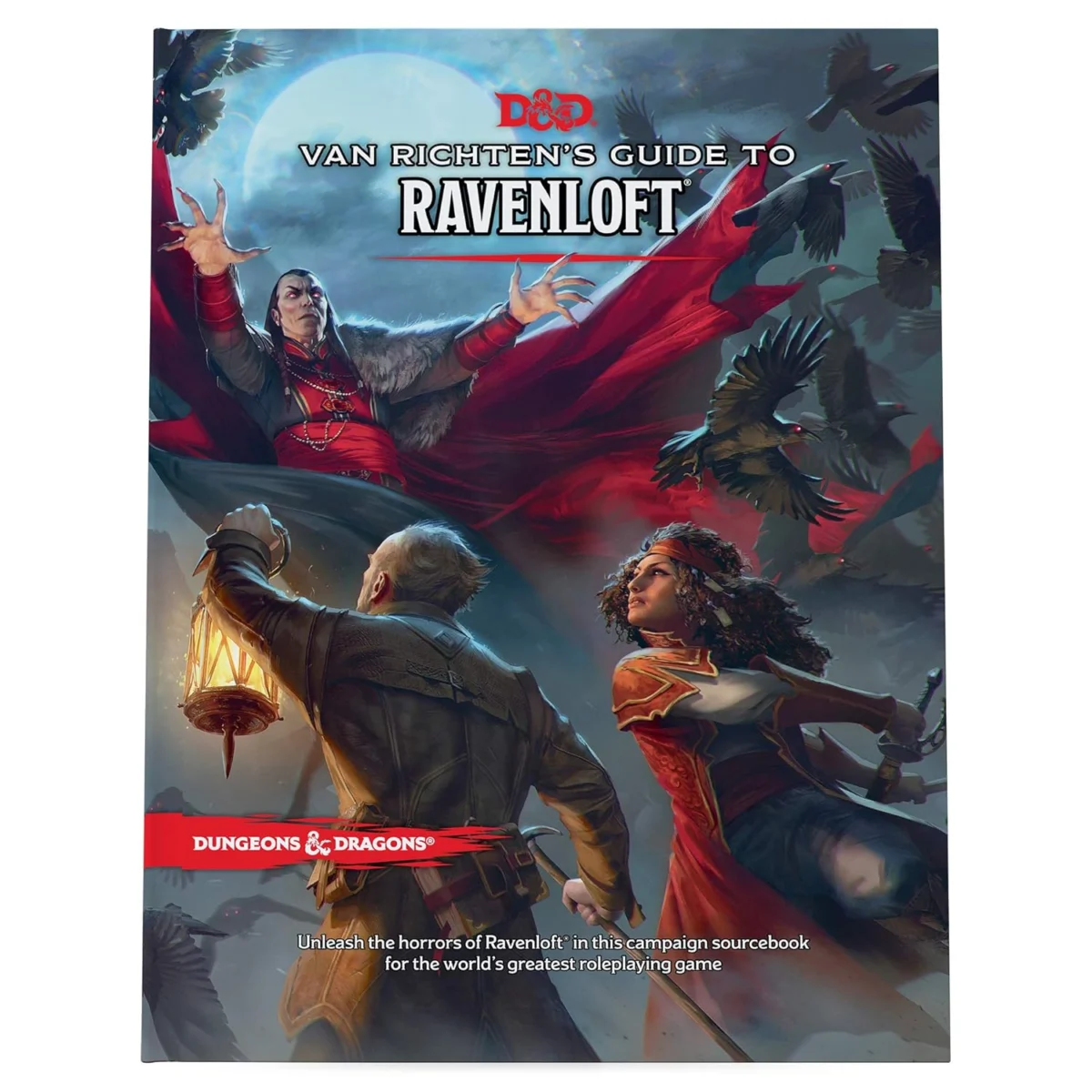
Main Facts: Van Richten’s Guide to Ravenloft plunges D&D into the terrifying depths of gothic horror, offering DMs the tools to craft chilling campaigns within the Domains of Dread – an expansive collection of demiplanes ruled by malevolent Darklords.
Chronology & Historical Context: Ravenloft originated as an adventure module (I6 Ravenloft) in 1983, quickly evolving into a full-fledged campaign setting in Advanced Dungeons & Dragons 2nd Edition. It established itself as D&D’s premier horror setting, known for its iconic villain, Strahd von Zarovich. Van Richten’s Guide to Ravenloft, released in 2021 for Fifth Edition, reimagines and expands upon this legacy. It moves beyond a single domain to present a vast "multiverse of dread," where each domain embodies a different subgenre of horror, from classic vampiric tales to cosmic dread, body horror, and psychological thrillers. The guide is framed as a collection of research and warnings from the legendary monster hunter, Rudolph Van Richten, adding an in-world narrative layer.

Supporting Data & Core Themes: The book meticulously details over 30 Domains of Dread, each a self-contained pocket dimension crafted by the mysterious Dark Powers to torment a specific Darklord, whose personal evils manifest as the very fabric of their domain. Examples include Barovia (classic vampiric horror), Lamordia (Frankensteinian mad science), Valachan (deadly hunt), and Bluetspur (Lovecraftian mind flayer terror). It provides extensive guidance for DMs on how to implement various horror tropes, build suspense, and elicit genuine fear. Crucially, it introduces new character options, including three "monstrous lineages" (Dhampir, Hexblood, Reborn) that allow players to embody monstrous traits, as well as new subclasses and "Dark Gifts" that offer potent but often cursed abilities. The overarching themes are fear, survival, moral compromise, and the struggle against inescapable evil, often with a psychological focus.
Official Rationale & Implications for Gameplay: WotC’s decision to revisit Ravenloft with a comprehensive guide for 5e demonstrates a commitment to catering to players who seek a darker, more mature, and emotionally intense D&D experience. The book’s description succinctly captures its essence: "Discover the mysteries of Ravenloft, then make your choice. Will you create your own Domains of Dread, settings to host endless terrifying adventures? Or will you join the ranks of haunted heroes who embrace macabre lineages, dual-edged Dark Gifts, haunted subclasses, and other forbidden powers?" This guide empowers DMs not only to run pre-made horror adventures but also to construct entirely new domains tailored to their group’s specific fears. Gameplay in Ravenloft is less about heroic triumph and more about desperate survival, uncovering dark secrets, and confronting personal demons. It challenges players to make difficult moral choices and DMs to master the art of atmosphere and psychological tension, pushing the boundaries of traditional D&D storytelling.
Eberron: Rising from the Last War
Main Facts: Eberron: Rising from the Last War introduces players to a world where magic and technology have intertwined to create a unique blend of pulp adventure, noir mystery, and steampunk-esque innovation. It’s a land scarred by war, now grappling with a fragile peace and burgeoning industrialization driven by arcane power.
Chronology & Historical Context: Eberron was first introduced in D&D 3.5e as the winner of the "Fantasy Setting Search" contest, designed by Keith Baker. Its immediate popularity stemmed from its distinct departure from traditional high fantasy, offering a setting that felt both familiar and fresh. The 5th Edition rendition maintains its core identity while streamlining its mechanics for the current ruleset. The world’s recent history is dominated by the Last War, a century-long global conflict that devastated the continent of Khorvaire, culminating in the mysterious Mourning – an event that consumed an entire nation in a magical cataclysm. The setting explores the aftermath of this war, focusing on reconstruction, lingering hostilities, and the rise of new technologies and societal challenges.
Supporting Data & Core Themes: Eberron is characterized by "magitech": elemental airships and lightning rail trains traverse the land, sentient constructs called Warforged struggle for identity, and powerful Dragonmarked Houses control vast industries and political influence. Arcane magic is not a rare, mysterious force but a pervasive utility, powering everyday conveniences and fueling industrial progress. The guide details the major nations, the powerful Dragonmarked Houses (each granting unique abilities to its members), and the diverse cultures of Khorvaire. It also provides rules for the Artificer class – a master of magical invention – and new character options like the Warforged race. Themes include espionage, investigation, political intrigue, industrial warfare, and the social ramifications of magic-driven technology, all steeped in a noir-inspired, "pulp adventure" aesthetic.

Official Rationale & Implications for Gameplay: Wizards of the Coast recognized Eberron’s unique appeal and sought to bring its distinct flavor to 5th Edition. As the book’s description states, it invites players to "embark on thrilling adventures shrouded in intrigue! Discover secrets buried by years of devastating war, in which magic-fueled weapons threatened an entire continent." Eberron offers an alternative to the medieval fantasy often associated with D&D, appealing to players who enjoy elements of mystery, political drama, and a touch of sci-fi. Campaigns often involve uncovering conspiracies, working for powerful organizations, delving into war-torn ruins, or navigating the complex social landscape of a post-war industrial society. The setting encourages a more proactive, investigative style of play, and the presence of advanced magic allows for creative solutions to problems, differentiating it significantly from more traditional D&D experiences.
Icewind Dale: Rime of the Frostmaiden
Main Facts: While primarily an adventure module, Icewind Dale: Rime of the Frostmaiden is so deeply intertwined with its setting that it effectively serves as a comprehensive guide to the frozen, isolated region of Icewind Dale, located in the far north of the Forgotten Realms. It focuses on survival horror, mystery, and the relentless grip of an eternal winter.
Chronology & Historical Context: Icewind Dale has a storied history within the Forgotten Realms, largely popularized by R.A. Salvatore’s Legend of Drizzt novels. Its stark, unforgiving landscape and hardy inhabitants have always made it a challenging setting. Rime of the Frostmaiden, released in 2020, capitalizes on this established lore, placing players in the midst of a new, existential threat: an endless winter brought about by the goddess Auril, the Frostmaiden. This constant night and freezing cold elevate the setting from a mere backdrop to an active antagonist, forcing players to contend with environmental hazards alongside monstrous threats.
Supporting Data & Core Themes: The adventure details the Ten-Towns, a cluster of small settlements clinging to survival amidst the snow and ice, each with its own quirks and secrets. It elaborates on the unique fauna and flora of the arctic, the dangers of frostbite and exhaustion, and the psychological toll of perpetual darkness. The central mystery revolves around the Frostmaiden’s motives and the ancient secrets buried beneath the glaciers. Players encounter strange cults, monstrous beasts adapted to the cold, and remnants of long-lost civilizations. Themes include survival against overwhelming odds, moral ambiguity in desperation, exploration of a desolate wilderness, and cosmic horror intertwined with the raw power of nature. The book provides specific rules for enduring extreme cold, foraging, and navigating blizzards, making the environment a constant threat.
Official Rationale & Implications for Gameplay: Rime of the Frostmaiden demonstrates WotC’s willingness to publish adventure modules that also serve as de facto setting guides for specific regions, especially when those regions offer a strong thematic hook. The official description paints a vivid picture: "Feel the cold touch of death in this adventure for the world’s greatest roleplaying game. Beneath the unyielding night sky, you stand before a towering glacier… a secret so old and terrifying that few dare speak of it." This highlights the adventure’s emphasis on fear, mystery, and the daunting challenge of the environment. Gameplay in Icewind Dale forces players to prioritize survival, manage resources, and make difficult choices in a desperate situation. It’s a setting that rewards clever problem-solving, careful planning, and a willingness to embrace the grim realities of an unforgiving world. The isolation and constant threat foster a sense of camaraderie (or paranoia) among the party, making character relationships particularly impactful.

Planescape: Adventures in the Multiverse
Main Facts: Planescape: Adventures in the Multiverse is not a single book but a comprehensive three-book collection designed to immerse players in the mind-bending realities of the D&D multiverse, with a particular focus on the planar metropolis of Sigil, the City of Doors. It encourages exploration beyond the Material Plane, delving into philosophical concepts and cosmic wonders.
Chronology & Historical Context: Planescape debuted in Advanced Dungeons & Dragons 2nd Edition (AD&D) in 1994, quickly earning a reputation for its unique blend of bizarre aesthetics, philosophical depth, and unparalleled freedom of exploration. Its reintroduction in 5th Edition in 2023 was highly anticipated by a dedicated fanbase, eager to revisit its distinct charm. Planescape fundamentally posits that the D&D universe is not just one world, but an infinite tapestry of interconnected planes of existence, each embodying different aspects of alignment, elemental forces, or abstract concepts. Sigil, the neutral hub of the multiverse, acts as a gateway to all these planes.
Supporting Data & Core Themes: The collection details Sigil, a ring-shaped city located atop an infinitely tall spire, filled with portals to every conceivable plane. It introduces the iconic Factions of Sigil, philosophical groups (like the Harmonium, Xaositects, and Bleak Cabal) whose beliefs dictate their actions and influence the city’s politics. The books also explore various Outer Planes (such as the lawful plane of Mechanus, the chaotic Limbo, and the demonic Abyss), Inner Planes (elemental realms), and the ethereal and astral seas that connect them. It features a bestiary of bizarre planar creatures and provides new character options, spells, and feats designed for planar travel. The core themes are philosophical exploration, cosmic wonder, bizarre encounters, and the breaking of conventional fantasy tropes.
Official Rationale & Implications for Gameplay: The return of Planescape in 5th Edition signifies WotC’s commitment to offering high-level, conceptually rich campaigns that challenge players’ understanding of reality within D&D. The official description boasts, "Bursting with multiversal flavor, this campaign collection contains everything you need to run grand adventures, including adventure hooks, idiosyncratic locations, 50 unusual creatures, and multiversal calamities." This collection is designed for groups looking to transcend traditional dungeon crawls and embark on epic, reality-bending quests. Gameplay in Planescape is characterized by interplanar travel, encounters with otherworldly beings, philosophical debates with faction members, and quests that often have multiversal stakes. DMs are empowered to create truly unique scenarios, drawing from an endless well of bizarre locations and challenging players’ assumptions about morality, reality, and power. It’s a setting that rewards creativity, open-mindedness, and a willingness to embrace the truly fantastic.
The Broader Implications for D&D
The continued development and reintroduction of diverse settings like the Sword Coast, Ravnica, Ravenloft, Eberron, Icewind Dale, and Planescape underscore Wizards of the Coast’s strategic vision for Dungeons & Dragons. By offering such a wide array of thematic and mechanical experiences, WotC broadens D&D’s appeal beyond its traditional fantasy roots, attracting players who might prefer horror, urban intrigue, science fantasy, or philosophical exploration. This diversity ensures that D&D remains relevant and exciting for a global audience with varied tastes.

These setting guides are more than just rulebooks; they are springboards for creativity. They empower Dungeon Masters to craft narratives that resonate deeply with their players, providing not only detailed lore but also thematic guidance and unique mechanical elements that shape the very fabric of a campaign. For players, these books open up new avenues for character concepts, allowing them to embody heroes (or anti-heroes) perfectly suited to the world they inhabit, whether it’s a guild-bound spellcaster, a magically augmented warrior, or a haunted monster hunter.
The ongoing balance between revisiting beloved classic settings and introducing innovative new ones demonstrates a healthy ecosystem within D&D’s product development. It ensures that the legacy of D&D’s rich history is honored while continuously pushing the boundaries of what a tabletop role-playing game can be. The future of D&D settings promises an even greater tapestry of worlds to explore, each offering unique challenges and unparalleled opportunities for imaginative storytelling.
Conclusion
The enduring power of Dungeons & Dragons lies not just in its rules, but in the boundless worlds it invites players to explore. The setting guides discussed here – Sword Coast Adventurer’s Guide, Guildmasters’ Guide to Ravnica, Van Richten’s Guide to Ravenloft, Eberron: Rising from the Last War, Icewind Dale: Rime of the Frostmaiden, and Planescape: Adventures in the Multiverse – are more than mere supplements; they are gateways to countless adventures.
From the familiar high fantasy of Faerûn’s Sword Coast to the gritty magitech streets of Eberron, the terrifying mists of Ravenloft, the guild-dominated cityscape of Ravnica, the brutal cold of Icewind Dale, and the philosophical labyrinth of the Planescape, each offers a distinct and enriching experience. For DMs seeking inspiration and players craving new horizons, these guides are invaluable tools for unlocking the full potential of D&D’s expansive multiverse. They affirm that in Dungeons & Dragons, the only limit to adventure is the collective imagination at the table.




Leave a Comment