
The Transparent Divide: A Decade of Solitude at the Gates of the Glass City Reveals Profound Lessons in Vulnerability
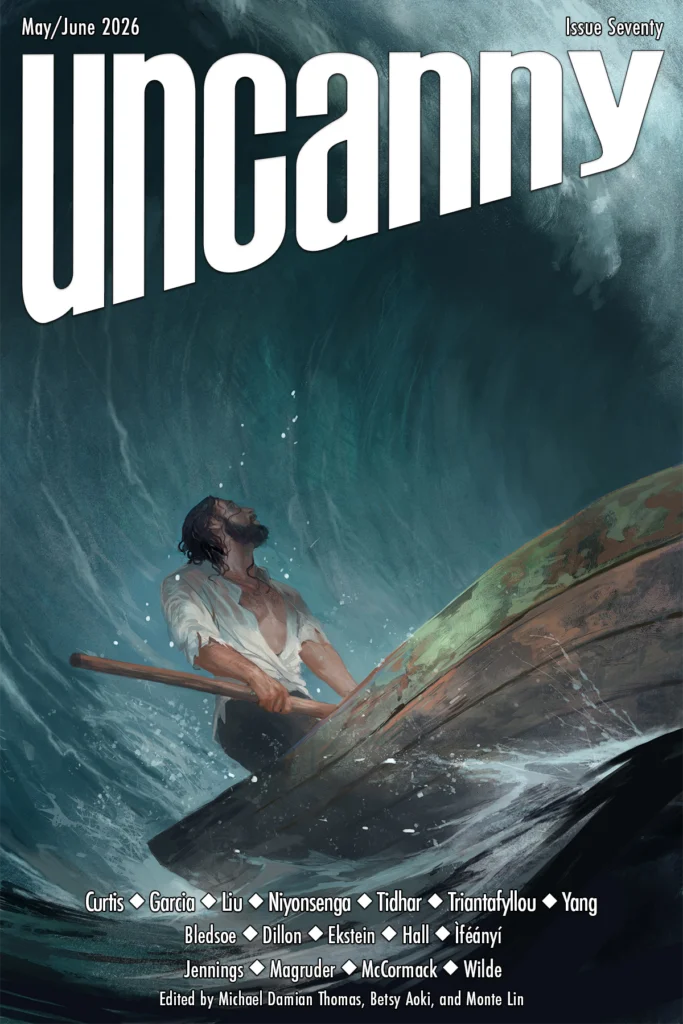
Introduction: The Enigmatic Glass City and its Silent Sentinel
For an unspecified period, spanning months, perhaps even years, an unnamed wanderer and his canine companion, Belén, have maintained a solitary vigil outside the enigmatic Glass City. This urban marvel, distinguished by its towering, smooth, and utterly transparent walls, stands as a beacon of both architectural innovation and profound cultural difference on a vast, grass-covered plain. The stranger, a figure marked by a growing beard and an enduring quietude, has carved a persistent path around the city’s perimeter, a ritualistic circuit driven by an intense, unspoken curiosity and a deep-seated reluctance to cross its threshold. His daily routine of observation, listening, and waiting has become a silent dialogue with a civilization that embraces a radical form of openness, a way of life he struggles to reconcile with his own perceived inner darkness.
Main Facts: A City of Unveiled Selves
The Glass City is a striking anomaly, its very construction challenging conventional notions of privacy and protection. Its perimeter wall, a seamless expanse of glass, rises approximately three times the height of a grown man. While perfectly crafted, its sheer thickness causes a subtle distortion of light and image when viewed from an angle, reflecting a thousand rainbow shards in one’s peripheral vision. This architectural marvel encases a society whose inhabitants live in a state of literal transparency: their internal organs are visibly displayed, worn like intricate, living garlands around their chests and shoulders. The red, pink, and yellow hues of these exposed vitalities are discernible even through the distorting glass, a constant, vivid testament to their unique existence.
Entry into this city is not granted casually. It involves a deeply symbolic and physically transformative ritual. Prospective residents are offered a sharp, purposeful knife, a tool that serves as both a welcome and an instrument of profound change. Those who choose to enter must use this knife to meticulously cut themselves open, turning their bodies "inside out" to mirror the city’s populace. This act of extreme vulnerability is the prerequisite for acceptance, a stark contrast to the world beyond where walls are built to conceal rather than reveal. The stranger, observing this ritual countless times, has never accepted the knife for himself, choosing instead a life of quiet observation on the periphery.
A Decade of Observation: The Stranger’s Chronology
The stranger’s long vigil has allowed for an unparalleled, if distant, study of the Glass City and its people, meticulously charting their rhythms, their language, and the profound philosophy underpinning their existence.
The Initial Approach and Lingual Labyrinth
His journey began years ago, a journey from a city where walls were crafted from carefully pruned trees, a stark contrast to the transparent barrier he now faced. His first encounter with the Glass City’s residents was marked by confusion and a profound cultural misinterpretation. Approaching the gate, he was offered a knife, held out like a treasured apricot, a gesture he initially perceived as an unexpected welcome. Unaccustomed to such a direct and demanding invitation, he declined, choosing instead to begin his now-familiar circular path around the city.
The language spoken within the glass walls, while possessing echoes of his own tongue, presented significant hurdles. Early attempts to decipher the overlapping, often unintelligible shouts from the other side of the wall proved futile. He could discern gestures from the corner of his eye, but an internal resistance prevented him from fully engaging, from knowing if their words were directed at him. Over time, however, his persistent listening began to yield fruit. Common concepts like play, eat, wait, and learn became discernible, as easy to grasp as the sun on his skin. Yet, many other concepts remained stubbornly opaque, their meanings eluding his comprehension, reflecting a world view profoundly different from his own.
Rituals of Revelation: Life "Inside Out"
The most striking feature of the Glass City’s inhabitants is their unique anatomy. Their organs, exposed and visible, are not merely an anatomical curiosity but a fundamental aspect of their social and philosophical fabric. This state of perpetual vulnerability dictates much of their daily life. Observers note instances of bleeding, quickly attended to by others who gently press salve or gauze onto the exposed wounds, a common act of communal care. This constant physical transparency fosters an environment of inherent empathy and mutual support, where the suffering of one is immediately apparent and addressed by all.
The practice of living "inside out" is, however, not absolute. When residents must leave the city for trade or travel, a fascinating and seemingly arduous transformation occurs. The stranger has witnessed them struggling, twisting, and wrenching themselves "right-side in," their skin patting and grimacing as if newly donned and foreign. This ritual highlights the profound commitment required to maintain their state of openness, suggesting that their natural state, or at least their preferred one, is the exposed form. The act of reversing this state for interaction with the outside world underscores the deliberate choice inherent in their way of life.
The Gateway to Openness: The Knife’s Invitation
The city’s welcoming ritual is perhaps its most profound and demanding. Travelers, their clothes dusty from long journeys, approach the gate, drawn by the whispered promises of the city: openness, kindness, and freedom from want. They are met with the same sturdy, purposeful knife the stranger was first offered. For most, the sight of the blade, and the implied act, is too much. They recoil, dropping the knife, retreating to the "hard, dusty road and the hurt they already know."
Yet, a few, driven by an extraordinary blend of strength, bravery, or desperation, accept the challenge. They take the knife, setting its point at their throats and cutting a straight line down through their belly. They then hold the edges of their skin, wrenching themselves open, pushing their bodies "out and through" until they are nothing but exposed flesh, organs, and teeth – an open wound, vulnerable to the slightest pain or irritation. At this moment of ultimate surrender and vulnerability, the gate of the Glass City opens, and its inhabitants welcome them, their acceptance a testament to the shared sacrifice and radical empathy that defines their society.
Sustenance and Solitude: Life Outside the Wall
Beyond the city’s walls, the landscape offers a stark yet beautiful contrast. The city rises from a flat, grass-covered plain, adorned with patches of wildflowers in the summer months. A small, brown river flows in one direction, while an elegant aqueduct, originating from distant mountains, supplies the city with purer, cleaner water, reportedly better suited for its delicate residents.
The stranger and Belén subsist on the fringes of this natural world, supplemented by the discards of merchants and occasional odd jobs outside the city. They often spend entire days by the river, catching fish, indulging in the spray, a simple existence punctuated by the constant presence of the city. Belén, with her boundless joy, dances in any water, indifferent to its source, a stark counterpoint to the city’s refined needs. Despite these excursions, the stranger’s gaze invariably turns back towards the Glass City, a silent, magnetic pull that Belén faithfully follows.
Linguistic Immersion and Philosophical Quandaries
As months stretched into years, the stranger’s linguistic immersion deepened. He began to unravel the complexities of the city’s language, discovering semantic intricacies that defied conventional logic. He learned that "out" could denote twelve different concepts, including "in," a paradoxical inversion that hinted at the city’s core philosophy. The word "touch," he discovered, simultaneously meant "kill" and "give name to," suggesting a profound connection between creation, destruction, and intimacy. Most strikingly, every word associated with goodness and benevolence stemmed from a root meaning "open," directly linking moral virtue to vulnerability and transparency.
Despite this growing intellectual understanding, the stranger harbored a profound internal conflict. He believed he did not truly "understand" the language in a way that resonated with his soul. If he did, he reasoned, he would surely have taken the knife himself. He perceived something "heavy" and "malignant" within him, a "poisonous stone" behind his ribs, a dark core that, if exposed, would bring only harm to the city’s gentle, vulnerable people. His inability to master "the art of connection," his tendency for words to "escape his intentions" and "wound," convinced him of his unworthiness. His only solace remained Belén, whose soft eyes and warm fur offered unconditional comfort, untainted by the "horrible, rotten heart" he believed he possessed.
A Turning Point: Grief, Kindness, and a New Offering
The stranger’s long-standing equilibrium, however fragile, was irrevocably shattered by a profound personal loss that would redefine his relationship with the Glass City.
The Silence of Loss: Belén’s Passing
One cold morning, the stranger awoke to a chilling realization: Belén was still. The fur he had kissed a thousand times offered no warmth, no familiar movement. His faithful companion, his sole anchor in a world of self-imposed solitude, was gone. The grief that enveloped him was immediate, visceral, and overwhelming.
Faced with the grim reality of death, the stranger confronted a choice of burial rites that reflected his liminal existence. In his city of origin, the dead were burned to ash. In the Glass City, they were carried to the rocky hills and left for vultures, their exposed insides defenseless against scavengers. He rejected both. He could not bear the thought of Belén disappearing into smoke or becoming prey. He sought to secure her, to place her safely in the earth, an act of final protection and devotion.
A Burial of Devotion: Digging Deep
His despair and desperation evident, the stranger convinced a trader to loan him a shovel, leaving his last coin as collateral. With Belén cradled in his arms, he walked a quarter of the way around the city from the gate, choosing a spot with a view of the river – a place of natural beauty that Belén had loved. He began to dig. The physical exertion – the pulling and burning in his shoulders, the aching in his arms – became a tangible manifestation of his profound sorrow.
As the hole deepened, a chilling realization dawned: once finished, he would have to leave Belén there, alone, forever. This unbearable thought prompted a desperate act. He climbed into the hole himself, continuing to dig, burrowing deeper, as if attempting to escape his grief or to extend their time together in the earth’s embrace. This descent into the earth mirrored his emotional descent into the depths of his sorrow.
Unexpected Benevolence: A Glimmer Through Glass
Near sunset, as the stranger continued his solitary, agonizing work, something unexpected happened. Objects began to fall near the edge of the hole. He heard them before he saw them, but after the second object landed, he hoisted himself out, settling on a pile of fresh dirt. Beside Belén’s body lay a cloth-wrapped bundle and a single, yellow apricot against the dark earth. Unwrapping the cloth, he found a perfect bone, scraps of meat still clinging to it, clearly from an animal far larger than the rabbits Belén had often hunted.
With careful, trembling hands, he placed the bone in Belén’s mouth, mindful of her jaw and a troublesome tooth. He then cradled her, his exhaustion dragging him down, and gently placed her in the bottom of the hole. He arranged her body in a circle, as if she were sleeping peacefully before a fire, adjusting the bone. After one last touch to her head, he climbed out, completing the painful task of covering her grave with earth.
Only then did he turn back towards the Glass City. Standing on the other side of the wall, gazing directly at him, were three figures: a family, the middle one smaller than the other two. For the first time, the stranger looked directly into the city, unshielded by peripheral vision or distortion. The horizontal light streamed through the glass, illuminating them perfectly. Their exposed organs – the pink of intestines, the dark red of kidneys – appeared almost decorative. He observed the child’s lungs, their barely discernible in-and-out movement, and shuddered at a piece of gauze on an adult’s shoulder, imagining the extent of the covering required for his own "ugly insides." The "poisonous stone" in his chest felt heavier than ever, threatening to drag him down to lie beside Belén. He keenly felt their extreme vulnerability, their openness to pain.
The Second Knife: A Clearer Message
A wave of conflicting emotions washed over him. He knew the words, however rough they would sound, to thank them for the bone and the apricot, for their kindness. He wondered if they could possibly comprehend his grief and overwhelming loneliness.
He observed the child taking another apricot from a bag at her feet and handing it to her father. The father, notably lacking visible fingernails, pulled a knife from the same bag. He began to peel and slice the apricot, a fully ripe fruit, almost pink in its brilliant orange hue. The knife, slightly too large, punctured too deep, releasing a small spray of juice, causing the father to wince. With careful movements, he finished peeling, offering sections to his child and wife. Then, he turned back to the stranger and nodded. After a moment, he held up the knife and, with a clear gesture, threw it over the wall. It landed to one side of the stranger, close enough for the message to be undeniable. The stranger, now understanding the language of the Glass City more deeply, knew this, too, was a kindness – the blade, their truest welcome.
He nodded his thanks, wrapped the knife, and placed it in his pocket. The apricot, large as his fist but still hard and unripe, he put in his pack.
Implications: The Path Forward and the Weight of Choice
The aftermath of Belén’s death and the unexpected, profound interaction with the family from the Glass City marked a significant shift in the stranger’s existence, initiating a slow, internal transformation.
The Echo of Emptiness: Life Without Belén
The stranger’s circular path around the glass wall continued, but now in profound solitude. The space beside his right leg was perpetually empty; his bedroll by the fire, always cold. The knife, now a tangible presence in his back pocket, and the slowly softening apricot in his pack, were constant reminders of the city’s offering. He visited Belén’s grave overlooking the river every day, but the visits brought no solace.
The "sharp toxic thing" inside him, the "stone" he had long feared, began to change. Instead of growing, it gnawed at everything, feeding until nothing was left. He felt hollow, cavernous rather than poisonous. The knife in his pocket remained, a potent symbol of potential, yet he was still afraid to use it, to enact the transformative cut that would grant him entry. He pondered the nature of pain within the city, wondering if he could still cause harm, if the inherent hurt of openness was ultimately "worth it." Despite his prolonged proximity, he had never spoken directly to anyone inside the city, respecting the glass wall as a boundary, unwilling to shatter their peace or way of life.
Conjugating Existence: The First Words Spoken
A subtle but significant change began to unfold. The stranger started to "conjugate," a term he used to describe speaking aloud. Not in the language of his people, which he had not heard or spoken in years, but in the language of the Glass City, which he now felt he truly understood. He walked his long, circular path, speaking to the wind and the tall grass, sometimes answered by birds. He spoke of the sky’s color, of pruning the trees of his old city’s wall, of Belén, "who was perfect and soft and beautiful." He even spoke of the "thing inside him," no longer a sharp, heavy stone, but "only a ghost of something." This act of vocalization, a departure from a lifetime of silence, marked a tentative step towards externalizing his internal world, a nascent attempt at his own form of "openness."
The Taste of Readiness: The Ripe Apricot and a New Hope
Weeks after receiving it, the apricot in his pack had ripened. It had grown soft, emanating a sweet, almost acidic aroma, on the verge of overripe. Its brilliant orange skin, slightly fuzzy to the touch, presented itself. With the knife, the blade sliding "smooth and so so easy" through the skin, the fruit’s flesh opened, "soft and beautiful."
The juice was sweet and sticky, running over his hands. He bit into it "recklessly," savoring the soft flesh until his teeth hit the pit, whose sharp edge almost cut his tongue. The pain, echoing through his teeth, shook something within him. He laughed aloud, a sound he hadn’t heard from himself in years, and licked the juice from his wrist. He finished the fruit slowly, more carefully this time, finding it "no less delicious." This act of consuming the ripe apricot, a gift from the transparent city, symbolized a readiness, a sensory awakening that blended sweetness with a hint of pain, a microcosm of the very vulnerability he feared.
Towards Connection: A Whisper of Dialogue
In the morning, a new possibility shimmered on the horizon. Perhaps he would describe the fruit to someone. Perhaps he would seek out the family that had offered him such unexpected kindness and thank them with words they could truly understand. Perhaps he would approach the man who stood at the gate, knife in hand, welcoming travelers, and share his experience of the best fruit he had ever tasted.
His long journey of observation, solitude, and internal struggle had led him to this precipice. The Glass City, once a source of impenetrable mystery and intimidating transparency, now offered a glimmer of hope. If he walked a little closer to the wall, if he only kept speaking, if he continued to articulate the complexities of his transformed interior, perhaps "someday soon someone will hear him, understand him, speak back." The silence of a decade was beginning to fracture, hinting at the potential for a new, vulnerable connection across the transparent divide.



Leave a Comment