
Bandai Namco Addresses "Dealbreaker" Player Feedback in Major Update for Little Nightmares VR: Altered Echoes
The transition of beloved indie titles into the immersive realm of virtual reality is often fraught with technical and design-related hurdles. While the atmosphere and aesthetic of the Little Nightmares universe seemed a natural fit for VR, the initial launch of Little Nightmares VR: Altered Echoes was met with a polarized reception. Despite critical acclaim for its art direction and atmospheric tension, a significant portion of the VR community voiced frustrations over restrictive comfort settings.
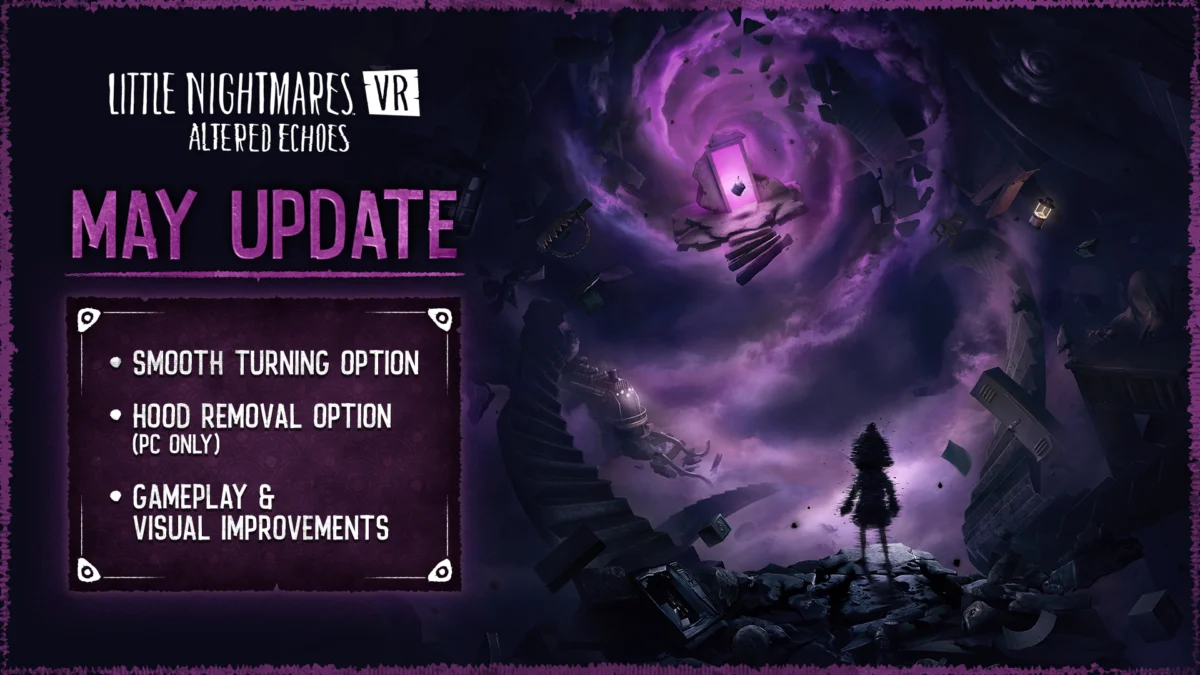
In a decisive move to address these concerns, Bandai Namco has released a comprehensive May update. This patch introduces long-requested features, most notably smooth turning and the ability to disable the controversial hood vignette, signaling a shift in the developer’s philosophy toward VR accessibility and player agency.
Main Facts: A Pivot Toward Player Customization
The core of the May update revolves around two specific technical features that players had labeled as "dealbreakers" during the game’s launch window.
First, Bandai Namco has implemented a Smooth Turning option across all supported platforms, including Meta Quest, PlayStation VR2, and SteamVR. Previously, the game was restricted to "Snap Turning," a comfort feature that rotates the camera in fixed increments (e.g., 30 or 45 degrees). While snap turning is a standard tool for reducing motion sickness, many experienced VR users find it jarring and immersion-breaking. The new smooth turning feature includes several speed presets, ranging from a slow 0.5x to a rapid 3.0x, allowing users to fine-tune the rotational velocity to their comfort level.
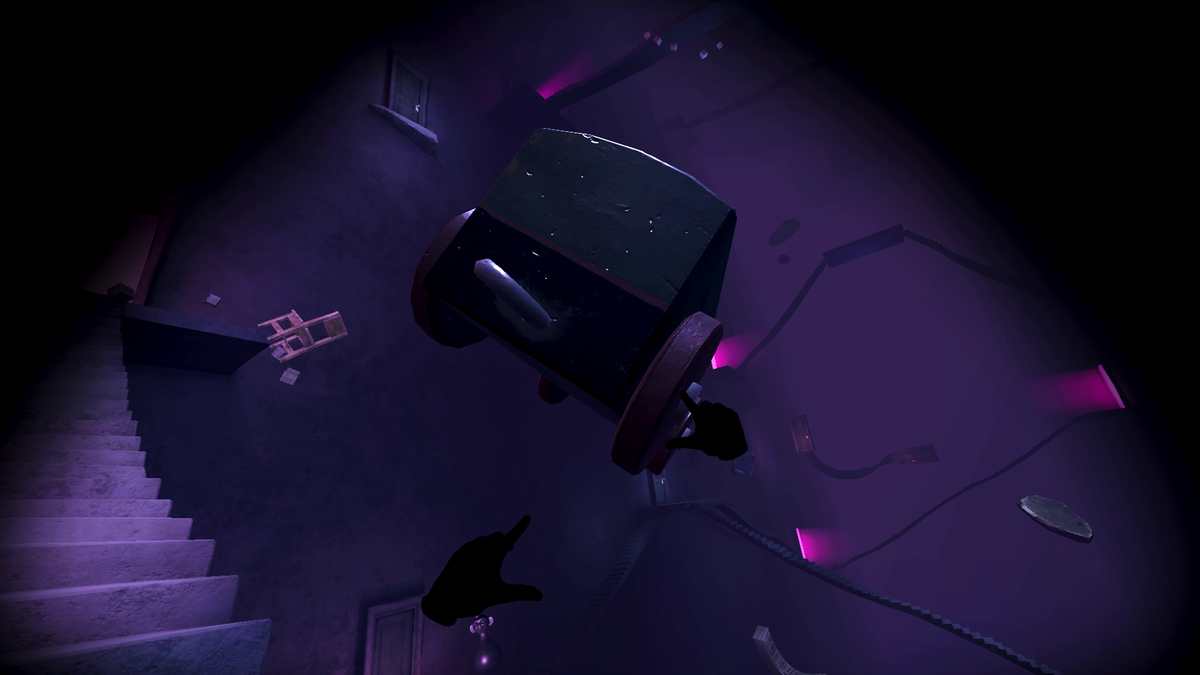
Second, the update addresses the Hood Vignette, a visual overlay designed to simulate the interior of the protagonist Dark Six’s hood. While intended to enhance immersion and provide a "fixed frame of reference" to combat nausea, many players found it claustrophobic and obstructive. The update now allows PC VR players to disable this vignette entirely. However, this specific feature remains absent from the Meta Quest and PS VR2 versions, with the developer citing "performance limitations" on console and mobile chipsets as the primary reason for the restriction.
Beyond these headline changes, the patch includes several "under-the-hood" improvements:
- Refined Interactions: Enhanced collision handling for climbable surfaces.
- Behavioral AI Updates: Improved logic for enemy investigations and chase sequences.
- Visual Fidelity: Better visibility handling for objects held by the player or located in the immediate vicinity.
Chronology: From Launch Backlash to Reactive Patching
To understand the significance of this update, one must look at the timeline of Little Nightmares VR: Altered Echoes.
Upon its initial release, the game was hailed as a "faithfully terrifying adaptation." Critics praised how the scale of the world—viewed from a miniature perspective—translated into a sense of genuine dread when standing beneath the towering, grotesque antagonists of the Maw. However, as the first wave of player reviews hit the Meta Store and Steam, a recurring theme emerged.
Initially, the official FAQ on Bandai Namco’s website took a hardline stance. The developers explicitly stated that snap turning was the only available rotation method and that the hood vignette was a permanent fixture. This design choice was framed as a preventative measure against motion sickness, adhering to a "safety-first" methodology common in early VR development.
By mid-April, the narrative among the core VR community had shifted. Negative reviews on the Horizon Store and Steam began to pile up, not because of the game’s content, but because of its perceived lack of "Pro" VR options. For many, the inability to customize the experience was seen as a step backward for a high-profile VR port in 2024.
Recognizing the potential impact on long-term sales and brand reputation, Bandai Namco’s development team began acknowledging the feedback on social media and developer blogs. By the first week of May, the "Comfort Update" was deployed, directly citing that these features were "highly requested" by the player base.
Supporting Data: Technical Performance and Hardware Constraints
The disparity between the PC VR version and the console/standalone versions regarding the hood vignette has sparked technical debate within the community.
According to Bandai Namco’s official statement, removing the hood vignette on platforms like the Meta Quest 3 or PS VR2 poses a performance risk. In VR rendering, a vignette often serves a dual purpose: it reduces the number of pixels the GPU needs to render in the periphery (foveated rendering or simple masking), and it hides edge-of-frame artifacts. By removing the mask, the hardware is forced to render a wider field of view with high-fidelity textures and lighting, which can lead to frame rate drops—a cardinal sin in VR that causes immediate physical discomfort.
Early testing of the update on high-end PC hardware suggests that the performance hit is negligible for those with modern specifications. On a system equipped with an NVIDIA GeForce RTX 5070 Ti and an AMD Ryzen 7 9850X3D, the game maintains a stable frame rate even with the vignette disabled. However, the developer’s caution regarding the Meta Quest is understandable, given the mobile processor’s limited overhead.
The addition of smooth turning speed presets (0.5x to 3x) is also supported by user data suggesting that "slow" smooth turning can be more nauseating than "fast" smooth turning for some users. By providing a 3x speed, Bandai Namco is catering to "VR veterans" who prefer near-instantaneous rotation that mimics natural head movement.
Official Responses: Balancing Vision with Accessibility
Bandai Namco’s communication throughout this process highlights the tension between artistic vision and user accessibility.
In the original FAQ, the company argued that the hood vignette was essential for "added immersion," intending for players to feel truly encased in the yellow raincoat of the protagonist. They stated: "The vignette is present to ensure the most comfortable and immersive experience possible, preventing the ‘floaty camera’ sensation that often leads to vestibular mismatch."
However, following the update, the tone shifted toward a more inclusive philosophy. In a post on the Horizon Store, the developers admitted that while their initial intent was to protect the player, the demand for choice was undeniable. They acknowledged that a "one-size-fits-all" design methodology is increasingly obsolete in the VR space.
"We have listened to the community’s feedback regarding comfort and control," the developer statement read. "By introducing smooth turning and PC-specific visual toggles, we hope to make the terrifying world of the Maw accessible to everyone, regardless of their VR experience level."
Implications: The Future of VR Porting Standards
The update for Little Nightmares VR: Altered Echoes serves as a case study for the evolving standards of the VR industry. It highlights three critical takeaways for developers moving forward:
1. The Death of the "One-Size-Fits-All" Approach
Early VR titles often forced comfort settings on players to avoid "poisoning the well" with bad experiences. However, as the medium matures, the user base has split into distinct tiers: newcomers who require vignettes and snap turning, and veterans who find those same features intrusive. The lesson here is that customization is no longer optional; it is a fundamental requirement for any premium VR title.
2. The Transparency of Performance Limitations
Bandai Namco’s honesty regarding why the hood removal is PC-only is a refreshing change from vague corporate jargon. By citing "performance limitations," they provide a logical justification that the community can understand, even if Quest users remain disappointed. This transparency helps manage expectations and reduces the likelihood of "review bombing" based on perceived laziness.
3. The Importance of Post-Launch Support
In the modern gaming landscape, a "mostly positive" rating can quickly slide into "mixed" if developers ignore early feedback. By responding within weeks of the complaints, Bandai Namco has likely saved the game’s long-term viability on platforms like Steam, where user reviews heavily influence the storefront’s discovery algorithms.
Conclusion
Little Nightmares VR: Altered Echoes remains one of the most atmospheric and visually striking experiences available in virtual reality. With the May update, Bandai Namco has successfully bridged the gap between their creative vision and the practical needs of the VR community. While the lack of hood-removal options on Quest and PS VR2 remains a minor point of contention, the addition of smooth turning and improved AI interactions significantly polishes an already strong title.
As the industry moves forward, the "Altered Echoes" update will likely be remembered as a pivotal moment where a major publisher recognized that in VR, the player’s comfort must be defined by the player themselves, not the developer. The game is currently available on PS VR2, Steam, and Meta Quest, and with these new options, there has never been a better—or more comfortable—time to descend into the Maw.


Leave a Comment