
Edmund I: The Forgotten King Who Forged a Nation Amidst Viking Chaos
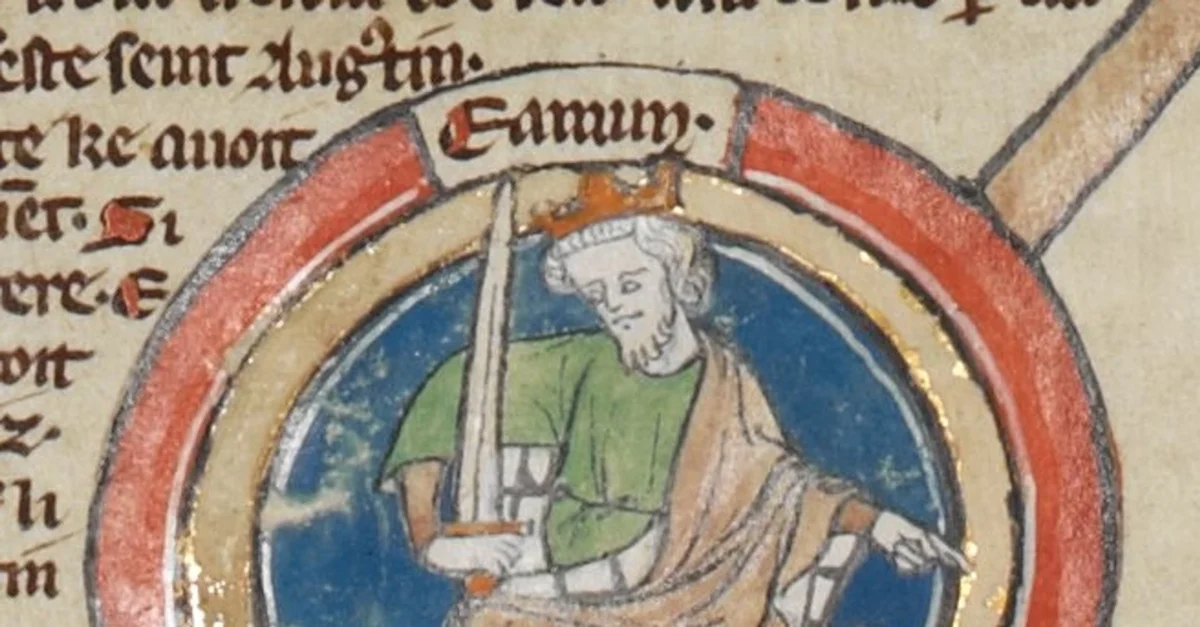
King Edmund I, who reigned over the Kingdom of the English from 939 to 946, stands as a pivotal yet often overshadowed figure in the tumultuous 10th century. Ascending to the throne at a mere 18, Edmund inherited a nascent kingdom constantly threatened by resurgent Viking power and complex Anglo-Celtic relations. Despite a brief reign tragically cut short, his strategic acumen, military prowess, and nuanced diplomacy solidified the foundations of a unified England, continuing the legacy of his illustrious grandfather, Alfred the Great, and his formidable brother, Aethelstan.
Edmund’s early life was marked by the crucible of conflict, notably fighting alongside his brother, King Aethelstan (reigned 924-939), at the legendary Battle of Brunanburh in 937. This decisive victory against a formidable Celtic-Viking alliance cemented English dominance. However, upon Aethelstan’s death in 939, the Vikings seized the opportunity, reclaiming York and plunging the north into renewed instability. Edmund spent much of his reign in a relentless struggle to reclaim these territories, successfully re-establishing the House of Wessex’s control over the north by 944. Beyond his borders, he skillfully navigated the intricate politics of the British Isles, fostering alliances with Welsh and Scottish rulers and demonstrating a pragmatic approach to power that diverged from his brother’s more imperial ambitions. His sudden and violent death in 946, at the young age of 25, left a lasting imprint on the succession and the ongoing battle for England’s unity.
Chronology: A Reign Defined by Conflict and Consolidation
921: Edmund is born, the fourth son of King Edward the Elder and Eadgifu of Kent. His name, linking him to Saint Edmund the Martyr, symbolically invoked resistance against Viking invaders.
924: Edward the Elder dies. A succession contest ensues, ultimately won by Edmund’s eldest half-brother, Aethelstan. As an infant, Edmund is taken under Aethelstan’s tutelage, beginning his "royal apprenticeship."
927: Aethelstan consolidates his power, taking York and proclaiming himself King of all England, demanding submission from neighbouring British rulers.
933: Edmund becomes the official heir after the death of his elder brother, Edwin, at sea.
934: Edmund participates, though likely too young to fight, in Aethelstan’s invasion of Scotland, learning lessons in military leadership and the assertion of English overlordship.
937: At 16, Edmund fights alongside Aethelstan at the Battle of Brunanburh, a monumental clash against a combined Celtic-Viking force. His role in this victory earns him praise from contemporary chroniclers and solidifies his reputation as a warrior prince.
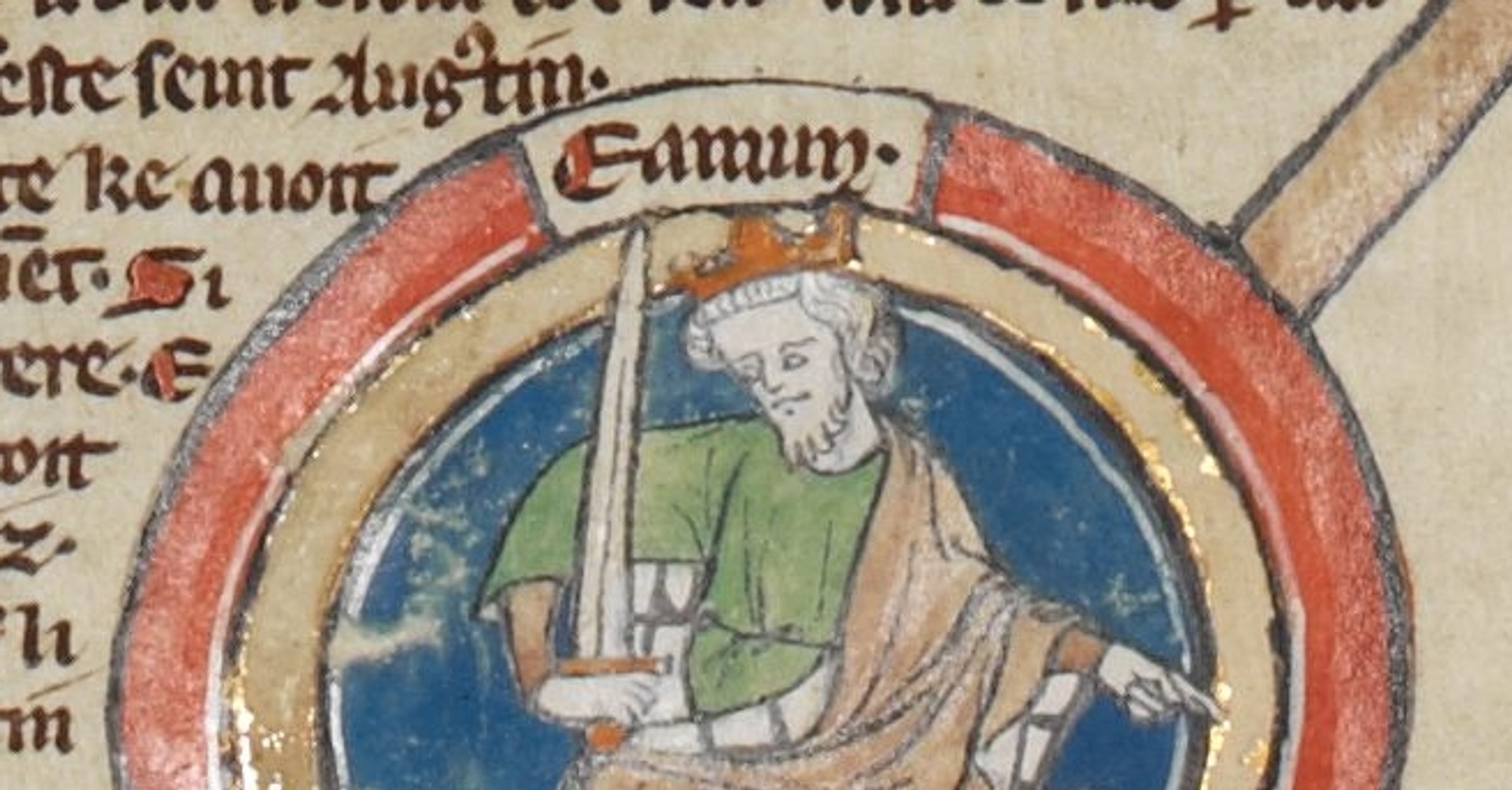
939: Aethelstan dies. Edmund, aged 18, inherits the crown. Almost immediately, Viking forces under Olaf Guthrithson seize York and large parts of the Danish East Midlands, challenging Edmund’s authority. His coronation takes place in Kingston-upon-Thames.
940: Edmund and Olaf Guthrithson meet at Leicester, avoiding battle through the intervention of Archbishop Wulfstan of York and Bishop Oda of Ramsbury. A peace settlement is negotiated.
941: Olaf Guthrithson dies, possibly in battle, during a campaign against the English earldom of Bamburgh. His cousin, Olaf Cuaran, succeeds him in York.
942: Edmund exploits the transition of power in York, reconquering the ‘Five Boroughs’ (Derby, Leicester, Lincoln, Nottingham, and Stamford) in the East Midlands. Olaf Cuaran seeks peace and even accepts baptism.
944: With political divisions weakening York, Edmund, supported by Archbishop Wulfstan, launches a decisive campaign, seizing York. Ragnall, a rival ruler in York, is executed, and Olaf Cuaran flees. York is returned to West Saxon control.
945: Edmund invades the Kingdom of Strathclyde, driving out its ruler and the Norse raiders. He grants the territory to King Malcolm I of Scotland, forging a new, less tribute-based alliance focused on mutual military support against Viking threats.
946: On May 26th, Edmund is tragically assassinated by a notorious thief named Leofa at Pucklechurch, Gloucestershire, during a feast. His sudden death leaves his young sons, Eadwig and Eadgar, too young to rule.
Post-946: Edmund’s younger brother, Eadred, inherits the throne. The struggle for the north and the ongoing challenge of Viking York continue, with York eventually falling to the House of Wessex for the final time after another decade of conflict.
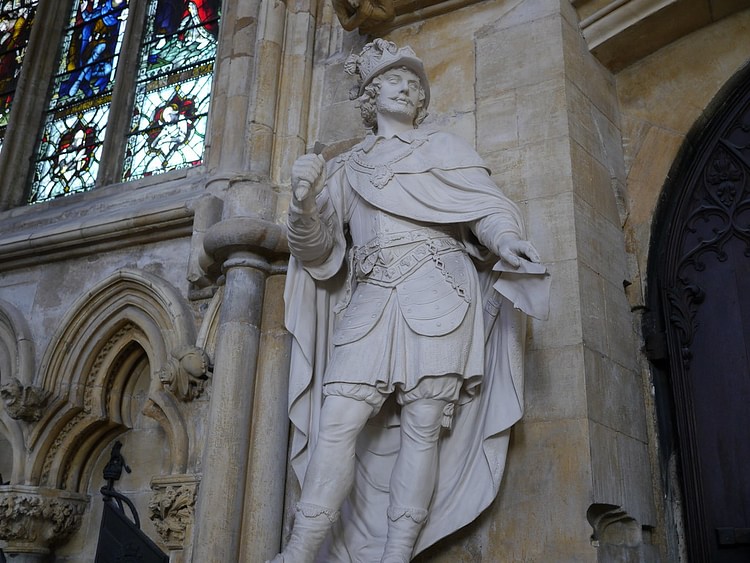
Supporting Data: A Deep Dive into Edmund’s Reign
The House of Wessex: Forging a Kingdom
The early 10th century was a period of profound transformation for England. The Viking invasions of the late 9th century had shattered the old heptarchy, sweeping away the independent kingdoms of East Anglia, Mercia, and Northumbria. Only Wessex, under the inspired leadership of Alfred the Great, managed to withstand the onslaught. Alfred’s strategic vision laid the groundwork for reconquest, a task vigorously pursued by his son, Edward the Elder. Edward systematically expanded West Saxon rule into Viking-held territories in the East Midlands and East Anglia, consolidating a nascent English state. His son, Aethelstan, would then complete this process, effectively becoming the first King of all England. Edmund was born into this dynamic era, a time when the very concept of "England" was being forged through military might and political maneuvering. The symbolic naming of Edmund, linking him to Saint Edmund the Martyr, the last English ruler of East Anglia killed by Vikings in 869, served as a powerful reminder of the ongoing struggle and the dynasty’s commitment to reclaiming and unifying the English lands.
A Prince’s Education and Early Trials
Born in 921, Edmund’s path to the throne was initially highly improbable. As the fourth son of Edward the Elder, he stood behind his battle-hardened half-brother Aethelstan (from Edward’s first marriage) and Aelfweard and Edwin (from Edward’s second marriage). His early life, likely spent under the care of his mother, Eadgifu of Kent, was not one of idle privilege. The 12th-century historian William of Malmesbury recounts that Edward’s sons received a rigorous education, "like philosophers," immersing themselves in "book-learning." This intellectual training was undoubtedly complemented by a comprehensive martial education, essential for any prince of the age. Edmund would have spent countless hours mastering the sword, spear, horsemanship, and military strategy, preparing him for the warrior kingship that lay ahead.
His trajectory shifted dramatically upon his father’s death in 924. A succession dispute between Aethelstan and Aelfweard saw Aethelstan emerge victorious, with Aelfweard’s swift demise consolidating his claim. Aethelstan, significantly older than Edmund and his full brother Eadred, adopted a paternal role. William of Malmesbury notes Aethelstan’s "remarkable affection towards his other brothers," whom he "brought up lovingly in childhood." This familial bond would prove crucial, as Aethelstan’s reign became Edmund’s intensive political and military apprenticeship.
Brunanburh: Forging a Warrior King
Aethelstan’s reign began with a strong assertion of English power. In 927, he seized York after the death of its Viking ruler, Sihtric, declaring himself ruler of all England and compelling submission from the Welsh, Strathclyde Britons, Scots, and the English lord of Bamburgh. His ambition was grand: to rule all of Britain. However, this ambition was met with resistance. In 934, the Scots reneged on their fealty, prompting Aethelstan to launch a massive invasion, which Edmund, then a young boy, joined to observe and learn. Scotland was raided and plundered, and King Constantine II was forced to publicly reaffirm his submission.
Yet, this subjugation proved temporary. In 937, a formidable Celtic-Viking alliance, spearheaded by Constantine II, Olaf Guthrithson of Dublin, and the King of Strathclyde, landed a huge army on the Wirral. This gathering represented the gravest threat to Aethelstan’s unified kingdom. Aethelstan, raising forces from Mercia and Wessex, marched north to meet them, with Edmund, now 16, fighting alongside his brother. What followed was the Battle of Brunanburh, a clash of epic proportions, immortalized in a contemporary Old English poem. The poem hails both brothers, describing them as "King Aethelstan, the lord of warriors," and "Prince Edmund," who "won themselves eternal glory / In battle with the edges of their swords." It highlights their shared history of defending their land "from boyhood," underscoring Edmund’s early immersion in warfare. Brunanburh was a brutal, all-day affair, a slaughter that secured northern England for the time being, though the Scots remained unconquered. For Edmund, it was a baptism by fire, a profound lesson in leadership, strategy, and the harsh realities of defending a kingdom.
The Crown of Crisis: Edmund’s Accession and the Return of the Vikings
Aethelstan’s unexpected death in 939, at the age of 45, thrust 18-year-old Edmund onto the throne. His coronation at Kingston-upon-Thames marked the beginning of a reign immediately plunged into crisis. The carefully constructed unity of Aethelstan’s kingdom proved fragile. Sensing a leadership vacuum, the leading men of York invited Olaf Guthrithson of Dublin to rule over them, and large swathes of the Danish East Midlands swiftly defected to Olaf, significantly expanding his newly formed Viking kingdom.
Edmund’s first years were a test of his resolve. In 940, a confrontation with Olaf at Leicester was averted by the diplomatic efforts of Archbishop Wulfstan of York (a key English defector who became Olaf’s advisor) and Bishop Oda of Ramsbury (Edmund’s leading counsel). A peace was negotiated, but Olaf’s ambitions remained unchecked. He turned his attention north, attacking the English earldom of Bamburgh, where he died, possibly in battle, in 941.
Reclaiming the North: The Struggle for York and the Five Boroughs
Olaf Guthrithson’s death provided Edmund with an opportunity. His cousin, Olaf Cuaran, succeeded him in York, but this transition created a momentary weakness that Edmund exploited. In 942, Edmund launched a swift campaign, successfully reconquering the strategically vital ‘Five Boroughs’ of Derby, Leicester, Lincoln, Nottingham, and Stamford in the northeast Midlands. Contemporary poets again lauded Edmund, calling him "the brave Edmund" and the "doer of necessary deeds."

Olaf Cuaran, facing significant losses, sought peace and even accepted baptism, hoping to foster better relations with the English king. However, this appeasement alienated his supporters in York, who viewed him as weak. His cousin, Ragnall, was soon promoted to co-ruler, leading to a split in the Viking kingdom of York. Ragnall, too, sought friendship and baptism from Edmund, perhaps hoping for English assistance against Olaf. But Edmund, demonstrating astute political judgment, chose to let the internal divisions of York fester, weakening his rivals. In 944, with the Viking power fragmented, Edmund struck decisively. Gaining crucial support from Archbishop Wulfstan, he crossed his northern border, seized York, executed Ragnall, and forced Olaf into exile. After five years of intense conflict, York was firmly back in West Saxon hands, allowing Edmund to assert control over all English territories, echoing Aethelstan’s earlier triumph. This campaign was less about pitched battles and more about strategic maneuvering, exploiting power vacuums, and winning over local elites – skills Edmund had honed since his youth.
A New Diplomacy: Shaping Britain’s Borders
Edmund’s ambitions, like his brother’s, extended beyond England, as evidenced by his styling himself "King of the English and of the surrounding peoples." However, his approach to these "surrounding peoples" marked a significant shift.
In Wales, Edmund inherited a complex political landscape divided between Idwal the Bald of Gwynedd and Hywel the Good of Deheubarth. While details are scarce, Edmund’s overlordship appears to have been lighter than Aethelstan’s, primarily requiring tribute and a commitment to avoid Viking alliances. This peace was shattered in 942 when Idwal either rebelled or allied with the Vikings. Edmund’s response was swift and decisive: he invaded Gwynedd, defeated Idwal, who was killed, and granted control of the region to Hywel. This move effectively consolidated Welsh power under a trusted English ally, securing a loyal buffer on England’s western flank.
Further north, the presence of Viking York initially limited English influence over Scotland and Strathclyde. With York’s fall in 944, Edmund gained direct access to these northern kingdoms. Strathclyde, having harbored Norse raiders and potentially the deposed Olaf Cuaran, became Edmund’s next target. In 945, he invaded, expelling the Norse and the Strathclydian ruler. Crucially, Edmund did not annex the territory. Instead, he granted it to King Malcolm I of Scotland, who had recently succeeded Constantine II. This "gift" fundamentally altered Anglo-Scottish relations. Unlike Constantine, Malcolm was not required to pay tribute or attend the West Saxon court as a supplicant. Instead, he pledged military support against Viking incursions in northern England.
Historian Alaric A. Trousdale characterizes this as a "reinforcement of the power of friendly client kings" rather than Aethelstan’s "enforcing the submission of client kings." Edmund, having witnessed the dangers of Celtic-Viking alliances forged in response to Aethelstan’s heavy-handedness, opted for a more pragmatic, sustainable approach. He positioned himself not as an emperor, but as a "first among equals," with Wales and Scotland as junior partners. This strategy, while less outwardly imperial, fostered stable alliances and created a robust defense against Viking resurgence, proving Edmund to be a shrewd statesman as well as a warrior.
Governing England: Court, Advisors, and Legal Reforms
On the home front, the young king relied heavily on a trusted circle of experienced advisors. His mother, Eadgifu, maintained significant influence as the leading lady of the royal court. His cousin, Ealdorman Aethelstan, later known as the ‘Half-King’ due to his immense power, was a critical military and political force, particularly in East Anglia and the East Midlands, the front lines against York. Edmund strategically elevated other kinsmen, appointing Aethelstan’s brothers, Aethelwold and Eadric, as ealdormen in Kent and Wessex, respectively, and another cousin, Ealhhelm, in Mercia. This demonstrated a policy of entrusting provincial power to loyal kinsmen rather than local elites, strengthening royal control.
A key figure in Edmund’s governance was Archbishop Oda of Canterbury, a devout Christian of Viking heritage. Oda, who had negotiated the peace with York in 940, became a crucial architect of Edmund’s legislation. Edmund was remembered as a wise "lawgiver" who "honoured God and kept his laws." His laws, while addressing traditional concerns like curbing blood feuds and theft, also contained innovative elements, possibly influenced by Oda’s exposure to reforming ideas from the Kingdom of Francia. These reforms included promoting higher standards for monks, enforcing celibacy with harsh punishments, and significantly enhancing the role of bishops. Bishops were mandated to tour their dioceses, preside over local assemblies, and oversee the rebuilding of churches in areas of former Viking settlement, with royal assistance. This focus on ecclesiastical reform and reconstruction underscores Edmund’s commitment to both spiritual renewal and the physical reintegration of previously Viking-controlled lands into the Christian English kingdom.
Dynasty and Legacy: A King’s Family and Untimely End
Edmund married twice. His first wife, Ælfgifu of Shaftesbury, from a wealthy Dorset family, bore him two sons, Eadwig and Eadgar, both of whom would later become kings of England. After Ælfgifu’s death in 944, he married Æthelflæd of Damerham, daughter of Ealdorman Ælfgar of Essex. However, his wives’ political influence remained limited, overshadowed by his formidable mother, Eadgifu.
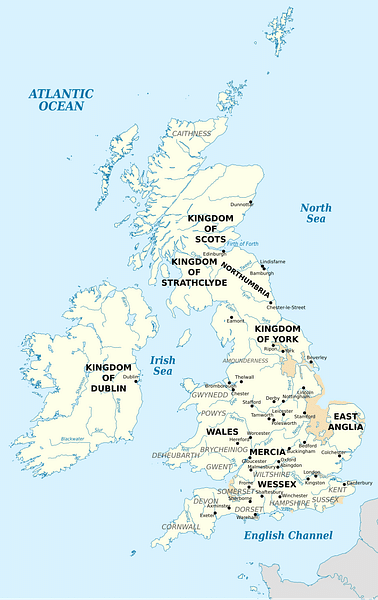
By 946, Edmund, at just 25, had achieved much: military expansion, the re-establishment of unity, and strategic alliances. He had undeniably proven himself a worthy successor to Aethelstan. His reign, though short, was one of dynamic consolidation.
His life, however, came to an abrupt and shocking end on May 26, 946. While celebrating the festival of Saint Augustine at Pucklechurch, Gloucestershire, a notorious thief named Leofa intruded into the royal hall. When challenged by a steward, Leofa refused to leave, and a brawl erupted. The king, personally intervening in the chaos, was tragically stabbed and killed by the thief. The circumstances of his death – a king falling not in battle but in a domestic incident – were highly unusual for the era and underscored the ever-present dangers faced by even the most powerful rulers.
Edmund was buried at Glastonbury Abbey, a prestigious monastic center in Wessex that he had favored and patronized during his life. His sudden demise left his sons, Eadwig and Eadgar, too young to rule, necessitating the succession of his younger brother, Eadred. This meant the ongoing struggle for the north, and the perennial challenge of Viking York, once again fell to a new king, extending the dynastic effort to finally secure England’s unity.
Official Responses: Historical Assessments of a Dynamic King
Contemporary and later chroniclers, though sometimes overshadowed by the towering figures of Alfred and Aethelstan, viewed King Edmund I with considerable respect and admiration. John of Worcester, the 12th-century chronicler, explicitly called him a "great king," a testament to his effective leadership during a turbulent period. Modern historians echo this sentiment. Sir Frank Stenton, a preeminent Anglo-Saxon scholar, described Edmund as "both warlike and politically effective," highlighting his dual strengths on the battlefield and in the council chamber.
His actions served as direct "official responses" to the challenges of his time. His decisive military campaigns to reclaim the Five Boroughs and York were direct responses to Viking resurgence and threats to English unity. His innovative diplomatic strategy with Wales and Scotland, shifting from Aethelstan’s heavy-handedness to a more cooperative "first among equals" approach, was a calculated response to the persistent Celtic-Viking alliances that had plagued his brother’s reign. His legal reforms, especially those empowering bishops and rebuilding churches, were an official response to the need for social order, moral rectitude, and the re-Christianization of formerly Viking-dominated areas. Even his tragic intervention against Leofa, though fatal, could be seen as an immediate, personal response to a breach of royal order and hospitality, reflecting a king willing to enforce justice himself.
Implications: A Legacy of Unity and Pragmatism
Edmund I’s brief but impactful reign had several profound implications for the future of England and the British Isles:
Consolidation of the English Kingdom: Despite the initial crisis following Aethelstan’s death, Edmund successfully reasserted West Saxon control over York and the Five Boroughs. This was a crucial step in the long process of unifying England, ensuring that the north remained integrated into the emerging English state, even if the struggle was not definitively over. His efforts laid the groundwork for the eventual, permanent absorption of the last Viking territories under his successors.
A New Model for British Diplomacy: Edmund’s pragmatic approach to Wales and Scotland, fostering alliances through mutual benefit rather than enforced submission, marked a significant departure from Aethelstan’s more imperialistic style. By granting territory and seeking military cooperation, he created a more sustainable framework for Anglo-Celtic relations, reducing the likelihood of costly Celtic-Viking alliances and establishing a precedent for future English kings in managing their peripheral neighbours.
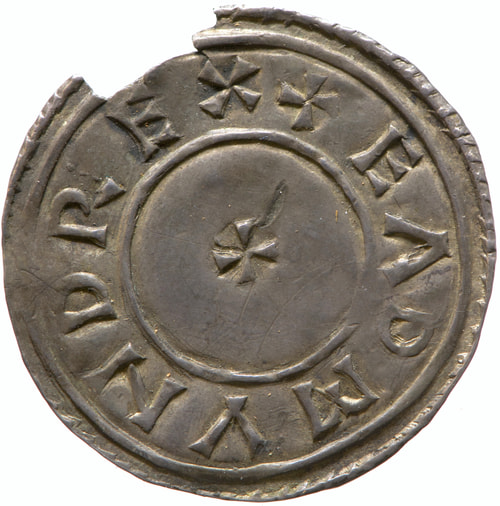
Strengthening the Monarchy and Governance: Through his reliance on trusted kinsmen and powerful ecclesiastical advisors like Archbishop Oda, Edmund managed to maintain stability and project royal authority across his kingdom. His legal reforms, particularly those concerning the church, contributed to the moral and administrative fabric of the nascent English state, enhancing the role of the episcopacy in local governance and promoting religious revival.
Dynastic Continuity and the Ongoing Struggle: While his death was tragic and premature, Edmund left behind two young sons who would eventually reign, ensuring the continuity of the House of Wessex. However, his death also immediately reignited the Viking challenge in the north, forcing his brother Eadred to continue the fight for York for another decade. This underscored the fragile nature of the kingdom’s unity and the persistent threat of external and internal divisions.
Edmund I, though often a footnote in the shadow of his more famous kin, was a king of significant accomplishment. He was a capable warrior who solidified the gains of his predecessors, a shrewd politician who adapted his strategies to maintain peace and power, and a lawgiver concerned with the moral and administrative health of his kingdom. His reign, short as it was, was essential in bridging the gap between Aethelstan’s conquests and the eventual secure unity of England, cementing his place as a vital architect of the English nation.




Leave a Comment