The Great Game: A Century of Imperial Shadows and Shifting Sands
Main Facts
The 19th century witnessed a geopolitical struggle of epic proportions, a rivalry that pitted two of the world’s most formidable empires – the British and the Russian – against each other across the vast and rugged terrain of Central Asia. Dubbed "The Great Game," this enduring contest was primarily driven by Britain’s paramount objective: the unwavering defense of its crown jewel, India, from perceived Russian expansionism. Simultaneously, Russia harbored its own imperial ambitions, seeking influence and access to warm-water ports that would solidify its status as a global power.
More than just a series of military maneuvers, The Great Game was a complex tapestry woven with threads of international diplomacy, clandestine espionage, strategic troop deployments, and occasional outright warfare. While its intensity and the reality of certain threats were sometimes overimagined and exaggerated by both sides, its indirect consequences rippled far beyond Central Asia, influencing events such as the European "Scramble for Africa." The game’s intricate dance of power effectively concluded following Russia’s humiliating defeat to a rising Japan in 1905, and the subsequent emergence of a far more tangible and dangerous threat to European stability: the ambitions of Imperial Germany.
The term "Great Game" itself, evocative of a high-stakes chess match played on a global board, was coined in the 19th century by Arthur Connolly, a British officer and intrepid explorer. However, it achieved wider recognition and popular imagination after its appearance in Rudyard Kipling’s seminal 1901 novel, Kim. Kipling’s portrayal cemented the romanticized yet perilous image of agents, explorers, and military strategists operating in the shadowy frontier lands. The term aptly describes the intricate web of relations between the British and Russian empires, characterized by their relentless efforts to undermine each other’s influence and alliances through a blend of overt and covert actions.
Historians, such as L. James, have drawn compelling parallels between The Great Game and the 20th-century Cold War between the USA and the USSR. Both involved a protracted ideological and geopolitical struggle without direct, full-scale military confrontation between the principal powers. Instead, the "moves of the game" frequently manifested as proxy wars, extensive espionage networks, sophisticated diplomatic strategies, and calculated bluffs designed to test the resolve of the adversary. The notable exception to this pattern was the Crimean War (1853-1856), a brutal conflict where British, French, and Ottoman forces directly engaged Russia, primarily to establish naval supremacy in the Black Sea and prevent Russian expansion into the decaying Ottoman Empire.
Central to this imperial standoff were the strategically vital regions of Persia (modern Iran) and Afghanistan. These nations, with their complex tribal structures and challenging geographies, inadvertently served as crucial buffer zones, separating the vast British Empire in India from the expanding Russian Empire to the north. Their independence, though often precarious, was paradoxically maintained by the competing interests of the two giants, neither willing to allow the other outright control.
The two empires themselves presented stark contrasts in governance and development. The Russian Empire, a sprawling autocratic state ruled by an authoritarian Tsar, commanded a population of around 160 million people. Despite its immense size and resources, Russia lagged significantly behind Western Europe in terms of industrialization and political modernization. In stark contrast, Britain stood as a well-established parliamentary democracy, presiding over an empire encompassing some 400 million people across more than 50 countries. While British rule in its colonies was undeniably imperialistic and often undemocratic, British rulers and diplomats frequently viewed themselves as morally and institutionally superior to their Russian counterparts, leveraging Russia’s autocratic governance and industrial backwardness as points of distinction and perceived weakness. This self-perception fueled a sense of destiny and justification for their imperial actions.
Chronology
The Great Game, commencing in the 1820s, unfolded as a series of calculated moves and counter-moves across the Asian continent, each event adding a layer of complexity to the imperial rivalry.
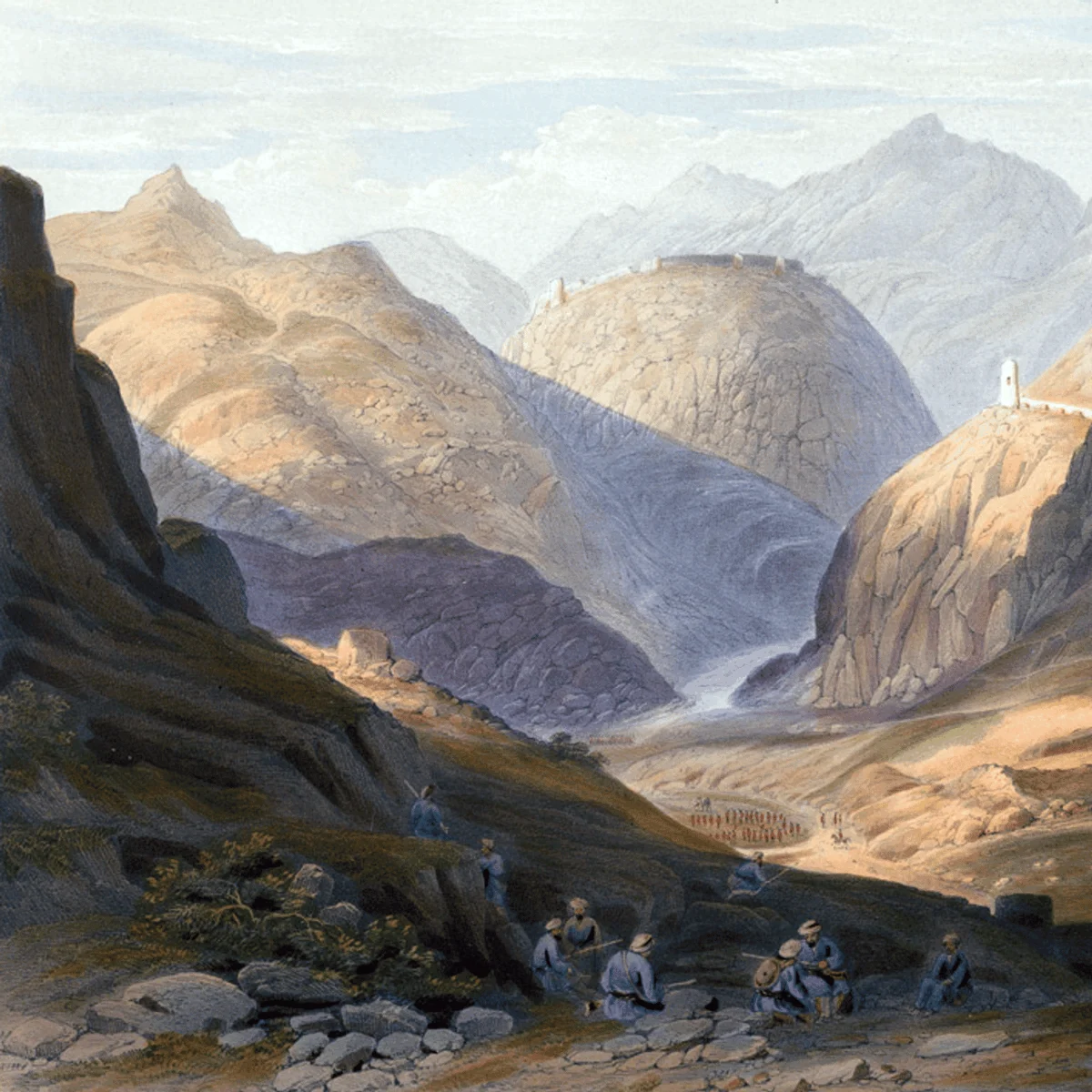
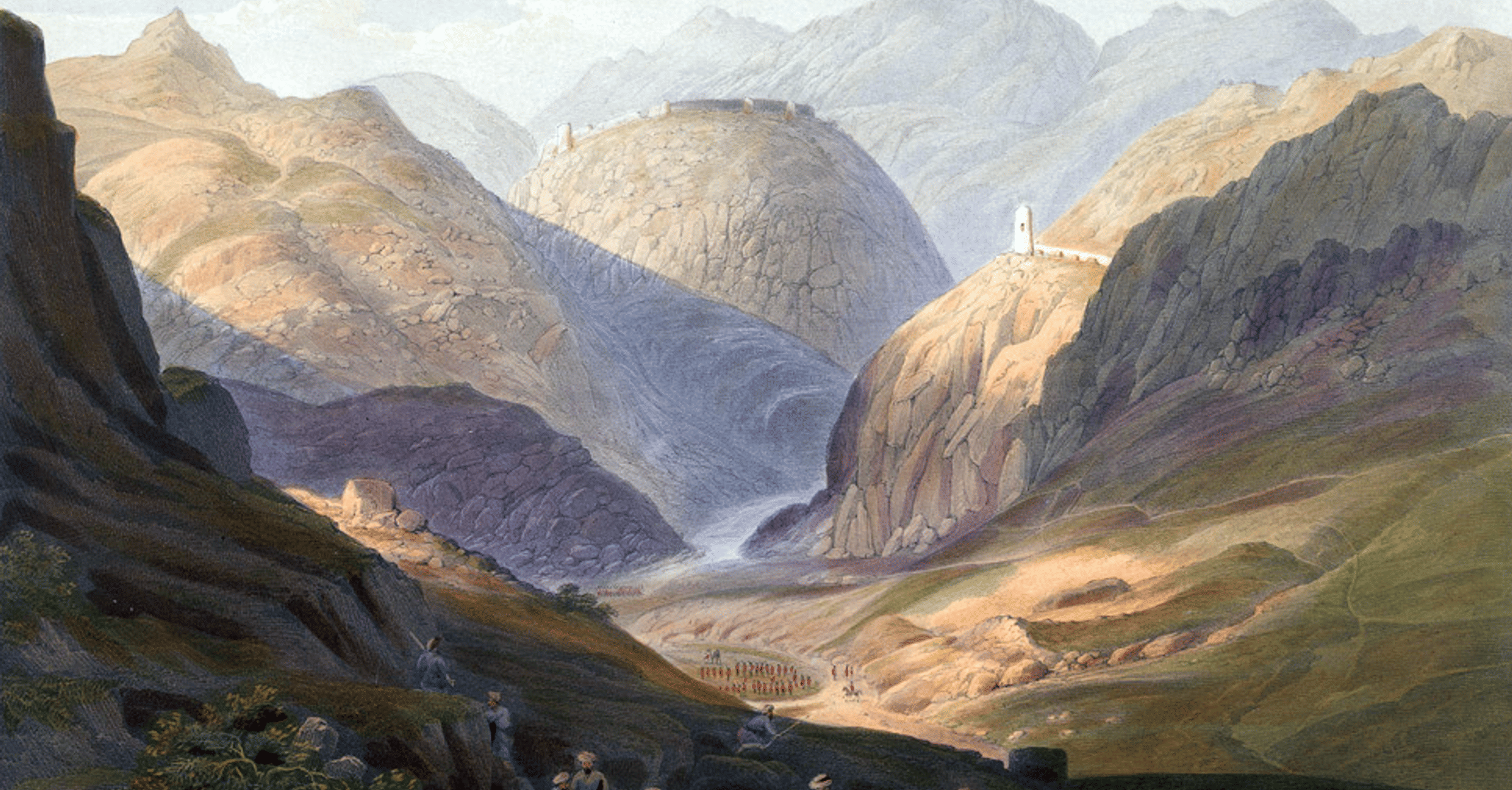
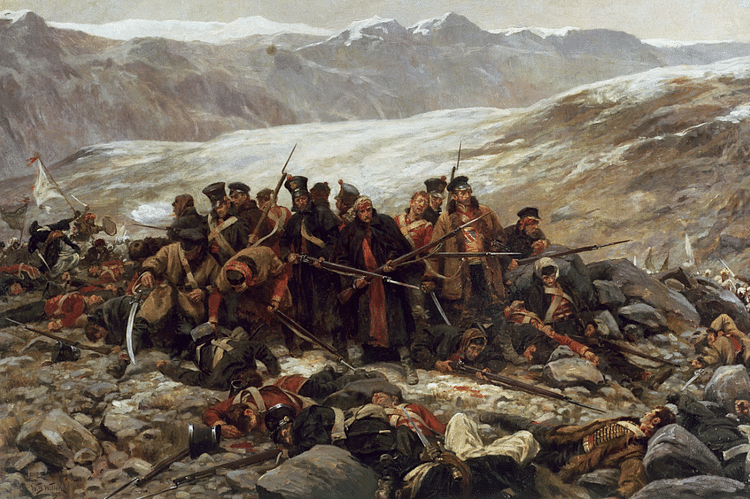
The initial tremors of the game were felt in the late 1830s. In 1837, Persia, emboldened by Russian diplomatic and material support, laid siege to the strategically important city of Herat in northern Afghanistan. This move sent alarm bells ringing in British India, reinforcing fears of Russian encroachment. The British responded with what became the disastrous First Anglo-Afghan War (1838-1842). Their attempt to install a puppet ruler in Kabul ended in a spectacular failure and a humiliating retreat, demonstrating the formidable challenges of controlling Afghanistan’s fiercely independent populace and treacherous terrain.
While Britain grappled with Afghanistan, Russia was simultaneously extending its reach eastward. By establishing commercial concessions in China and annexing Chinese Amur in 1858 and Ussuri in 1860, Russia secured a vital naval base at Vladivostok. Further south, Russia aggressively expanded into the old Mongol khanates of Central Asia, annexing Khiva in 1864, Tashkent in 1865, and Samarkand in 1868. These territorial gains brought Russian borders ever closer to Afghanistan and, by extension, British India.
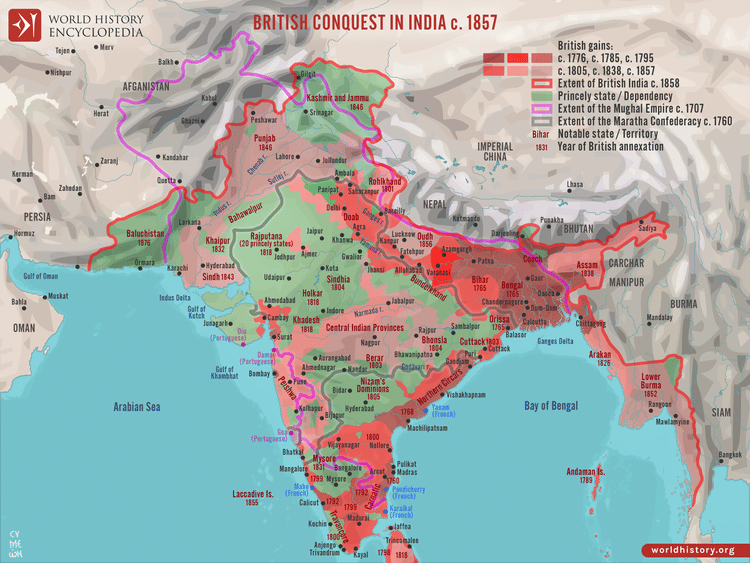
Figure 1: Map of the British Conquest in India c. 1857 (Simeon Netchev (CC BY-NC-ND))
(This map illustrates the extent of British control in India, highlighting the proximity to the contested North-West Frontier.)
The British, primarily through the formidable British East India Company – a state-sponsored private trading company with its own vast army – were not passive observers. They relentlessly consolidated their control over the Indian subcontinent, particularly in the vital northwest. Sind was annexed in 1843, followed by Jammu and Kashmir in 1846, and Punjab by 1849 after the Second Anglo-Sikh War. Baluchistan was brought under British sway in 1876. These acquisitions aimed to create a robust defensive perimeter around India’s core territories.
Despite the lessons of the First Afghan War, the British made another ill-fated attempt to control the Afghan buffer zone in the Second Anglo-Afghan War (1878-1880). This intervention was largely a reaction to Russia’s renewed diplomatic overtures to Amir Sher Ali, the Afghan ruler, signaling a perceived increase in Russian influence at Kabul. Though militarily more successful in parts, the British ultimately withdrew, unable to establish lasting control.
These Asian maneuvers occurred against a backdrop of wider global conflicts. The Crimean War (1853-1856) saw Britain, France, and the Ottoman Empire decisively defeat Russia, preventing its expansion into the Balkans and securing the existing status quo around the Black Sea. This war, a rare direct confrontation between the Great Game’s primary players, underscored the fragility of peace and the extent to which imperial rivalries could escalate.
Closer to home for the British was the devastating Sepoy Mutiny of 1857-1858, an internal rebellion against British rule in India. This widespread uprising served as a stark reminder of the precariousness of British control and dramatically heightened the fears of British diplomats. The prospect of any future Anglo-Russian war being exploited by separatists in India, leading to another rebellion on the scale of the Mutiny, became a deeply unsettling nightmare for the British administration.
Despite imperial rivalries, an interesting familial connection emerged in 1884 when Alexandra Feodorovna (1872-1918), a granddaughter of Queen Victoria (reign 1837-1901), married Tsar Nicholas II (reign 1894-1917). However, this royal bond had virtually no impact on the relentless machinations of The Great Game. The very next year, in 1885, Russian troops were mobilized to the Afghan border in the infamous Pandjeh Incident, nearly sparking a direct confrontation.
Figure 2: The Last Stand of the Retreat from Kabul (William Barnes Wollen (Public Domain))
(This iconic painting depicts the tragic British retreat from Kabul during the First Anglo-Afghan War, a symbol of the difficulties faced by imperial powers in Afghanistan.)
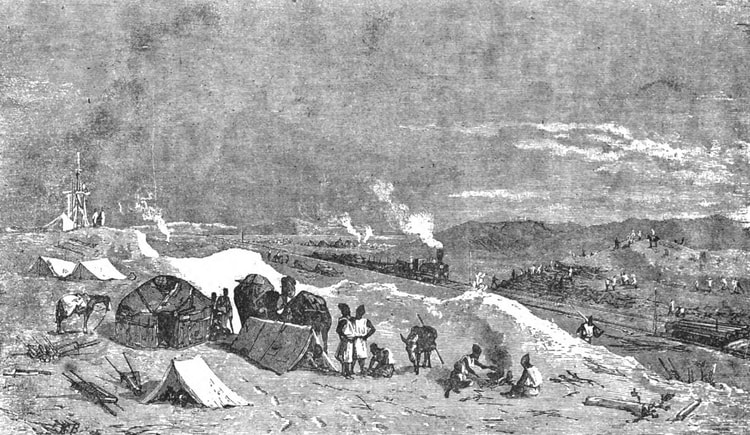
Technological advancements further exacerbated British anxieties. The construction of new Russian railways in Central Asia, such as the Transcaspian Railway (passing through what is today Turkmenistan and Uzbekistan and extending right up to the Afghan border), dramatically improved Russia’s logistical capabilities. Such a railway meant that Russian forces could now be easily resupplied and reinforced. Russia could theoretically mobilize around 300,000 troops on the border in less than three months, a formidable force compared to Britain’s Anglo-Indian army on the frontier, which numbered significantly smaller at approximately 95,000 men. As the 19th century drew to a close, reinforcing this British army was no easy feat, given significant military commitments elsewhere in the empire, most notably the protracted Boer War in Southern Africa (1899-1902).
Figure 3: Building the Transcaspian Railway (Unknown Artist (Public Domain))
(This image showcases the immense engineering effort behind the Transcaspian Railway, a key infrastructure project that significantly altered the military balance in Central Asia.)
Despite the ambitions of both Britain and Russia, Afghanistan consistently proved to be fiercely independent and seemingly unconquerable. Recognizing that neither power could establish lasting control over such a hostile region, the British ultimately settled for a policy of containment, a pragmatic approach that became known as "masterly inactivity." This involved influencing Afghanistan from a distance rather than attempting direct annexation or military control.
A stark contrast to this policy was the much more aggressive stance adopted by the British regarding Tibet. Then an almost totally inaccessible state ruled by the Dalai Lama and Buddhist monks, Tibet was nominally under the suzerainty of China. British intelligence, fueled by Russophobia, somehow convinced itself that Russia intended to invade Tibet and use it as a base to cause further mischief in Central Asia. To preempt such an occurrence, a British force led by the soldier-explorer Francis Younghusband (1863-1942) invaded Tibet in 1904. The Tibetans, armed with antiquated weapons and lacking modern military training, had little means to resist. Most of the brief military encounters quickly devolved into massacres. When Younghusband finally arrived in the mythical Tibetan capital, Lhasa – a place so difficult for foreigners to reach that it had acquired an almost legendary status – he found no Russians and absolutely no evidence that any had ever been there. The British eventually withdrew from Tibet following assurances from the Chinese emperor that he would not allow any rival power to hold sway over the region. The Younghusband expedition, though a military success, highlighted the depths of British paranoia.
Spies & Russophobia
The psychological dimension of The Great Game was perhaps as significant as its military and diplomatic aspects. The British government and its colonial officials became increasingly consumed by a profound paranoia regarding Russia’s intentions. This "Russophobia," as historian L. James notes, "infected the minds of nearly every nineteenth-century British statesman, diplomat and strategist, and was strongly felt among all classes and shades of political opinion" (James, 180). Any foreigner traversing Central Asia, regardless of their declared purpose, was viewed with an intense degree of suspicion. Even renowned explorers like the Swedish geographer Sven Hedin (1865-1952), whose expeditions aimed to chart the sources of major rivers like the Brahmaputra and Indus, found their scientific endeavors hampered by a lack of official British blessing or aid. To the suspicious British, a skilled cartographer could just as easily be gathering intelligence invaluable to an enemy intent on invading South Asia.
The logical fallacy of this pervasive fear was often ignored: the sheer logistical difficulties of a large-scale Russian invasion of India were immense, rendering its success highly unlikely. Yet, this inconvenient truth was frequently overlooked by British strategists and, indeed, by some overly ambitious Russian generals who indulged in similar fantasies.
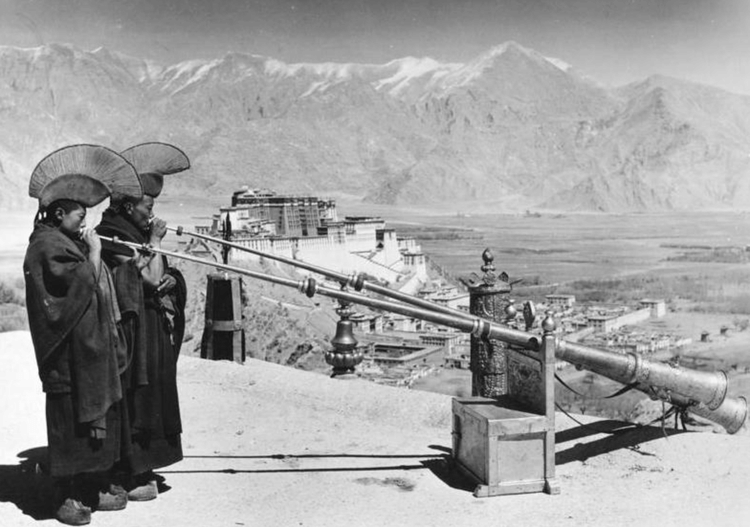
Figure 4: Potala Palace, Tibet (Bundesarchiv, Bild 135-KA-07-089 (CC BY-SA))
(The Potala Palace in Lhasa, Tibet, a symbol of the remote and mystical land briefly invaded by the British due to unfounded fears of Russian presence.)
This atmosphere of intense suspicion naturally fostered a flourishing, albeit shadowy, industry of espionage. British-paid spies – and undoubtedly, their Russian counterparts, though less is known about their operations – were tasked with amassing intelligence on enemy intentions, military capabilities, and troop movements across the vast Central Asian landscape. Ingenious methods were employed: locals were recruited, often posing as beggars, enabling them to cross borders unnoticed and unmolested. Telegraph operators and post office staff were bribed to make copies of sensitive communications between Russian officials. Spies, adopting the guise of household staff, were even placed within Russian consulates, listening in on conversations and gathering vital information.
The very nature of this clandestine world also bred a significant number of double agents, individuals who skillfully navigated both sides of the conflict. They protected their cover and secured their income by feeding each side a steady stream of often dubious or outright false information. This cycle of misinformation became self-perpetuating; the flurry of reports, accurate or otherwise, flowing back and forth across Asia, constantly fed the diplomatic paranoia that seemed to grow rather than diminish, creating a self-fulfilling prophecy of distrust.
Involving France in the Great Game
The Great Game was not confined solely to Central Asia; it was a global struggle that constantly sought to draw in other players, with each main party attempting to disrupt the traditional alliances of the other. A significant turning point in European diplomacy, with direct implications for the Game, occurred in 1882 when Britain seized control of the Suez Canal in Egypt. This vital waterway, connecting Europe to British India, was of immense strategic importance. The French government, which had historically viewed Egypt as its own particular sphere of influence, was profoundly displeased by this British assertiveness, particularly as it followed similar disputes during the intense European "Scramble for Africa," where imperial powers aggressively carved up the continent.
This lingering Franco-British discord became a strategic lever for Russia. The French government, seizing upon Britain’s embarrassment and vulnerability in Central Asia during the 1885 Pandjeh incident, "used Britain’s embarrassment in Central Asia to secure concessions in Africa and the Pacific" (James, 382). Russia, ever keen to exploit divisions among its rivals, actively sought to capitalize on this resentment, leading to the formation of a crucial alliance with France. A decade later, in 1892, a dramatic demonstration of this new entente occurred when a group of Russian warships sailed through the Bosphorus and dropped anchor in the French naval base at Toulon in the Mediterranean. The British Royal Navy, long accustomed to unchallenged supremacy in the Mediterranean, was appalled by the prospect of a potential naval alliance between its main European rival, France, and Russia, which would severely threaten its ability to control this vital sea lane.
Figure 5: Map of the Russian Empire on the Eve of World War I, 1914 (Simeon Netchev (CC BY-NC-ND))
(This map illustrates the vast territorial extent of the Russian Empire, showcasing its proximity to British India and its expansion into Central Asia, a key area of contention in the Great Game.)
Franco-Anglo-Russian relations became even more convoluted with the outbreak of the Russo-Japanese War (1904-1905). France, by this point, was Russia’s formal ally. However, Britain had signed an alliance with Japan in 1902, creating a paradoxical situation where two of Europe’s major powers were indirectly supporting opposing sides in an Asian conflict. Japan, a rapidly modernizing power, ultimately won the war without any direct British military intervention, largely thanks to its more efficient and modern navy. Russia’s navy, despite being the third largest in the world, proved to be tragically obsolete and poorly managed. Japan’s victory allowed it to seize Manchuria, effectively preventing Russia’s further expansion into China.
Russia’s humiliating defeat not only exposed its military weaknesses but also served as a significant contributing cause to the Russian Revolution of 1905, a widespread uprising that Tsar Nicholas II only just managed to suppress, clinging precariously to power. From a British perspective, the Russo-Japanese War was profoundly significant. It offered irrefutable evidence, which decades of espionage and Russophobia had failed to reveal, that Russia was militarily incapable of mounting a successful invasion of India. The grand fears of an overland invasion, so long a cornerstone of British imperial strategy, were largely unfounded. The Great Game, in essence, had been precisely that – a mere game, albeit one played by overly imaginative imperialists, with real-world consequences. The price of this game, fueled by paranoia and ambition, was tragically paid by ordinary people whose lives, livelihoods, and even entire states were destabilized or destroyed in the imperial churn.
End Game
The conclusion of the Russo-Japanese War marked a significant turning point in the Great Game, paving the way for a dramatic realignment of European powers. Anglo-French relations, strained for decades by colonial rivalries, began to improve substantially, particularly following the Moroccan Crises of 1905 and 1911. In these episodes, Imperial Germany aggressively attempted to assert its influence in French Morocco, challenging France’s colonial claims. British diplomatic support for France proved crucial in compelling Germany to back down, fostering a new sense of shared interest and a common adversary.
The Great Game effectively ended with the signing of the Anglo-Russian Convention of 1907. This landmark agreement finally diffused the simmering tensions and resolved the long-standing rival claims over Afghanistan, Tibet, and Persia. Russia formally agreed not to interfere in British India, acknowledging its paramount importance to the British Empire. Crucially, both sides meticulously delineated their respective spheres of influence in Persia, essentially dividing the country into Russian and British zones.
This new diplomatic position was a direct reflection of several converging factors: Russia’s undeniable weakness and internal instability following its disastrous defeat to Japan, and the growing realization in both London and Paris that the rising power and aggressive ambitions of Imperial Germany posed a far greater and more immediate threat to global peace and the existing balance of power than their traditional rivalries. Mutual suspicion between Britain and Russia certainly did not vanish overnight, but the strategic calculus had fundamentally shifted. Later in 1907, Britain, France, and Russia formally solidified their new alignment by joining together in the Triple Entente alliance bloc. This powerful coalition would ultimately stand victorious against Germany and Austria-Hungary in the cataclysmic global conflict that erupted just seven years later: World War One.
The legacy of The Great Game is multifaceted. It left behind a geopolitical landscape in Central Asia marked by instability and external interference, shaping the destinies of nations like Afghanistan for generations. It also demonstrated the profound impact of perceived threats, propaganda, and espionage on international relations. Ultimately, it highlighted the capacity of imperial powers to shift their focus and forge new alliances when confronted by a common, existential threat, moving from a century of intense rivalry to an unprecedented alliance that would reshape the world.