
The Renaissance of the Funny Pages: The Sharon Herald Challenges the "Zombie Strip" Status Quo
Introduction
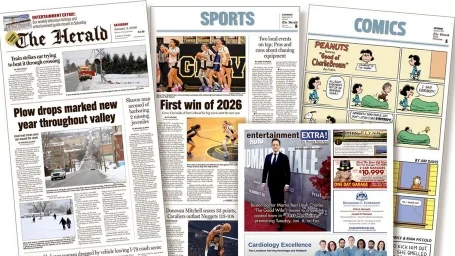
In an era where the survival of local print journalism depends on relevance and cost-efficiency, the traditional newspaper comics page—long considered a static, untouchable institution—is undergoing a radical transformation. The Sharon Herald, a daily newspaper serving the Shenango Valley in Pennsylvania and parts of eastern Ohio, has announced a comprehensive overhaul of its comics section effective June 2026. This move, while seemingly a routine editorial update, signals a burgeoning rebellion among local publishers against the industry’s reliance on "zombie strips"—comics that have remained in reruns for decades.
By purging legacy content in favor of a "slew of new comics," The Sharon Herald is addressing a growing tension between the nostalgia of readers and the economic reality of paying syndication fees for recycled material. This report explores the specifics of the Herald’s decision, the broader context of the syndication market, and the implications for the future of the American comic strip.
I. Main Facts: A Bold New Lineup
In late May 2026, The Sharon Herald published an editorial titled “Our View: New comics to start in June,” outlining a significant shift in its daily and weekend offerings. The primary catalyst for the change was a realization by the editorial board that the paper’s "funny pages" had become a museum of the past rather than a reflection of contemporary humor.
The Departure of Legacy Strips
The most striking aspect of the announcement was the implicit critique of strips that have remained in circulation long after their creators ceased producing new work. The Herald’s editorial noted that some strips currently in the paper have been in reruns for more than 25 years. While the paper did not provide an exhaustive "exit list," industry analysts and readers have identified Peanuts as the primary target of this critique. Since the death of Charles M. Schulz in 2000, Peanuts has been distributed as "Classic Peanuts," providing newspapers with a reliable but static product for over a quarter-century.
The New Additions
Starting in June, the Herald will introduce a diverse array of content designed to appeal to both traditionalists and a younger demographic.
- New Weekday Comics: Wallace the Brave, Marmaduke, Hi & Lois, Dennis the Menace, FoxTrot, Dogs of C-Kennel, and Flo & Friends.
- New Weekend Comics: Baby Blues, Frank & Ernest, Nancy, Big Nate, Dogs of C-Kennel, and Flo & Friends.
The inclusion of Wallace the Brave is particularly noteworthy, as Will Henry’s strip has been hailed by critics as the spiritual successor to Calvin and Hobbes, bringing a fresh, artistic vitality to the medium. Conversely, the addition of Dogs of C-Kennel and Flo & Friends to both daily and Sunday slots suggests a commitment to strips that balance modern sensibilities with the classic "gag-a-day" format.
II. Chronology of Change: From Big Nate to a Total Overhaul
The path to The Sharon Herald’s June refresh was paved by shifts in the wider syndication market earlier in the year.
- April 20, 2026: News broke that Lincoln Peirce’s Big Nate, a staple of the comics world and a massive hit in the middle-grade book market, would be transitioning to a Sunday-only format for newspapers. The daily Big Nate strips would no longer be offered as reruns, forcing hundreds of newspapers to find a replacement for their Monday-through-Saturday editions.
- Early May 2026: The Sharon Herald editorial board began reviewing the cost-to-engagement ratio of their current comics package. They identified several "legacy" strips—those in perpetual reruns—as candidates for removal to make room for active creators.
- May 30, 2026: The Sharon Herald officially announced the new lineup via their editorial page.
- June 1, 2026: The new comics schedule is set to debut, marking one of the most significant changes to the paper’s entertainment section in recent memory.
III. Supporting Data: The Economics of the "Zombie Strip"
To understand why The Sharon Herald’s decision is significant, one must look at the data surrounding newspaper syndication.

The Cost of Nostalgia
Syndicates typically charge newspapers based on their circulation size. While reruns of Peanuts or Classic For Better or For Worse are often offered at a slightly lower rate than premier "active" strips, they still represent a significant portion of a local paper’s features budget. For a mid-sized paper like the Herald, the cumulative cost of several legacy strips can equal the salary of a part-time reporter or a freelance photographer.
The "Zombie" Phenomenon
The term "zombie strip" refers to comics that continue in newspapers after the original creator has died or retired. These fall into two categories:
- Reruns: Strips like Peanuts or Get Fuzzy (which has been in reruns for years).
- Ghosted/Legacy Strips: Strips like Blondie or The Phantom, which are continued by new writers and artists under the original creator’s name.
The Herald’s specific mention of "25 years of reruns" highlights a growing frustration. In a digital age where readers can access the entire 50-year archive of Peanuts for free on platforms like GoComics, the value proposition of printing the same strips in a physical newspaper has plummeted.
The FoxTrot Discrepancy
One point of confusion in the Herald’s announcement involves Bill Amend’s FoxTrot. Amend famously moved to a Sunday-only schedule in 2006 to focus on the quality of the work. The Herald listed FoxTrot as a new "weekday" comic. This has led to speculation among industry experts, such as D.D. Degg of The Daily Cartoonist, as to whether the Herald is inadvertently subscribing to "classic" daily reruns or if there has been a misunderstanding in the syndication agreement.
IV. Official Responses and Editorial Stance
The editorial published by The Sharon Herald serves as a manifesto for the modern local newspaper. The board’s stance is rooted in the belief that the comics page should be a living document, not a historical archive.

The Editorial Perspective
"We think it’s a positive and needed change," the Herald stated. "Some of the comic strips that had been running are from syndicates that are not new… some have been in reruns for more than 25 years."
This transparency is rare in the newspaper industry. Usually, when a comic is dropped, editors brace for a deluge of phone calls from angry readers who have read the same strip every morning for forty years. By framing the change as a "needed" modernization, the Herald is proactively defending its decision to support living artists over the estates of deceased ones.
The Reader Reaction
As of May 30, the announcement had already garnered significant attention, with initial comments on industry blogs like The Daily Cartoonist reflecting a mix of support and skepticism. Some readers praised the inclusion of Wallace the Brave, while others questioned the removal of Peanuts, arguing that the strip’s quality remains higher than most modern offerings, regardless of its rerun status.
V. Implications for the Industry
The move by The Sharon Herald could be a bellwether for the future of the American funny pages. Several implications emerge from this shift:
1. The "Peanuts" Precedent
If more mid-sized newspapers follow the Herald’s lead and drop Peanuts, it could signal the end of the "Classic Peanuts" era in print. While Schulz’s work is immortal, its presence in newspapers occupies a slot that could be used to cultivate the next generation of cartoonists. The Herald’s decision suggests that the "sentimental value" of reruns is no longer enough to justify the "real estate" they occupy on the page.

2. Support for Contemporary Creators
By adding strips like Dogs of C-Kennel (by Mick and Mason Mastroianni) and Nancy (currently written and drawn by the pseudonymous Olivia Jaimes), the Herald is investing in creators who are currently producing new content. Olivia Jaimes’ Nancy, in particular, has been a lightning rod for modernization, successfully bringing 21st-century technology and humor to a strip that began in the 1930s.
3. The Struggle for Daily Consistency
The transition of Big Nate to Sunday-only and the confusion over FoxTrot highlight a crisis in the daily strip format. As more high-profile creators move to "Sunday-only" or "digital-first" models to avoid the grueling 365-day-a-year grind, newspapers are finding it increasingly difficult to curate a consistent, high-quality daily page.
4. The Local Newspaper as a Curator
In the digital age, the role of the newspaper has shifted from being a primary source of information to a curator of quality. By refreshing their comics, The Sharon Herald is attempting to prove that they are paying attention to the quality of every inch of their product. They are signaling to their subscribers that the paper is not on autopilot, but is actively being managed to provide the best possible experience.
Conclusion
The Sharon Herald’s June 2026 comics refresh is more than a simple change of scenery; it is a calculated strike against the stagnation of the medium. By removing "zombie strips" that have haunted the pages for a quarter-century and replacing them with a mix of modern hits and established classics, the paper is attempting to bridge the gap between legacy readers and a new generation. Whether this move will appease the vocal minority of "rerun" fans remains to be seen, but as an economic and editorial statement, it is a clear declaration that the future of the comics page belongs to the living.


Leave a Comment